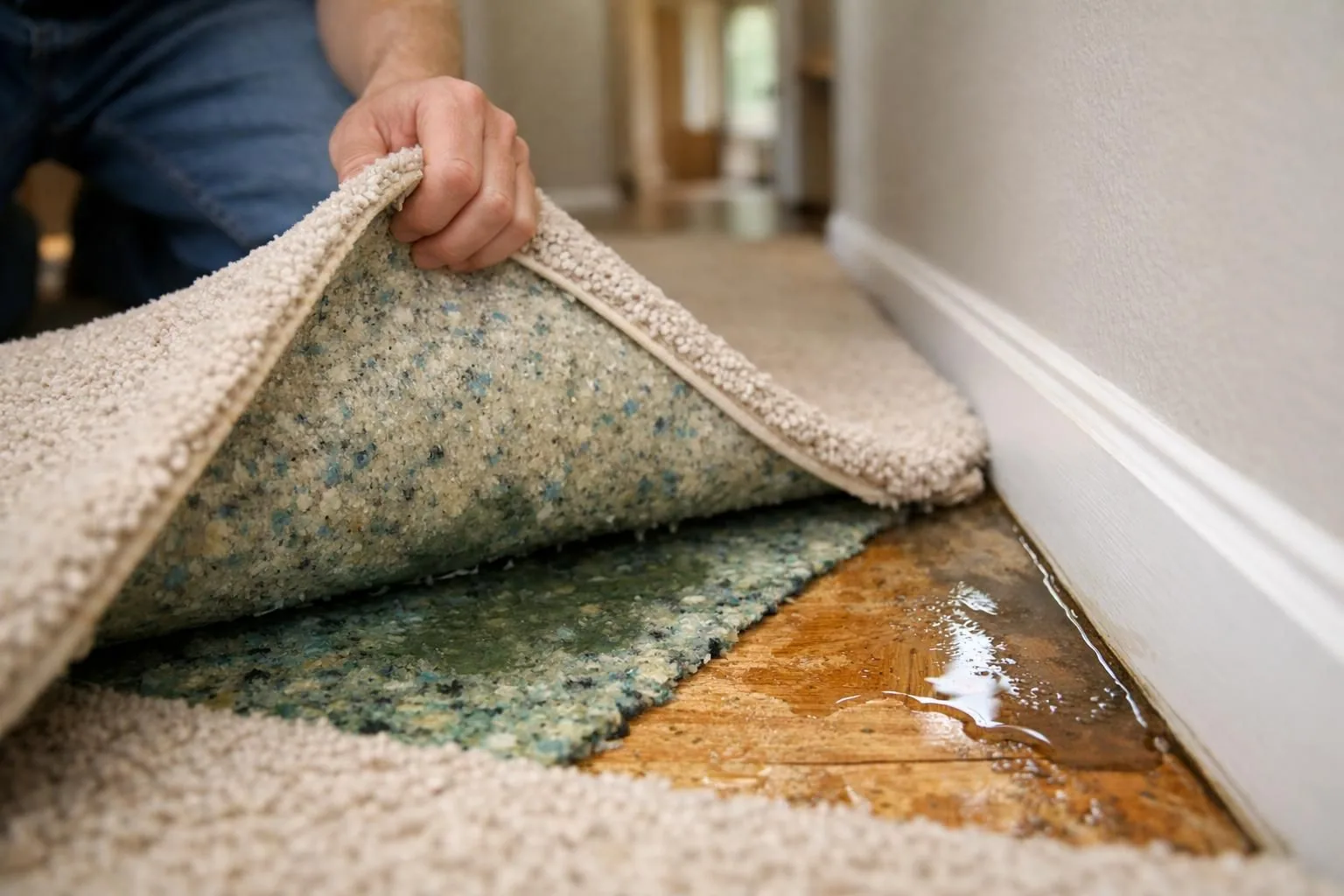
If your carpet pad got wet, the big question is whether you can dry it out safely or whether it’s already a replacement job. And yeah, it matters, because padding holds water like a sponge and can turn into an odor and mold problem fast, even if the carpet fibers look “fine” on top. In this guide, you’ll learn when can wet carpet padding be saved, how the water type changes the answer, how to check what’s actually wet (including the subfloor), and the drying steps that work in real homes. You’ll also get clear non-negotiables for when to stop trying and swap the pad.
Best for: Small clean-water leaks caught quickly, where the pad is damp but not contaminated and the subfloor is sound.
Not ideal when: Water is gray/black, the pad smells musty, or it stayed wet long enough to trigger mold and indoor air quality issues.
Good first step if: You can stop the leak source, confirm the water category, and start extraction and airflow within hours.
Call a pro if: There’s sewage backup, floodwater, widespread saturation, or you can’t access and dry the subfloor thoroughly.
Quick Summary
-
Padding can sometimes be saved if the water is clean (Category 1) and you dry everything fast, including the subfloor.
-
The carpet and the carpet padding dry differently; pad saturation is the usual reason problems linger.
-
Water category (clean vs. gray vs. black) is a safety decision, not just a “how wet is it” decision.
-
The 24–48 hour rule is real in practice because damp padding plus warmth equals mildew and odor risk.
-
Proper drying usually means lifting the carpet, extracting water, then running dehumidification and directed airflow.
Quick Answer: When Wet Carpet Padding Can Be Saved
Wet carpet padding can be saved when the water is clean, the affected area is small, and you can dry both pad and subfloor fast enough to prevent odor or microbial growth. That usually requires immediate extraction and aggressive drying that pulls moisture from below, not just the surface.
Odds improve if the pad hasn’t collapsed, delaminated, or turned spongy, and if carpet adhesive hasn’t broken down. Don’t rely on “feels dry” from above; decide based on inspection and moisture checks. If you’re unsure what to do first, use first 24 hours plan.
The Clean-water + Fast-action Rule
Clean water plus fast action is the only reliable scenario for saving wet carpet padding. Category 1 water from a supply line or a non-contaminated overflow can sometimes be extracted and dried without ongoing health risk.
Speed is non-negotiable. Once the pad stays damp, it holds
Identify the Water Type (Clean Vs. Gray Vs. Black)
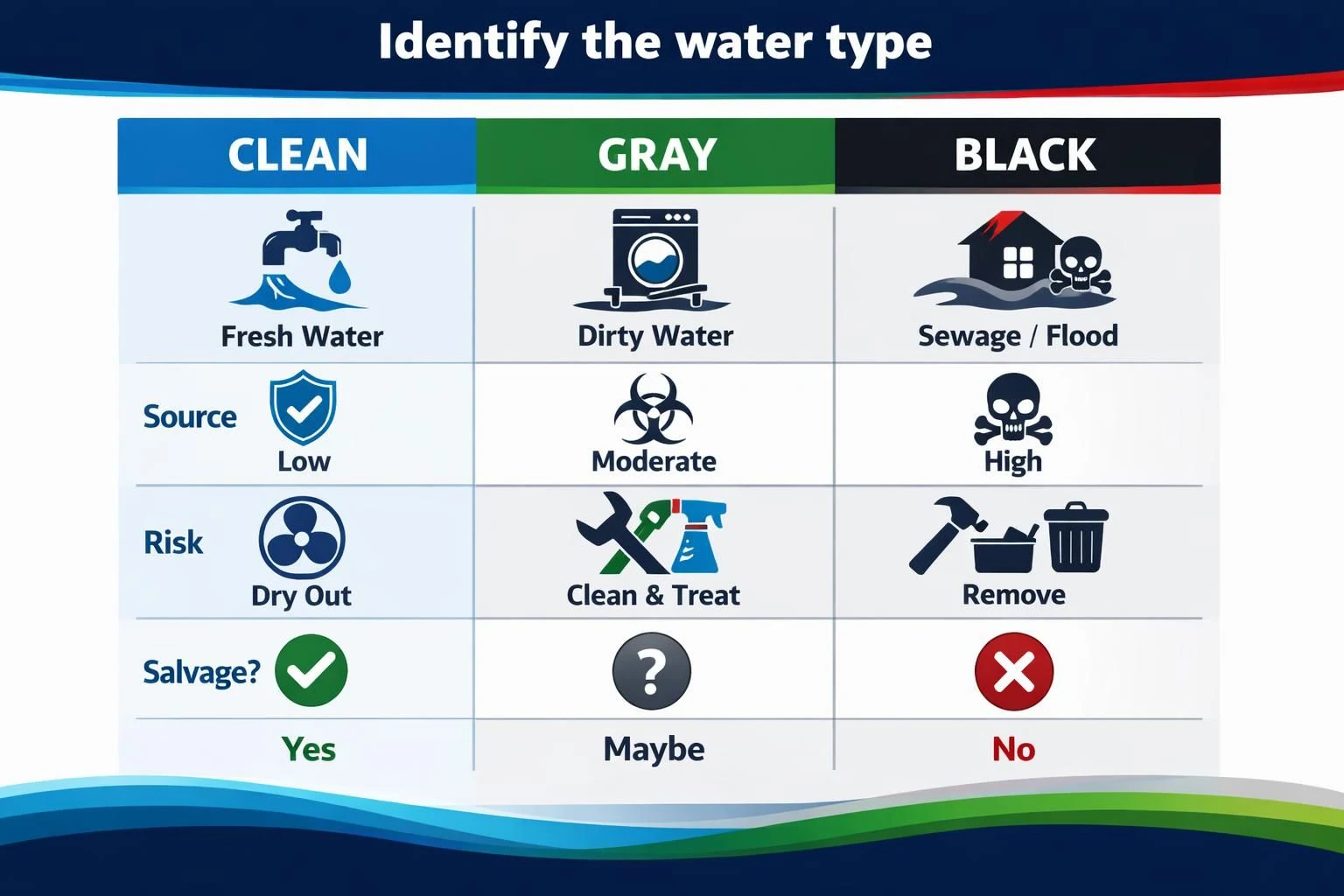
Water type determines whether this is just drying or also contamination control. Clean water (Category 1) is the main case where pad salvage can be realistic, because the priority is preventing mold. Gray water (Category 2) carries contaminants that soak into padding and cause odor and hygiene issues. Black water (Category 3), including sewage backup and floodwater, is hazardous and should not remain in porous materials.
Padding is highly absorbent, so it’s hard to “disinfect back to normal” once contaminants penetrate. Carpet fibers may clean better than pad, and the subfloor can also absorb contaminants. For toilet overflow scenarios, follow steps after a toilet overflow for safety steps.
Examples of Each and Why it Matters
Clean water examples: a fridge supply line leak, a burst pipe with clear water, rainwater that didn’t pick up debris. These situations can sometimes support drying wet carpet and pad if you move fast.
Gray water examples: dishwasher discharge, washing machine overflow, sump pump failures that bring in dirty water. Black water examples: sewage backup, river or storm floodwater. The reason it matters is simple: you can remove moisture, but you can’t reliably “un-soak” contamination from a pad.
Time Window: the 24–48 Hour Tipping Point
The practical tipping point is 24–48 hours. If padding and subfloor stay wet that long, the risk of mold, mildew, and stubborn odor rises fast. It’s not a precise clock, but “we’ll run a fan tomorrow” is rarely a safe plan.
Wet padding also keeps moisture pressed into the subfloor, leading to swelling, warping, or softened materials. If you discovered the leak late, shift from “can I save it?” to “can I verify it’s dry?” For larger events, stop water damage spreading helps limit damage while you decide on drying versus replacement.
How to Check if the Padding is Actually Wet (and How Bad)
To judge whether wet carpet padding is salvageable, check the pad and subfloor, not the carpet face. Pull back a carpet corner near the wettest point and inspect. Press the pad to see if water squeezes out, and look for discoloration, grit, or debris.
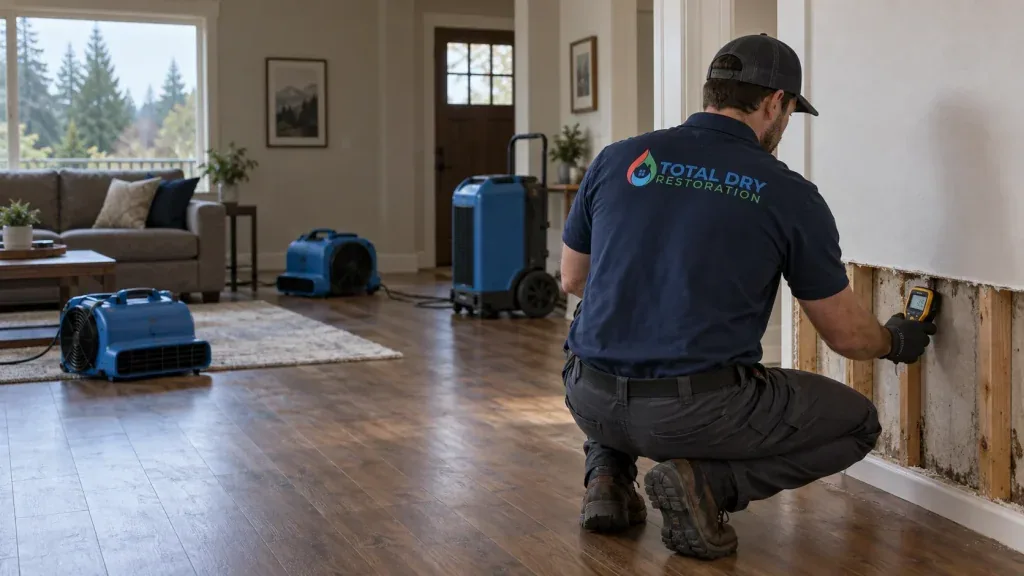
If you have a moisture meter, test several spots: the center, the edges where moisture migrated, and a known-dry area for comparison. Check along tack strips and perimeters where water often wicks and hides. Use safe shutoffs if water is near outlets; follow turning off electricity tips when in doubt.
Signs of Saturation, Odor, and Subfloor Moisture
Saturation signs include squishing when you step, a pad that feels heavy or spongy, and water beading at seams after you press down. Odor signs include a sour or musty smell that returns after the room “airs out.”
Subfloor moisture clues include darkened edges at baseboards, swollen laminate transitions, squeaking that wasn’t there before, or a cool damp feel when you touch the subfloor under lifted carpet. If the subfloor is wet, drying the carpet alone won’t solve anything.
How to Dry Carpet Padding (if It’s Salvageable)
Drying a salvageable pad starts with fast extraction, then controlled airflow and dehumidification until the pad and subfloor are truly dry. Stop the leak and remove standing water. Extract through the carpet using a water extractor or wet/dry vacuum, making multiple slow passes.
Next, lift the carpet off the tack strip in the wet zone so air reaches the pad and subfloor. If water is trapped under an intact pad, cut back or lift sections to expose the subfloor for drying. If you’re weighing rentals or speed, urgent extraction options helps set expectations.
-
Extract water repeatedly (don’t just do one quick pass)
-
Lift carpet to ventilate the pad and subfloor
-
Run a dehumidifier continuously in a closed room
-
Use an air mover (high-velocity fan) aimed across, not straight down
-
Recheck moisture and odor before reinstalling carpet
Extraction, Airflow, and Dehumidification Basics
Extraction is what removes gallons of water fast; fans alone mostly evaporate surface moisture. Airflow works best when it’s directional, pushing air across the damp zone to pick up moisture and feed it to the dehumidifier.
Dehumidification is what keeps evaporation happening. Close windows in humid weather, keep interior doors mostly closed for better control, and empty the dehumidifier as needed so it keeps pulling moisture. If the room smells worse when you run air, that’s often a sign the pad is contaminated or already turning.
When Padding Should Be Replaced (Non-negotiables)
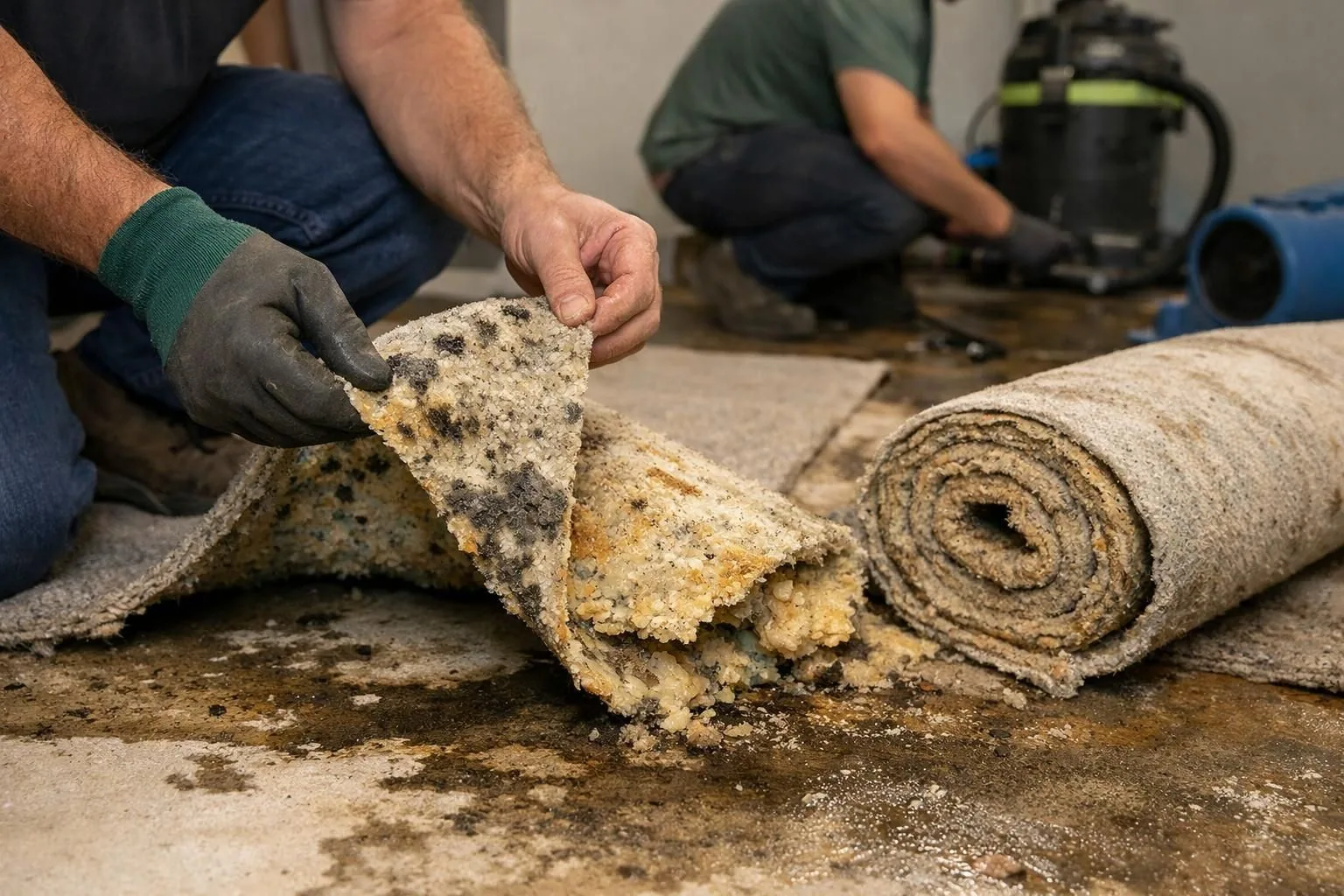
Replace padding when the water is gray or black, when sewage is involved, or when you can’t fully dry and verify the subfloor. Even if it feels dry, contaminated pad can keep releasing odor and affect indoor air quality. Replace it too if it’s matted, crumbling, or delaminating, because it won’t rebound and the carpet will feel uneven.
Replacement is often smarter when wetness spans rooms, runs under built-ins, or reaches walls where moisture hides. Carpet may still be salvageable, but only after pad removal, proper cleaning, and complete subfloor drying. For the bigger-picture process, see restoration overview basics.
Contamination, Mold, and Lingering Odor
Contamination is the line you don’t cross, because porous pad holds onto it. Mold and mildew are another hard stop: visible growth, fuzzy spotting, or a persistent musty odor after drying attempts usually means the pad (and possibly sections of carpet) need to go.
Lingering odor isn’t just annoying. It’s a signal that moisture or contamination remains somewhere, often at the perimeter, under seams, or in the subfloor layers. If you can’t locate and eliminate the source, replacing the pad is often the only way to reset the room.
What to Do After Drying: Cleaning, Sanitizing, and Verification
After drying, clean and verify, because dry materials can still smell or affect air quality. Once fully dry, vacuum and clean carpet fibers with a product suited to your carpet. If the water was clean, apply a light antimicrobial to the subfloor (when compatible), but don’t re-soak the area.
Verification matters. Use a moisture meter if available, then do a next-day smell check after the room stays closed for a few hours. If odor returns, something is still damp or contaminated. Inspect edges, transitions, and baseboards. Renters should document and follow tenant steps after damage.
DIY Vs. Pro Restoration: What’s Realistic for Homeowners
DIY drying can work for small, clean-water leaks when you can access the padding, run equipment nonstop, and confirm the subfloor is drying. A wet/dry vacuum, a consumer dehumidifier, and a couple of fans may be enough if you can lift the carpet edge and monitor results. Wear gloves, and use a mask if there’s dust, odor, or suspected contamination.
Professional help is more realistic when the wet area is large, the water is gray/black, or moisture is trapped under layers. Pros use high-capacity extraction, air movers, commercial dehumidifiers, and moisture meters to find hidden wetness and decide on pad removal and reinstall timing. If you can’t verify dryness, you’re guessing. Use actions after a burst pipe for a clear sequence.
Conclusion
In some cases you can salvage the padding, but only if the water is clean, the affected area is limited, and you can quickly dry the carpet, padding, and subfloor and confirm they are dry. Acting fast, within 24–48 hours, is critical: remove standing water, lift the carpet to allow airflow, run fans and a dehumidifier, and use moisture meters to verify dryness. Inspect the padding for staining, odor, or softening; if it is discolored, smells musty, or remains damp despite drying attempts, replacement is the safer choice. Also check the subfloor for water damage or mold growth, if the subfloor is compromised, you will need to repair or replace it before reinstalling new padding. If the water was from a contaminated source (sewage, floodwater, or unknown origin), do not attempt to salvage the padding; treat it as contaminated waste and replace it. For larger losses, visible mold, or any uncertainty about contamination and structural integrity, consult a professional restoration contractor, document the damage and communicate with your insurance company as needed. Taking these steps improves the chance of saving materials when appropriate and helps avoid long-term problems such as persistent odors, mold, or structural damage.