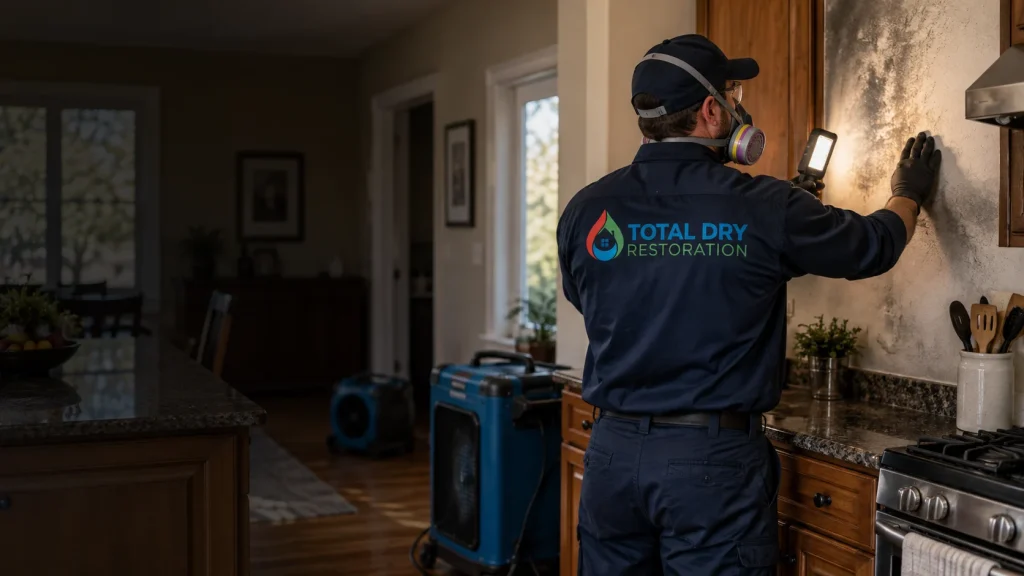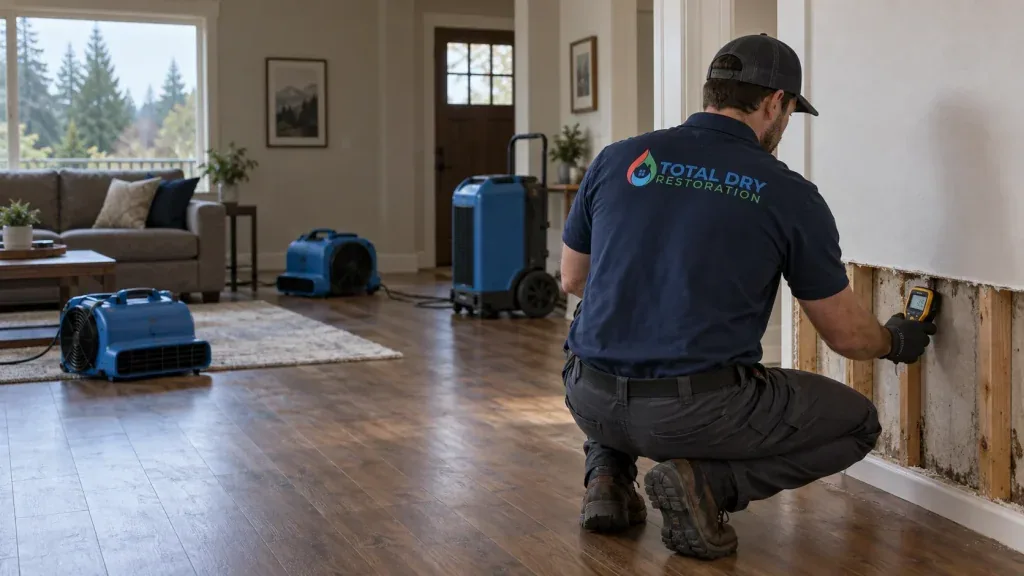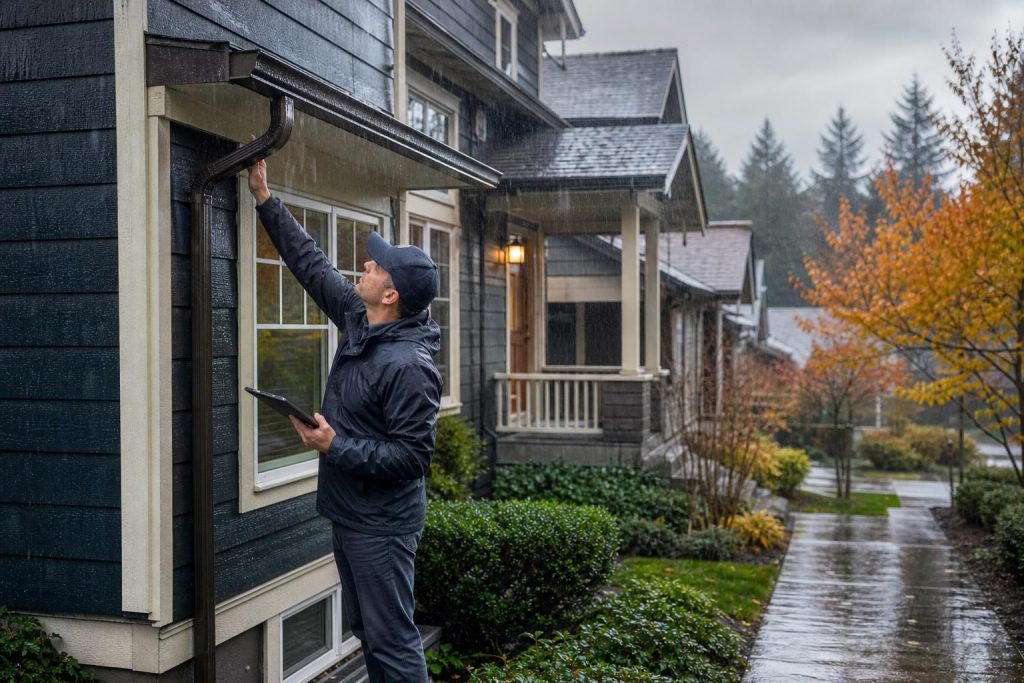

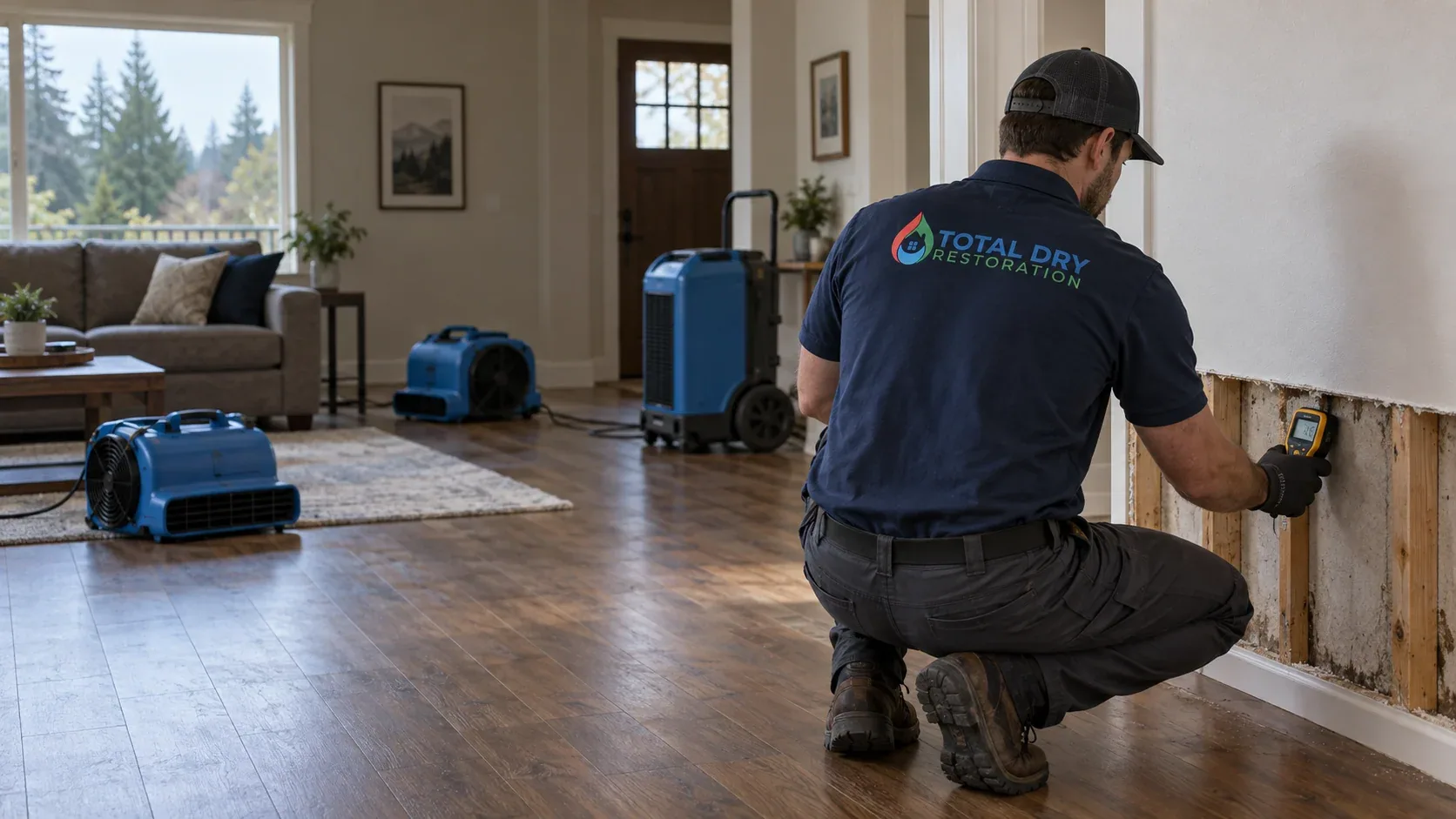
When water enters one apartment, the visible stain may be only one part of the problem. A useful response gives the property manager a clear picture of what is affected, who needs to coordinate access, what remains unsafe, and which decisions are waiting on qualified professionals. Use this guide to organize the first response and next-day handoff. It is an operations checklist, not a legal or insurance determination.
Quick sequence: protect people first, stop or report the source when safe, identify every area that may be affected, communicate a practical access plan, document what you can observe, and coordinate assessment and drying. Do not make a diagnosis from a stain or promise a repair outcome before the affected materials are inspected.
Start with safety and authority
If there is an immediate threat to life, fire, active electrical danger, gas odor, structural instability, or rapidly rising water, use the appropriate emergency service or utility first. Do not send staff or residents into standing water, a damaged ceiling area, an unsafe crawl space, or a room with exposed wiring. If water may have reached electrical equipment, keep clear and wait for the utility or a qualified electrician to confirm what is safe. EPA’s damaged-building guidance also warns that re-entry should follow local authority direction and that cleanup can expose people to chemical, structural, and biological hazards. Read EPA’s guidance for damaged buildings.
Use the property’s existing emergency contacts and access procedures. Confirm who is authorized to approve entry, source repair, temporary protection, and restoration work. If a resident is not available, follow the property’s established process rather than improvising access rules. Keep a written record of who gave each instruction and when.
The first hour: make one reliable incident picture
- Record the report. Note when the issue was discovered, who reported it, the location, and the visible condition. Separate what someone observed from what they suspect caused it.
- Locate the source if it is safe. A resident or authorized maintenance worker may be able to identify an obvious fixture or supply issue. If the source is not clear, do not open walls, operate unfamiliar equipment, or assume the leak has stopped.
- Map the possible path. Check the reported room and nearby areas that share a wall, floor, ceiling, plumbing line, or equipment space. Water can travel beyond the first visible mark. Record each area as observed, reported, or not yet checked.
- Set the access plan. Identify the next person who needs entry, the point of contact for residents, and any rooms that must stay clear. Give people a realistic update time even if the cause or repair estimate is not yet known.
- Preserve a clear record. Take wide and close photos from a safe position, note the time, and keep the original files with the incident record. Avoid photographing personal belongings or residents unless the documentation is necessary and authorized.
Identify affected units and coordinate communication
A leak in one unit may affect a neighboring ceiling, corridor, storage room, or shared mechanical area. Build a simple location list instead of relying on a single note such as “water in unit 4.” Include the reported source area, spaces below it, shared walls, common areas, and any place where a resident reports odor, dampness, bubbling paint, or a new stain. Mark unknown spaces as “not inspected yet.” That wording keeps an incomplete check from being mistaken for a negative finding.
Send residents short, factual updates through the property’s normal communication channel. Explain what area is being assessed, when access is requested, what they should avoid touching, and who will provide the next update. Do not tell residents that a room is safe, that mold is absent, or that a particular item is salvageable unless the appropriate professional has made and documented that determination.
The next day: hand off observations and open decisions
Keep one incident log that follows the issue from discovery through assessment and follow-up. A compact record can include:
| Record | What to capture | Why it helps |
|---|---|---|
| Timeline | Report time, access attempts, source-control actions, visits, and updates | Shows how the response progressed |
| Locations | Unit or common-area identifier, room, surface, and whether checked or reported | Helps find connected areas and gaps |
| Observations | Photos, visible moisture, odors reported, material changes, and conditions still unknown | Separates evidence from assumptions |
| Coordination | Who was contacted, instructions received, access status, and next owner | Reduces duplicate calls and missed handoffs |
| Open decisions | Questions awaiting a source repair, qualified assessment, or property approval | Keeps unresolved items visible |
Share the log with the authorized property contact and the professionals coordinating the response. Do not include resident contact details in public notes or analytics. Keep the property’s records in its approved system and limit access to people who need them for the incident.
Coordinate source repair, assessment, and drying as separate questions
The person who stops a leak may not be the person who assesses wet building materials or completes repairs. Track these as related but distinct tasks: identify and address the source, determine which materials and spaces were affected, and agree on the next drying or repair steps based on what the assessment finds. Avoid closing the incident because the visible drip stopped; hidden areas may still need to be checked.
After flooding or contaminated water, do not treat the area as an ordinary clean-water cleanup. EPA cautions that floodwater may contain sewage or hazardous chemicals and that damaged materials can create exposure risks. Keep people away from affected areas until the appropriate authorities and qualified professionals establish safe access. EPA cleanup guidance for homes and businesses describes these general hazards.
Confirm the drying-to-repair handoff
Ask the restoration team what materials were checked, which areas remain inaccessible, and what observations support the next repair step. Keep assessment and moisture records with the incident log. A dry-looking wall or a stopped leak does not by itself close the drying question. Before a contractor closes a cavity or reinstalls flooring, confirm who is responsible for assessing the underlying materials and recording any unresolved moisture concerns. EPA’s flooded-home cleanup resource provides additional general cleanup context for residential buildings.
Prepare a useful handoff
Before handing the incident to the next shift or vendor, summarize the confirmed facts, the affected locations, the steps already taken, the areas that remain unchecked, and the next decision owner. Include the resident communication status and the next promised update time. Ask the receiving person to confirm the handoff so responsibilities do not disappear between messages.
- What is known about the source, and has anyone confirmed it is controlled?
- Which units, common areas, and building layers were inspected, and which remain unknown?
- Is there a safety, contamination, electrical, or structural concern that limits access?
- Who is authorized to approve the next action, and who will update residents?
- What photos, notes, or assessment records should accompany the handoff?
For occupant-facing first steps after a residential leak, see the apartment water-damage guide. For existing rental and commercial service-area information, see Tukwila service information. When affected building materials need an assessment, review water damage restoration. The right next step depends on the site findings and the property’s own authorization process.