
Sump pump failure is one of those problems that goes from “minor annoyance” to “serious damage” fast, especially when the water’s already creeping across your basement floor. The good news is you can usually limit the mess if you act in the right order: stay safe, stop the water source (or slow it down), protect anything that can’t get wet, and start drying before moisture soaks into framing, drywall, and flooring. In this guide, you’ll learn the early warning signs, the most common causes, what to do when it happens, how insurance typically treats it, and how to prevent a repeat.
Best for: Homeowners who want a clear, practical response plan for basement flooding caused by a sump pump problem.
Not ideal when: You’re dealing with sewage, active electrical hazards, or structural movement where staying in the basement isn’t safe.
Good first step if: You notice rising water or a silent pump during heavy rain and need a safe, quick shutdown and triage plan.
Call a pro if: Water is spreading fast, materials are saturated, or you can’t restore pumping and drying within a few hours.
Quick Summary
- A failing sump pump often shows up as strange noises, constant cycling, no discharge, or water rising despite the pump running.
- Power loss, switch problems, clogs, and overwhelmed drainage are common failure points during storms.
- Your first priorities are safety, stopping incoming water, and getting water out without creating electrical risks.
- Insurance coverage depends on cause and policy options like water backup or sump overflow endorsements.
- Prevention is mostly about testing, cleaning the pit, managing discharge lines, and adding redundancy.
Signs Your Sump Pump is Failing
A key sign of a failing sump pump is water rising in the pit or appearing on the basement floor when the pump is running or should be running. Dampness at wall bases, new puddles near the pit, or a persistent wet-concrete smell are warnings.
Watch for changes from your normal cycling pattern. Common symptoms:
- The pump runs constantly and can’t catch up.
- The pump does not run during obvious high-water conditions.
- Rapid on-off short cycling.
- Grinding, rattling, or humming without pumping.
- Weak, inconsistent, or absent discharge outside.
- Worse odors or unusual debris in the pit.
- Repeat flooding during similar weather after a prior incident.
Don’t assume a recent “good run” means it will perform under peak storm load.
What Causes Sump Pump Failure
Most sump pump failures trace back to power loss, switch problems, clogs, frozen/blocked discharge, or the pump being undersized for peak inflow. Often the pump is fine mechanically, but one weak link stops the system.
Power problems include a tripped breaker, tripped GFCI, a loose plug, or an overloaded circuit shared with a dehumidifier or other equipment. Storm outages are common, which is why backup power or a backup pump matters.
Other common causes: a float switch stuck against the pit wall or tangled in the cord, an intake blocked by debris, a discharge pipe clogged by silt or gravel, a frozen discharge line outside, or a failed check valve that lets water fall back into the pit.
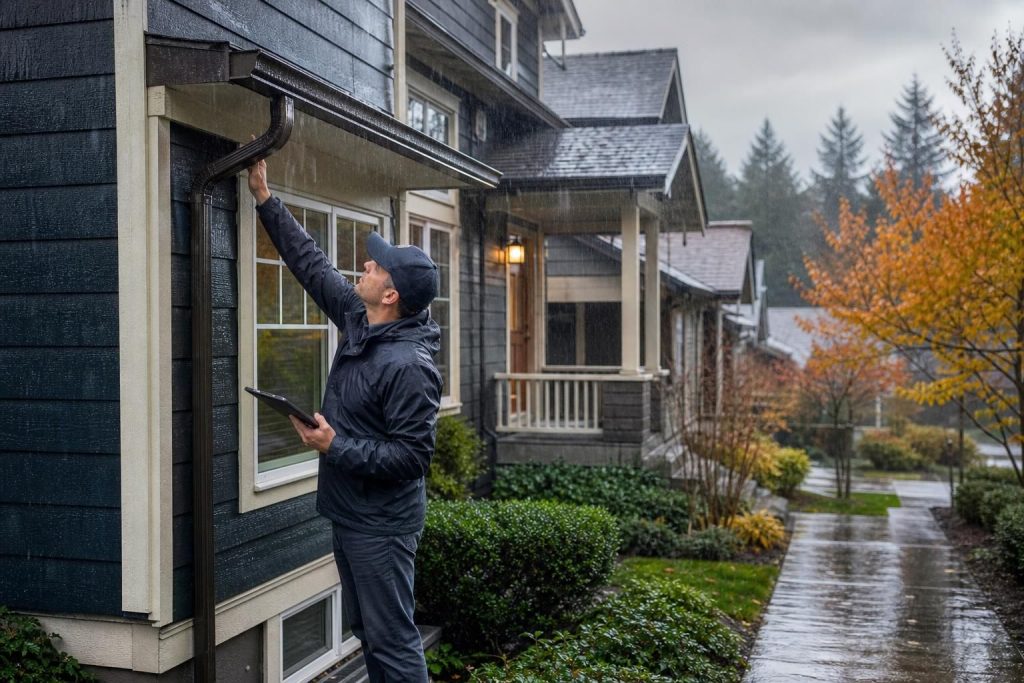
Sometimes the “failure” is overwhelmed drainage from gutters, downspouts, or grading sending water toward the house. For broader triage, see: what to do after floods.
What to Do Immediately When Your Sump Pump Fails
When your sump pump fails, prioritize safety and limit spread. Do not step into water near outlets, touch the pump with wet hands, or unplug cords on a wet floor.
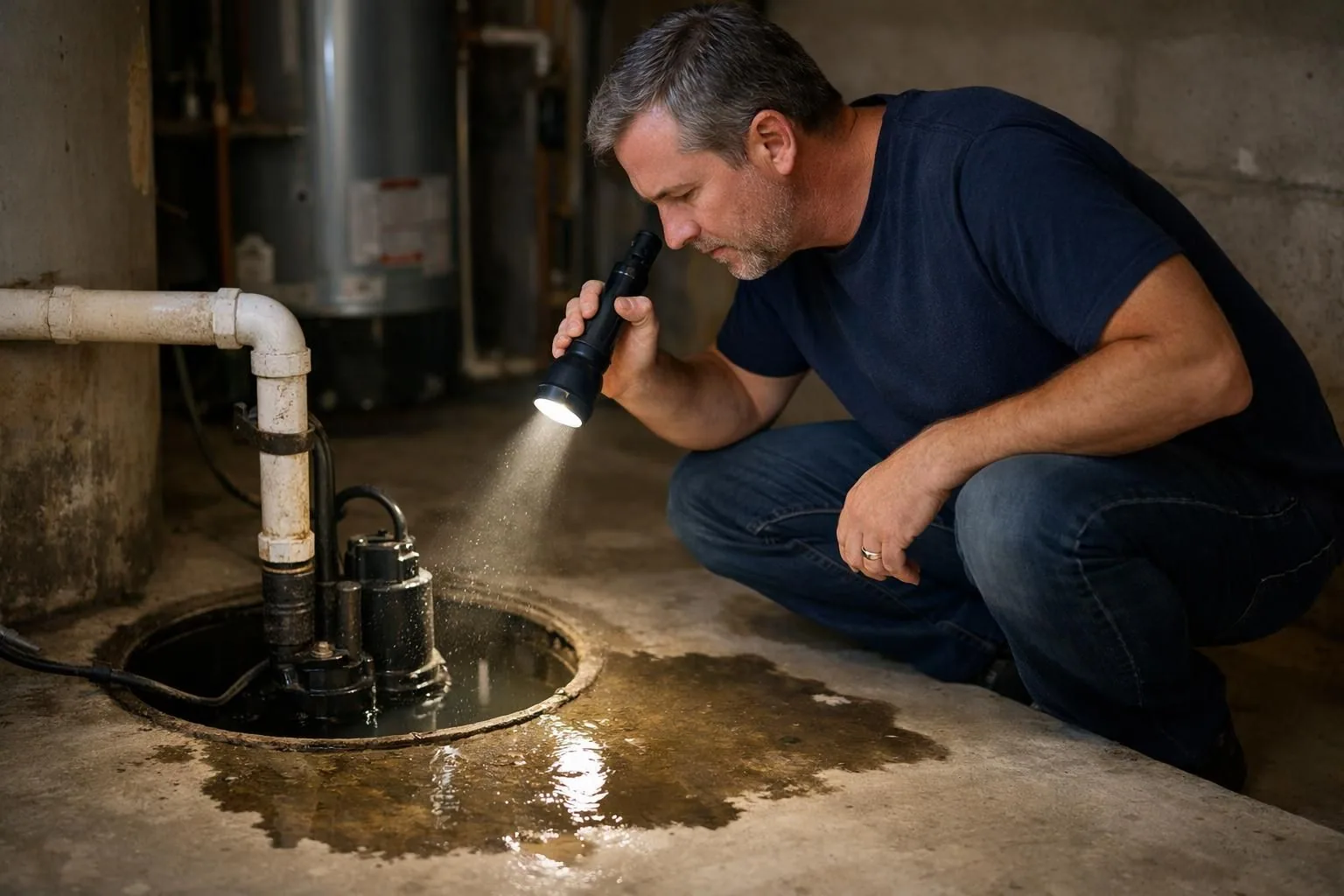
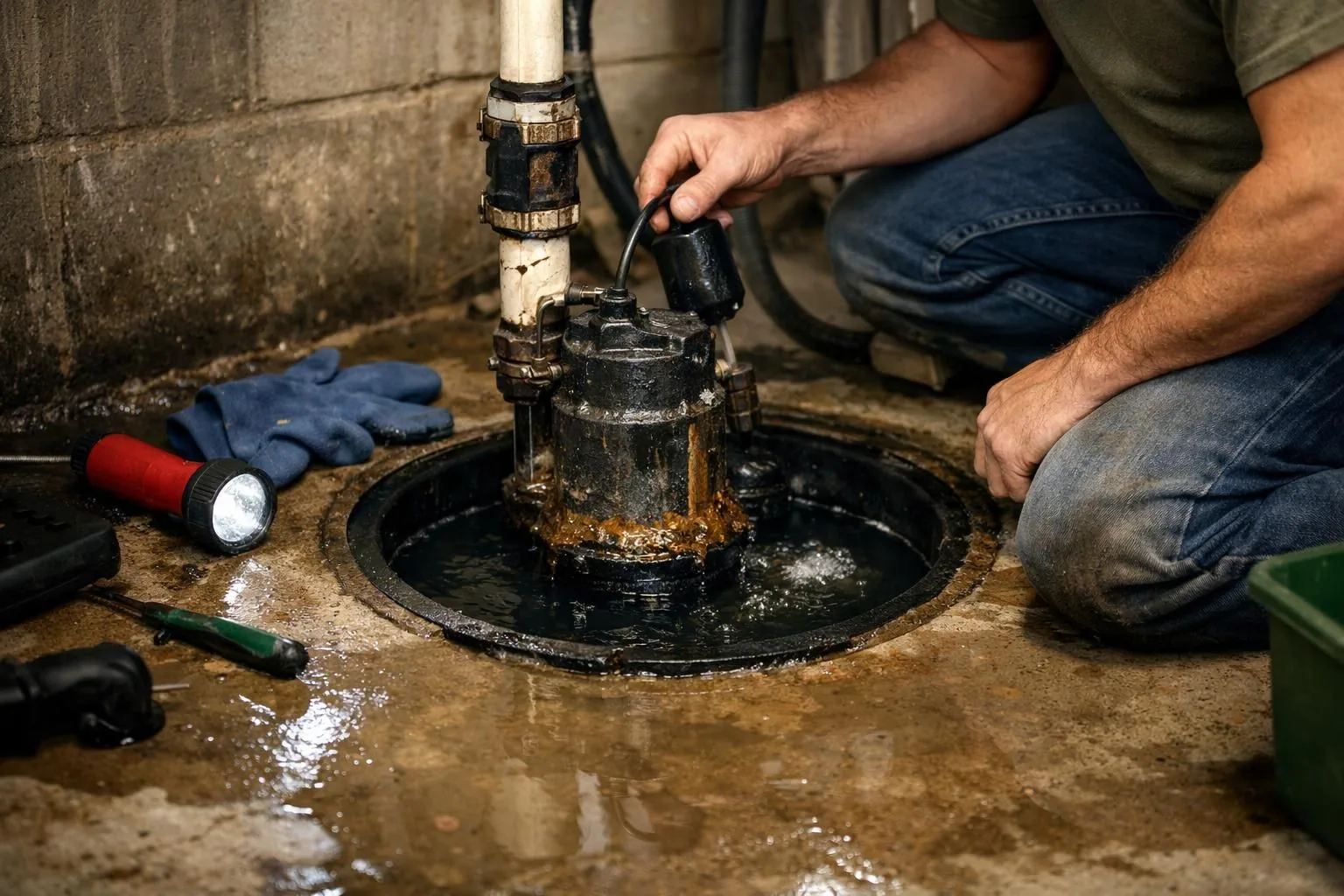
First, if water is near outlets or appliances, shut off basement power at the main panel only if you can reach it from a dry area. Then check simple power issues: a tripped breaker, tripped GFCI, or an unplugged cord. Next, check the float switch and cord; the float must move freely and not be pinned to the pit wall. Finally, check the discharge outside to confirm water is exiting and flowing away from the house.
If the pump hums but doesn’t move water, turn it off to prevent overheating. With power off, look for a clogged intake, a blocked check valve, or a frozen/blocked discharge line, and scoop obvious debris from the pit.
Then shift to damage control: move soft goods up, elevate furniture legs, remove standing water with a wet/dry vac only when power is safe, and run fans and a dehumidifier after electrical conditions are safe. Use this checkpoint: drywall water damage signs.
Does Homeowners Insurance Cover Sump Pump Failure
Homeowners insurance may cover sump pump failure, but it depends on the cause and your policy language. Many policies do not automatically cover basement flooding from sump overflow.
Coverage often hinges on a water backup or sump overflow endorsement. Without it, a flooded basement may be treated as an excluded backup event or a maintenance-related loss.
Rules of thumb:
- Sudden, accidental water damage may be covered, depending on the source.
- Groundwater intrusion and sewer or drain backup are often excluded without added coverage.
- Damage tied to lack of maintenance can be denied.
If you might file a claim, document before cleanup: take photos and video of water levels, the pit, the pump, and damaged items, and save receipts for emergency supplies and services. Don’t discard damaged materials until you confirm insurer requirements.
More background: homeowners insurance water coverage. Then review your declarations page and call your agent with the timeline and trigger.
How to Prevent Sump Pump Failure
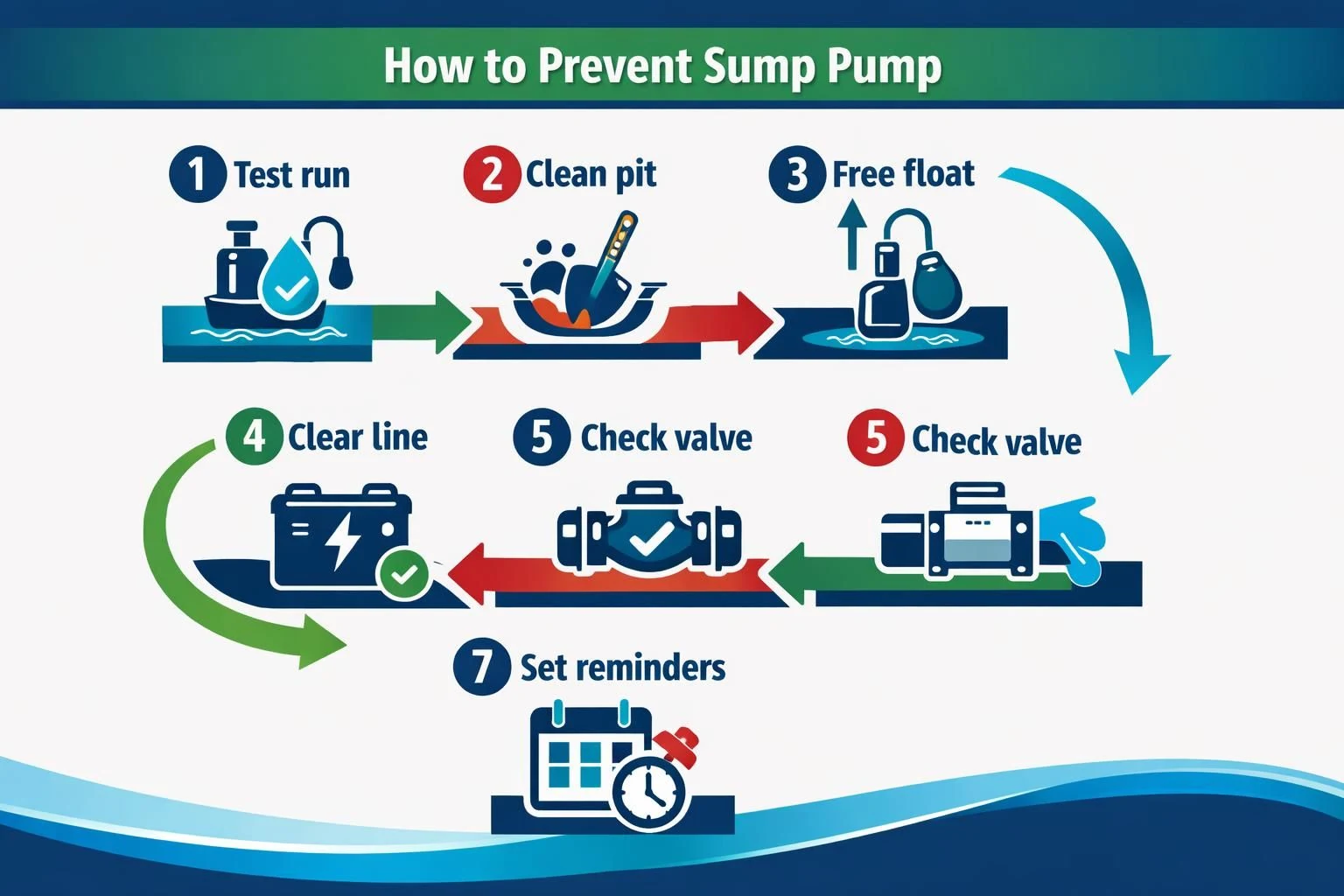
Prevent most sump pump failures by testing the system, reducing single points of failure, and managing water before it reaches the pit. The pump, pit, discharge line, and power all matter.
Test under load. Pour water into the pit until the float lifts, confirm the pump starts, discharges strongly, and shuts off normally, then verify outside that discharge flows away from the foundation.
Checklist:
- Verify the float moves freely and cords can’t snag it.
- Clean the pit and remove silt, stones, and sludge that clog intakes.
- Inspect the check valve and replace it if you notice backflow.
- Inspect the discharge line for cracks, leaks, loose fittings, and freezing risk.
- Plug into a proper outlet, not an extension cord.
- Add resilience with a battery backup or water-powered backup and a high-water alarm.
Also reduce inflow: clean gutters, extend downspouts, and correct grading so water slopes away from the house.
When to Call a Water Damage Restoration Company
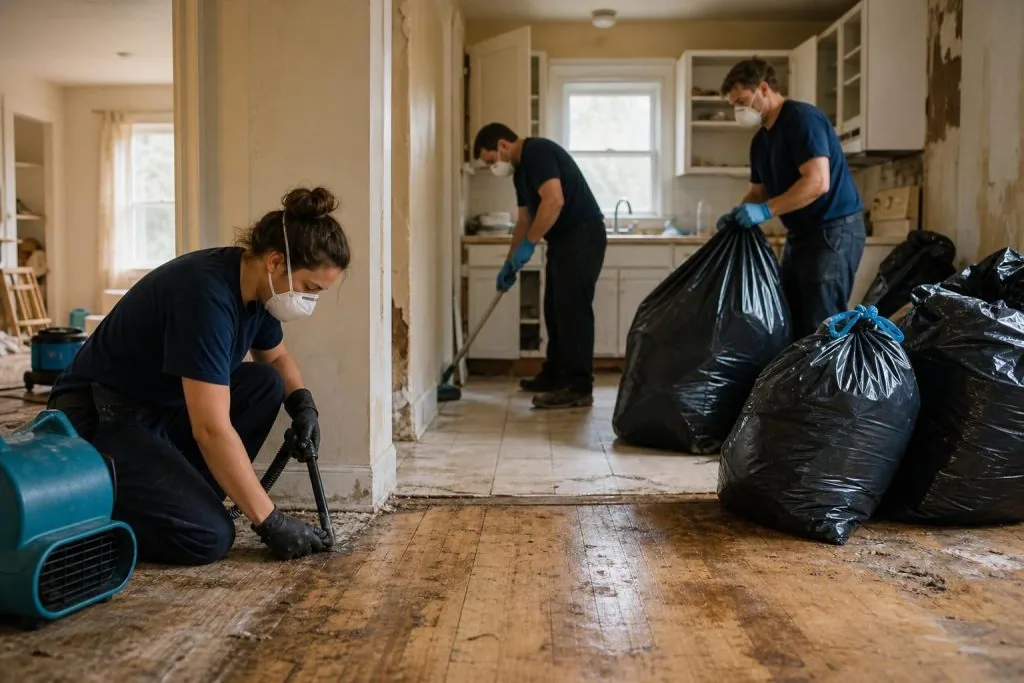
You should call a water damage restoration company when you can’t remove water and start drying fast enough to protect porous materials. The line is usually obvious in the moment: water is still spreading, the pump can’t keep up, or your drywall, insulation, and flooring are already soaked.
The reason to escalate isn’t panic, it’s physics. Once water wicks into wall cavities, under floating floors, or into subfloor layers, household fans often can’t dry it evenly. That’s when you get lingering odors, warped materials, and hidden damp spots that keep causing trouble.
A few clear “don’t DIY this” triggers:
- You have several rooms affected or water traveled under walls
- The water level reached outlets, appliances, or your electrical panel area
- You see bubbling, swelling, or soft spots in drywall or baseboards
- Wood flooring is cupping, lifting, or feels spongy underfoot
- The water looks dirty, smells off, or might include drain/sewer contamination
- You can’t restore sump function and keep the area dry within a few hours
FAQs
What to Do When Sump Pump Fails During a Storm?
Shut off basement power if water is near electrical, then check breaker, GFCI, and plug. Free a stuck float with power off. If it can’t pump, remove water and protect porous items.
Why is My Sump Pump Running but Not Pumping Water?
Usually the intake is clogged, the discharge is blocked or frozen, or the check valve is failing. Turn it off, clear debris, and confirm water exits outside. Replace if unresolved.
Will a Basement Flood Again After a Sump Pump Failure?
Yes, if the root cause remains, flooding can recur in the next storm. Fix the pump, then address discharge routing, exterior drainage, pit debris, and backup power.
Does Sump Pump Failure Insurance Require a Special Endorsement?
Often, yes. Many policies exclude water backup or sump overflow unless you add an endorsement. Confirm what triggered the flooding, then compare it to your declarations and endorsements.
How Do I Know if I Need to Remove Drywall After a Sump Pump Failure?
If drywall is wet at the bottom, soft, swollen, or stained, removal may be needed to dry the cavity. Surface dryness can fool you. Check moisture readings and behind baseboards.
Conclusion
A sump pump failure doesn’t have to turn into a full rebuild, but your first hour matters. Prioritize safety, restore pumping if it’s a simple power or float issue, and start controlled water removal and drying before moisture spreads into walls and floors. Then take a second pass at the “why” so it won’t happen again: discharge routing, pit maintenance, and backup power. If the basement flooded sump pump failure left saturated materials or the water moved fast, bringing in help early can save you from longer, messier drying problems later.