
Water near a light, outlet, appliance, or electrical panel needs a safety response before cleanup. This guide explains when to stay out, who to call, and why drying the building does not replace an electrical inspection.
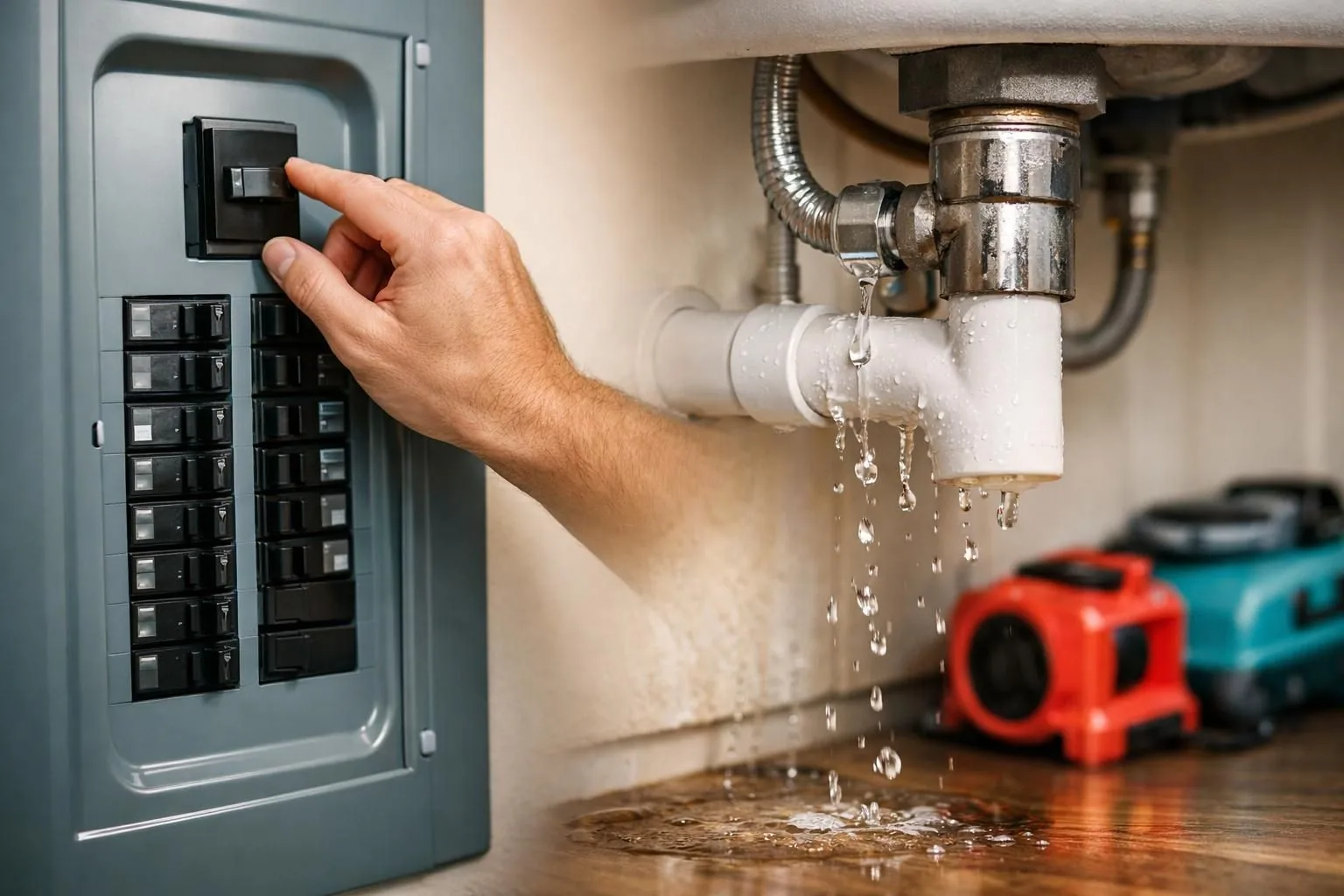
- Keep people out when water may have reached electrical equipment. Do not approach a wet panel; call for qualified help.
- Avoid touching wet switches, outlets, or plugged-in devices, even if they look fine.
- If you cannot reach the panel without stepping in water, do not attempt to shut off breakers yourself.
- Drying is not just about comfort; it reduces electrical hazards water damage can create behind walls and under floors.
- Call an electrician when wiring, outlets, breakers, or any electrical behavior seems abnormal after a leak.
Quick answer: when to shut off power and when to stay out
If water has reached electrical equipment, keep people away. Shut off power only when you can do so from a dry, safe position without touching wet equipment. If access is wet or you are unsure, stay out and call an electrician or your utility. A ceiling light leak is an electrical concern even when the floor looks dry.
If the leak has clearly stayed far away from electrical components, such as a small plumbing drip contained in a sink basin with no overflow, you may not need to shut off power. Even then, keep an eye on where water travels and be conservative. Water can wick along framing and reach an outlet or junction box later, especially in walls and floors.
Stay out and do not touch anything electrical if any of the following are true: you see standing water near outlets, you smell burning or hot plastic, you hear buzzing, or breakers trip repeatedly. In those cases, your priority is to prevent shock or fire, not to investigate.
Signs electricity is at risk (outlets, lights, appliances, panel)
Some warning signs are obvious, like a wet outlet, but others are subtle. Look for water staining or dampness around outlet covers, baseboards, and along the path the water likely took. If you are asking wet outlet what to do, the answer is: do not use it, do not plug anything in, and do not try to dry inside it with tools or cloths. Treat it as energized until power is off and it has been inspected.
Changes in lighting can also signal trouble. Flickering lights after a leak, lights that will not turn on, or lights that seem unusually bright can indicate water intrusion into fixtures or wiring. Appliances that were splashed or sat in shallow water may still run, but internal components can remain wet and unsafe.
Pay special attention to the electrical panel area. If there is any sign of moisture on the wall near the panel, water dripping nearby, or a damp floor where you would stand to open it, stop. Water near a panel increases the chance of shock. Also watch for tripped breakers you cannot reset or that immediately trip again, which can be a sign of a short caused by moisture.
When to stay away from the panel and call for help
Do not approach a wet panel, remove covers, test circuits, or rely on household shoes or gloves for protection. Ask a qualified electrician to isolate affected equipment and assess it before power is restored. For electrical shock, fire, or immediate danger, call 911.
What not to touch:
- Do not open the panel if the wall, panel cover, or floor in front of it is wet
- Do not reset a breaker that keeps tripping after the leak
- Do not handle wet extension cords, power strips, or plugged-in chargers
- Do not use a vacuum, shop vac, or pump that is not rated for wet use and properly protected
If you cannot safely access the panel, back away and contact your utility or an electrician for guidance. Safety beats speed.
What to do before entering a wet area
Before you step into any wet room, decide whether electricity could be present. Water can energize metal surfaces and wet flooring if a live conductor is involved. If there is standing water and you do not know whether power is off, do not enter. This is especially important in basements, laundry rooms, and kitchens where appliances and multiple circuits are common.
If you must approach the area to shut off water, do it from a dry path if possible. Shut off the water supply at a nearby valve or at the main water shutoff, again avoiding wet electrical switches. If the shutoff valve is in the wet area and you are not sure power is off, consider waiting and calling for help rather than risking entry.
Keep children and pets out. Do not assume a light switch being off makes the area safe. Leave electrical inspection and decisions about restoring power to a qualified electrician.
Safe drying steps that reduce electrical risk
Drying is part of electrical safety, not just cleanup. Moisture trapped in wall cavities, under floors, and around boxes and fixtures can keep creating electrical hazards water damage may leave behind. After power is off and the area is deemed safe to enter, start by removing as much water as you can without using unsafe equipment. Mopping and towels are safer than powered tools if you are uncertain about conditions.
Once an electrician has confirmed safe power and the area is safe to enter, controlled drying can begin. Do not use fans where mold or contaminated water may be present. A restoration assessment can identify wet materials behind the visible surface and plan appropriate drying.
Helpful steps that are generally safer:
- Unplug devices only after power is confirmed off, then move them to a dry area
- Elevate cords and keep power strips off the floor in adjacent dry spaces
- Pull furniture slightly away from walls to allow air circulation
- Monitor for lingering dampness near outlets, behind appliances, and under sinks
Have water-exposed electrical equipment inspected before restoring power. See the CDC guidance on electrical hazards after water damage.
When to call an electrician vs a restoration pro
Call an electrician when the leak involves electrical components or behavior changes, or when you cannot confidently make the area safe. Common triggers include wet outlets or switches, water contact with appliances, ceiling leaks near light fixtures, buzzing sounds, scorch marks, frequent breaker trips, or any moisture around the panel. If you are wondering when to call electrician after a leak, a good rule is: if electricity might have been touched by water, get it checked before turning power back on.
After electrical safety is addressed, water damage restoration focuses on extraction, hidden moisture, controlled drying, and affected materials. Restoration work does not replace an electrician’s inspection or authorization to restore power.
In many real-world leaks, you may need both. Electricians address safety and code-compliant repairs. Restoration pros address moisture management and material recovery. Coordinating early can shorten downtime and reduce the temptation to turn things back on too soon.
What to document for insurance

Good documentation helps you communicate the cause and scope of the loss clearly, whether you are filing a claim or just keeping records for repairs. Start as soon as it is safe, and prioritize photos before you move items or begin significant cleanup. Capture the source of the leak if visible, the path the water took, and the highest water line on walls or furniture.
Document damage in a structured way so nothing gets missed. Photograph each affected room from multiple angles, then take close-ups of specific items like flooring edges, baseboards, cabinets, and any visible moisture near outlets or fixtures. Record the make and model of damaged appliances if you can do so safely and without moving wet electrical items.
Also keep a simple written log:
- When you discovered the leak and what you did first (water shutoff, power shutoff)
- Which circuits you turned off and whether any breakers were tripped
- Drying actions taken (fans, dehumidifier, removal of wet materials)
- Names of any professionals contacted and what they advised
Avoid throwing away damaged items until you have documented them, unless they present a safety or sanitation risk.
How to reduce future risk (GFCI, leak alarms, maintenance)
Reducing risk means addressing both water control and electrical protection. In areas where moisture is common, GFCI protection is a key upgrade because it is designed to trip quickly when it senses current leakage, lowering shock risk. If you have older outlets near sinks, laundry areas, garages, basements, or exterior locations, ask an electrician about bringing protection up to current expectations.
Leak alarms and smart water sensors can alert you early, before water reaches outlets or wiring. Even simple battery-powered alarms placed under sinks, behind toilets, near water heaters, and near washing machines can buy you time. Pair that with periodic maintenance: inspect supply hoses, replace worn shutoff valves, clear appliance drain lines, and watch for slow drips that can soak walls over time.
Practical habits also matter. Keep power strips off the floor, avoid running extension cords under rugs, and learn where your main water shutoff and electrical panel are so you can act calmly. Prevention is rarely dramatic, but it is effective.
Conclusion
Keep people out of wet electrical areas, get qualified help, and address drying only after the hazards are controlled. A dry-looking wall or working light is not proof that water-exposed wiring or equipment is safe.