
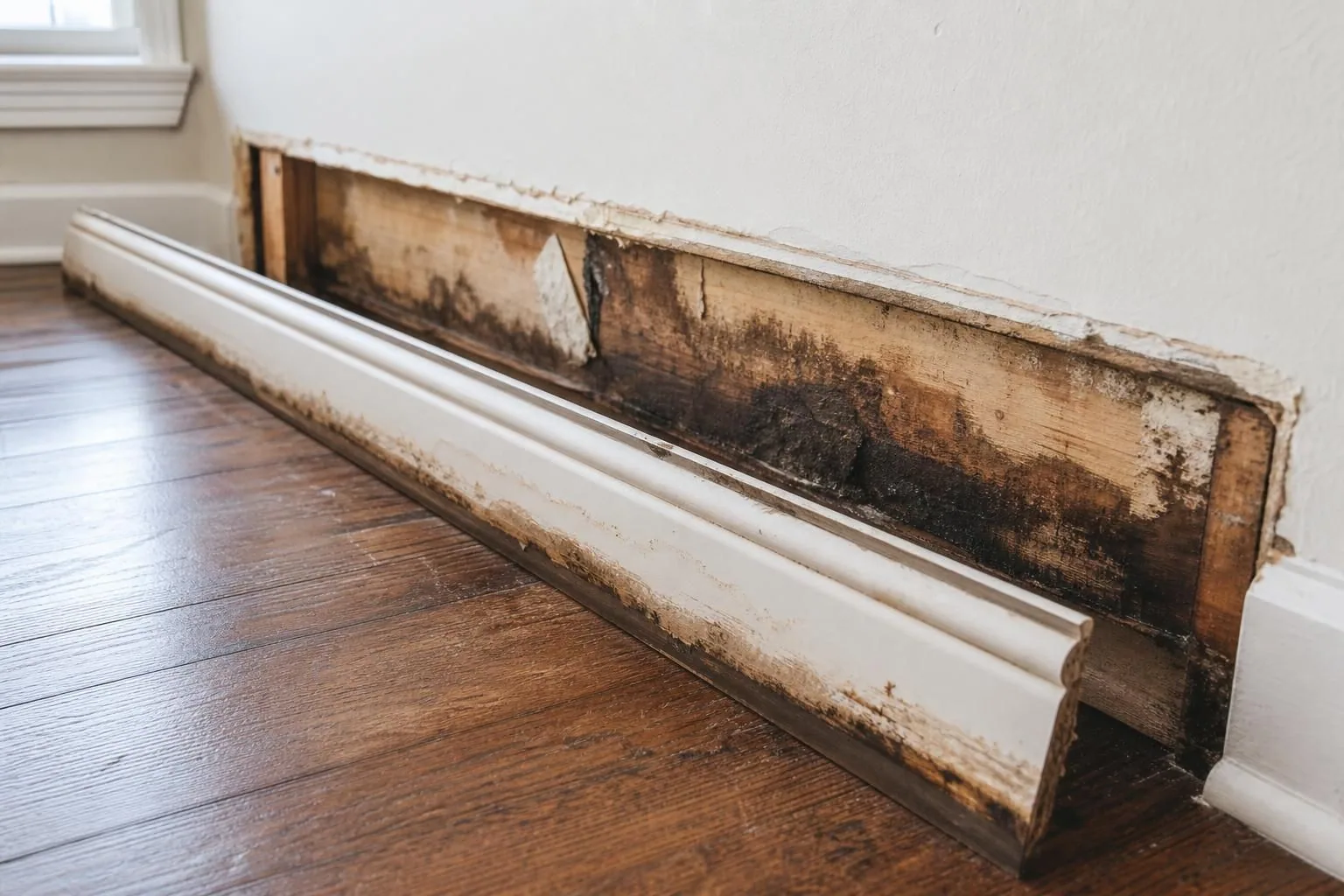
Swollen, stained, separating, or damp baseboards often mean water has reached more than the painted trim. It may be sitting at the floor-wall joint, soaking the drywall edge, or hiding in the wall cavity behind the trim.
If you see wet baseboards after a bathroom, kitchen, dishwasher, washing machine, or supply-line leak, start small:
- Stop the water source if you can.
- Look for bubbling paint, gaps, soft drywall, musty odor, or stained flooring nearby.
- Press gently along the trim and lower wall. Don’t pry yet if it feels mushy or the leak is still active.
A baseboard can look dry on the surface while cupping, swelling, or paint bubbles point to trapped moisture. For more clues beyond trim, see signs of hidden water damage.
Quick Answer
Swollen, stained, wet, or separating baseboards usually mean moisture has reached the lower edge of the wall. That might be limited to the trim. But it can also mean water is sitting behind the baseboard, soaking into the drywall edge, or trapped inside the wall cavity, which is the hollow space behind the wall surface.
- Stop the water source if you can. Check nearby sinks, toilets, tubs, dishwashers, washing machines, supply lines, exterior walls, basement edges, or slab edges.
- Look for clues around the trim. Watch for paint bubbles, brown stains, gaps between trim and wall, cupping, swelling, or soft drywall just above the baseboard.
- Smell the area. A small stain plus a musty odor is a stronger clue that moisture is hidden behind the trim.
- Press gently near the bottom of the wall. Don’t force it. If the drywall feels soft, crumbly, or damp, stop poking.
- Don’t caulk, repaint, or reinstall trim until the area is confirmed dry.
If the leak is active, the area is widespread, or the wall feels soft, it’s safer to call restoration company before opening more of the wall.
Why Baseboards Reveal Hidden Water Damage
Baseboards are early warning strips because they sit exactly where water likes to settle: the floor-wall joint. If a dishwasher line leaks, a toilet supply drips, or moisture seeps in along a basement slab edge, water often runs behind the trim before you see anything higher on the wall.
Think of the baseboard like the shoreline after a small flood. The wall may look fine at eye level, but the bottom edge can absorb moisture, trap it, and show changes first. Painted trim can also hide wet wood or medium-density fiberboard underneath, so the surface may feel dry while swelling or cupping tells a different story.
| Visible clue | What it can mean | Best next check |
|---|---|---|
| Swollen or cupped trim | Water absorbed into the baseboard | Look for nearby leak sources |
| Gap between trim and wall | Drywall edge or trim has moved | Smell and press gently above it |
| Brown stain near floor | Moisture wicked upward | Check flooring and wall bottom |
| Paint bubbling on trim | Moisture trapped under paint | Don’t repaint until tested dry |
A bathroom leak might leave swollen baseboards and soft drywall at the bottom of the wall. A washing machine leak can send water behind trim on the other side of the room.
Signs Water is Behind the Trim or Drywall
Look for combinations, not just one mark. A single scuff on a baseboard may be normal wear. A small stain plus a musty smell or a new gap at the wall is different. That pattern can mean moisture is sitting behind the trim or soaking into the bottom edge of the drywall.
- Wet or cool trim: Touch the baseboard with the back of your fingers. If it feels damp, cool, or different from nearby trim, check the leak source first.
- Swelling or cupping: A baseboard that bows outward, looks puffy, or has rounded edges after a recent leak may have absorbed water from behind.
- Peeling paint or bubbling: Paint can lift when moisture is trapped under it. Don’t scrape and repaint yet.
- Gaps at the wall or floor: Trim can pull away when drywall, flooring, or the baseboard itself swells.
- Soft drywall above the trim: Press gently, not hard. If it dents easily near the floor, water may have wicked upward.
- Musty odor: A musty smell near one section of trim can point to hidden dampness even if the surface looks dry.
- Stains along basement or slab-edge walls: Brown marks or separating trim can come from moisture collecting where the wall meets the floor.
Should You Remove the Baseboard?
Removing one short piece of baseboard can be useful, but don’t start prying off trim just because you see one stain. The goal is to confirm whether moisture is trapped behind the trim without turning a small inspection into avoidable damage.
Use this quick decision check:
- Leave it in place if the mark is small, dry, and the wall feels firm. Monitor the spot, check for a nearby source, and avoid caulking or painting until you’re confident no moisture is returning.
- Inspect more closely if the baseboard is cupped, swollen, paint is bubbling, or there’s a gap at the wall. Check the nearby floor, the other side of the wall, and any bathroom, kitchen, dishwasher, washing machine, or supply-line connection nearby.
- Remove a small section only if the trim is already loose, wet, or separating and you can do it gently with a utility knife and pry bar. Score the caulk line first so you don’t tear the drywall paper.
- Stop and call a restoration pro if drywall is soft, water is active, the area smells musty, or several feet of trim are affected. Those are stronger hidden-water clues
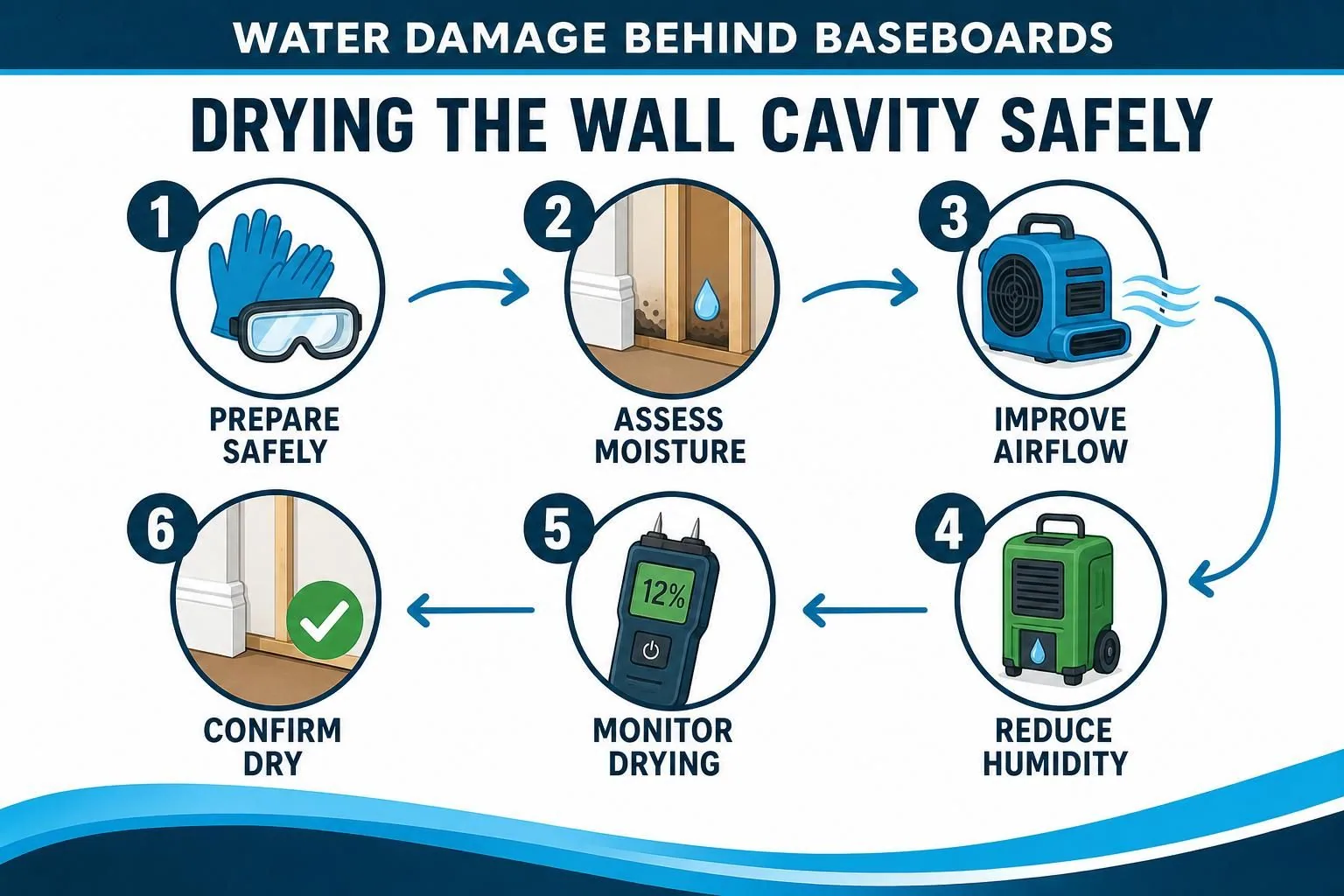
Drying the Wall Cavity Safely
Drying isn’t just “point a fan at the baseboard.” If water has slipped behind the trim, the front surface can feel dry while the drywall edge, bottom plate, or wall cavity stays damp, so knowing how long to dry a wall can help you avoid closing it up too soon.
- Stop the water source first. Shut off the supply valve, stop using the leaking dishwasher or washing machine, or block seepage where it’s safely possible. Drying won’t work while water is still entering.
- Keep the area open if trim was removed. Don’t caulk, repaint, or reinstall the baseboard yet. That can trap moisture inside the wall, like putting a lid on a wet container.
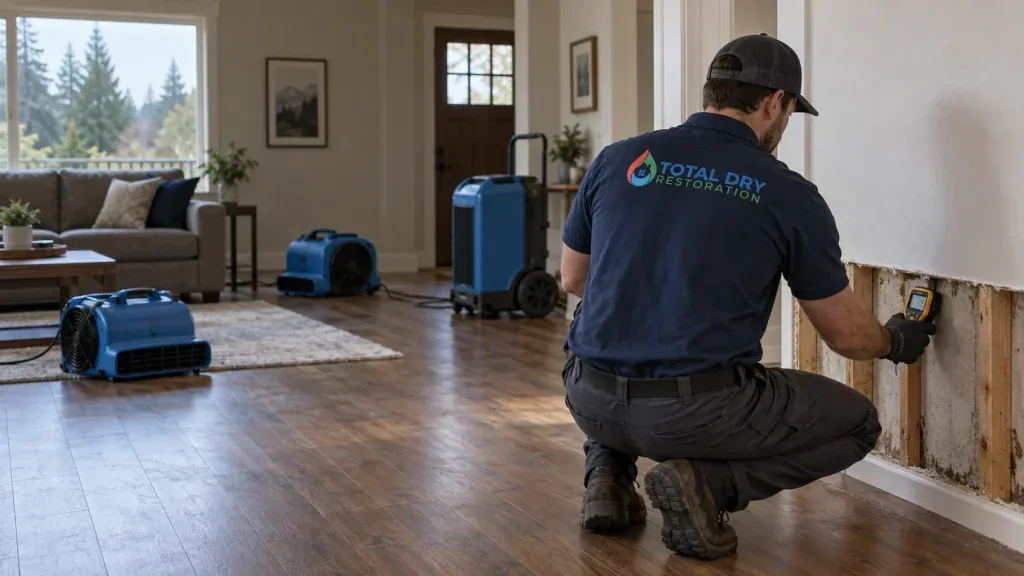
- Use controlled airflow and dehumidification. Air movement helps moisture leave the exposed edge. A dehumidifier pulls that moisture out of the air so it doesn’t settle back into the wall or flooring.
- Check nearby materials. Look at the flooring edge, drywall bottom, and back of the baseboard. Swelling, crumbling drywall, or a musty smell means the problem may be deeper than the trim.
- Call for help if moisture appears widespread. A restoration technician can use moisture meters and drying equipment to check inside the wall without unnecessary demolition.
Mold and Repair Considerations
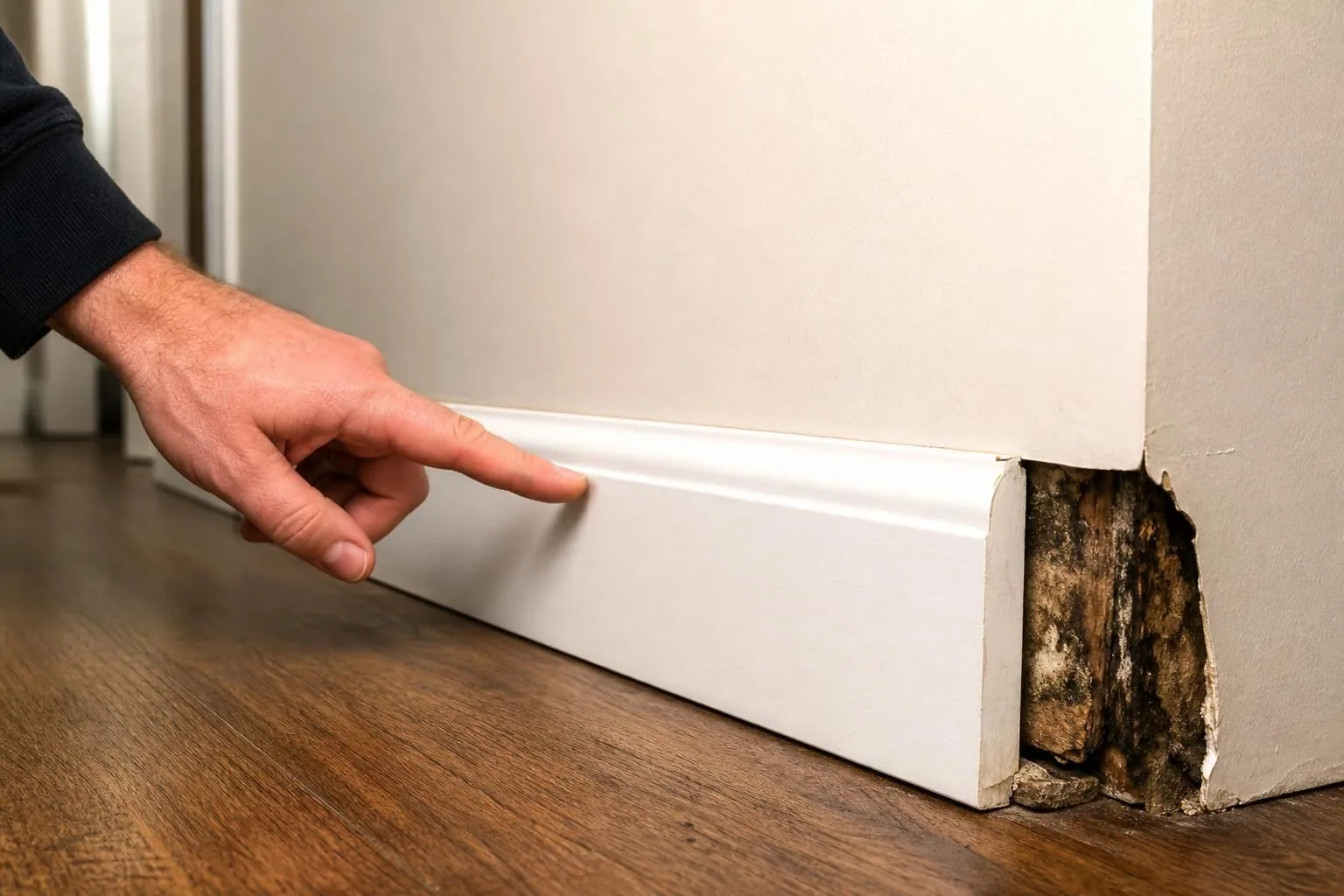
Mold doesn’t automatically appear every time a baseboard gets wet. But trapped moisture behind trim creates the kind of dark, low-airflow space where mold can grow if the area stays damp.
Don’t judge by the front of the baseboard alone. A painted baseboard can feel dry while the back side, drywall paper, or bottom plate inside the wall is still wet. Think of it like a damp towel folded in a drawer: the outside may feel okay, but the inside can stay wet much longer.
Before repairing anything, confirm the area is dry. That means no musty smell, no soft drywall edge, no bubbling paint, and ideally a moisture check with a meter if the leak was more than minor.
Watch for these repair clues:
- Baseboard only: Light staining or slight swelling may mean trim replacement is enough after drying.
- Drywall edge damage: Crumbling, softness, or peeling paper usually means the lower drywall section needs attention.
- Repeated swelling: If the baseboard swells again, the water source probably wasn’t fixed.
Don’t caulk, repaint, or reinstall trim to “seal it up” before moisture is gone. That can trap water inside the wall. For next-step repair planning, see water damage wall repair.
FAQs
Can Baseboards Look Dry but Still Hide Water?
Yes. Paint can feel dry while the back of the trim, the bottom edge of drywall, or the gap behind the baseboard stays damp. Cupping, swelling, bubbling paint, or a musty smell after a leak are better clues than surface touch alone.
Should I Pull Off All the Baseboards?
No. Start small. Check the stain, press gently on the lower wall, smell for mustiness, and look at nearby flooring. If one area is suspicious, removing a short loose section may help you inspect. Stop if drywall crumbles, the trim is heavily swollen, or water keeps appearing.
Can I Just Paint Over Stained Baseboards?
Don’t paint or caulk until the moisture source is fixed and the area is confirmed dry. Covering the stain can trap dampness behind the trim. That’s how a small baseboard issue can turn into hidden drywall or cavity damage.
When Should I Call a Restoration Professional?
Call if the wall feels soft, the leak came from a dishwasher, washing machine, bathroom supply line, basement seepage, or slab edge, or the odor won’t go away. A pro can check moisture behind trim without guessing.
Conclusion
Swollen trim, stains, gaps, bubbling paint, soft drywall edges, or a musty smell all point to the same question: is moisture trapped behind the baseboard? If the mark is small, the wall is firm, and the leak source is fixed, start with a careful visual check and moisture monitoring.
Remove only a short section of trim if you need to inspect safely. Stop and call a restoration professional if the wall is soft, the odor lingers, or the leak involved plumbing, appliances, basement seepage, or a slab edge. The safest next step is to confirm the area is truly dry before repainting, caulking, or reinstalling trim.