Hidden leaks rarely announce themselves. They quietly soak drywall, swell wood, and feed mold until a “small issue” turns into a messy repair. That’s why knowing the signs of hidden water damage matters, even if your home looks fine on the surface. In this guide, you’ll learn the hidden water damage signs people miss most, how to check for hidden water damage behind walls, and where to look under floors and in ceilings. And if you do spot a problem, you’ll know what to do next so it doesn’t spread.
Best for: Homeowners noticing odd smells, stains, warping, or sudden humidity changes and wanting to confirm a hidden leak quickly.
Not ideal when: You suspect sewage, contaminated water, or widespread mold because DIY inspection can spread contaminants and miss risks.
Good first step if: Your water bill jumped or you see a localized stain, soft spot, or bubbling paint with no obvious source.
Call a pro if: You find active dripping, sagging ceilings, wet electrical areas, or repeated moisture readings that don’t dry out.
Quick Summary
- Hidden leaks damage framing and finishes long before you see obvious puddles.
- The clearest clues are staining, paint changes, odors, and localized warping or softness.
- Checking behind walls means looking for patterns, then confirming with touch, light probing, and a moisture meter.
- Floors and ceilings often show “secondary” symptoms, like cupping, squeaks, or sagging away from the true leak source.
- Fast action is about stopping the water, drying thoroughly, and documenting what you find.
Why Hidden Water Damage is so Dangerous
Hidden water damage is dangerous because it keeps working even when your home looks “fine.” Moisture trapped in wall cavities, under flooring, or above ceilings breaks down materials and creates mold-friendly conditions without leaving obvious puddles.
First is structural and finish damage. Drywall can soften and crumble, wood swells and weakens, and metal fasteners corrode. Over time you may notice loose tile, warped trim, separating caulk, or floors that feel unstable. Water can also travel along framing and subfloors, so the visible damage may appear far from the leak.
Second is air quality risk. Mold and other microbial growth need moisture and something to feed on, like drywall paper, dust, or wood. If you notice persistent musty odor in one area, recurring condensation, or allergy-like symptoms that improve when you leave the house, treat it as a signal to investigate, not something to cover up with fragrance or a dehumidifier alone.
Third is financial risk. Slow leaks often stay unnoticed until the repair scope suddenly expands into drywall removal, flooring replacement, or mold remediation. Document what you see early in case you need to speak with a contractor or insurer. If you’re unsure how coverage typically works, water damage insurance basics can help you plan what information to collect.
Top Signs of Hidden Water Damage
The top signs of hidden water damage are changes in surfaces, textures, and smells that don’t match normal aging, especially when they return after a paint job or minor patch. Look for patterns: stains that grow, a wall that feels different in one spot, or odors that linger.
Start with what you can see. Water staining is often irregular, with streaking, uneven edges, or a “shadow” that slowly spreads. Compare the symptom location to plumbing runs, bathrooms, kitchens, laundry areas, exterior walls, windows, and doors.
Common hidden water damage signs to take seriously include:
- Discoloration: yellow, tan, or brown stains on ceilings, walls, baseboards, or around windows.
- Bubbling, peeling, or cracking paint and wallpaper that looks blistered or loose.
- Soft or spongy drywall when pressed gently with fingertips.
- Warped trim, swollen baseboards, or caulk lines pulling apart.
- Musty or earthy odor that concentrates in a room, closet, or cabinet.
- Rust on corner beads, nail pops, or fasteners showing through paint.
- Floors that cup, crown, buckle, or feel uneven.
- Localized humidity spikes or condensation that keeps returning.
- Unexplained pests drawn to damp wood or voids.
Treat “cosmetic” changes as diagnostic clues. Bubbling paint on an interior wall can indicate water damage behind walls from a bathroom supply line, a pinhole leak, or a shower pan problem. If symptoms point to a bathroom zone, leaking shower warning signs can help you narrow likely causes before opening anything up.
Also watch your utilities. A higher water bill, a water meter that moves when all fixtures are off, or the sound of running water with nothing on are strong indirect signs. They do not locate the leak, but they tell you a targeted search is worth it.
How to Check for Water Damage Behind Walls
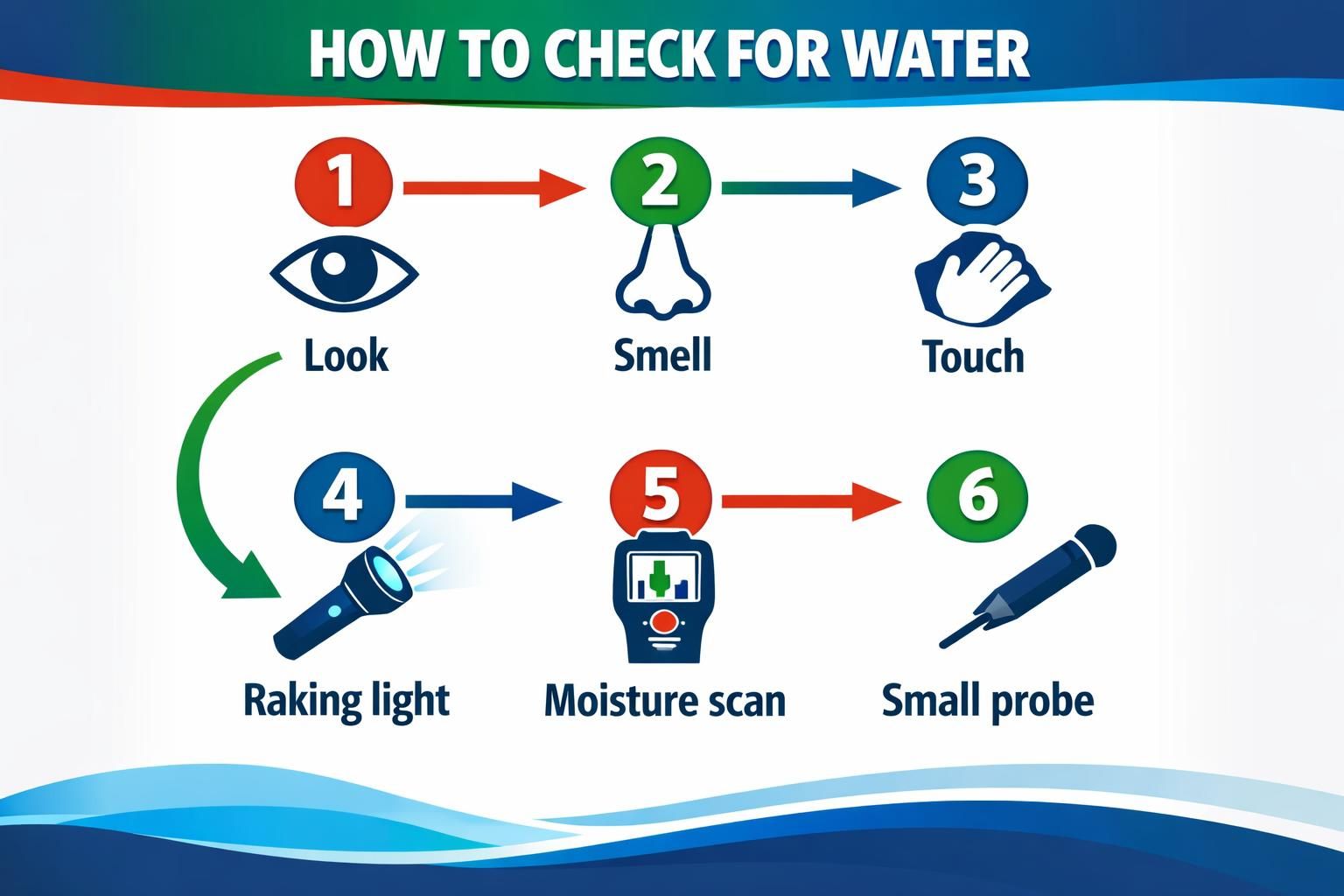
To check for water damage behind walls, confirm moisture with minimal disruption. A layered approach works best: look, smell, feel, measure, then consider a small access point if evidence is strong.
Start by narrowing the likely source. Supply lines, drains, and fixtures are common, but exterior intrusion matters too. Stains near windows can be flashing, caulk, or siding issues, while low-wall staining can come from slab leaks, baseboard-level pipes, or water wicking up from a wet floor.
Use this practical sequence:
- Visual scan: staining, texture shifts, swollen seams, or baseboards separating.
- Smell test: closets, behind furniture, inside cabinets, near HVAC returns.
- Touch: compare temperature and firmness to surrounding areas.
- Gentle pressure: press lightly; do not puncture drywall.
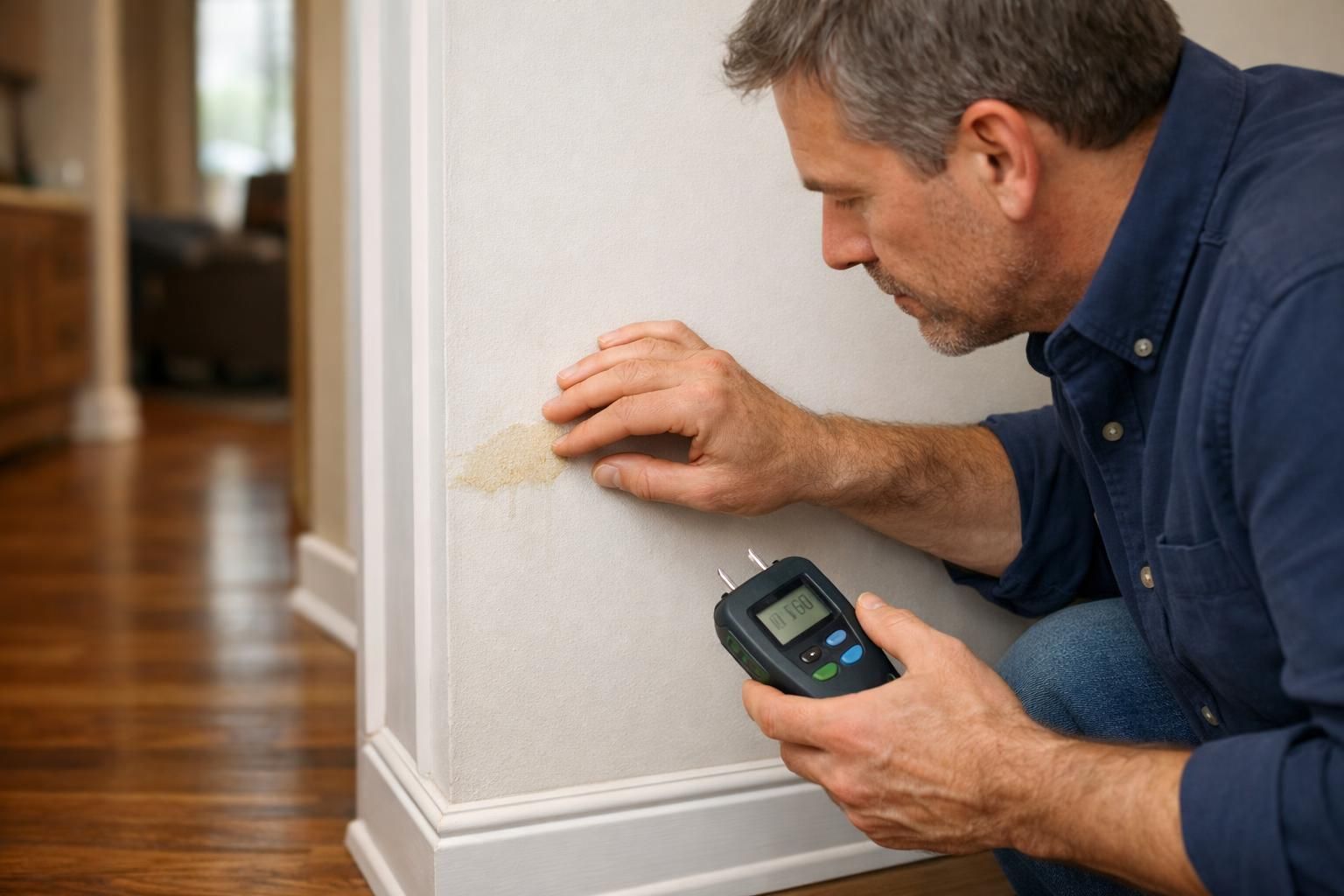
- Moisture meter: compare the suspect spot to a known dry area.
- Thermal cues: an infrared thermometer may show differences, but it is not proof by itself.
If signs strongly suggest water damage behind walls, keep the next step controlled. A small inspection hole near the baseboard is easier to patch and can reveal wet insulation or damp framing. Avoid cutting near outlets, switches, or where wiring is likely. If you suspect wet electrical components or anything feels unsafe, stop and call a pro.
What “active” vs “old” Damage Looks Like
Active damage changes. Stains expand, paint continues to bubble, and moisture readings stay elevated or increase across 24 to 48 hours. Old damage is typically stable: no odor, normal moisture readings, and no continuing changes, even if a stain remains visible.
Be cautious with intermittent leaks. Some only occur during shower use, appliance drain cycles, or wind-driven rain. If readings are borderline, re-check after using nearby fixtures or after storms to catch the problem in the act.
Common Wall-cavity Leak Sources You’ll Miss at First
Hidden leaks often seep rather than drip. Slow supply-line leaks, failed grout letting water behind tile, and HVAC condensation are frequent culprits.
Common sources include:
- Toilet supply lines and shutoff valves inside vanity cabinets.
- Tub/shower penetrations and escutcheons that are not sealed.
- Dishwasher supply and drain connections under the sink. dishwasher leak cleanup steps
- Refrigerator water lines behind the appliance. refrigerator line leak clues
- Water heater fittings and overflow pans that are not draining. water heater leak cleanup.
How to Check Under Floors and in Ceilings
Checking under floors and in ceilings is about how water changes the way materials sit, sound, and move. Floors may show early, subtle symptoms, while ceilings may show later but can become urgent quickly.
For floors, focus on edges and transitions near dishwashers, refrigerators, toilets, tubs, and exterior doors. Water can travel under the finished layer along underlayment or subfloor. Walk slowly and note soft spots, bounce, new squeaks, or areas that feel colder. Look for baseboard swelling, gaps, or staining that appears to start at floor level.
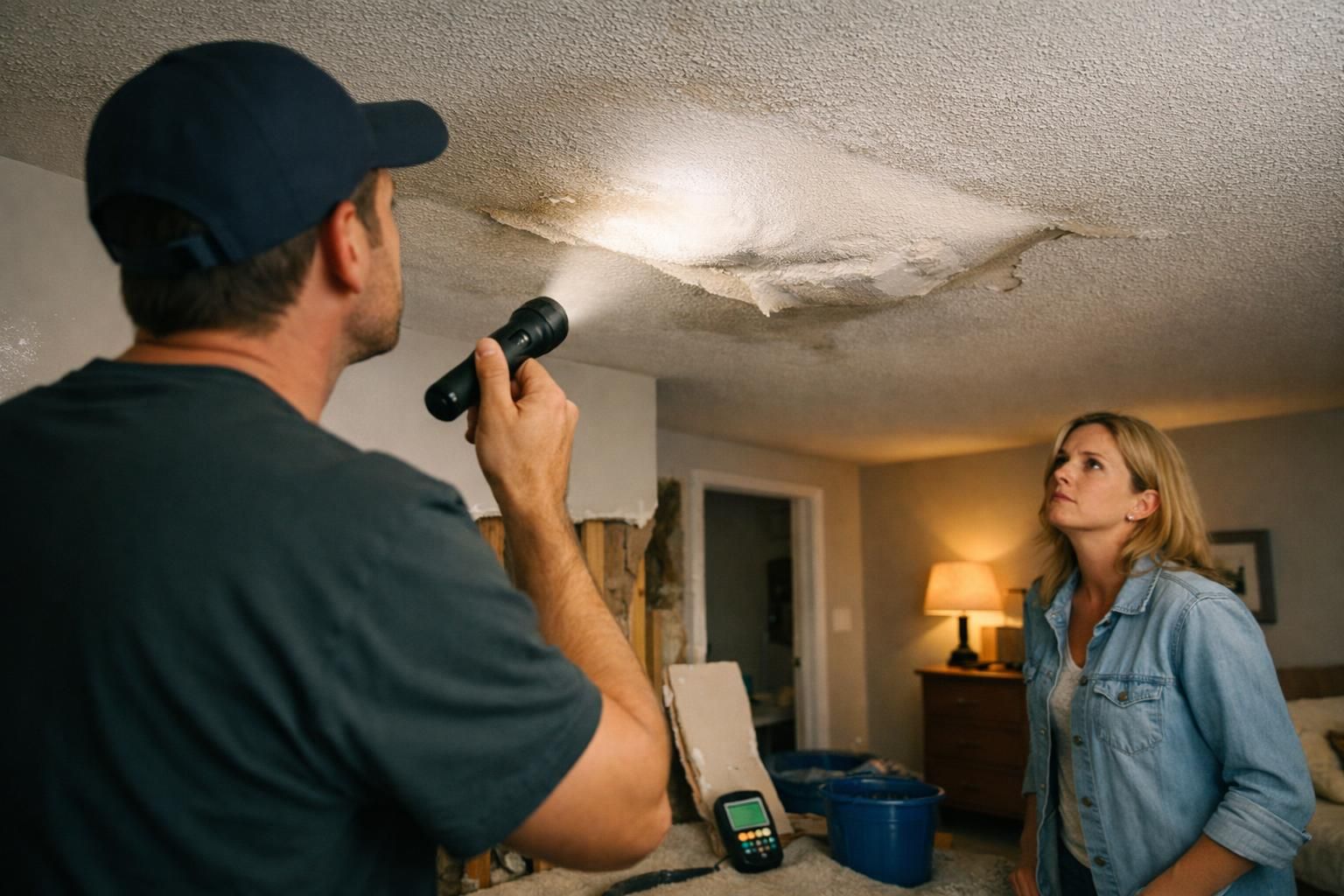
For ceilings, watch for sagging, spreading cracks, or a surface that feels spongy. Do not press hard. A sagging ceiling can fail once drywall becomes saturated. If water likely comes from above, check the plumbing overhead, bathroom layout, and attic penetrations. If you see dripping or bowing, prioritize safety and shut off water if plumbing may be involved.
Flooring-specific Clues: Hardwood, Laminate, Tile, and Carpet
Different flooring shows moisture differently. Hardwood often cups (edges rise) or crowns (center rises). Laminate swells at seams or feels “crunchy.” Tile may look fine while the subfloor softens, until grout cracks or tiles loosen. Carpet can hide moisture, so rely on odor, tack strip rust, or padding that feels damp.
If you’re concerned about wood, wood floor damage symptoms can help you tell surface movement from deeper subfloor damage.
Attic and Ceiling Cavity Checks That Actually Help
The most effective ceiling check is often from above. If you have attic access, look for darkened wood, compressed insulation, rusty nails, or dampness around vents and plumbing penetrations. Use a flashlight at a low angle to spot sheen on wet surfaces.
Remember water can travel before it shows up. A roof leak may stain drywall several feet from the entry point, and a bathroom fan duct can drip condensation that mimics a roof issue. When you find staining, map what is above and upslope, not only what is directly overhead.
What to Do if You Suspect Hidden Water Damage
If you suspect hidden water damage, focus on stopping the source, limiting spread, starting controlled drying, and documenting what you see. The biggest mistake is painting over symptoms or waiting because the area seems dry today.
Start with containment and confirmation:
- Shut off the nearest fixture supply, or the home’s main water if you cannot identify the source.
- If a drain or appliance is involved, stop using it until connections are inspected.
- Take clear photos of stains, warped materials, and any meter or moisture readings.
- Move belongings away and protect nearby areas from drips.
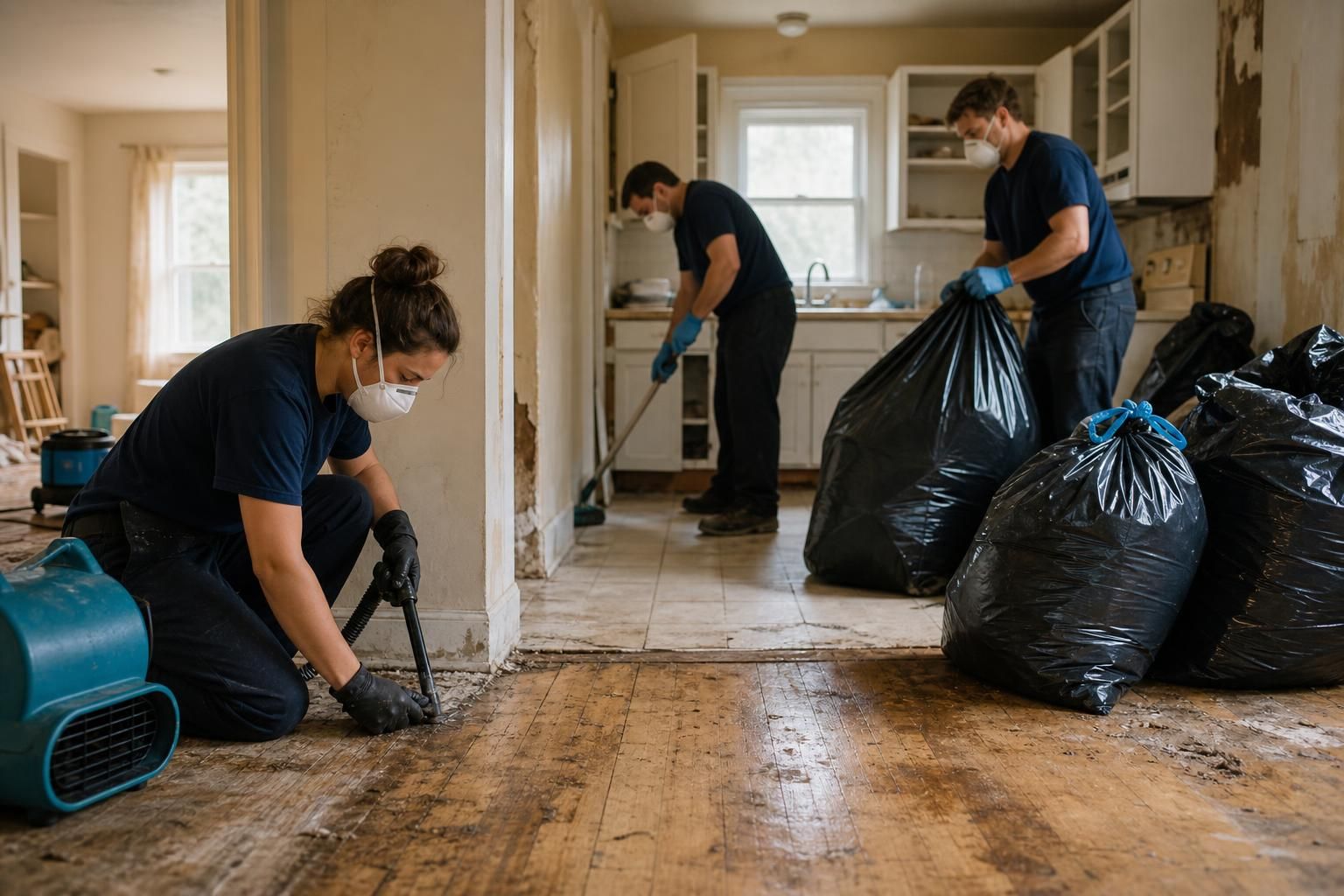
Then dry strategically. Fans can help, but trapped moisture in cavities may require dehumidification and, in some cases, removing wet materials. Insulation can hold water and keep re-wetting framing. For a practical approach to priorities, stop damage from spreading explains how to separate stopping, containing, and cleaning.
FAQs
What Are the Earliest Signs of Hidden Water Damage?
Early signs are often odor and subtle texture changes: a persistent musty smell, slightly bubbling paint, or drywall that feels cool or soft in a small area. Minor baseboard swelling and tiny stains that slowly widen are also common early warnings.
How Do I Know if There’s Water Damage Behind a Wall Without Cutting it Open?
Combine visual clues (staining, bubbling paint, separating baseboards) with moisture meter comparisons between the suspicious spot and a known dry area. If readings remain high over time or odor persists, a small inspection hole can be a reasonable next step.
Can Hidden Water Damage Come From Condensation, Not a Leak?
Yes. Poor ventilation, sweating cold-water pipes, and HVAC drain issues can create enough ongoing moisture to damage drywall and framing. Condensation often appears seasonally or after repeated long showers.
What Should I Do First if I Find a Wet Ceiling?
Treat it as a safety issue. Keep people out from under the area, shut off water if plumbing may be involved, and avoid using lights or touching fixtures near the wet zone. Document what you see, then identify the source quickly.
Does a Musty Smell Always Mean Mold?
Not always, but it often means moisture is present now or was present recently. The smell can come from damp drywall paper, wet insulation, or trapped humidity. If odor persists after drying efforts, plan a deeper inspection.
Conclusion
Catching the signs of hidden water damage early is about treating small changes as real signals and confirming them with a simple routine: look for stains and warping, take persistent odors seriously, and use a moisture meter to verify. If you find active dampness, do not wait for it to get worse. Stop the source, document the area, and dry it thoroughly. When damage is in a ceiling, near electrical, or keeps returning, bringing in a pro is usually the safest way to prevent a hidden issue from turning into a major repair.