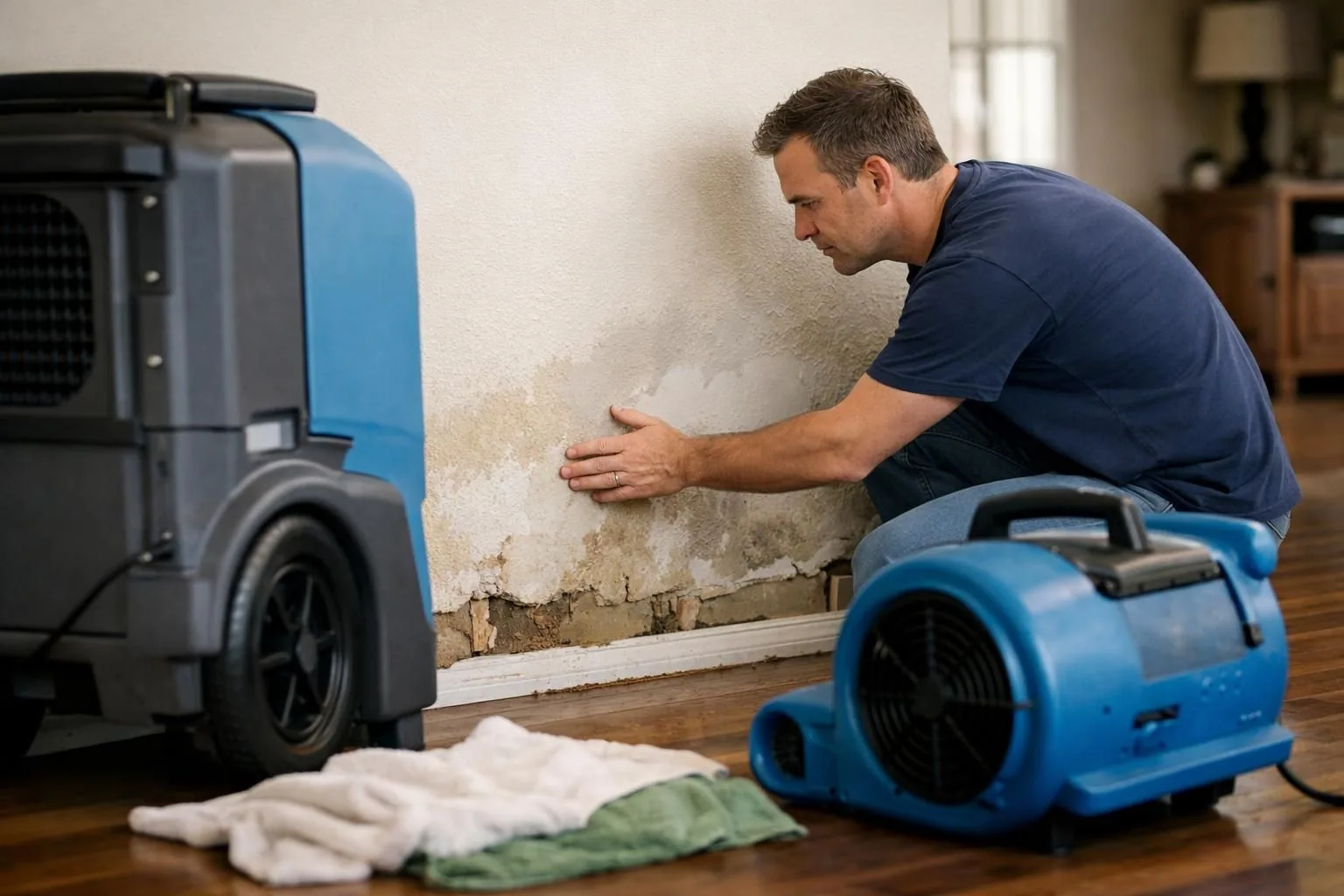
If you’re asking how long does water damage take to dry, you’re probably staring at wet drywall, damp flooring, or that musty smell that won’t quit. The tricky part is that drying isn’t just “waiting for the surface to feel dry.” Real drying means moisture is out of the materials, out of hidden cavities, and back to normal levels so mold and warping don’t keep developing. In this post, you’ll get a practical timeline, what actually changes water damage drying time, and what to expect for walls and floors specifically, plus when professional equipment makes a real difference.
Best for: Homeowners who’ve stopped the leak and need a realistic drying timeline for common materials like drywall, wood, and subfloors.
Not ideal when: Sewage, stormwater, or long-standing saturation is involved, because drying alone doesn’t address contamination and deep material damage.
Good first step if: You can safely remove standing water, increase airflow, and start dehumidifying while you document affected areas and materials.
Call a pro if: Water got into wall cavities, ceilings, insulation, or under flooring, or if you notice persistent odors, swelling, or staining.
Quick Summary
- Drying time depends more on depth of saturation and airflow than on how “wet” the surface looks.
- Walls usually dry faster when insulation is dry and cavities can vent, but slower when water is trapped behind paint or tile.
- Floors can take longer because moisture can sit in subfloor layers and under finishes.
- Dehumidification and controlled air movement speed up drying and help prevent secondary damage like warping.
- If you can’t confirm dryness with moisture readings, you’re guessing, and guessing can lead to mold or material failure.
How Long Does it Take to Dry Out Water Damage
Most water damage takes days to dry, and longer when moisture is trapped in drywall paper, insulation, subfloors, or under floor coverings. “Feels dry” is not enough; materials must return to normal moisture levels.
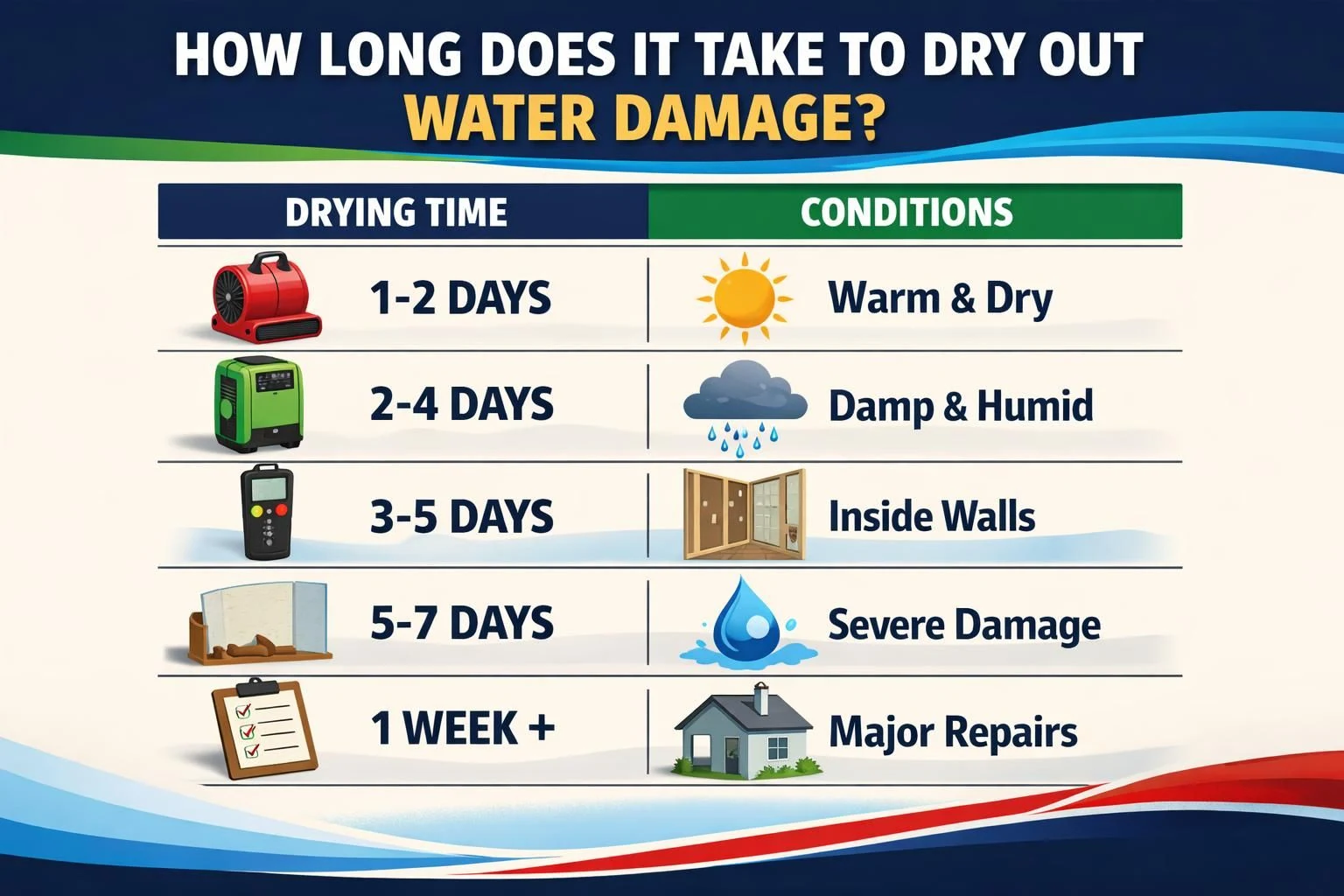
A small clean-water leak caught quickly can improve within a couple of days with airflow and dehumidification. When water sat, spread, or soaked multiple assemblies, drying slows because moisture must migrate outward before evaporating.
For a structured process, follow drying a room after a leak..
Factors That Affect Water Damage Drying Time
Water damage drying time depends on saturation depth, humidity removal, and whether moisture is trapped in cavities. Similar-looking wet areas can dry on different timelines because materials, layering, and access vary.
Key factors include water category, how long water sat before drying began, and the materials involved. Drywall, wood, insulation, and particleboard release moisture differently, and layers like flooring over underlayment or tile over backer board slow evaporation.
Warmth helps only with dehumidification and controlled airflow. Sealed cavities, closed doors, and furniture against walls reduce drying. If water is migrating, use containment as outlined in stop water from spreading..
How Long for Walls to Dry After Water Damage
Walls can dry in a few days when only the surface is damp, but longer if insulation, studs, or the bottom plate are wet. A wall dries at the pace of its wettest hidden layer.
Paint, tile, and vapor barriers slow evaporation, while insulation can hold moisture against framing. Wetting from the floor often wicks above the visible line and behind baseboards or cabinets.
Speed drying by removing baseboards, pulling saturated insulation, or adding small access openings for ventilation and dehumidification. See signs drywall must be replaced..
Wall Drying Mistakes That Stretch the Timeline
The biggest mistake is sealing the wall too soon. Spackle, paint, and reinstalling baseboards can trap moisture and lead to musty odors later.
Another is heating without dehumidification. Heat can increase evaporation, but if humidity isn’t removed, materials can reabsorb moisture and drying stalls.
How Long for Floors to Dry
Floors often take longer than expected because moisture lingers under the surface in underlayment, adhesive, or subfloor layers. Carpet may feel dry while the pad stays soaked, and laminate or vinyl can trap water underneath. Hardwood needs controlled drying to limit cupping and gaps, while tile sheds water but grout and underlayment can stay wet. For warning signs, see wood floor water damage signs..
Subfloors, Underlayment, and the Hidden Wet Layer
Subfloors make timelines deceptive. Plywood or OSB can dry unevenly, especially under cabinets and along wall edges with limited airflow. Adhesives and layered systems trap moisture; clues include odor, edge staining, or persistently high humidity.
Professional Drying vs DIY: Does it Matter
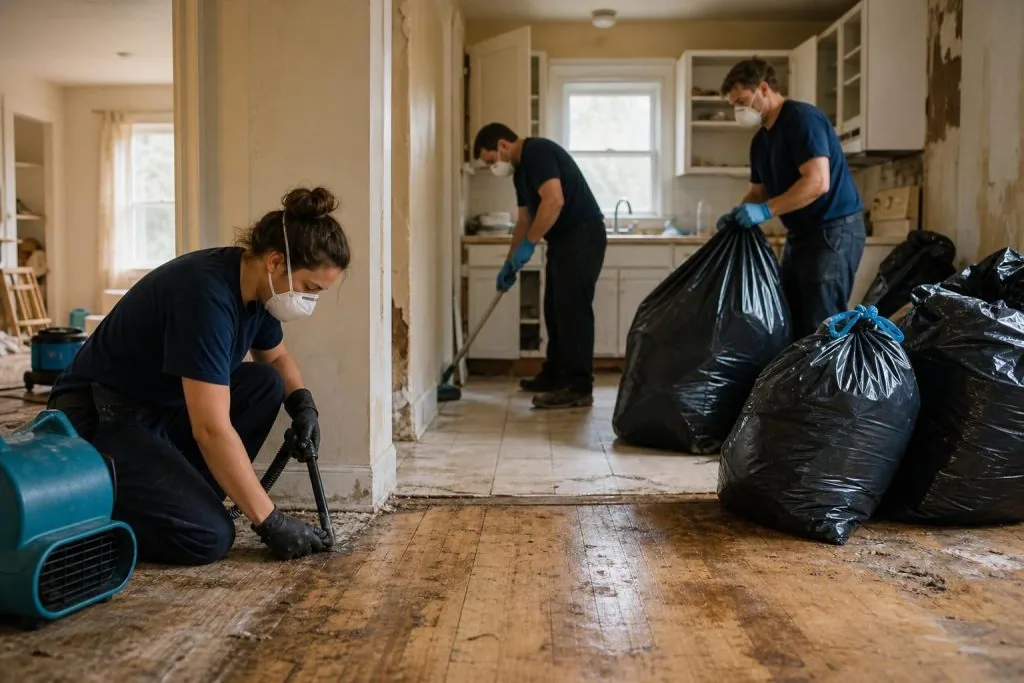
Professional drying usually shortens the timeline and reduces secondary damage because it combines high-capacity dehumidification, controlled airflow, and moisture measurement instead of guesswork. DIY can work for small, quickly caught events, but it tends to fall short when water is in cavities, under floors, or spread across multiple materials.
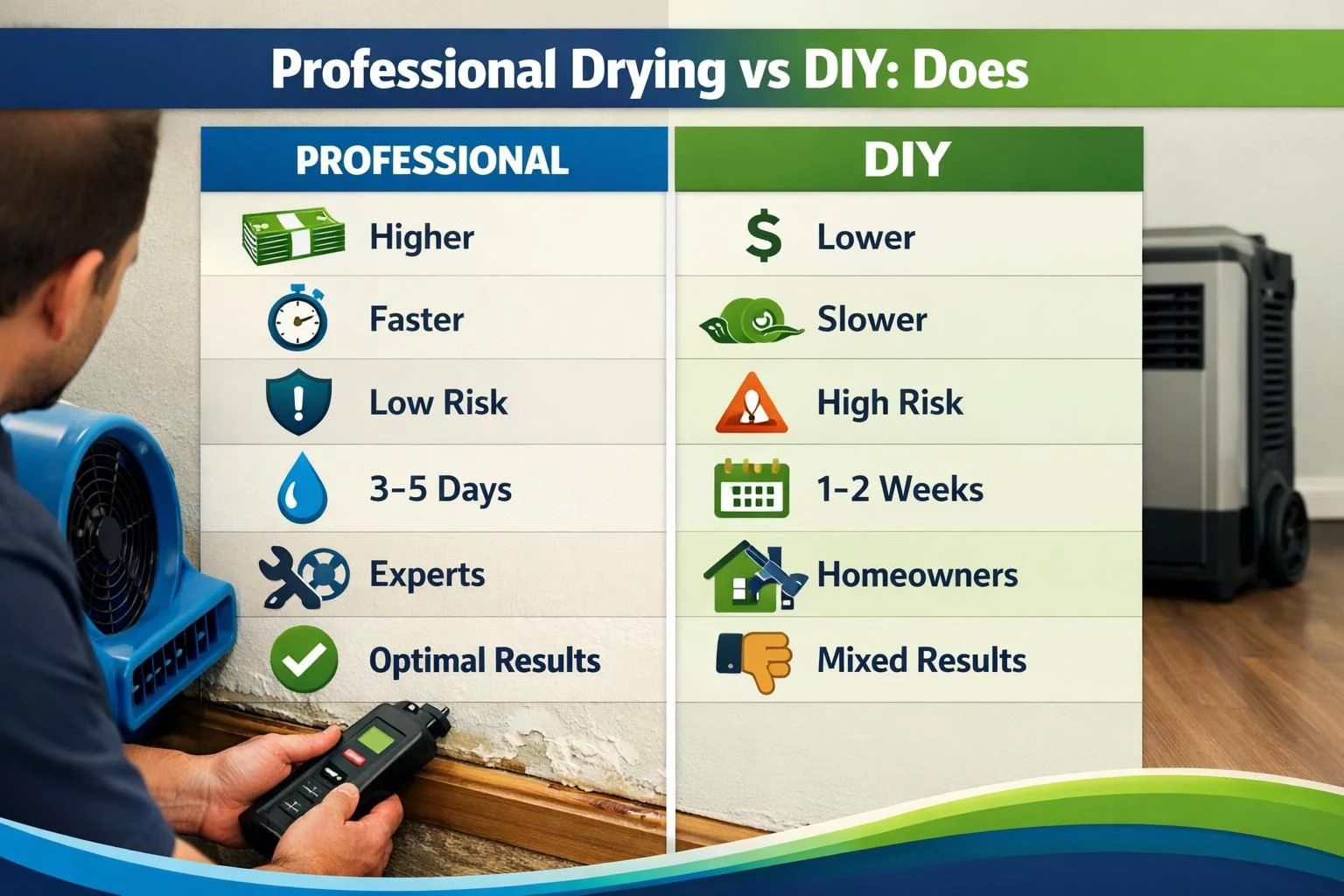
The real difference isn’t just equipment. It’s process. Pros will typically map the wet area, remove materials that can’t be saved, and set up a drying environment that pulls moisture out efficiently while preventing it from moving into dry areas. If you’re trying to decide whether it’s worth escalating, it helps to understand what full water damage restoration work usually includes: extraction, drying, monitoring, and targeted demolition when needed.
Here’s a practical comparison so you can sanity-check your plan:
| Approach | Best for | Limits | Typical outcome |
|---|---|---|---|
| DIY fans + store dehumidifier | Small, clean-water leaks caught early | No moisture readings, limited cavity drying | Surface dries, hidden damp may remain |
| Professional drying setup | Multi-material saturation, hidden moisture | Requires access and sometimes material removal | Faster, verifiable dry standard |
When DIY is Reasonable (and When it Isn’t)
DIY is reasonable when you have a small affected area, you can remove wet rugs or contents quickly, and you can keep the space ventilated and dehumidified without obstruction. It’s also more realistic when the water never reached insulation, subflooring, or behind cabinets.
FAQs
How Long Does it Take to Dry Out Water Damage With Fans Only?
Fans help, but they mainly dry surfaces. Without dehumidification, indoor air can get humid and slow evaporation, especially in closed rooms. Fans work best with moisture removal and opened pathways so cavities can vent.
How Do I Know if the Area is Actually Dry?
Use moisture measurement, not touch. Walls can be wet inside and floors can hold moisture under the finish. Without meters, watch for lingering musty odor, recurring condensation, swelling, or stains that keep expanding.
Will Running the Heat Make Water Damage Dry Faster?
Heat can speed evaporation, but it can also raise indoor humidity if you don’t remove moisture. That can stall drying and make the space feel clammy. Pair heat with dehumidification and steady airflow for better results.
Should I Remove Drywall or Flooring to Speed up Drying?
Removal can speed drying by opening trapped cavities or eliminating sponge-like materials, but it commits you to repairs. If drywall is soft, delaminating, crumbling, or strongly musty, removal is often better than in-place drying.
Does Insurance Care About Drying Time and Documentation?
Often, yes. Documentation helps show what happened, what materials were affected, and what you did to prevent further damage. Take photos, keep notes, and save removed materials until next steps are clear. For coverage questions, see water damage insurance coverage.
Conclusion
Drying isn’t a single clock you can check, because how long does water damage take to dry depends on saturation depth, material layers, and whether moisture is trapped where air can’t reach. Your best next step is to stop the source, remove what’s clearly wet and unsalvageable, and set up consistent airflow plus dehumidification. If walls, insulation, or subfloors were involved, don’t rely on surface feel alone. Get moisture verification or bring in help before you close everything back up.