
A musty smell in the house usually means something is staying damp somewhere you cannot see. It is the smell of moisture sitting in materials long enough for mold, mildew, or bacteria to grow. Air fresheners and candles cover it for an hour. Finding and drying the damp source is what makes it go away.
This guide walks through the most common sources of a musty smell, how to narrow down where yours is coming from, and when it points to water damage that needs professional attention.
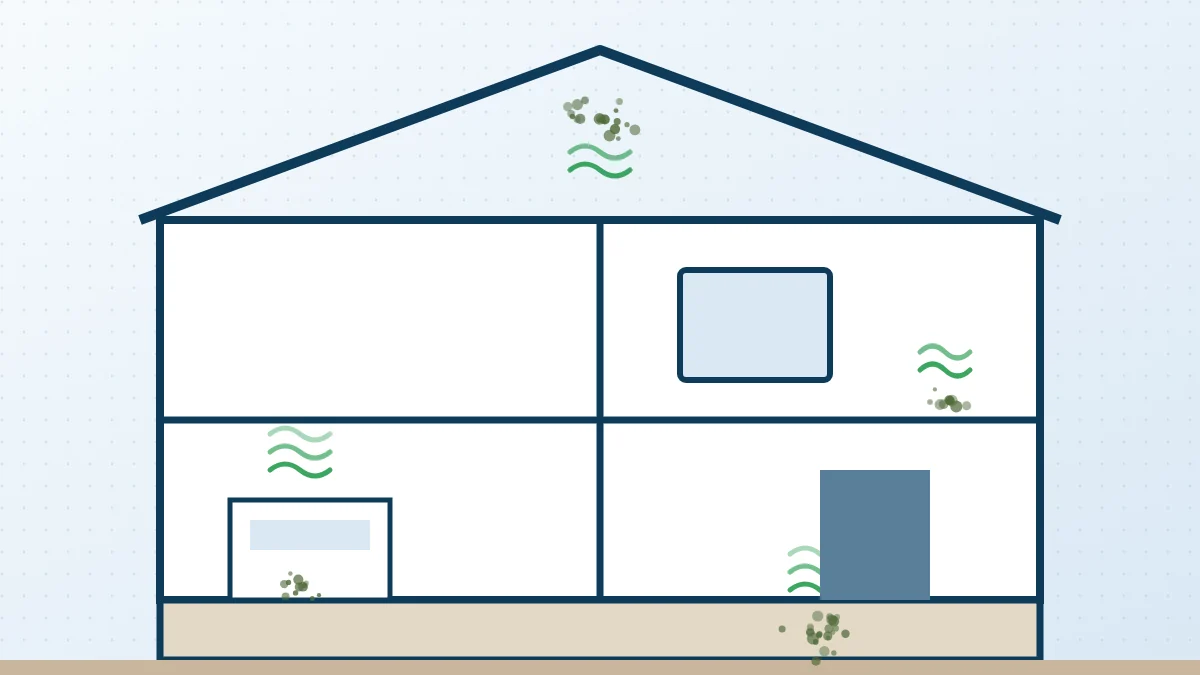
What a musty smell usually means
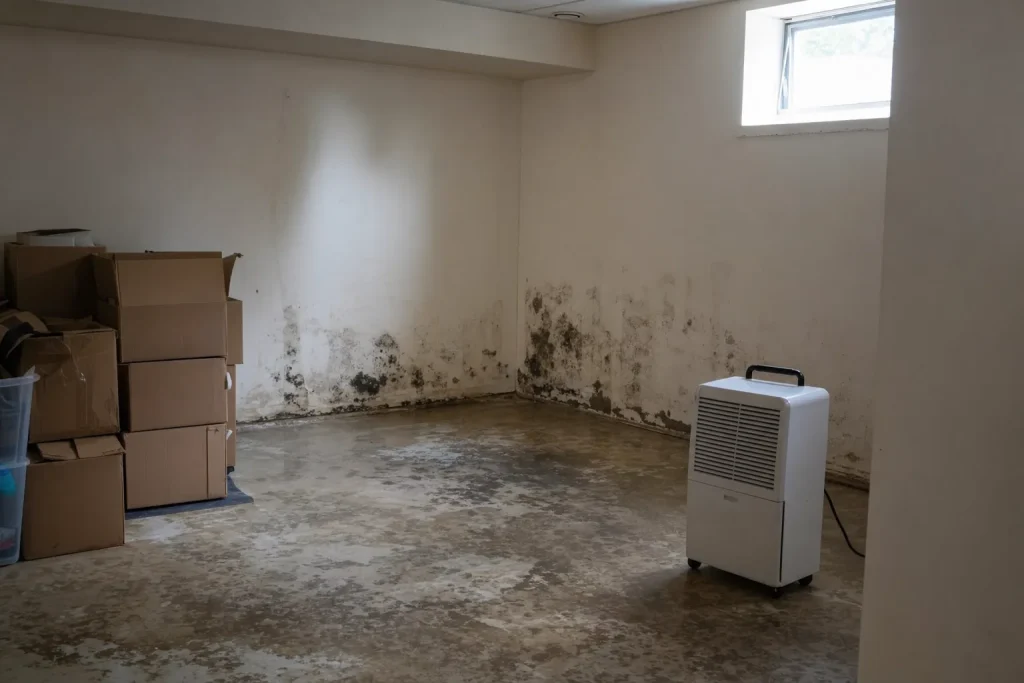
Musty, earthy, or stale odors are typically produced by mold and mildew growing on damp materials. EPA notes that mold can grow on almost any material when moisture is present, and that the key to controlling it is controlling moisture (EPA: A Brief Guide to Mold, Moisture and Your Home). A musty smell does not always mean a large mold problem, but it does mean something is staying wet longer than it should.
Where musty smells most often come from
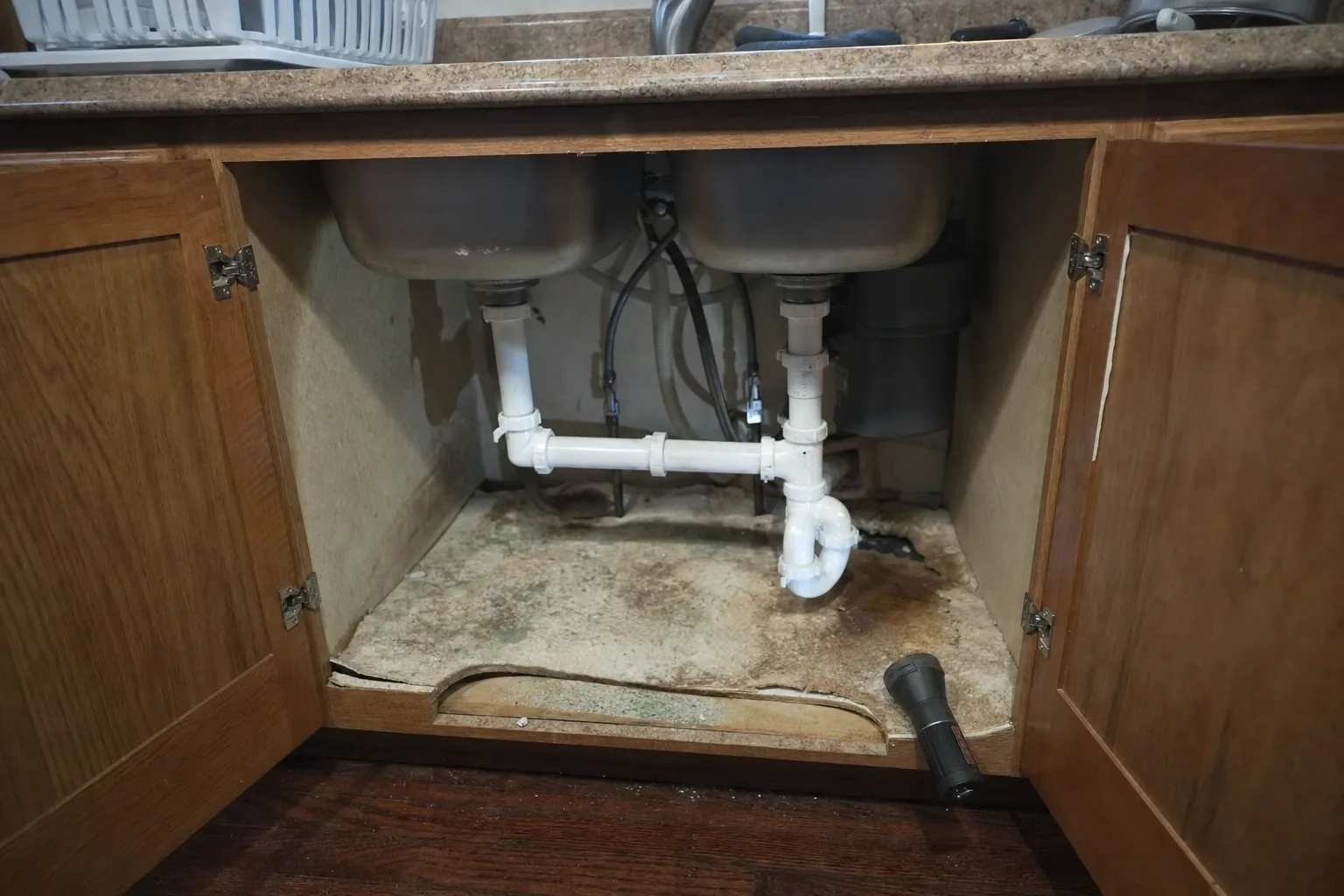
- Under sinks and behind appliances: slow drips from supply lines, drains, dishwashers, and refrigerator water lines soak cabinet bases and subfloor.
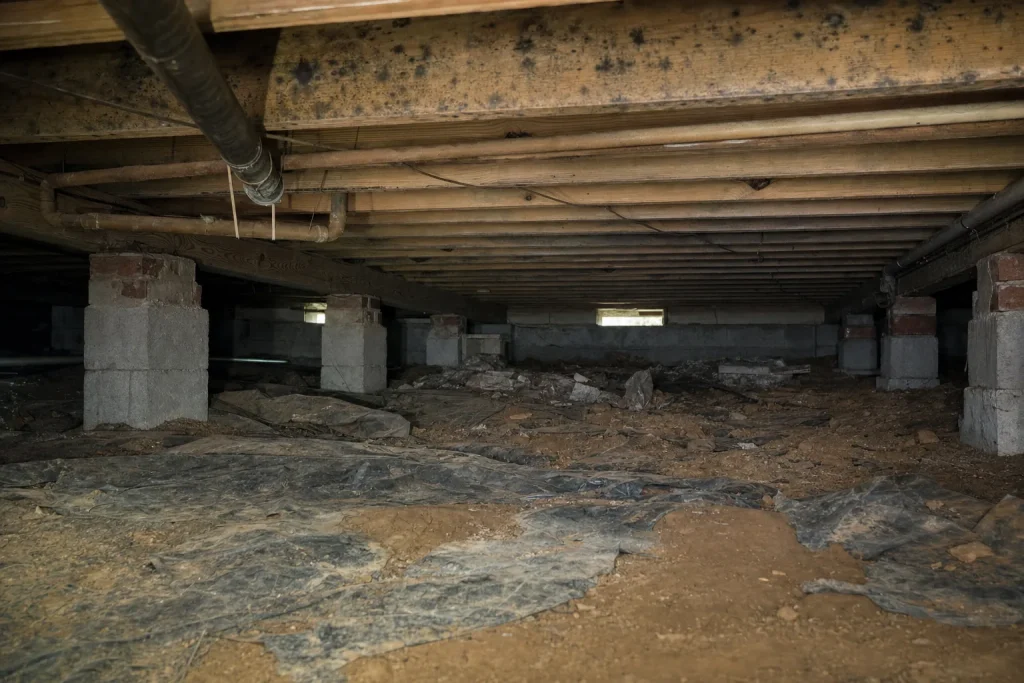
- Crawl spaces and basements: damp soil, seepage, missing vapor barriers, and poor airflow. See mold in the crawl space and mold in the basement.
- Bathrooms: failed grout or caulk, a leaking shower pan, or a toilet seal that lets water into the floor and wall. See water damage from a leaking shower.
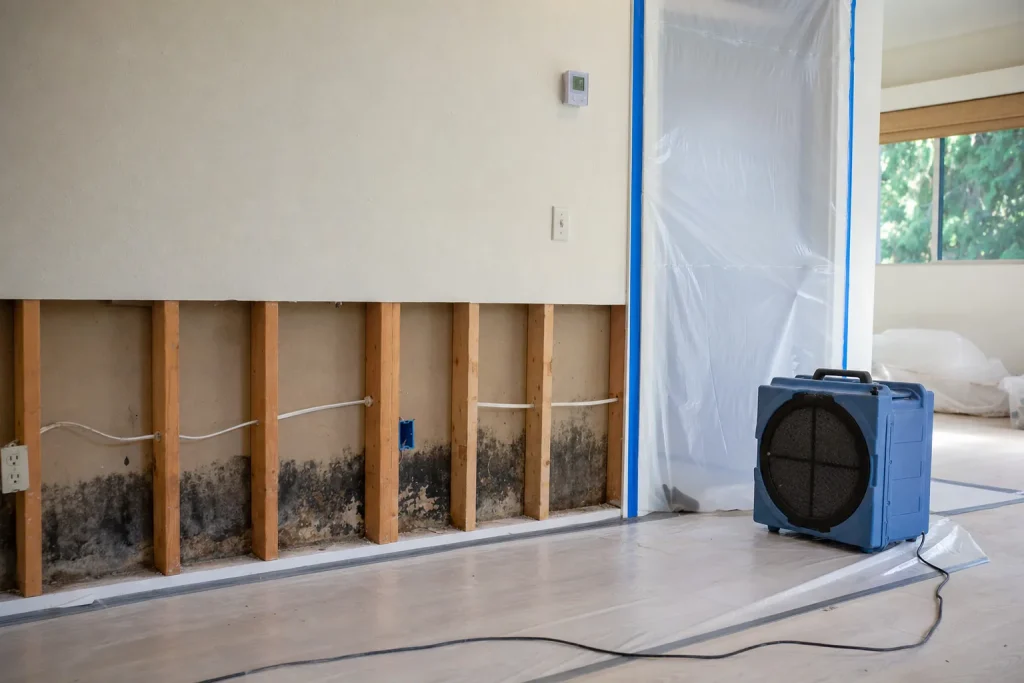
- Inside walls and behind baseboards: past leaks that were never fully dried. See water damage behind baseboards.
- Attics: roof leaks or condensation on the underside of the roof deck. See attic mold after a roof leak.
- Carpet and pad: spills, pet accidents, or past water damage that dried on the surface but not underneath. See whether wet carpet padding can be saved.
- HVAC: clogged condensate lines, wet drip pans, or dirty coils. See AC condensate line water damage.
- Laundry and storage: clothes left damp in a washer, and cardboard or fabric stored against cool exterior walls.
How to narrow down the source
- Follow the strength of the smell. Close doors and check room by room. Smells are usually strongest close to the source.
- Notice when it gets worse. A smell that appears after rain points to roof, window, or foundation water. A smell that appears when the heat or AC starts points to ducts, the crawl space, or the HVAC system.
- Look low and behind. Check under sinks, behind the toilet, the base of walls, inside closets on exterior walls, and behind furniture.
- Look for supporting signs: stains, bubbling paint, swollen baseboards, soft flooring, or condensation.
- Measure humidity. An inexpensive hygrometer shows whether a room stays above the 60 percent level EPA recommends staying under.
- Use a moisture meter on suspicious walls and floors. Comparing a suspect spot to the same material elsewhere is more reliable than touch.
Our guide to signs of hidden water damage covers more ways to check walls, floors, and ceilings.
What to do once you find it
- Stop the water source first: repair the leak, clear the condensate line, or fix drainage.
- Dry wet materials quickly. EPA’s guidance is within 24 to 48 hours to prevent mold growth. A dehumidifier helps; see using a dehumidifier after water damage.
- Clean small areas of growth on hard surfaces with detergent and water, then dry completely. EPA says most people can handle areas under about 10 square feet.
- Remove porous materials that stayed wet and moldy, such as carpet pad, ceiling tiles, or insulation.
- Do not paint or seal over damp or moldy surfaces. The smell and the damage usually return.
When a musty smell needs a professional
- The smell persists after cleaning, airing out, and dehumidifying.
- You can smell it but cannot find the source.
- There was a known leak or flood in the past and the area was never dried professionally.
- Visible growth covers more than about 10 square feet, or the water involved was sewage.
- Anyone in the home has asthma, allergies, or other health concerns made worse indoors.
A water damage assessment uses moisture meters and, when needed, thermal imaging to find damp areas behind finished surfaces. If mold is confirmed, our mold remediation service can address the growth and the moisture behind it. We serve Burien, White Center, Tukwila, Des Moines, and nearby South King County communities.