
Water on the floor is the obvious problem. The moisture you can’t see is the one that causes the long-tail headaches: swelling wood, soft drywall, musty odors, and mold risk. That’s why a dehumidifier after water damage is often the difference between “we dried it out” and “why does this room still feel damp a week later?” In this guide, you’ll learn when a dehumidifier is actually necessary, how it helps after a flood or leak, how long to run it, and how to choose a size that matches the mess.
Best for: Drying rooms after minor to moderate leaks once standing water is removed and you can keep doors and windows mostly closed.
Not ideal when: You have saturated drywall, wet insulation, or water under flooring where moisture is trapped in layers.
Good first step if: You can control the source, extract visible water, and start airflow right away to reduce indoor humidity quickly.
Call a pro if: Water is contaminated, reached multiple rooms, soaked building materials, or you smell musty odor that keeps returning.
Quick Summary
- A dehumidifier removes moisture from the air so damp materials can release water faster.
- Pair dehumidification with airflow and heat control; one tool alone won’t dry a room evenly.
- Run time depends on how wet the materials are, not the calendar, so track humidity and drying progress.
- Oversizing can help, but only if you manage airflow, drainage, and closed-room conditions.
- Pro equipment shines when water is trapped in cavities, under floors, or across large areas.
Why Dehumidifiers Are Critical After Water Damage
Dehumidifiers matter after water damage because they lower indoor humidity so wet materials can evaporate instead of staying damp. When air is already moisture-loaded, drywall, wood, carpet pad, and framing can’t release water, which increases swelling, odor, and microbial risk.
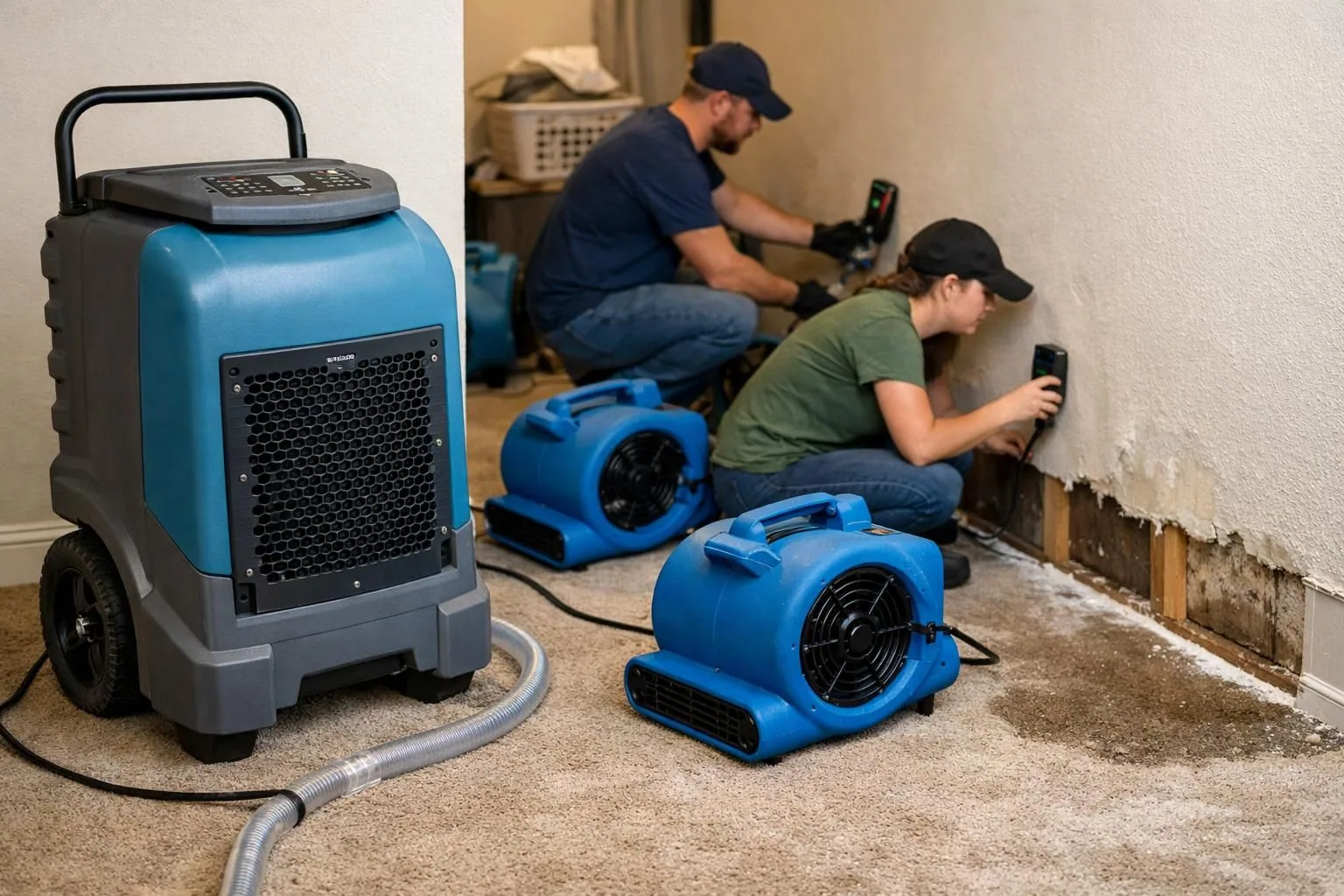
Drying also looks finished before it is. Surfaces may feel dry while subfloors, baseboard backs, and drywall cores still hold moisture. By keeping the air drier than the materials, a dehumidifier creates the gradient that pulls moisture out, then removes it from the room.
Basic rules:
- Stop the source first.
- Extract standing water and remove saturated items quickly.
- Keep windows/doors closed unless outdoor air is clearly drier.
- Use fans to sweep air across wet surfaces.
For larger losses, see how this fits into water damage restoration and what “dry” means.
How Does a Dehumidifier Help After a Flood
After a flood, a dehumidifier removes water vapor from the air, which speeds evaporation from damp materials and reduces mold-friendly conditions. It doesn’t dry studs or drywall directly; it makes the room air dry enough for materials to release moisture.
Water category affects what’s safe to keep. If flooding involved groundwater, stormwater, or sewage, dehumidification is only part of the response. Contamination can make porous materials unsalvageable and may require controlled removal and thorough cleaning.
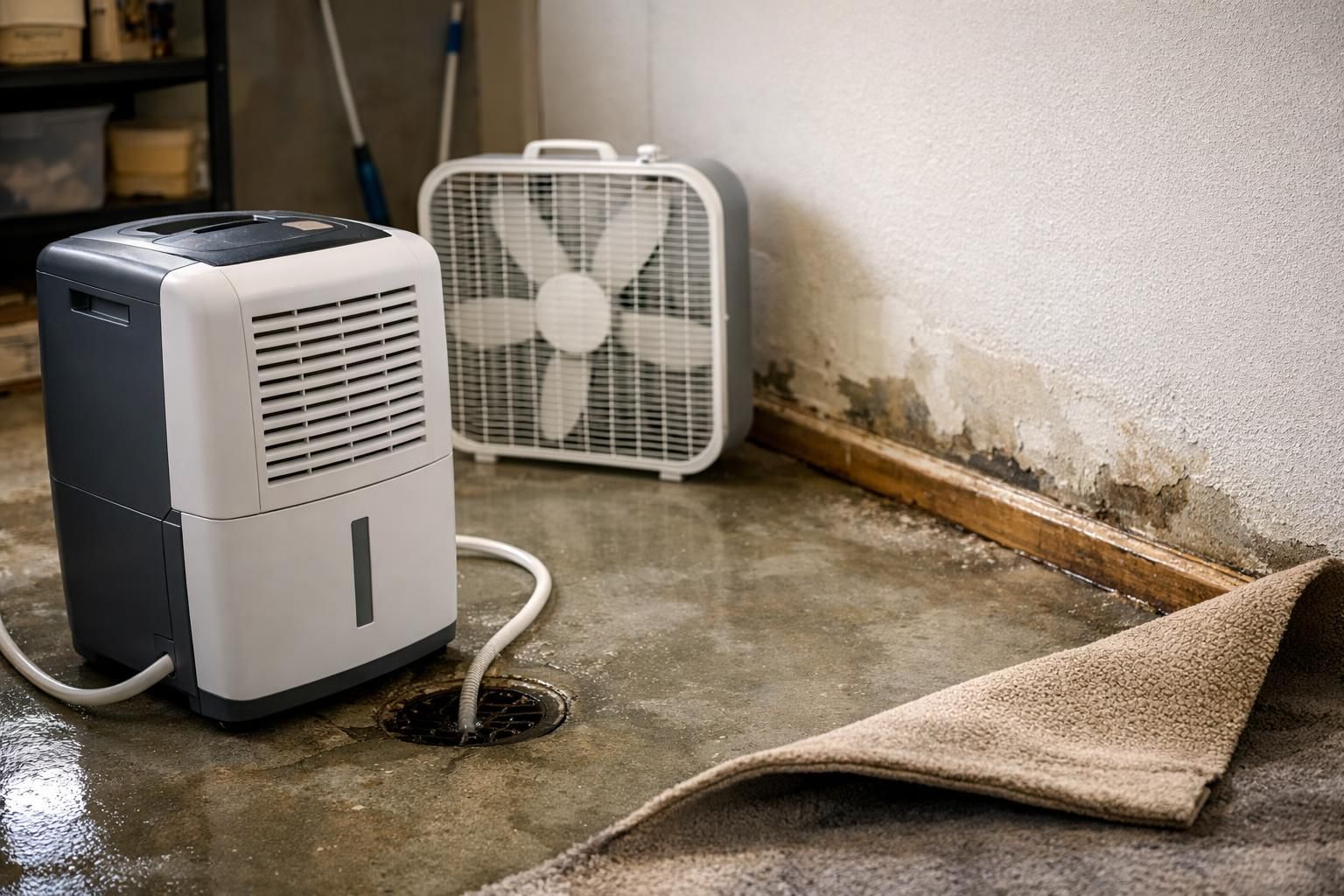
Best results come from a system:
- Extraction removes bulk water.
- Air movement breaks the saturated surface layer.
- Dehumidification keeps air “thirsty.”
- Moderate heat supports evaporation without driving moisture into cavities.
Basements add risks like limited ventilation and wicking. Follow what to do after basement floods for a step-by-step plan.
How Long to Run a Dehumidifier After Water Damage
Run a dehumidifier until indoor humidity and affected materials return to normal and stay stable for at least 24 hours. Timelines vary with soaked subfloors, cool basements, humid weather, and moisture trapped behind trim.
Use a hygrometer and watch signs. You’re not done if the tank fills fast or the drain runs steadily, musty odor returns when it’s off, wood or trim feels cool or damp, or you see condensation on windows or pipes. You’re close if RH drops and holds, the unit cycles off, and odors normalize.
If humidity won’t drop, suspect hidden water under floors, behind cabinets, or in wall cavities. Review how to stop water spreading.
How Long Does a Dehumidifier Take to Dry a Room?
So, how long does a dehumidifier take to dry a room? A lightly damp, enclosed room may show noticeable improvement within one or two days, while drywall, carpet padding, wood, or subflooring affected by water damage can require several days of continuous drying.
Drying time depends on:
- The amount of water involved
- Room size and temperature
- Dehumidifier capacity
- Airflow across wet materials
- Moisture trapped inside walls or beneath flooring
Do not stop solely because surfaces feel dry or the tank fills more slowly. Continue until humidity remains stable and affected materials no longer show elevated moisture for at least 24 hours.
What Size Dehumidifier Do You Need
Choose a dehumidifier that can steadily lower humidity in the area you can actually contain. Oversized units won’t fix an open layout, cold conditions, or saturated materials, and undersized units may run nonstop with little change.
Define your drying zone first. Close doors, hang plastic, and block open doorways. A tighter zone needs less capacity.
Sizing cues: One room with a clean-water leak and good airflow may be fine with a residential unit. Multiple rooms, soaked pad, or heavy rebound usually needs more capacity or two units. In cool basements, efficiency drops, so size up.
Place it with clear airflow, keep the area closed, and use a drain hose. If walls got wet, check drywall. Use drywall water damage signs.
Dehumidifier vs Professional Drying Equipment
Professional drying equipment is better than a standard dehumidifier when moisture is trapped in building assemblies, spread across large areas, or needs controlled airflow and pressure to dry evenly. A household dehumidifier is still useful, but it’s not designed for the same intensity or control.
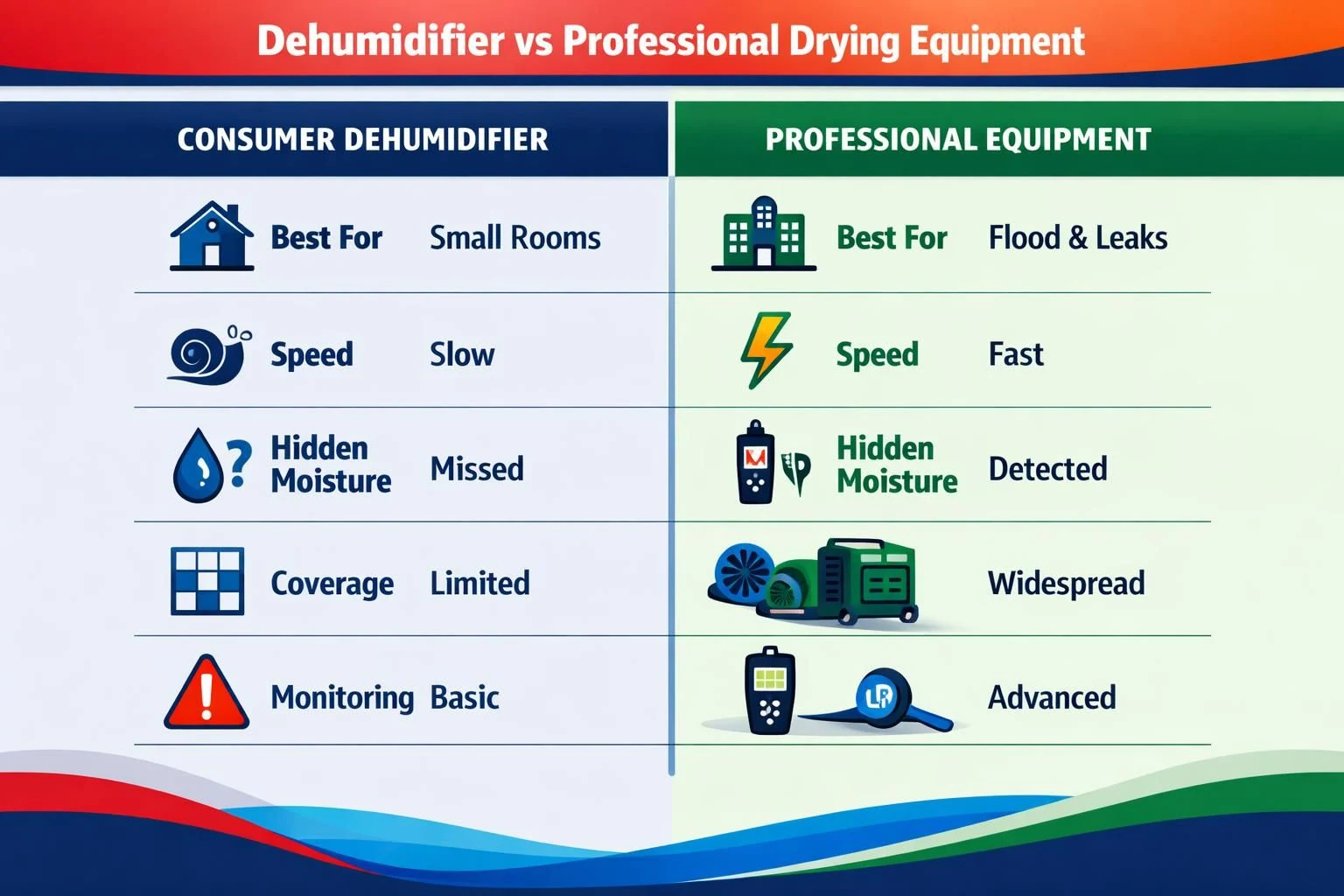
Here’s the simple comparison:
| Option | Best for | Limits | Typical outcome |
|---|---|---|---|
| Home dehumidifier | One or two rooms | Slower, less control | Gradual humidity drop |
| Air movers (pro fans) | Surface evaporation | Can spread moisture if mis-aimed | Faster surface drying |
| Low-grain refrigerant dehumidifier | Deep, steady drying | Needs setup and monitoring | Faster moisture removal |
| Negative air containment | Dusty demos, odor control | Requires sealing and filtration | Cleaner, controlled work zone |
Now, why does pro gear change the outcome? It’s about getting moisture out of the layers. Pros use combinations: high-volume air movers, higher-capacity dehumidifiers, and sometimes targeted drying systems for cavities. They’ll also monitor moisture content, not just room humidity, so they can tell whether the subfloor is actually drying or just the air.
Where homeowners often get stuck is the “looks fine, still wet” scenario:
- Water under engineered wood or laminate that can’t vent upward
- Wet insulation holding water like a sponge behind drywall
- Cabinets that look dry outside but trap moisture at the toe-kick
- Stair stringers and framing that wick moisture into adjacent spaces
If the wet area includes hardwood, be careful. Drying too slowly can cause cupping, but drying too aggressively can cause cracking or exaggerated gapping. This is a good moment to read up on wood floor water damage signs so you’re not guessing.
When to Call a Professional
Call a professional when you can’t confirm structural materials are drying, the water may be contaminated, or the affected area is too large for DIY equipment to control humidity. The goal is to avoid trapping moisture behind finishes and finding it later as odor, warping, or growth.
Common triggers:
- Sewage, groundwater, stormwater, or unknown water source.
- Water reached wall cavities, insulation, ceilings, or upper floors.
- Buckling floors, swelling baseboards, or stains that spread.
- Humidity won’t stay down despite continuous drying.
- Someone in the home is mold-sensitive or has asthma.
Pros can also document damage for claims. If insurance is involved, read homeowners insurance and water damage before discarding materials.
FAQs
Do You Need a Dehumidifier After Water Damage if You Already Have Fans?
Often yes. Fans move air but don’t remove moisture. If air stays humid, evaporation slows and materials remain damp. Pair fans with dehumidification to actually remove water.
Will a Dehumidifier Help Prevent Mold After Water Damage?
It helps by lowering humidity and speeding drying, which reduces risk. If porous materials are saturated, contaminated, or sealed behind finishes, removal and cleaning may still be needed.
Can I Run a Dehumidifier With Windows Open?
Only if outdoor air is drier than indoor air. Humid outdoor air will feed moisture and force nonstop runtime. When unsure, close the space and measure humidity.
What if My Dehumidifier Isn’t Pulling Much Water Anymore?
It may be nearly dry, or moisture may be trapped. Check carpet pad, under flooring, damp drywall corners, and adjacent rooms. Persistent odors justify professional moisture testing.
Conclusion
If you’re asking “do you need a dehumidifier after water damage,” the practical answer is yes in most real-world leaks and floods, as long as you’ve removed standing water and you’re actually trying to dry materials, not just the air. Set up airflow, isolate the space, and run your dehumidifier after water damage until humidity stabilizes and the room stays normal when the unit cycles off. And if moisture is trapped in walls or under floors, don’t wait for smell or stains to prove it.