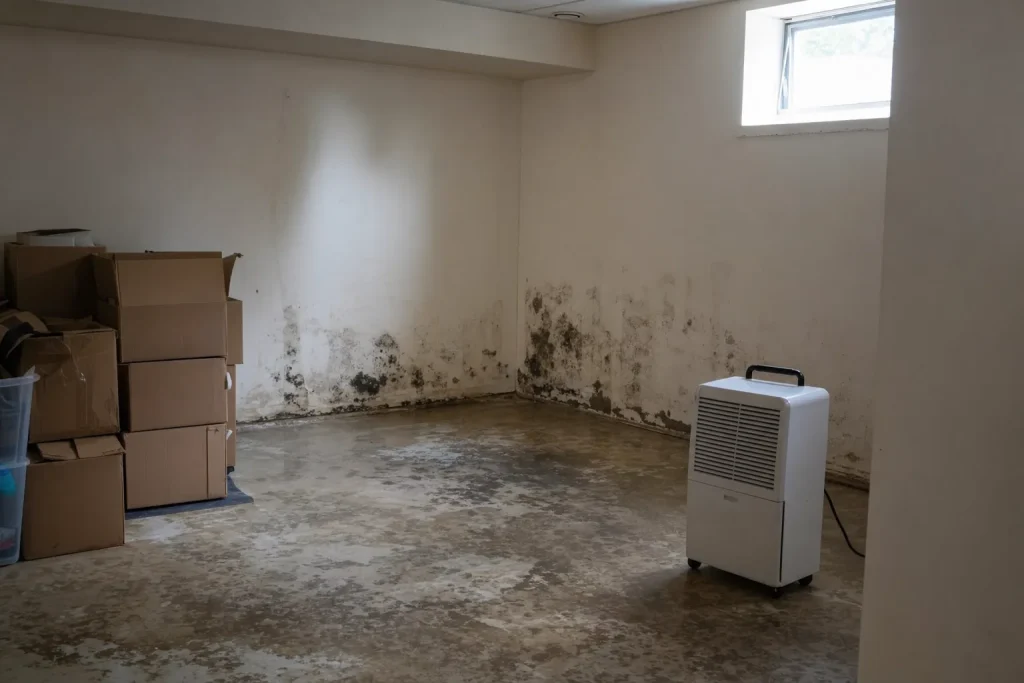

Crawl spaces are one of the most common places for mold to start in Pacific Northwest homes, and one of the least visited. Long wet seasons, damp soil, plumbing that runs under the floor, and limited airflow give mold what it needs: moisture and time. Because nobody looks down there often, the first sign is usually a musty smell in the house or a floor that starts to feel different.
This guide covers the signs of crawl space mold, the usual moisture sources, what to check first, and what professional remediation typically involves.
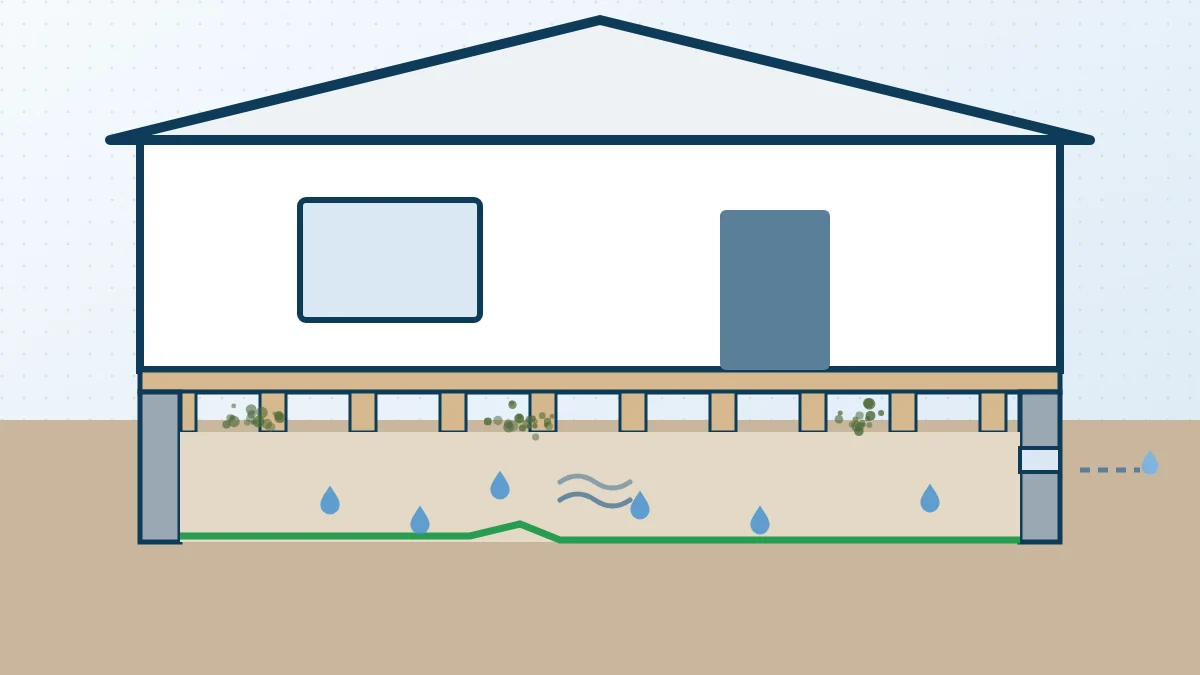
Signs of mold in a crawl space
You do not need to crawl in to notice the first clues. Common signs include:
- A musty or earthy smell in the house, often stronger in rooms above the crawl space or after the heat comes on.
- Floors that feel soft, cupped, or cooler and damper than usual.
- Higher indoor humidity, condensation on windows, or allergy-like complaints that get worse indoors.
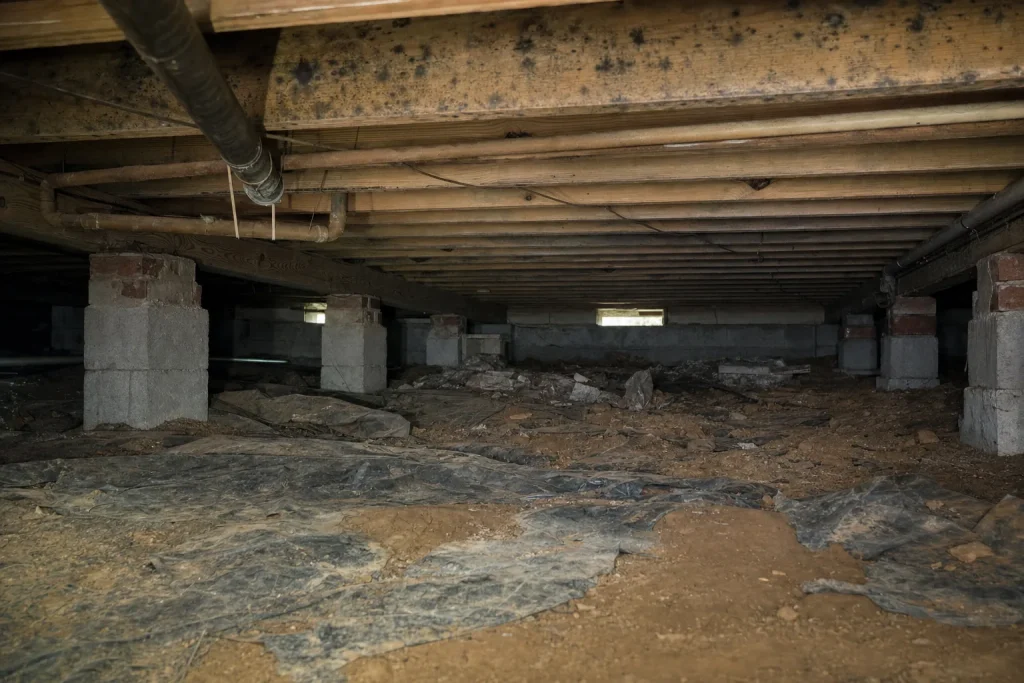
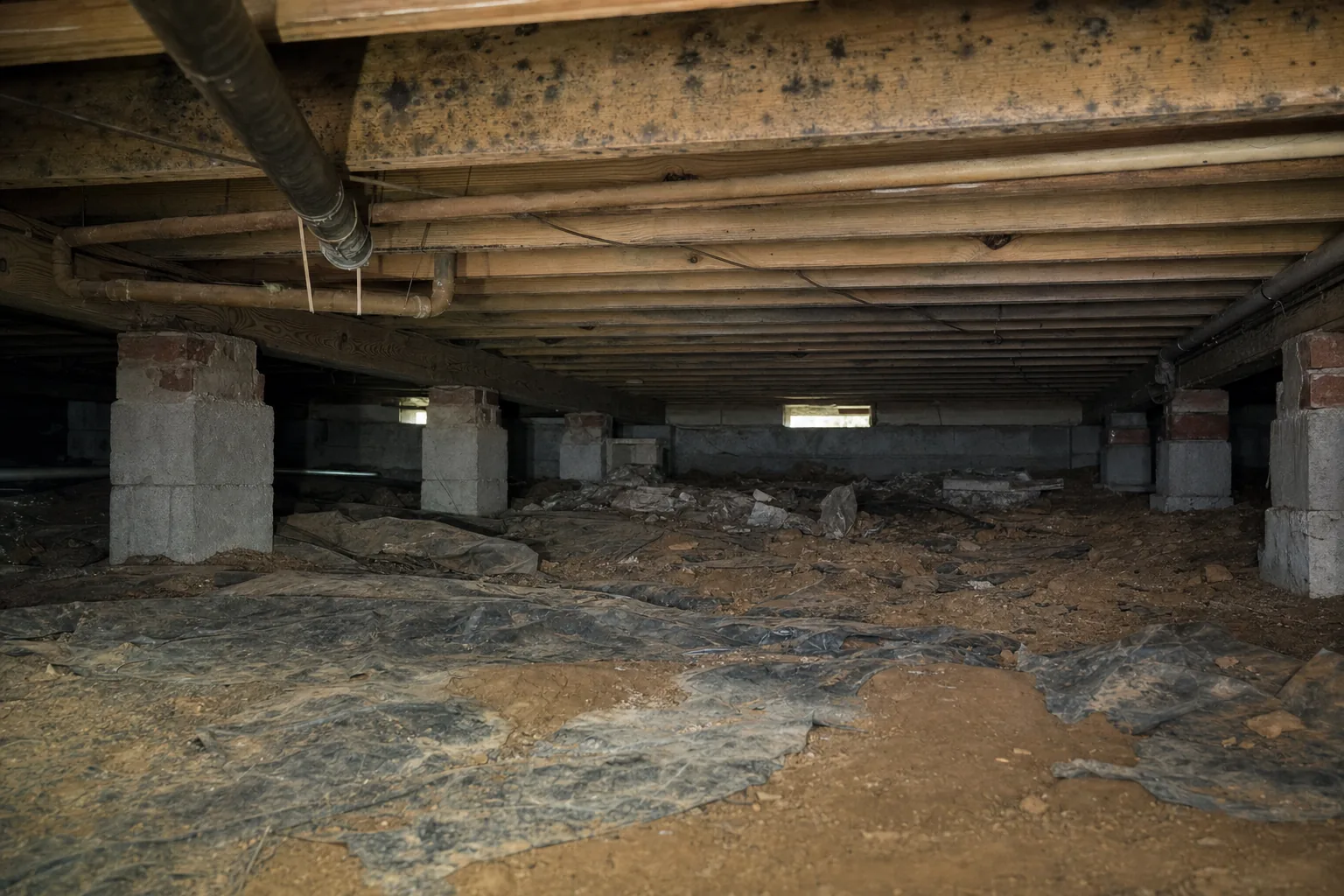
- Inside the crawl space: fuzzy or dark growth on joists and subfloor, sagging or wet insulation, standing water, damp soil, or water droplets on pipes and ducts.
A musty smell does not always mean mold, but it does mean something is staying damp. Our guide to a musty smell in the house covers other common sources.
Where the moisture comes from
Mold in a crawl space is a symptom. Finding the moisture source matters more than the growth itself, because remediation will not last if the source stays. Common sources include:
- Plumbing leaks: supply lines, drain lines, and water heater connections that run under the floor. A slow leak can run for months. See crawl space water damage after a pipe leak.
- Groundwater and drainage: gutters, downspouts, and grading that send rain toward the foundation.
- Damp soil without a proper vapor barrier: exposed or torn plastic lets ground moisture evaporate into the crawl space.
- Humid outside air: in some conditions, vents bring in moist air that condenses on cooler surfaces.
- Storm intrusion: water that enters through foundation gaps during heavy rain. See storm water intrusion cleanup.
EPA’s general guidance is to keep indoor humidity below 60 percent, ideally between 30 and 50 percent, and to dry wet materials within 24 to 48 hours to prevent mold growth (EPA: A Brief Guide to Mold, Moisture and Your Home). A crawl space that stays damp for weeks gives mold far more time than that.
What to check first
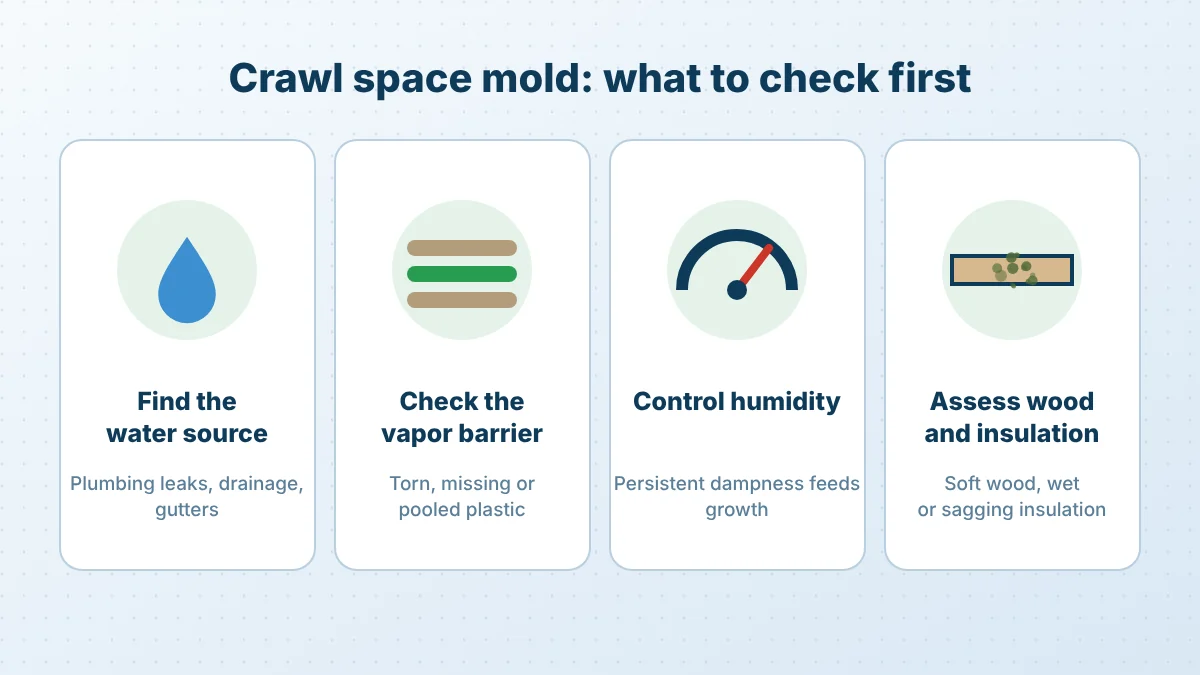
Start with what you can see safely. Do not enter a crawl space with standing water near wiring, sagging insulation overhead that could fall, signs of animals, or a tight entry you cannot easily get out of. A flashlight from the access hatch often shows enough to decide the next step.
- Water source: active drips, wet pipe insulation, puddles, or water lines on the foundation walls.
- Vapor barrier: whether the soil is covered, and whether the plastic is torn, missing, or holding water on top.
- Humidity: a simple hygrometer placed near the hatch can show whether the space stays damp.
- Wood and insulation: dark staining or growth on joists, soft wood, and insulation that is wet, sagging, or fallen.
Should you clean crawl space mold yourself?
EPA notes that most people can clean small mold areas, roughly under 10 square feet, themselves, but that larger areas, significant water damage, or contamination from sewage call for professional help. Crawl spaces add their own problems: limited space, difficult access, disturbed insulation, and the risk of pulling spores into the house. If more than a small spot is affected, or if you are not sure how far it has spread, an assessment is usually the better first step.
What professional crawl space remediation usually involves
Each job is different, but a typical sequence looks like this:
- Assessment: locate the moisture source, map the affected area, and check wood for damage.
- Source correction: plumbing repair, drainage fixes, or vapor barrier work, sometimes by a separate trade.
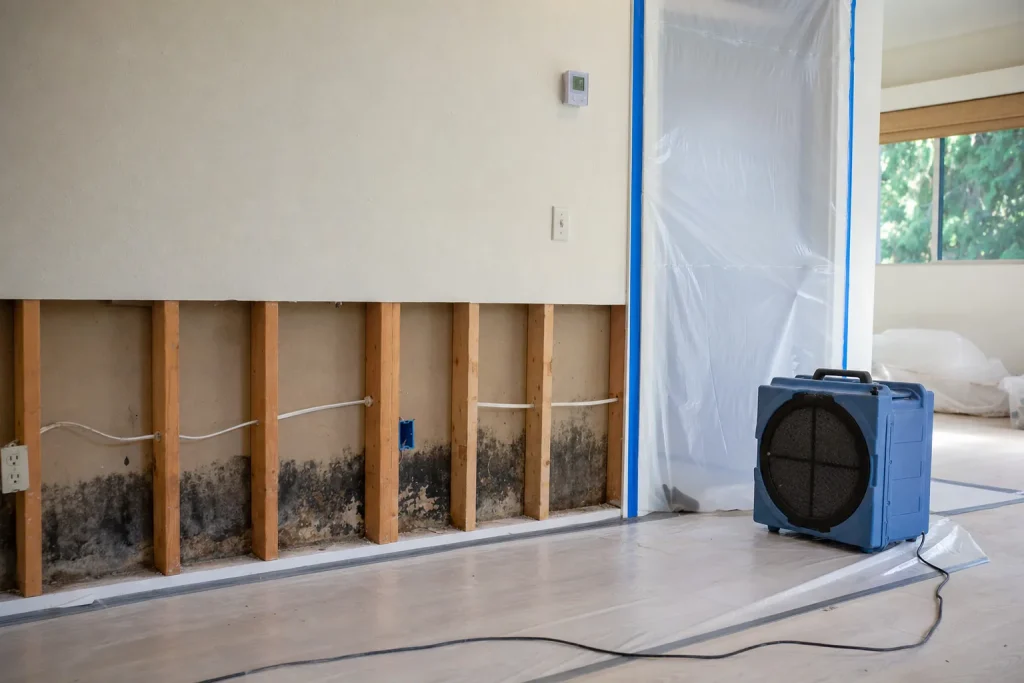
- Containment and protection: isolating the access and work area so debris and spores are not carried into the living space.
- Removal: wet or moldy insulation and debris are removed and bagged.
- Cleaning: affected framing is cleaned of surface growth; badly damaged wood may need repair.
- Drying and verification: moisture is brought down and confirmed with readings before closing up.
- Prevention: a proper vapor barrier and moisture control so the problem does not return.
For a sense of what drives the price, see mold remediation cost.
Crawl space mold help near Burien
If you notice a persistent musty smell, damp floors, or visible growth under a home in Burien, White Center, Tukwila, Des Moines, or nearby, our mold remediation service can assess the crawl space, find the moisture source, and explain the scope before any work starts.