
A water damage smell is usually your first clue that moisture is still trapped somewhere it shouldn’t be, even if everything looks “dry” on the surface. And because odor follows moisture, getting rid of it for good is less about perfumes and more about finding the wet zone, drying it correctly, and removing whatever the water fed along the way.
In this guide, you’ll learn what that smell actually resembles, why it happens, whether it can be harmful, and the most reliable steps for water damage smell removal. We’ll also cover when a musty smell after water damage points to mold, and when it’s time to bring in help.
Best for: Homeowners or renters who notice lingering mustiness after a leak and want a practical, step-by-step odor plan.
Not ideal when: The smell is strongest inside walls, under floors, or returns quickly after you’ve dried and cleaned the area.
Good first step if: You can locate the moisture source and access the affected materials to dry, clean, and dehumidify them.
Call a pro if: You suspect hidden moisture, sewage contamination, extensive wet drywall, or any visible mold growth you can’t safely remove.
Quick Summary
- Water-damage odor is typically musty, earthy, and “stale,” and it often gets stronger in closed-up rooms or closets.
- The smell comes from moisture feeding microbes plus wet porous materials holding onto odor molecules.
- Odor is a moisture problem first, a cleaning problem second, and an air problem last.
- Effective deodorizing usually requires drying, removing damaged porous materials, and cleaning hard surfaces thoroughly.
- If the musty smell after water damage keeps returning, assume there’s still damp material or hidden mold nearby.
What Does Water Damage Smell Like
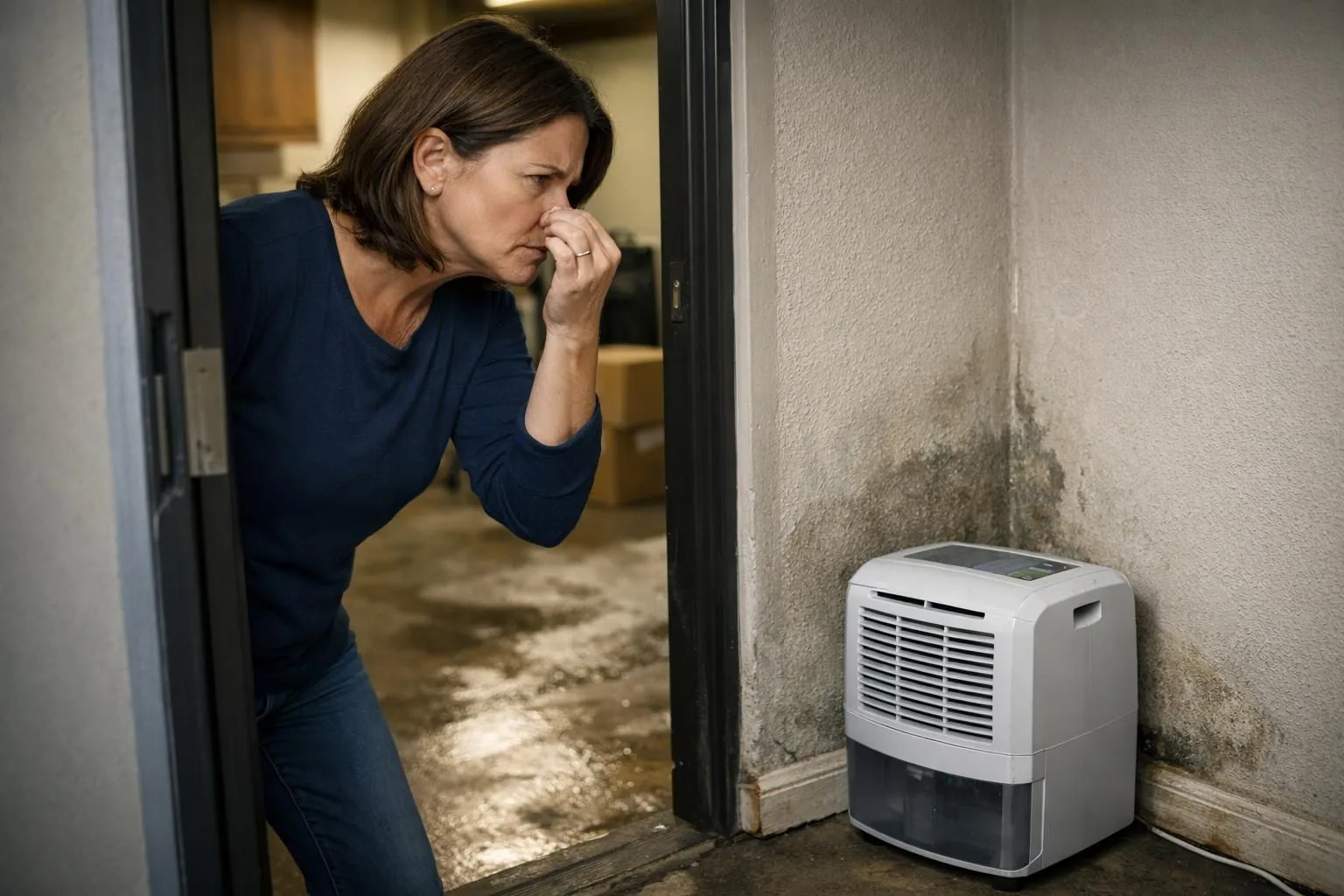
Water damage usually smells musty, earthy, and stale, like damp cardboard, a wet basement, or towels that never fully dried. It often hits when you open a closet, enter a closed room, or turn on HVAC.
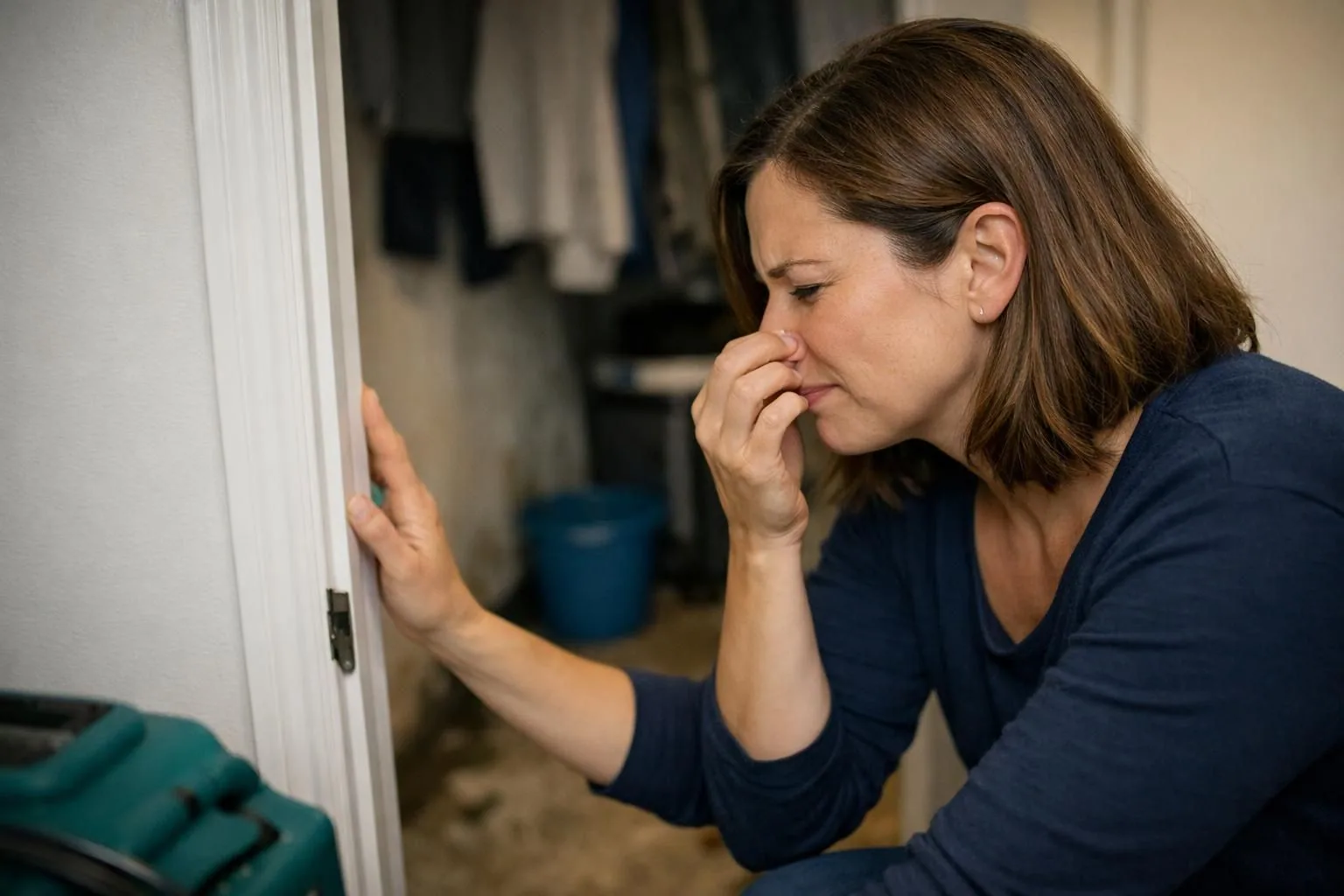
These odors cling to porous materials like drywall paper, insulation, carpet pad, and unfinished wood, so the surface can feel dry while deeper layers stay damp or microbe-affected.
Clues: damp paper points to wet drywall or stored boxes; sour “old laundry” suggests wet fabrics or carpet pad; earthy basement notes can mean concrete or crawlspace moisture; sharp, dirty smells suggest contamination. The key difference is persistence and worsening with humidity.
Why Does Water Damage Cause a Musty Smell
Water damage causes a musty smell because moisture fuels microbial growth and releases odor compounds that soak into porous materials. It changes the biology and chemistry of a space, not just its humidity.
Mold and mildew are common sources, but bacteria can also smell, especially when water sits in carpet pad, under vinyl, or inside wall cavities. Microbes feed on dust, paper facing, and wood fibers, creating a “dirty damp” odor before growth is obvious.
Drywall, insulation, particleboard, and carpet padding trap moisture and odor, so smells return as humidity rises. To troubleshoot, think about where water traveled, not only where you noticed it. For bathroom pathways, see: leaking shower warning signs.
Is the Smell Dangerous
The smell itself usually isn’t toxic, but it signals conditions that can affect health and the building. Odor often indicates ongoing dampness, microbial growth, or residues from contaminated water.
Musty air can trigger irritation even with limited visible mold. People report headaches, scratchy throat, coughing, or worsened allergies and asthma, especially in bedrooms or near HVAC returns.
Moisture can also weaken drywall, warp wood, corrode fasteners, and damage electrical components if water reached outlets or fixtures. Treat odor as a diagnostic clue, and use extra caution with sewage or large hidden wet areas. For the typical professional workflow, see: water restoration process.
How to Get Rid of Water Damage Smell
To get rid of water damage smell, stop the moisture source, dry the structure fully, remove odor-holding porous materials, then clean and deodorize surfaces and air. Deodorizing first is like cleaning while the leak still runs.
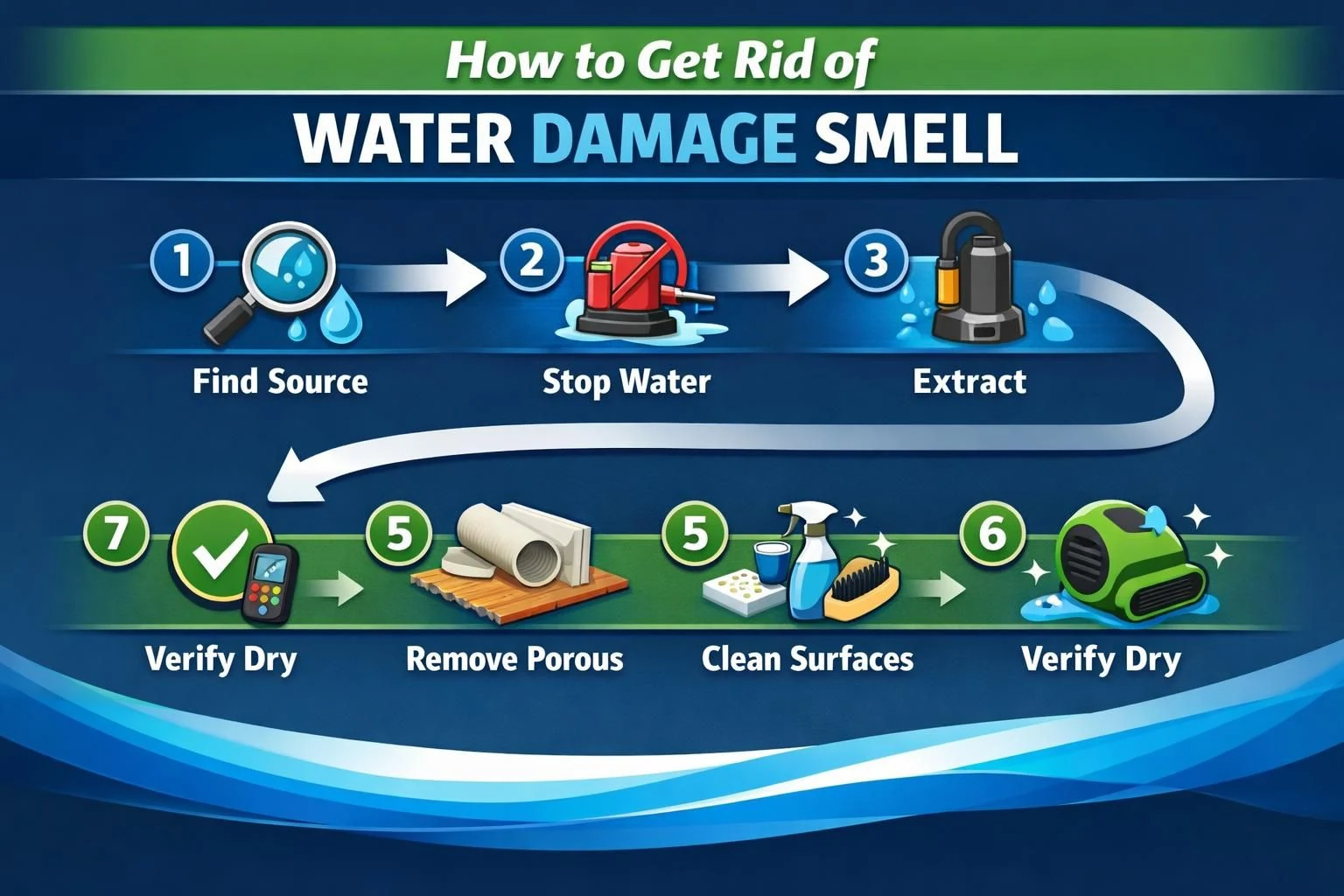
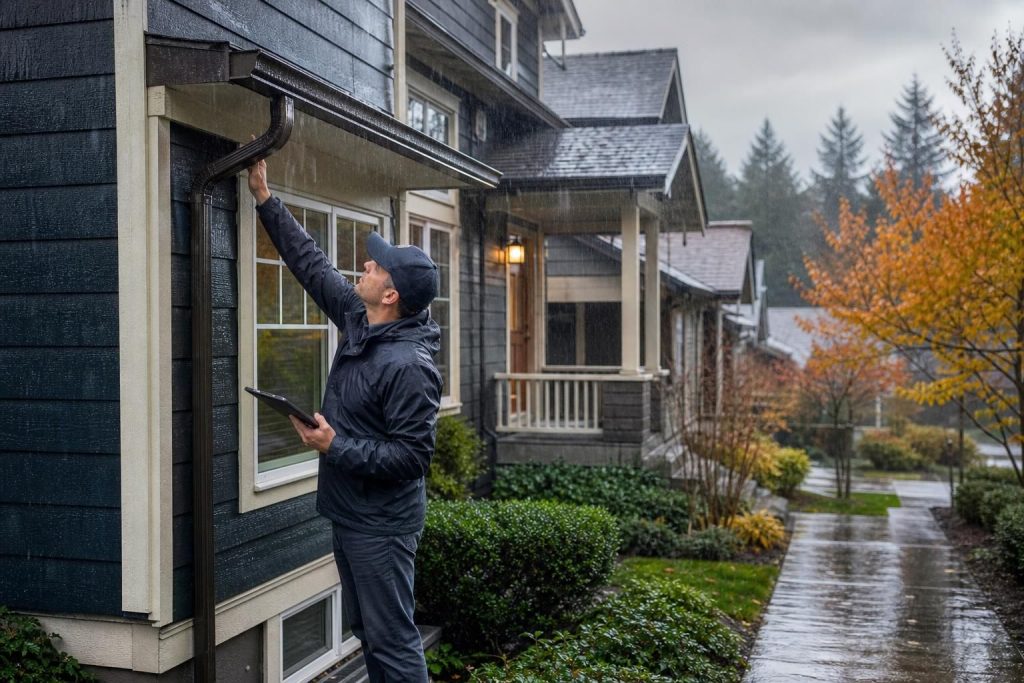
First, eliminate the water problem. Odor removal fails if a leak, seepage, or condensation issue is still active. Check supply lines, under-sink cabinets, appliances, wet baseboards, window condensation, and poor bathroom or laundry ventilation. In apartments, water may be coming from another unit, and access or responsibility can delay real repairs. For next steps, see: steps after apartment water damage.
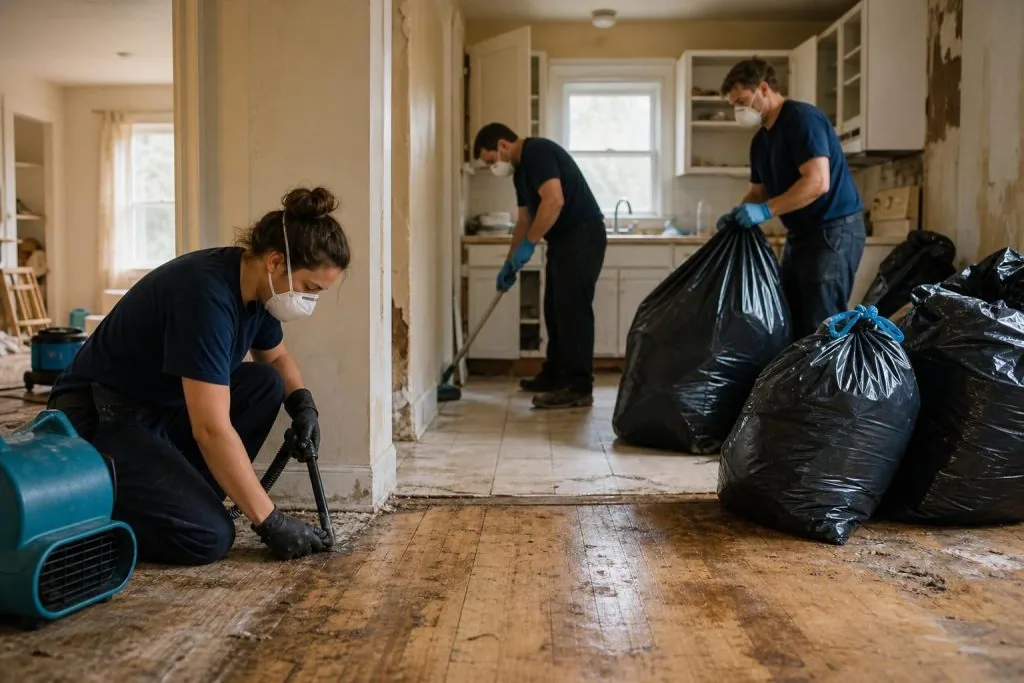
Second, dry deeper than the surface. Moisture hides under carpet, behind baseboards, inside wall cavities, and under flooring edges. Run a dehumidifier continuously in the affected zone, use fans to move air across wet surfaces, and increase air exchange when outdoor humidity is lower. Pull back wet carpet and remove saturated pad when needed. If the smell spikes overnight with doors closed, you are likely not dry yet.
Third, remove materials that won’t recover. Carpet padding, swollen particleboard or MDF trim, delaminated drywall, and soaked insulation often keep odor even after drying. Drywall is a frequent culprit because paper facing traps odor and supports growth. If you’re unsure what’s salvageable, use: drywall damage red flags.
Fourth, clean and treat the air last. Wash hard surfaces with mild detergent, rinse, and dry fully, then use HEPA filtration, activated carbon, and continued dehumidification to keep humidity down.
When the Smell Means Mold
A persistent odor that’s strongest in one spot or returns quickly after drying often points to mold in hidden or porous materials. You can have a moldy smell without visible growth, especially behind drywall, under flooring, or in insulation.
Mold is more likely when the odor concentrates near one wall or closet, worsens during humidity or HVAC use, or you see bubbling paint, peeling wallpaper, or soft drywall. Repeating leaks and stains that reappear after cleaning are also red flags.
“Map the smell.” Check baseboards, outlets, plumbing penetrations, under sinks, behind appliances, and flooring edges. If you find visible growth on porous materials, plan on removal, not wiping. If flooring seems involved, review: wood floor damage signs.
When to Call a Professional
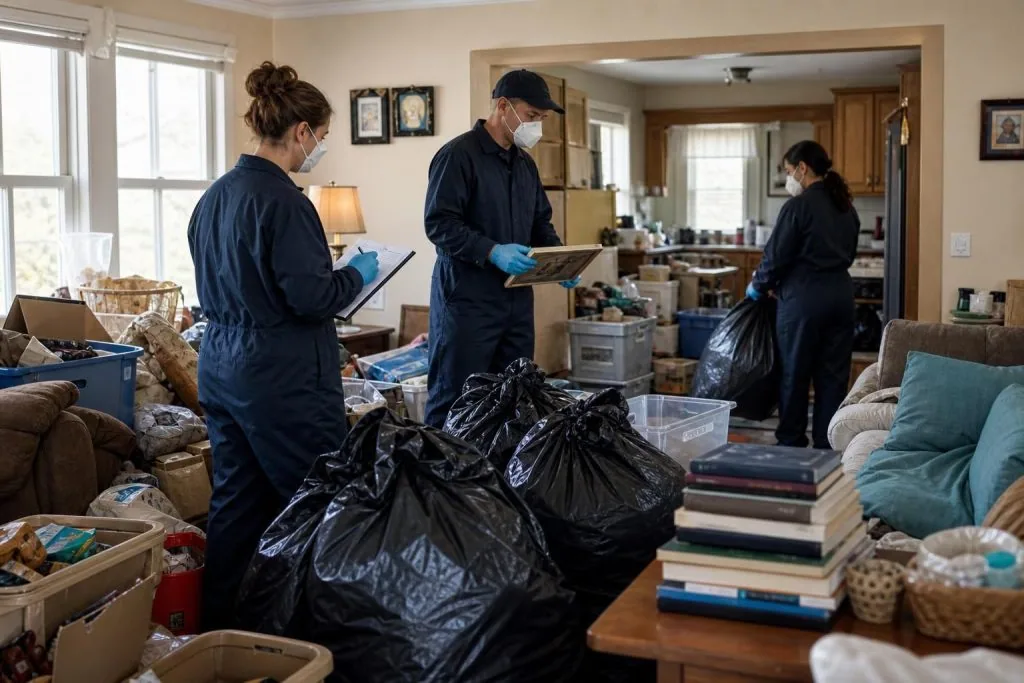
Call a professional when the odor suggests hidden moisture, contamination, or damage you can’t access or dry correctly. DIY works for small, open wetting, but it fails when the source is trapped.
Don’t wait if the smell persists after several days of dehumidification, you suspect water inside walls or under floors, or there was sewage or dirty water. Pros use meters, thermal imaging, commercial drying, and containment. If you need urgent stabilization, see: emergency restoration help.
FAQs
How Long Does a Water Damage Smell Last?
It can last until materials are truly dry and odor-holding porous items are removed or cleaned. If it persists beyond a few days of active drying, assume trapped moisture or microbial growth.
Can I Just Use Baking Soda or Air Fresheners to Fix It?
Baking soda may help minor odors in small, fully dry areas, but it won’t fix mustiness from damp materials. Air fresheners mainly mask smells, delaying source control and drying.
Why Does the Smell Come Back After I Clean?
It returns when the cause remains, like damp drywall, wet carpet pad, or moisture under flooring. Surface cleaning helps briefly, but hidden wet or contaminated materials keep producing odor as humidity changes.
What if I Can’t Find Where the Water Is?
Check common paths: under baseboards, around plumbing penetrations, beneath appliances, and along flooring edges. If odor is strong but nothing shows, hidden moisture is likely and professional detection may be fastest.
Does Insurance Cover Odor Removal After Water Damage?
Coverage depends on the cause and your policy’s exclusions and limits. To judge whether to file, see how insurers separate sudden leaks from long-term seepage: insurance water damage coverage.
Conclusion
Getting rid of a water damage smell comes down to one simple idea: odor follows moisture. If you stop the source, dry deeper than the surface, remove porous materials that won’t recover, and clean residues off hard surfaces, you’ll usually get lasting results instead of temporary cover-ups.
Your practical next step is to pick one room, locate the strongest odor point, and work outward with drying and removal decisions. If the smell keeps returning or you suspect hidden wet areas, treat it as an active moisture problem and plan your water damage smell fix around finding what’s still damp.