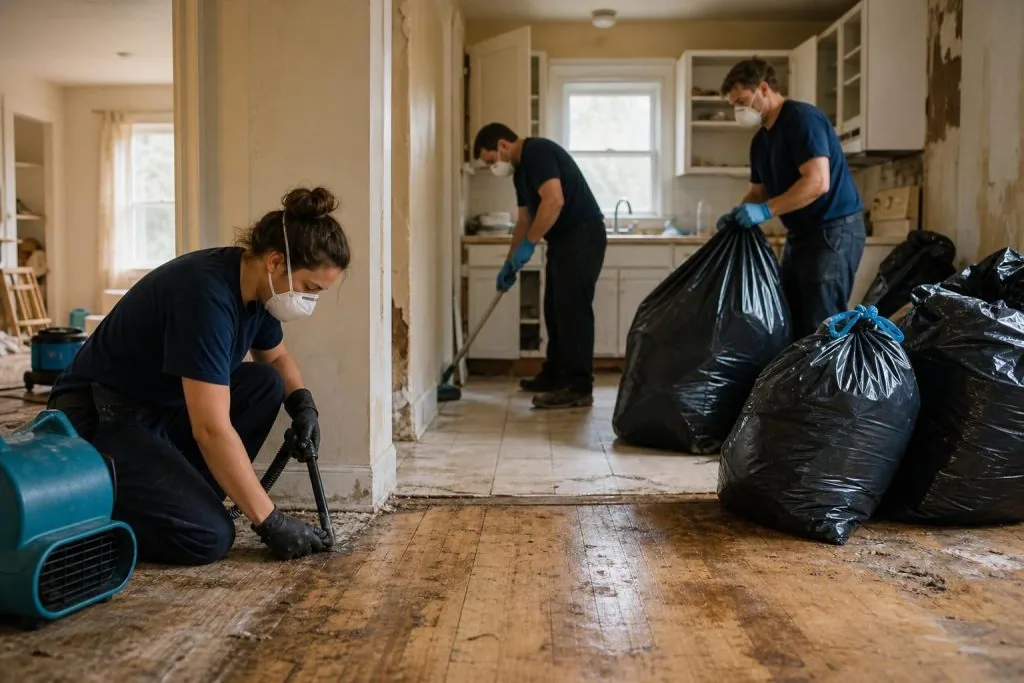

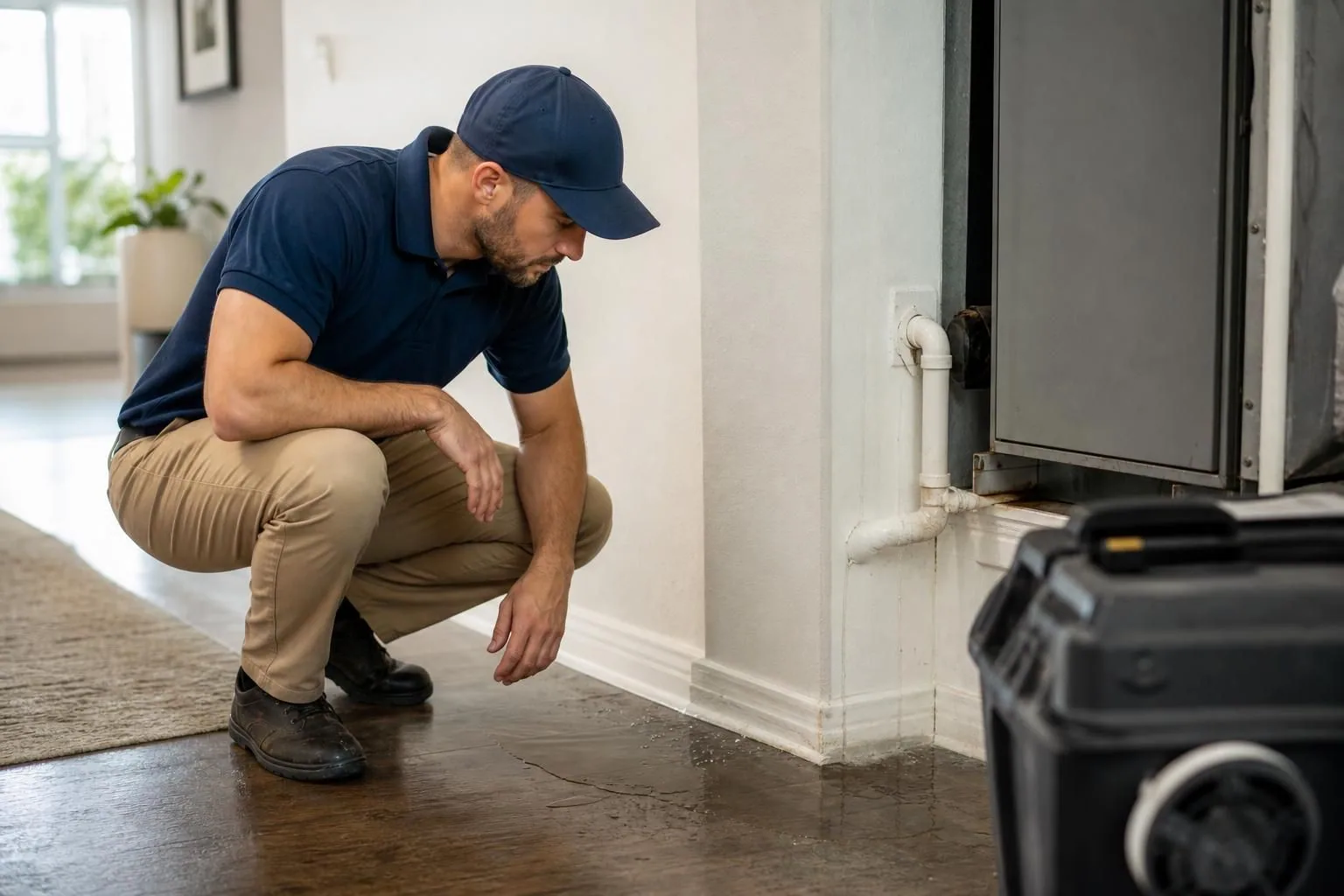
If your AC is running nonstop in summer and you notice dripping, damp floors, or a growing ceiling stain, you may be dealing with AC condensate line water damage cleanup. This usually starts when the air conditioner’s condensate drain line, the small pipe that carries moisture away from the unit, clogs or overflows. The visible water may be only part of the problem. Moisture can travel into ceilings, wall cavities, insulation, baseboards, and flooring before you realize anything is wrong. In this guide, you’ll learn what to do first, how to spot hidden damage, how drying works, and when to bring in HVAC or restoration help.
- Use this for homeowners who found fresh AC-related water damage and need safe first steps before cleanup begins.
- Pause if electrical panels, outlets, or sagging ceilings are wet and the area may be unsafe to enter.
- Turn the AC off if you can do so safely and stop adding more moisture.
- Get expert help if water reached ceilings, insulation, multiple rooms, or smells musty after the AC leak.
Quick Answer
The safest first move after an AC drain line overflow is to stop the AC if you can, protect the area, remove visible water, and check whether moisture reached building materials. Don’t keep running the system just to stay cool. If the drain is backed up, the air conditioner may keep producing condensation and adding water to the same area.
- Turn off the AC at the thermostat if it’s safe.
- Avoid wet outlets, switches, ceiling lights, and electrical panels.
- Move rugs, boxes, furniture, and electronics away from the wet area.
- Place towels or a shallow container under active dripping.
- Remove standing water with towels, a wet vacuum, or a mop.
- Look around the indoor HVAC unit, drain pan, and visible drain line.
- Photograph the damage before moving damaged materials.
- Call an HVAC technician to fix the clog or drain issue.
- Call a cleanup professional if water entered ceilings, walls, or floors.
Here’s the key difference: HVAC repair stops the leak source, but it doesn’t dry the structure. If water has soaked drywall, insulation, trim, or flooring, you may need water damage restoration to remove trapped moisture and prevent secondary damage.
Why AC Condensate Lines Cause Hidden Water Damage
AC condensate lines cause hidden water damage because they can overflow slowly while the air conditioner keeps making new moisture. Your AC cools warm indoor air. As that happens, water vapor turns into liquid condensation, like droplets on a cold glass in summer. That water normally drains through a condensate line.
When the line clogs, cracks, disconnects, or backs up, the water has to go somewhere. If the air handler, which is the indoor part of the AC system, sits in an attic, closet, hallway, or ceiling space, the overflow may soak nearby materials before it becomes obvious. An attic air handler drain line can clog and drip into the ceiling below a bedroom or hallway. You might only see a small yellow stain at first.
A drain pan can also overflow near an indoor HVAC unit. That can wet surrounding flooring, baseboards, drywall, or stored belongings. During hot weather, the AC may run for hours, so a minor HVAC condensation leak can become a bigger cleanup job.
Think of it like a slow faucet hidden behind a wall. The stream may be small, but if it runs long enough, drywall, insulation, wood, and subflooring can absorb it. If you’re unsure whether the wet area is larger than it looks, compare what you see with these signs of hidden water damage.
Signs the Leak Reached Ceilings, Walls, or Floors
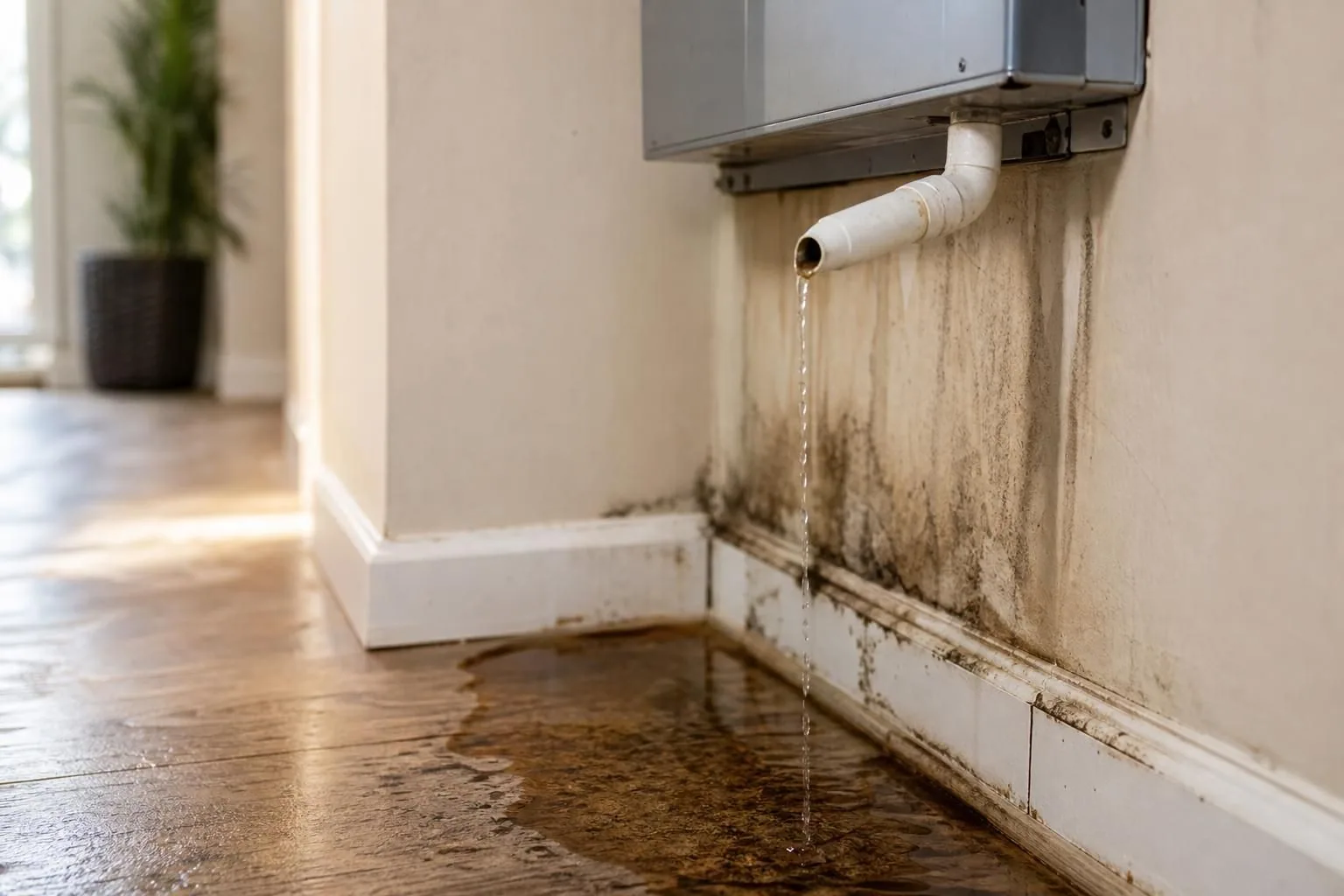
The clearest signs that an AC leak reached building materials are staining, sagging, bubbling, softness, musty odor, and dampness that returns when the AC runs. Ceiling water damage from AC often starts as a small stain that grows during hot weather. If the spot gets darker or wider each time the system runs, the drain line or pan may still be overflowing.
Check more than the obvious wet spot. Water follows gravity, framing, seams, and small gaps. That means the stain on the ceiling may be several feet away from the air handler above it. Look in closets, hallways, adjacent rooms, and around vents.
Watch for these AC-specific warning signs:
- Paint that bubbles, peels, or feels soft
- Drywall that sags, crumbles, or dents easily
- Baseboards pulling away from the wall
- Flooring that cups, buckles, or feels spongy
- Damp carpet near an HVAC closet
- Musty smells near vents, closets, or the AC area
- Wet insulation in an attic or ceiling cavity
- A stain that grows whenever the AC runs
Don’t trust the surface alone. A ceiling can feel dry outside while insulation above it is still wet. Drywall can also dry on the face while holding moisture inside. If the damage is overhead, this guide to ceiling water damage repair can help you understand what may need inspection or replacement.
What to Do Immediately Before Cleanup
Before cleanup, stop the moisture source, make the area safer, and document what happened. Cleaning wet materials while the AC is still overflowing is like mopping during a rainstorm.
Use this quick action plan:
- Turn the thermostat to off.
- Avoid electrical hazards.
Stay away from wet outlets, switches, ceiling fans, light fixtures, and breaker panels. If water is dripping through a light, don’t use that fixture.
- Protect belongings.
Move furniture, storage bins, clothes, rugs, and electronics out of the wet zone. If items are too heavy, lift them onto blocks or place foil under the legs.
- Contain active dripping.
Place a bucket, pan, or towels under drips. Don’t poke a sagging ceiling unless a qualified person tells you it’s safe.
- Remove surface water.
Use towels, a mop, or a wet vacuum rated for water. Don’t use a regular household vacuum on water.
- Take photos and notes.
Photograph the AC unit area, drain pan, ceiling stains, wet flooring, and damaged belongings. Write down when you first noticed the leak.
- Separate the jobs.
Call HVAC help to clear or repair the drain line. Call cleanup help if water entered structural materials.
A common mistake is unclogging the drain line and assuming the home is fine. Fixing the AC drain line overflow stops new water, but it doesn’t remove moisture already trapped inside drywall, flooring, or insulation.
Drying, Dehumidification, and Mold Prevention
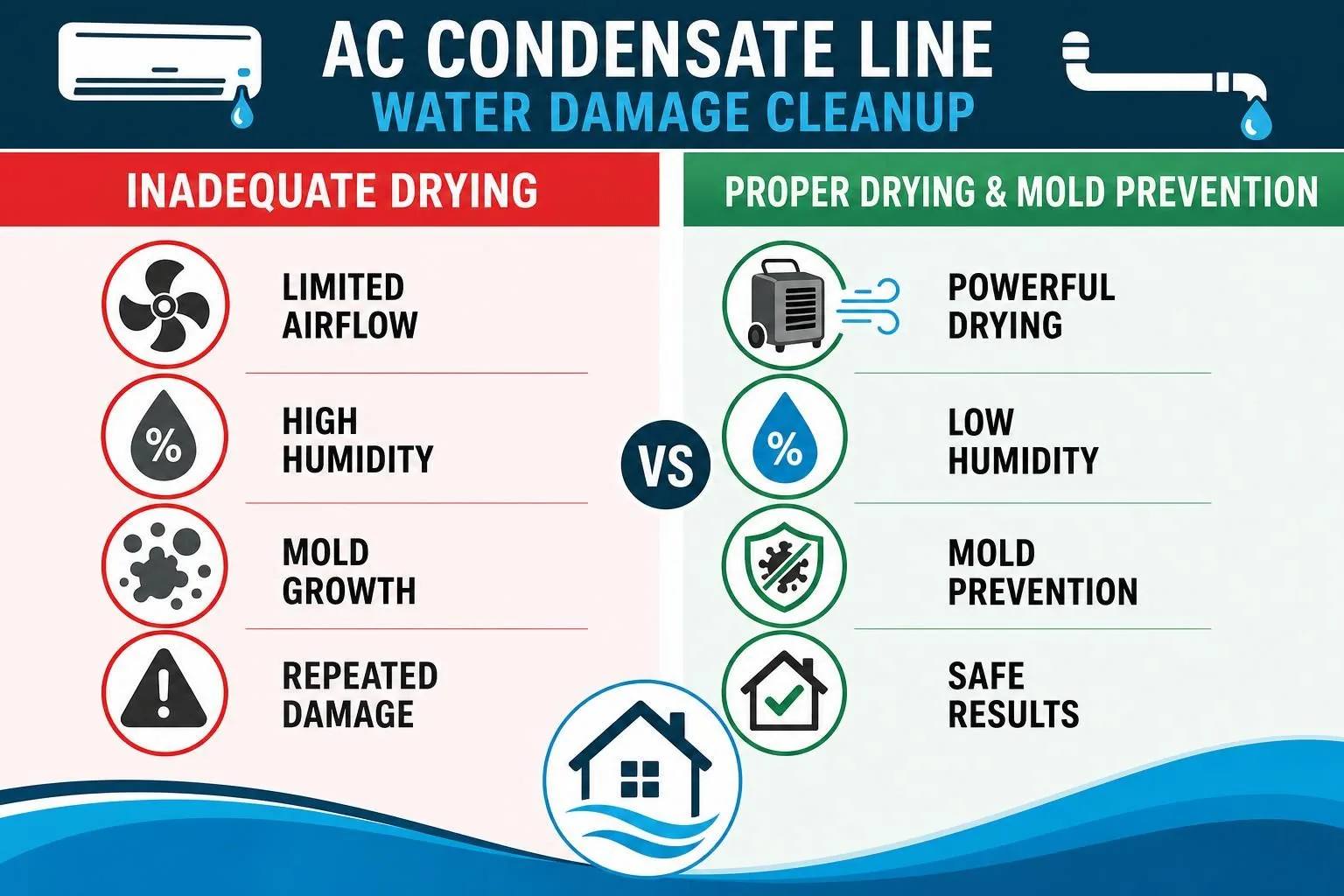
Drying AC-related water damage means removing standing water, lowering indoor moisture, and checking hidden materials until they’re actually dry. A fan alone may dry the surface while pushing humid air around the room. Dehumidification pulls moisture out of the air so wet materials can release moisture more effectively.
Start by removing standing water you can safely reach. Then open access only where appropriate. Wet carpet padding may need to be lifted or removed. Wet baseboards may need inspection behind them. If the leak came from an attic air handler, insulation above the ceiling may need to be checked. Wet insulation can hold water like a sponge.
Use a dehumidifier if the area is damp and safe for equipment. Keep interior doors open in the affected area unless a professional sets up containment. If you’re not sure how to size, place, or run one, this beginner guide to using a dehumidifier after water damage explains the basics.
Mold prevention starts with moisture control. Mold is a fungus that can grow on damp organic materials, such as paper-faced drywall, dust, wood, or carpet backing. Don’t spray bleach around and assume the issue is solved. The goal is to dry wet materials, remove unsalvageable porous items, and monitor musty odors. If drywall stays soft, smells musty, or shows visible growth, get it checked before covering or repainting it.
When to Call a Restoration Company
You should call a restoration company when AC water damage reaches ceilings, walls, insulation, subflooring, multiple rooms, or any area that stays damp or smells musty. This is especially true when the leak sat unnoticed. Summer AC leaks can run repeatedly because the system cycles on and off all day.
A restoration company focuses on the water damage, not just the HVAC problem. They can inspect moisture inside materials, remove water-damaged items, set drying equipment, and identify areas that may need repair. An HVAC technician still needs to fix the clogged condensate line, failed pump, cracked pan, or disconnected drain. These are two different jobs.
Call sooner if you notice:
- A ceiling stain that keeps growing
- Dripping from a ceiling, vent, or light fixture
- Wet attic insulation
- Damp carpet or flooring around an HVAC closet
- Moisture in more than one room
- Soft baseboards or swollen trim
- Musty odor near vents, closets, or walls
- Visible mold growth
- Water that may have been sitting for more than a short time
Here’s a practical example. Your attic air handler clogs and water stains the hallway ceiling below. The HVAC tech clears the line, and the dripping stops. That’s good, but the ceiling cavity may still contain wet insulation. In that case, drying the surface with a box fan won’t tell you whether the hidden space is dry.
Another example: the drain pan overflows beside an indoor unit and wets laminate flooring, drywall, and baseboards. The floor may look fine after mopping, but the edges can swell later if moisture reached the underlayment or subfloor. For wet wall materials, this guide to drywall water damage explains signs that repair may be needed.
If you smell mustiness after an air conditioner leak water damage event, don’t ignore it. Odor often means moisture remained somewhere you can’t see. When visible growth or persistent odor appears, professional mold remediation may be needed to address contaminated materials safely.
FAQs
What Causes an AC Condensate Drain Line to Overflow?
An AC condensate drain line usually overflows because water can’t drain away from the indoor unit. Common causes include a clog, a backed-up line, a cracked or rusted drain pan, a disconnected pipe, or a condensate pump problem. The AC may keep making water while it runs, which worsens the overflow.
Can I Keep Using the AC if the Drain Line is Leaking?
Don’t keep using the AC until the cause is fixed. If the drain line is clogged or the pan is overflowing, running the system can add more water to ceilings, walls, or floors. Turn it off if safe, then contact an HVAC technician to repair the drainage problem.
Does an AC Drain Line Overflow Always Cause Mold?
No, an AC drain line overflow doesn’t always cause mold. The risk depends on how much water escaped, what materials got wet, and how long moisture remained. The safest approach is to dry the area thoroughly, check hidden spaces, and investigate any musty smell or visible growth.
Should I Document Air Conditioner Leak Water Damage for Insurance?
Yes, document the damage before cleanup if you can do so safely. Take clear photos of the AC area, drain pan, wet rooms, ceiling stains, flooring, and damaged belongings. Save repair notes from the HVAC technician and cleanup company. Coverage decisions depend on your specific policy and situation.
How Do I Know if the Surface is Dry but Hidden Areas Are Still Wet?
Suspect hidden moisture if stains grow, odors remain, drywall feels soft, flooring changes shape, or dampness returns when the AC runs. Wet insulation, wall cavities, and subflooring can hold moisture after the surface looks dry. A restoration professional can check materials with moisture-detection tools.
Conclusion
AC condensate line water damage cleanup starts with one simple goal: stop adding water, then find out how far the moisture traveled. Turn off the AC if it’s safe, protect belongings, remove visible water, and avoid wet electrical areas. Then look beyond the first stain or puddle. Ceilings, insulation, walls, flooring, and baseboards can stay wet after the surface looks normal.
If the leak was small, fresh, and limited to a hard surface, careful drying may be enough. But if water reached building materials, smells musty, or keeps coming back when the AC runs, get help from HVAC and restoration professionals. That’s the safest way to fix the source and protect your home from hidden damage.