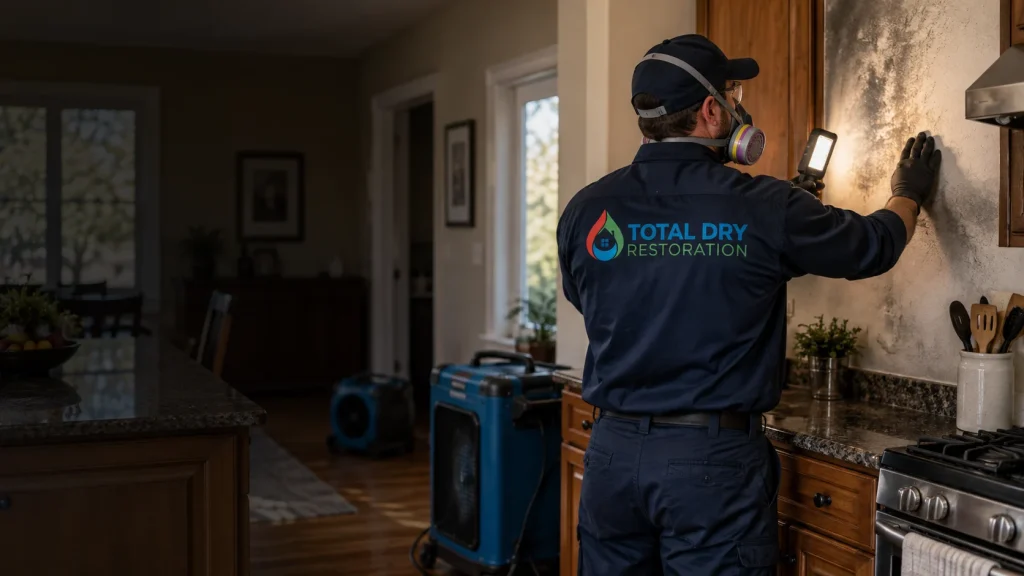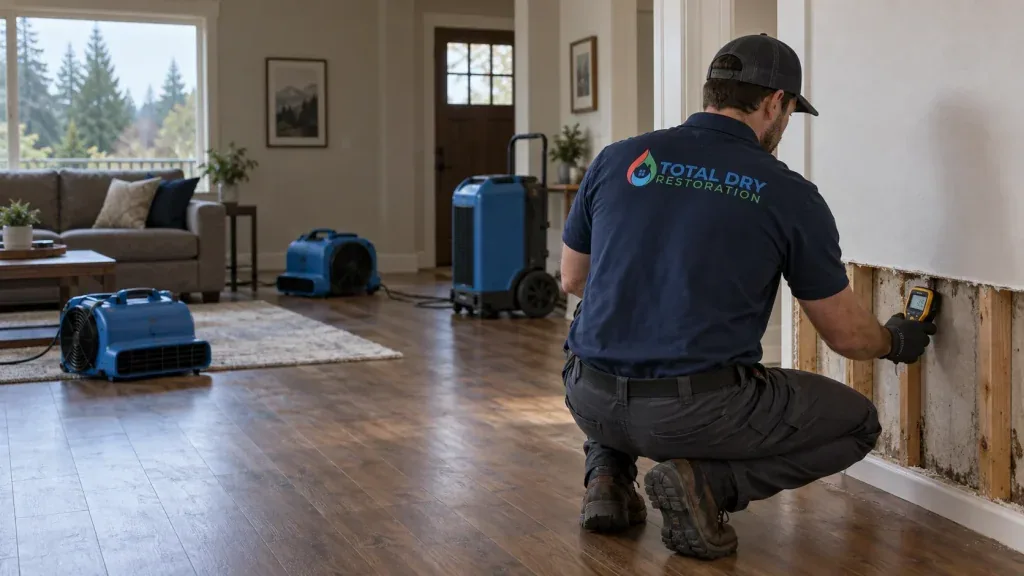

Before you touch wet ceiling tiles, swollen wallboard, or crumbling plaster, ask one question: could this material be old enough to contain asbestos? Not all water damage involves asbestos, but asbestos after water damage becomes a concern when older materials are stained, sagging, broken, soft, or about to be demolished.
- Stop cutting, scraping, drilling, or tearing out suspect materials.
- Check whether the home or building has older ceiling tiles, textured finishes, pipe insulation areas, flooring, or wall materials.
- Keep people away from loose debris if the material is damaged.
- Arrange asbestos testing after leak damage before repair crews disturb the area.
- Coordinate testing through /services/lead-and-asbestos-testing/ before water-related repair planning through /services/water-damage-restoration/.
Quick Answer
Not every leak creates an asbestos problem, but asbestos after water damage becomes a concern when older building materials are stained, sagging, broken, soft, crumbling, or about to be removed. If the home or building was built before the 1990s, treat suspect materials cautiously until testing confirms what they are.
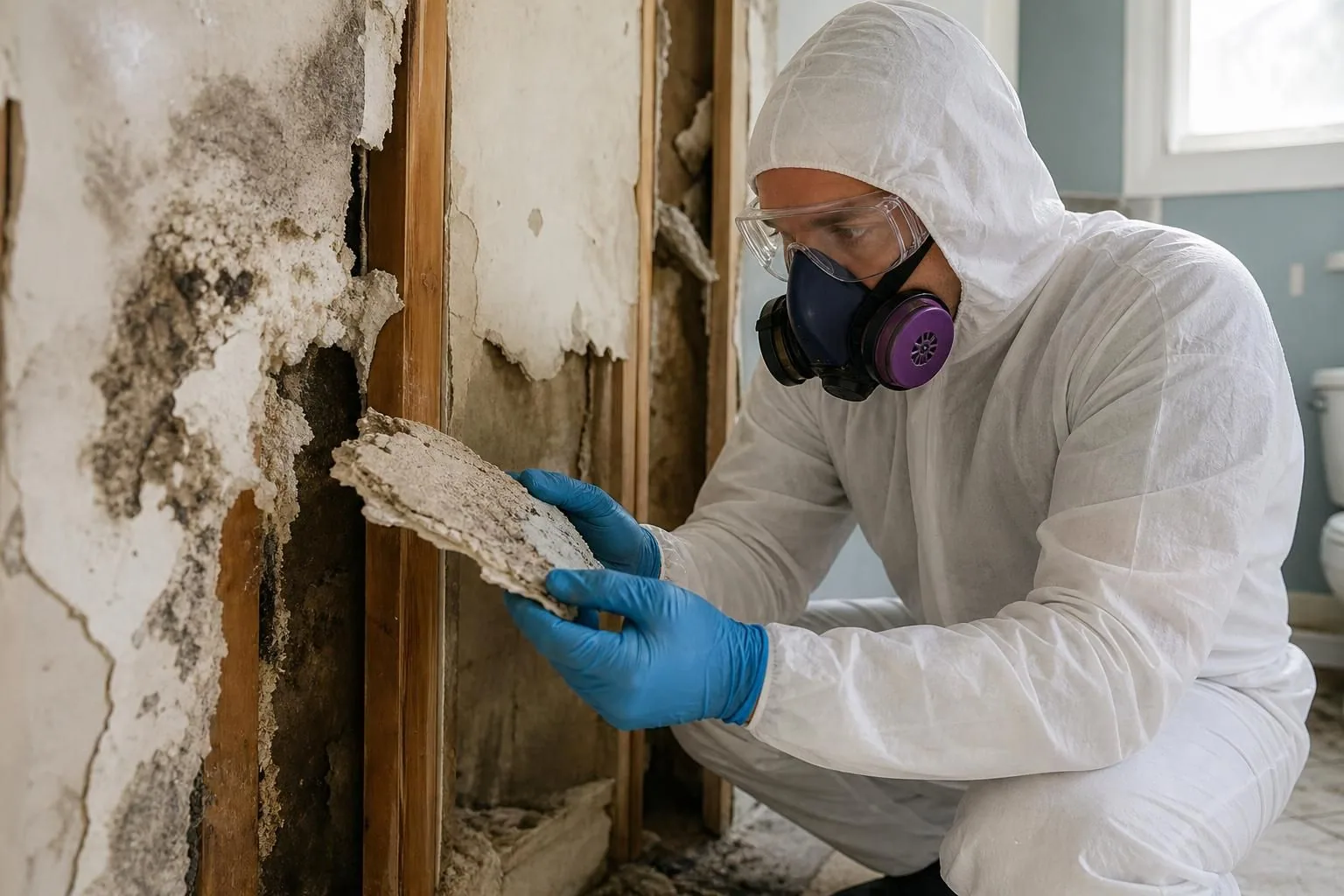
- Stop disturbing the material. Don’t pull down wet ceiling tiles, scrape texture, break wallboard, or remove damaged flooring if the material could be old. Wet doesn’t mean safe. Water can make some materials weaker, so they break apart more easily during cleanup.
- Check what’s damaged. Look for stained or sagging ceiling tiles, damaged textured ceilings or walls, old plaster, pipe or duct insulation areas, basement finishes, hallway ceilings, bathroom wall materials, and flooring layers exposed by flooding or leaks.
- Separate repair decisions from testing decisions. Water damage repair asks, “What needs drying or replacement?” Asbestos testing asks, “Can this material be disturbed safely?” Testing should come first when demolition, tear-out, sanding, scraping, or aggressive drying could disturb suspect materials.
- Keep people away from the immediate area if materials are broken. You’re not “containing” asbestos yourself. You’re simply reducing foot traffic and avoiding more disturbance until a qualified professional evaluates it.
- Coordinate testing and restoration in the right order.
A restoration crew may need test results before removing or drying suspect materials. For testing, use /services/lead-and-asbestos-testing/. For water-related restoration coordination after materials are cleared or contained, use /services/water-damage-restoration/.
Why Water Damage Can Trigger Material Disturbance
Water doesn’t neutralize asbestos. The bigger issue is that leaks can weaken old materials, so they crack, crumble, peel, or break apart during cleanup. If a material contains asbestos, that physical disturbance can release fibers into the air. Think of it like a damp cracker: it may look mostly intact, but once you touch it, it falls apart.
This is why asbestos after water damage is often a pre-demolition question, not just a cleanup question. The leak may be stopped, but the damaged ceiling, wall, floor, or insulation-adjacent material still needs to be checked before anyone cuts, scrapes, drills, sands, pulls, or tears it out.
| Condition after leak | Why it matters | Before repair or demolition |
|---|---|---|
| Stained, sagging ceiling tiles | Tiles may snap or crumble when moved | Pause and arrange testing if older |
| Soft, bubbling wall finish | Layers can delaminate during scraping | Don’t dry-scrape or sand |
| Crumbling textured ceiling | Texture can become friable, meaning easily crushed | Keep disturbance low |
| Wet material near old insulation | Hidden layers may be suspect | Have the area evaluated first |
A common example is a ceiling leak that leaves old ceiling tiles stained and bowed. They may not look dangerous from the floor, but lifting one corner or pulling a broken tile down can create dust. The same applies in a bathroom, hallway, or basement where old plaster, joint compound, texture, or ceiling finish is already soft or flaking.
So what does this mean in practice? Treat damaged older materials as suspect until testing says otherwise. Testing comes before tear-out, not after the mess is already on the floor.
Older Materials That May Need Testing
Check the age and type of the damaged material before anyone cuts, pulls, scrapes, or drills it. Asbestos was used in many building products because it resisted heat and helped materials hold together. You can’t confirm it by sight, smell, color, or how wet it is. Only lab testing can do that.
Materials that commonly deserve a pause after a leak include ceiling tiles, textured ceilings or walls, old wallboard systems, flooring materials, insulation-adjacent materials, and specialty panels.
- Stained, sagging, cracked, or broken ceiling tiles, especially in older basements, offices, hallways, and finished lower levels.
- Textured ceilings or walls, including popcorn texture, heavy plaster texture, and old skim-coated finishes that are soft or flaking.
- Old wallboard systems, including joint compound, taping compound, and plaster around seams or patches.
- Flooring materials, such as older vinyl tiles, sheet flooring, backing paper, and black floor adhesive.
- Pipe, boiler, duct, or insulation-adjacent materials that got wet near mechanical rooms, crawl spaces, or basements.
- Old cement board, fireproof panels, or specialty panels around furnaces, heaters, fireplaces, and utility areas.
A simple rule helps: if the material is older, damaged, and in the path of demolition, test before tear-out. That applies whether you’re planning a bathroom repair, a hallway ceiling replacement, or a basement cleanup after a burst pipe.
If painted surfaces are peeling too, ask whether lead paint testing should happen during the same visit. A combined lead and asbestos testing appointment through /services/lead-and-asbestos-testing/ can help your restoration crew know what can be dried, contained, or removed safely before work continues through /services/water-damage-restoration/.
Why You Should Not Tear Out Suspect Materials Yourself
Tearing out wet, older materials can turn a contained problem into an airborne one. Asbestos is risky when tiny fibers are released into the air. You can’t see or smell those fibers, so “it looks fine” isn’t a reliable safety check.
Water damage makes this worse because materials often lose strength. A ceiling tile that was solid last week may be sagging, cracked, or crumbly today. Old plaster can delaminate, which means layers separate. Textured ceiling finish can soften and break apart. Once you start pulling, scraping, drilling, or bagging debris, you may disturb suspect material before anyone knows what’s in it.
Don’t assume wet means safer. Damp material may make less dust at first, but it can still break, smear, dry out later, or contaminate tools, flooring, and nearby contents. The bigger issue is control. Professional asbestos work uses testing, containment, protective equipment, and disposal rules. A homeowner cleanup usually doesn’t.
If you find suspect water-damaged material, follow this order.
- Stop cutting, pulling, scraping, or sanding the area.
- Keep people and pets away from the damaged room if material is loose or crumbling.
- Take photos from a safe distance so you can describe the issue clearly.
- Schedule asbestos testing before demolition or repair decisions are made.
- Wait for results before your restoration crew removes or dries suspect materials.
This is where coordination matters. Testing through /services/lead-and-asbestos-testing/ helps determine what can be handled normally and what needs containment before water damage work continues through /services/water-damage-restoration/.
Testing, Containment, and Restoration Next Steps
Treat suspect materials as “pause and verify,” not “rip out and see.” The right order is testing first, containment if needed, then water restoration work that avoids spreading dust or debris.
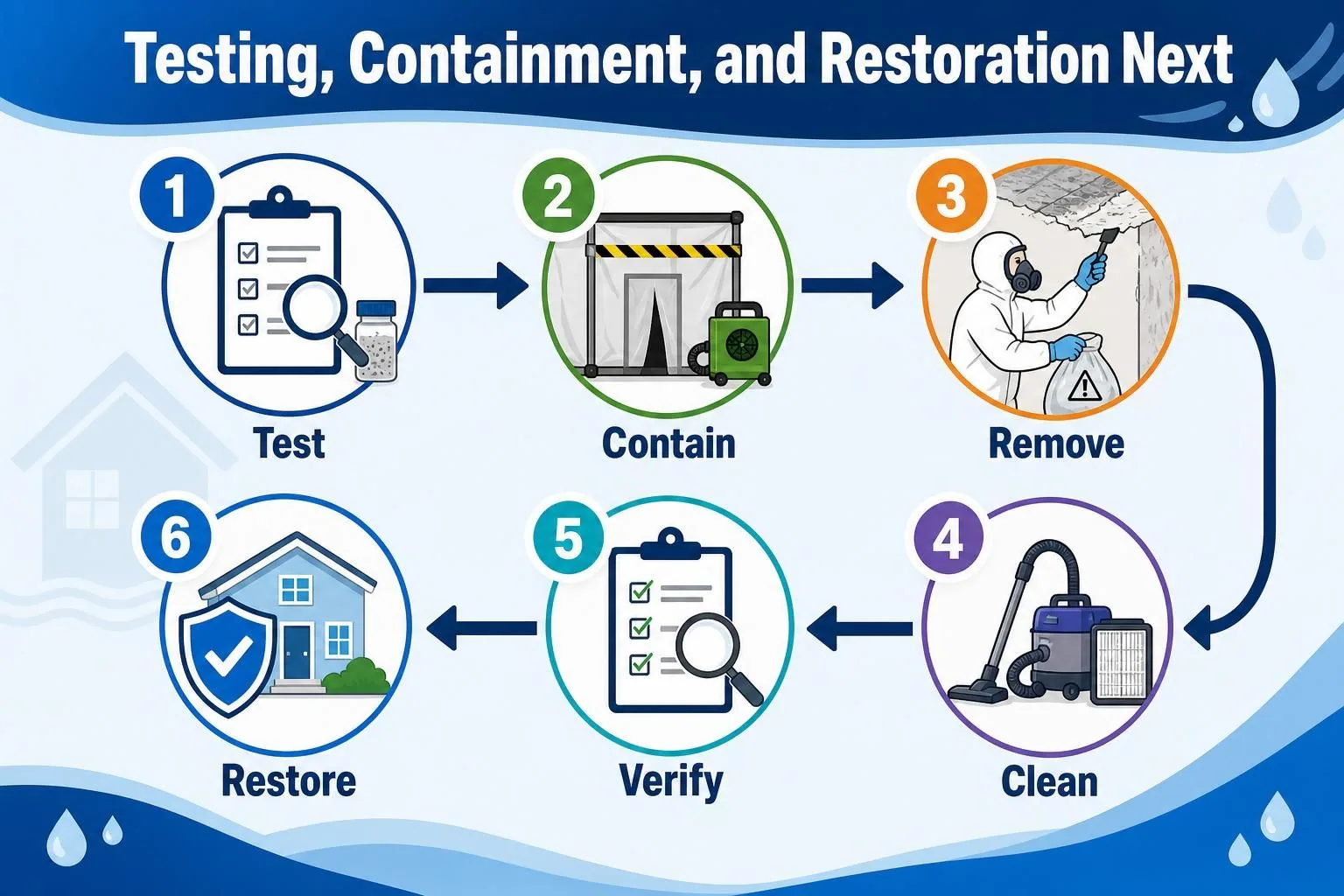
- Stop disturbing the area. Don’t cut, drill, scrape, pull down, or bag damaged materials that could be old enough to contain asbestos.
- Keep people away from the damaged spot. If a stained ceiling tile is sagging over a hallway, or a basement wall finish is soft and crumbling, limit access until it’s checked.
- Document what you can see. Take photos from several feet away. Note the room, the leak source if known, and whether the material is broken, delaminating, or falling apart.
- Arrange asbestos testing before demolition. Testing means a trained professional collects a small sample and sends it to a lab. This confirms whether the material contains asbestos instead of guessing by age or appearance.
- Wait for results before drying or removal decisions. This is the key difference: routine water damage repair can often move quickly, but asbestos after water damage needs confirmation before tear-out begins.
- Use containment if asbestos is confirmed or strongly suspected. Containment means isolating the work area so dust and fibers don’t spread into clean rooms.
- Coordinate restoration after the asbestos decision is made. Once testing and any required containment are handled, the water damage team can plan drying, removal, and repairs without disturbing unknown materials.
FAQs
Does Water Make Asbestos Safer?
No. Water may reduce some dust for the moment, but it doesn’t make asbestos harmless. Wet materials can also become softer, heavier, and easier to break. That’s why stained ceiling tiles, crumbling plaster, or delaminating wall finishes should be left alone until you know what they are.
When Do I Need Asbestos Testing After a Leak?
Arrange testing before demolition, scraping, sanding, drilling, or tear-out if the damaged material is older and suspect. Common examples include wet ceiling tiles, textured ceilings, old wallboard joint compound, pipe-area materials, vinyl flooring layers, and damaged finishes in a bathroom, hallway, or basement.
Can a Restoration Crew Remove Wet Materials Before Testing?
Sometimes, but not when the material may contain asbestos and removal would disturb it. In that case, the restoration crew may need to wait for test results before cutting out drywall, pulling ceiling panels, or using drying methods that could spread debris.
Who Should I Call First?
If water is still entering, stop the source first. Then pause work around suspect materials. For material confirmation, use professional lead and asbestos testing at /services/lead-and-asbestos-testing/. Once the asbestos decision is clear, coordinate the drying, removal, and repair plan with water damage restoration at /services/water-damage-restoration/.
What Should I Do While Waiting for Results?
Keep people out of the damaged area if materials are soft, broken, or shedding debris. Don’t sweep, dry-scrape, vacuum, or bag suspect pieces yourself. The safest move is simple: stop disturbance, limit access, and wait for clear testing guidance before repairs begin.
If the damaged material is old, soft, sagging, crumbling, or about to be cut open, pause before demolition. That’s the practical rule for asbestos after water damage: don’t disturb suspect ceiling tiles, wall finishes, insulation-adjacent materials, or textured surfaces until testing says what they are.
Your next move is simple. Keep people away from loose debris, avoid scraping or tear-out, and arrange professional testing through /services/lead-and-asbestos-testing/. Once the material is identified, coordinate the safe repair sequence with water damage restoration at /services/water-damage-restoration/ so cleanup, containment, drying, and rebuilding happen in the right order.