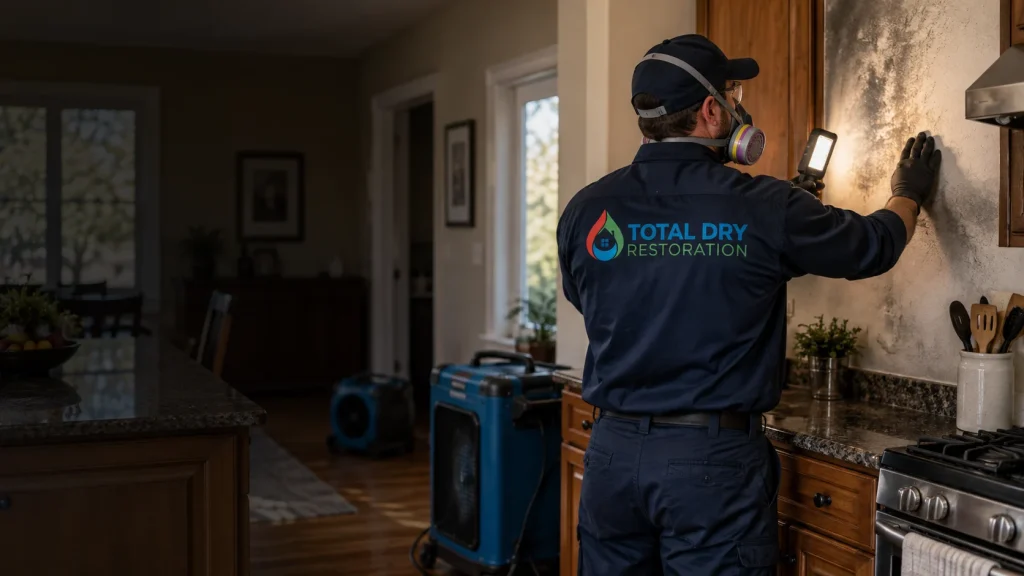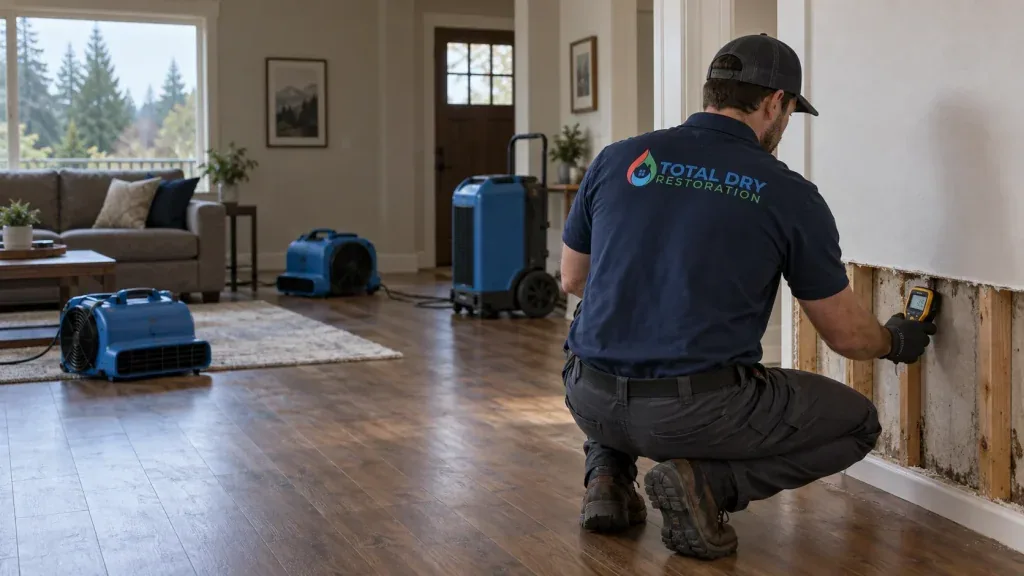

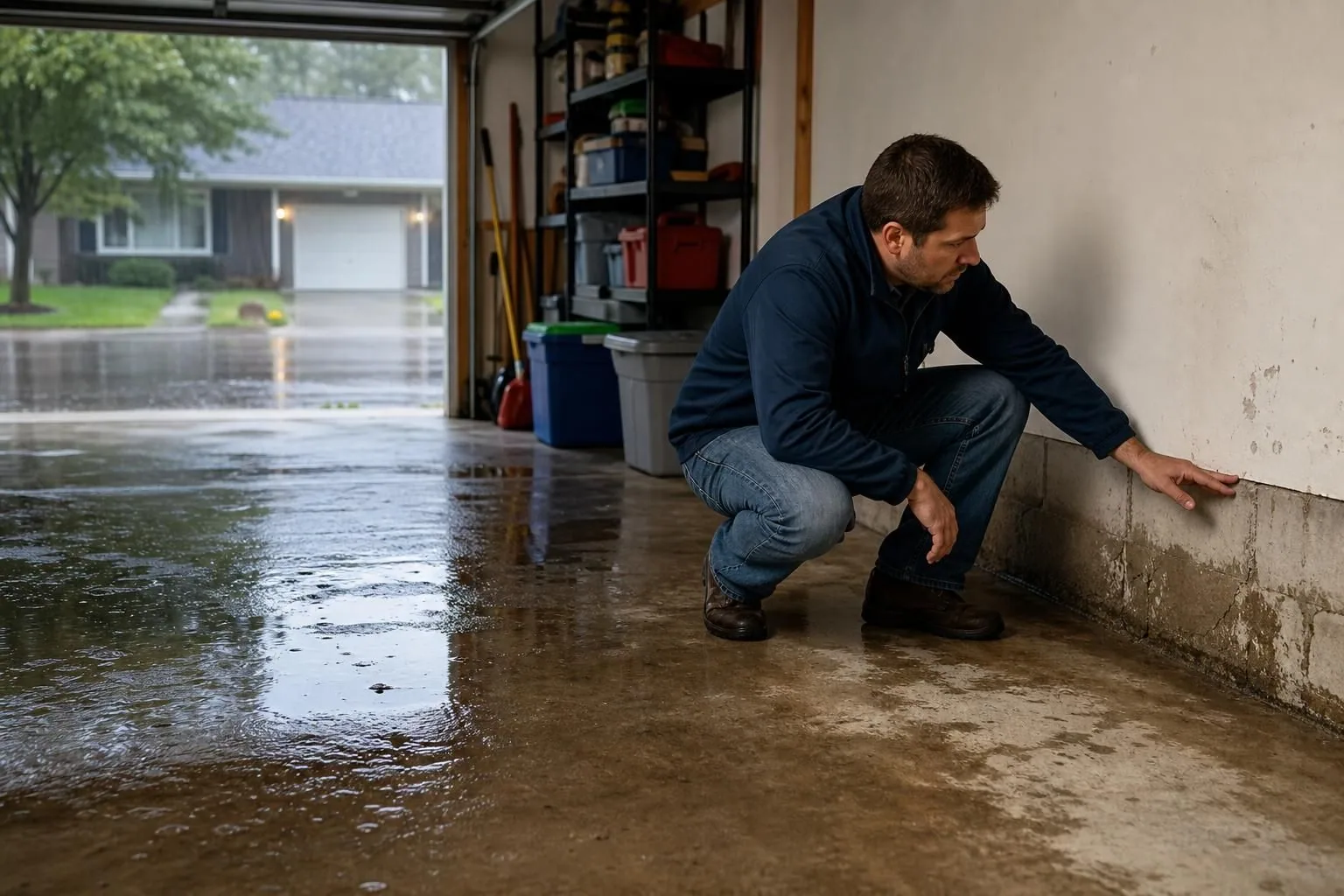
Finding rainwater in your garage after a local downpour is frustrating, but pause before you start mopping. Garage water damage after heavy rain can involve more than a shallow puddle, especially if water reached outlets, appliances, drywall, baseboards, tools, cords, or stored items. Stay out of standing water near anything electrical, take photos, move dry salvageable items when it is safe, look for the entry point, and begin drying only after the area is safe to work in.
Quick Answer
After heavy rain, treat garage water as a safety issue first. It can stay cosmetic, but it can spread fast if it reaches drywall, baseboards, boxes, outlets, appliances, tools, or cords.
- Check electrical risk. Don’t walk through water near outlets, appliances, tools, or cords. Shut power off only from a dry, safe location.
- Photograph before cleanup. Take wide shots, then close-ups of pooling, wet drywall, damaged boxes, and the likely entry point.
- Move what you can safely save. Prioritize vehicles, tools, chemicals, seasonal storage, and cardboard boxes touching wet concrete or walls.
- Find the likely source. Check the garage door, side doors, driveway slope, cracks, drains, gutters, downspouts, and nearby grading.
- Dry only when safe. Remove standing water, add airflow from a dry outlet, and use a dehumidifier if the space can be closed up.
Call a restoration pro if water reached drywall, outlets, stored valuables, or keeps returning after storms.
Common Ways Rainwater Enters a Garage
Most garage water damage after heavy rain starts at the lowest, weakest edge. Water follows the slope until something blocks it, absorbs it, or lets it inside.
- Check the garage door first. Look for rainwater pooling along the inside of the garage door after a wind-driven storm. A worn bottom seal, uneven concrete, or a bent door track can leave small gaps.
- Look at the driveway slope. If driveway runoff flows toward the door instead of away from it, even a good seal may get overwhelmed during local heavy rain.
- Inspect side doors and wall edges. Water stains near a side entry, cracked trim, or wet baseboards can point to wind-driven rain or failed weatherstripping.
- Scan cracks, foundation gaps, and drains. Hairline cracks, gaps where the wall meets the floor, clogged trench drains, and debris-packed floor drains can all route water inside.
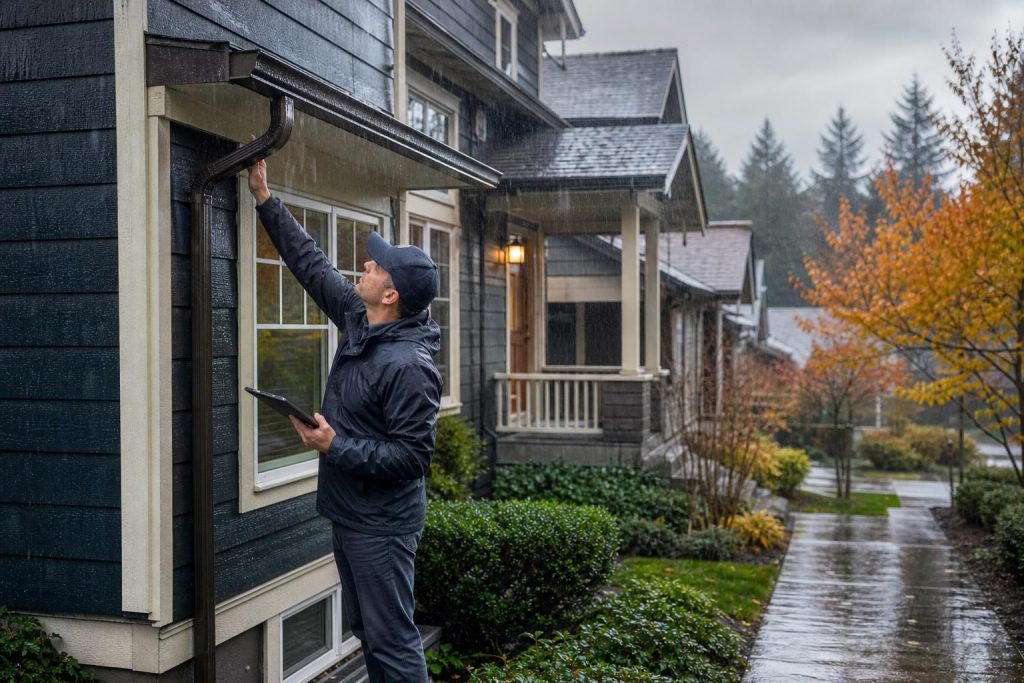
- Step outside and look up. Overflowing gutters, short downspouts, and poor grading, meaning soil that slopes toward the garage, can dump water against the wall.
| What you see | Likely entry point | Check next | Priority |
|---|---|---|---|
| Puddle inside garage door | Door seal or driveway slope | Bottom gasket and concrete pitch | High |
| Wet side wall or baseboard | Side door, crack, or runoff | Trim, caulk, grading | High |
| Water near drain | Clogged drain or backflow | Leaves, mud, drain cover | Medium |
| Stains below gutter line | Roof runoff or downspout | Gutters and extensions | Medium |
Floor, Drywall, Storage, and Electrical Red Flags
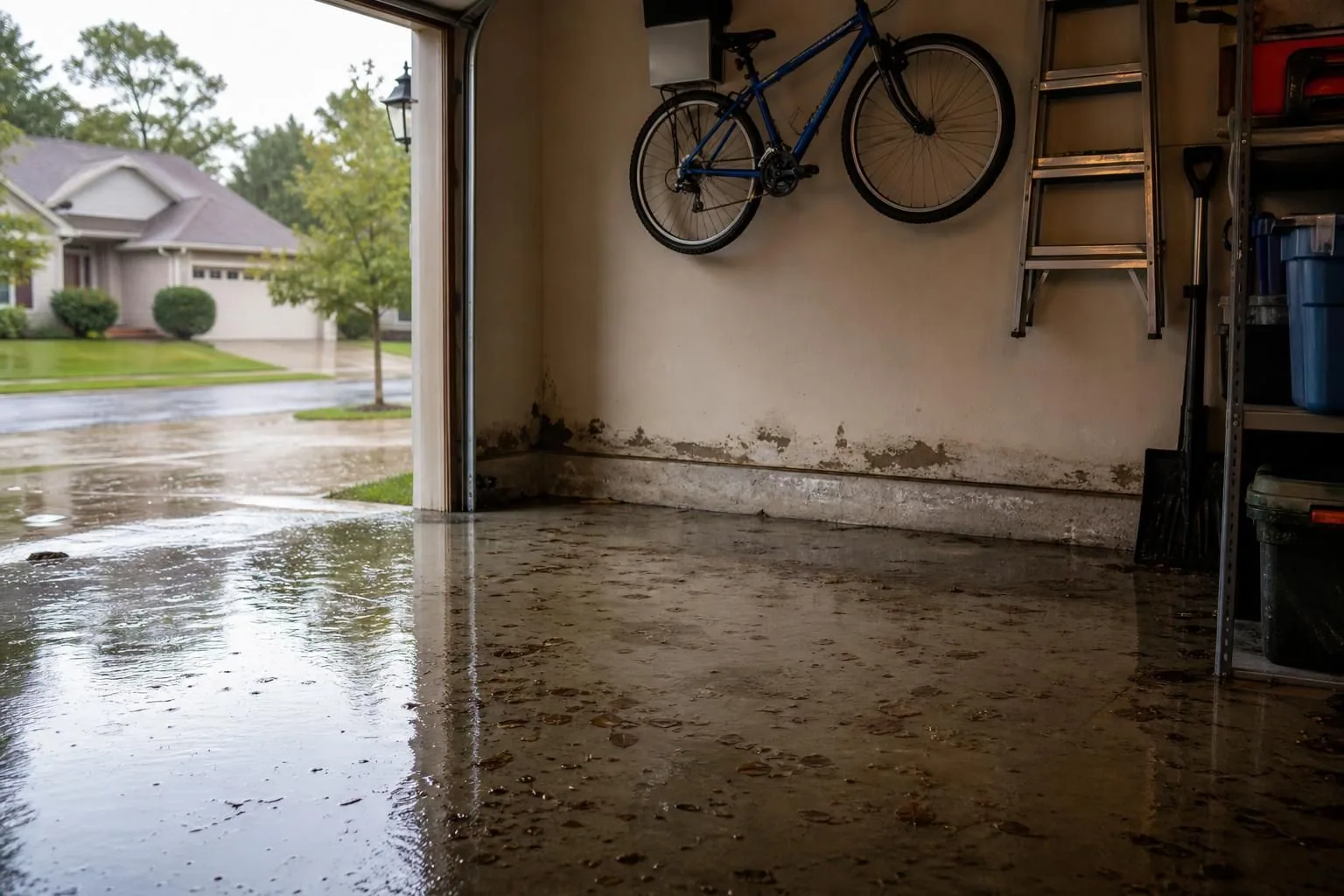
Once you know where the rain likely came in, check what the water touched. A shallow puddle on bare concrete is one thing. Water reaching drywall, stored boxes, outlets, or appliances is a bigger warning sign.
- Check the floor first. Look for water spreading under shelving, workbenches, freezers, or tool chests. Concrete can look dry on top while moisture sits under rubber mats, rugs, or storage bins.
- Inspect drywall and baseboards. If drywall feels soft, swollen, stained, or crumbly near the floor, moisture may have moved behind it. Use extra caution along a shared garage wall because hidden moisture can spread beyond the visible puddle.
- Look at framing and shelves. Dark staining, warped wood, rusted brackets, or sagging shelves suggest the garage water damage after heavy rain wasn’t just a one-time splash.
- Check stored items. Cardboard boxes sitting directly on the garage floor can wick water upward like a paper towel. Open a few boxes and look for damp paper, musty odors, mold spots, or damaged contents.
- Stop if electricity may be involved. Don’t step into water near outlets, extension cords, power tools, a freezer, or a garage door opener cord. For professional drying and safety-focused cleanup, see /services/water-damage-restoration/.
What to Move or Photograph First
Before you move anything, take quick photos to preserve the “before” view in case you need it later.
- Photograph the wet area from the garage entrance. Capture the puddle, the garage door, side door, wall, or driveway edge in the same shot if you can. This helps show where the rainwater likely entered.
- Take close-ups of damaged items. Photograph soaked boxes, wet drywall, swollen baseboards, rusty tool cases, warped shelving, and water around appliances. Don’t unplug or touch anything electrical if it’s near water.
- Move vehicles if it’s safe. If the path is dry and there’s no electrical risk, move cars, bikes, and motorcycles away from the wet area. Water sitting under tires or floor mats can hide damage.
- Lift salvageable items off the floor. Move plastic bins, tools, sports gear, seasonal decorations, and lawn equipment to a dry area. Keep wet cardboard boxes separate so they don’t spread moisture to dry items.
- Prioritize anything touching wet drywall. Pull shelving, storage tubs, and fabric items a few inches away from damp walls. Wet drywall can hold moisture behind the surface, especially along a shared garage wall.
- Separate chemicals and fuels carefully. Move paint, pesticides, cleaners, and gas cans only if containers are sealed and the floor is safe to walk on. If anything leaked, stop and get help.
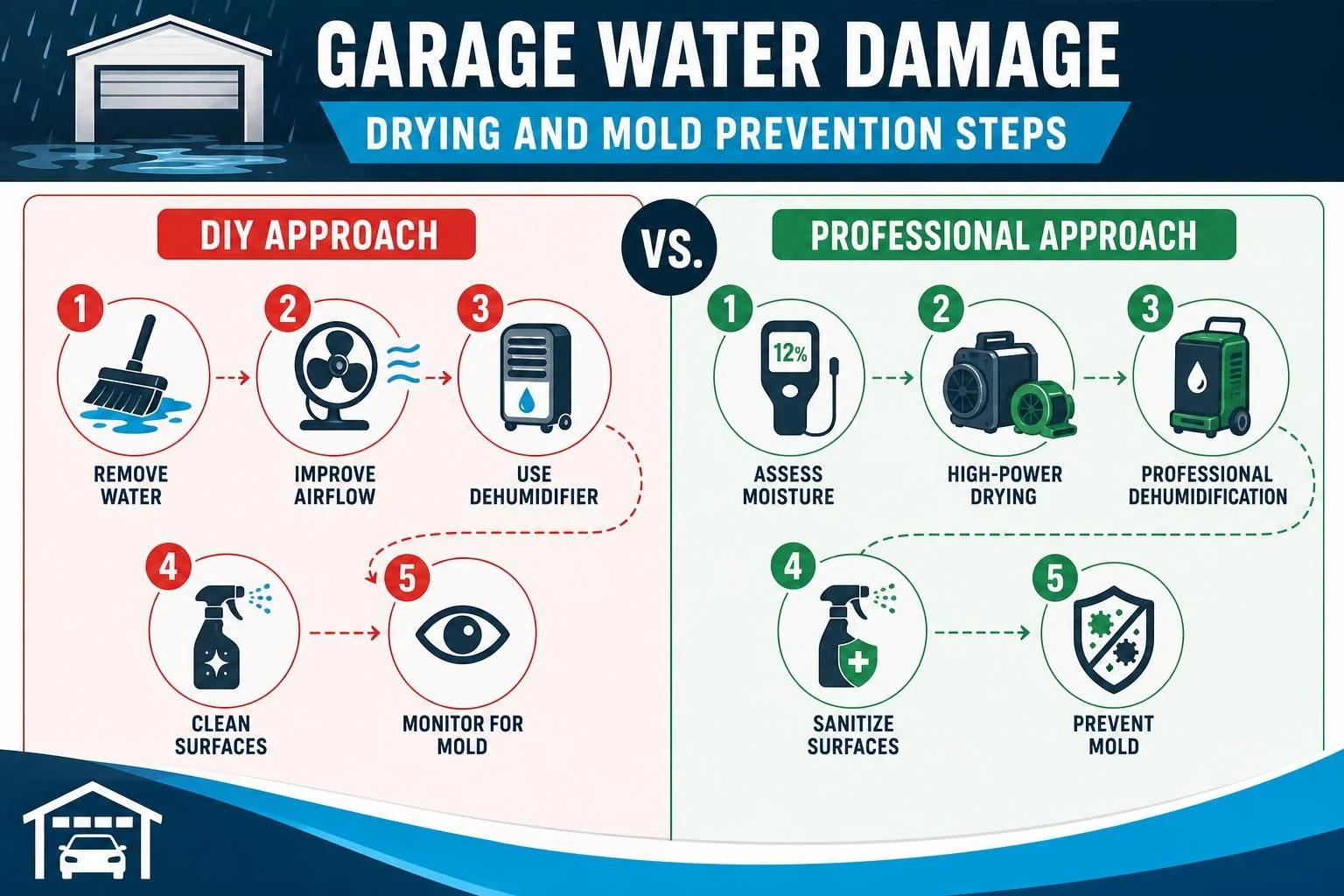
Drying and Mold Prevention Steps
Dry the garage from the cleanest, safest area outward. Don’t plug in fans, shop vacs, or dehumidifiers if cords, outlets, a freezer, or extension cords are in or near standing water.
- Remove standing water first. Use towels, a mop, or a wet/dry vacuum only if the electrical setup is dry and safe. Push water out through the garage door only if it won’t flow back toward the wall or into stored items.
- Open the door for airflow when rain has stopped. Add fans from a dry outlet if you can do it safely. Aim air across the floor and along damp wall edges, not directly into outlets.
- Run a dehumidifier. A dehumidifier helps wet concrete, trim, and storage areas dry more evenly. Keep the garage door mostly closed while it runs.Throw away soaked porous items when needed. Porous means sponge-like. Wet cardboard, insulation, fabric storage bags, and particleboard shelving can hold water long after the surface looks dry.
- Check drywall and baseboards again. If the bottom edge feels soft, swollen, or musty, moisture may be trapped behind it. That’s when professional drying matters.
- Monitor the area after the next rain. If dampness returns, the entry point isn’t fixed yet.
If water reached drywall, outlets, appliances, or valuable stored items, see /services/water-damage-restoration/ before mold and hidden damage spread.
Preventing the Next Garage Leak
Prevent the next leak by matching the fix to the entry point you found. A new garage door seal won’t help much if driveway runoff is flowing straight toward the door.
- Check the garage door seal. Close the door and look for daylight along the bottom corners. Replace cracked rubber weatherstripping and inspect the threshold, which is the raised strip the door closes against.
- Watch the driveway during the next rain. If water runs toward the garage instead of away from it, you may need a trench drain, regrading, or a repaired apron at the garage entrance.
- Clear nearby drains and gutters. Leaves, roof grit, and mulch can block water and send it toward the garage slab. Extend downspouts so roof runoff discharges away from the garage, not beside it.
- Seal small cracks and gaps. Use the right concrete or masonry sealant for hairline cracks along the floor edge, side door, or foundation. Wider cracks or recurring seepage need a closer look.
- Raise stored items. Put boxes, tools, and seasonal storage on shelves or plastic bins. Keep them a few inches off the floor and away from drywall.
- Recheck after heavy storms. If water keeps entering from multiple areas, or runoff is affecting more than the garage, review broader stormwater cleanup options at /storm-water-intrusion-cleanup/.
FAQs
Is Water in the Garage After Heavy Rain Serious?
Sometimes it’s just a shallow puddle near the garage door. But treat garage water damage after heavy rain as serious if water reached drywall, baseboards, outlets, appliances, stored boxes, or a shared wall. Those areas can hold hidden moisture after the floor looks dry.
When Does Wet Garage Drywall Need Removal?
Drywall may need removal if it’s soft, swollen, stained, musty, or wet above the baseboard. If the wall is shared with your living space, be more cautious. Moisture can sit behind the surface where you can’t see it.
Is Replacing the Garage Door Seal Enough?
Only if the water clearly came under the door. For example, rainwater pooling along the inside of the garage door after a wind-driven storm may point to a bad bottom seal. But if driveway runoff flows toward the garage, you’ll also need drainage or grading fixes.
How Long Does a Wet Garage Take to Dry?
It varies by weather, airflow, materials, and how much water entered. Concrete may look dry while boxes, drywall, shelving, or framing still hold moisture. Use fans and a dehumidifier only from a dry, safe power source.
When Should I Call a Restoration Company?
Call for help if water touched outlets, a freezer, extension cords, drywall, stored valuables, or keeps coming back after storms. Professional drying and moisture checks can prevent bigger repairs. For garage-specific support, see /services/water-damage-restoration/.
Conclusion
Garage water damage after heavy rain is manageable when you slow down and check the right things first: safety, photos, where the water entered, what it touched, and whether anything stayed wet. A shallow puddle by the garage door is different from wet drywall, soaked boxes, musty smells, or water near outlets, a freezer, tools, or extension cords.
If runoff is coming from grading, gutters, drains, or broader stormwater pressure, review /storm-water-intrusion-cleanup/. If water reached drywall, stored valuables, or electrical areas, get professional drying help through /services/water-damage-restoration/. Your next step is simple: inspect the garage again after the next heavy rain and fix the entry point before damage spreads.