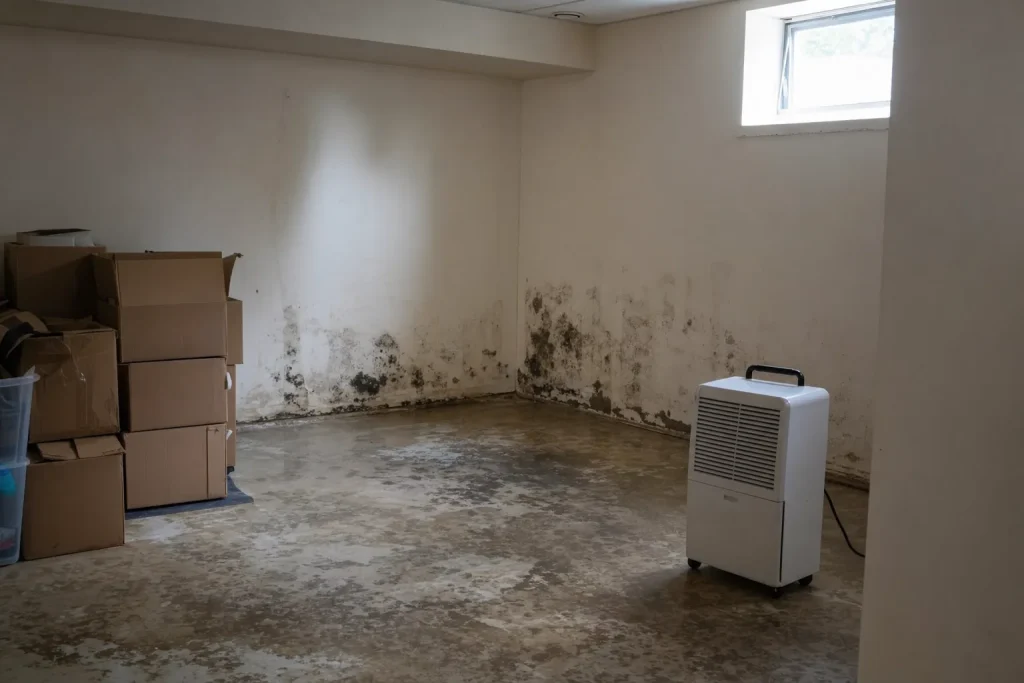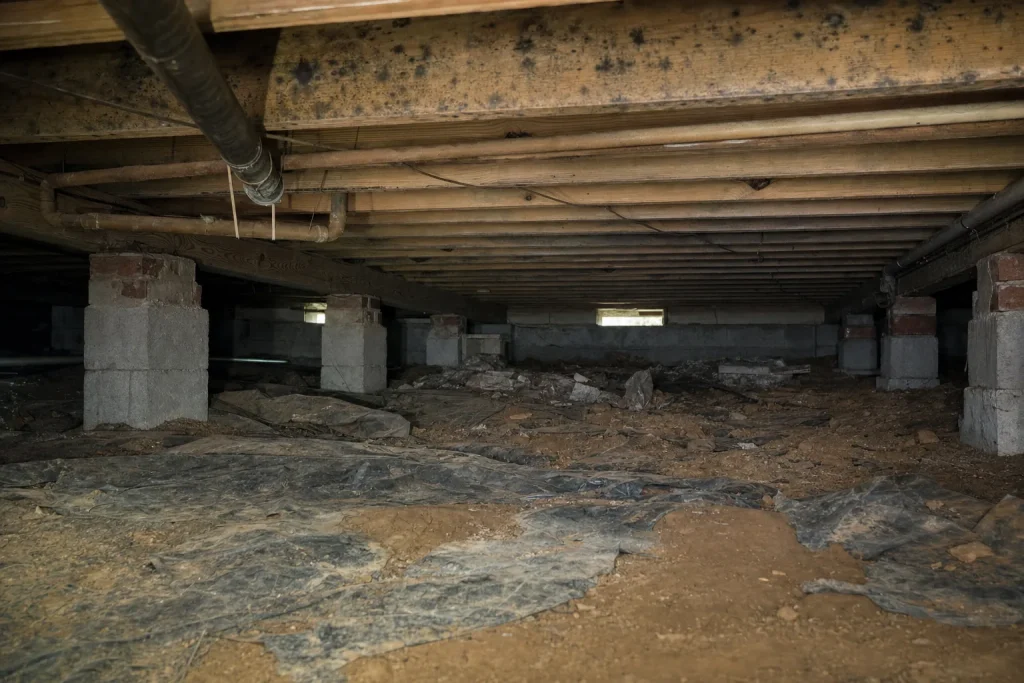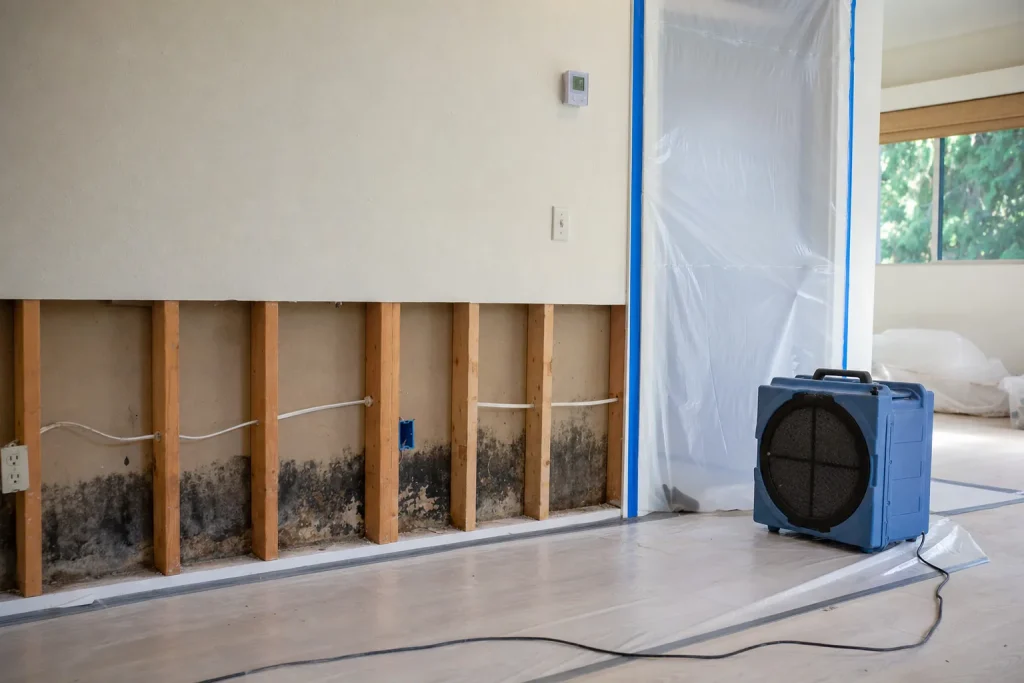

Basements are built partly into the ground, so they stay cooler and damper than the rest of the house. After a flood, a sump pump failure, a plumbing leak, or months of slow seepage, that dampness can turn into mold on drywall, carpet, stored boxes, and framing. The good news is that basement mold follows the water, so finding where the water came from tells you most of what you need to know.
This guide covers how to recognize mold in a basement after water damage, what is usually salvageable, what you can safely handle yourself, and when to call for help.
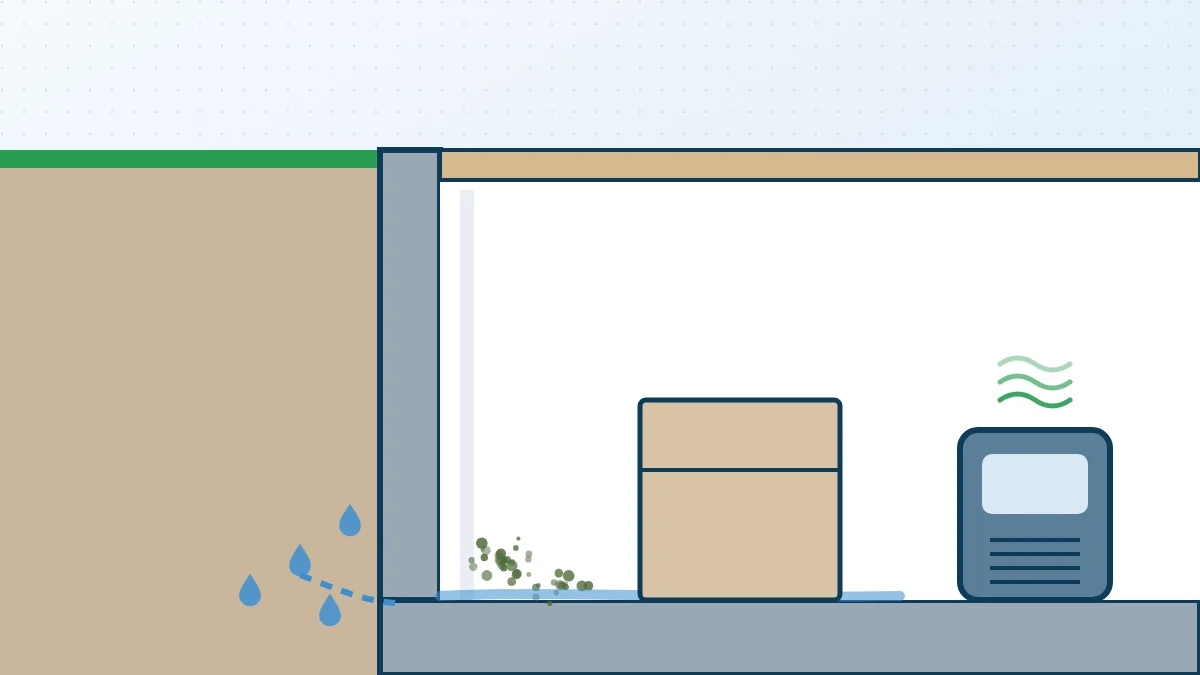
Signs of mold in a basement
- A musty smell that lingers even after the basement looks dry.
- Spots or fuzzy growth low on drywall, along the bottom plate, behind furniture, or on the back of carpet and pad.
- Bubbling paint, white crusty deposits (efflorescence) on concrete, or water lines on walls.
- Stored cardboard boxes, fabric, or wood that feel damp or smell stale.
- Condensation on cold water pipes, windows, or foundation walls.
White powdery deposits on concrete are often mineral salts left behind by water, not mold, but they still show that moisture is moving through the wall.
How basement mold starts after water damage
Mold needs moisture and time. EPA’s guidance is to dry water-damaged areas and items within 24 to 48 hours to prevent mold growth, and to keep indoor humidity below 60 percent, ideally between 30 and 50 percent (EPA: A Brief Guide to Mold, Moisture and Your Home). Basements make both harder: concrete and drywall hold moisture, airflow is limited, and outside humidity and cool walls keep things damp.
The most common sources are:
- Flooding or seepage at the joint between the wall and the floor, through cracks, or around pipe penetrations.
- Sump pump failure during heavy rain. See what to do after your basement floods.
- Plumbing leaks from water heaters, laundry, or supply lines. See water heater leak cleanup.
- Sewer or drain backups, which bring contaminated water. See sewage backup cleanup.
- Condensation on cold surfaces in humid weather, especially in finished basements with little air movement.
What is usually salvageable and what is not
Hard, non-porous items such as metal, glass, and sealed plastic can usually be cleaned. Porous materials are harder. EPA notes that absorbent or porous materials such as ceiling tiles and carpet may have to be thrown away if they become moldy. In a basement that often means:
- Carpet and pad: usually removed if they were soaked for more than a short time or the water was contaminated.
- Drywall and insulation: wet or moldy sections are typically cut out, often in a band above the water line, so the wall cavity can dry.
- Wood framing: often cleaned and dried if it is structurally sound.
- Stored belongings: cardboard, fabric, and paper items with growth are often not worth saving. Photograph them first if you plan an insurance claim.
If the water came from a sewer or drain backup, treat everything it touched as contaminated and get professional help.
Small areas you may clean yourself
EPA says most people can clean up an area under about 10 square feet themselves if the water was clean. Scrub hard surfaces with detergent and water, dry them completely, and do not paint or caulk over mold. Wear gloves and eye protection, keep the area ventilated, and run a dehumidifier. If anyone in the home has asthma, allergies, or other health concerns, talk to a health professional first.
Call for help when the affected area is larger, when it keeps coming back, when the water was contaminated, or when you can smell mold but cannot find it. Hidden growth behind finished walls is common in basements. Our guide to mold behind drywall explains how it is found.
Preventing basement mold from returning
- Fix the water source first: grading, gutters, downspouts, sump pump, cracks, or plumbing.
- Keep humidity down with a dehumidifier sized for the space, and empty or drain it reliably. See using a dehumidifier after water damage.
- Keep stored items off the floor and away from exterior walls, in plastic bins rather than cardboard.
- Leave space between furniture and walls so air can move.
- Check the basement after heavy rain and after the heat comes on in the fall.
Basement mold help near Burien
If your basement in Burien, White Center, Tukwila, Des Moines, or nearby has mold after a flood or leak, our mold remediation service can find the source, define what needs to come out, and dry the space before rebuild. For pricing factors, see mold remediation cost.