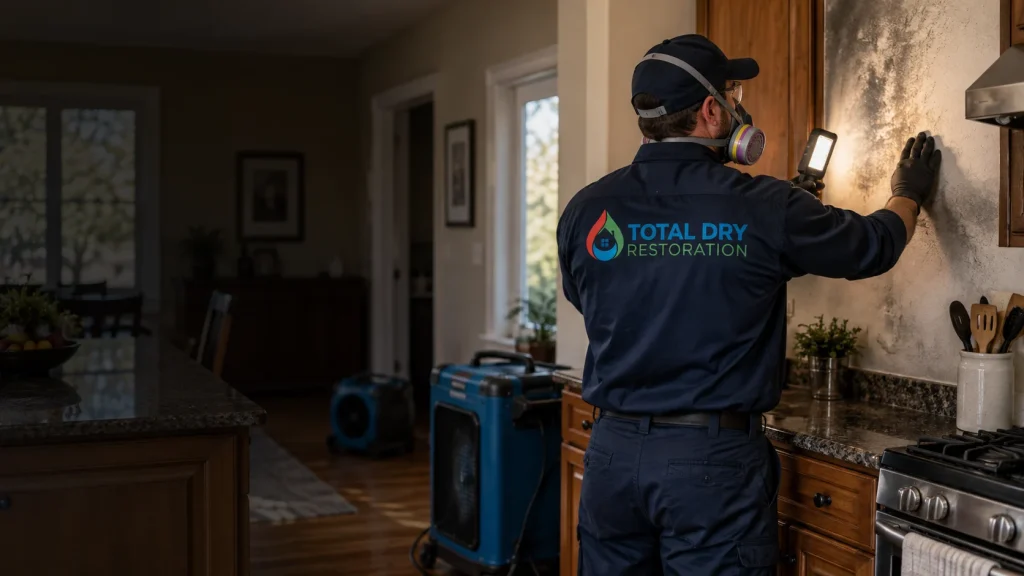

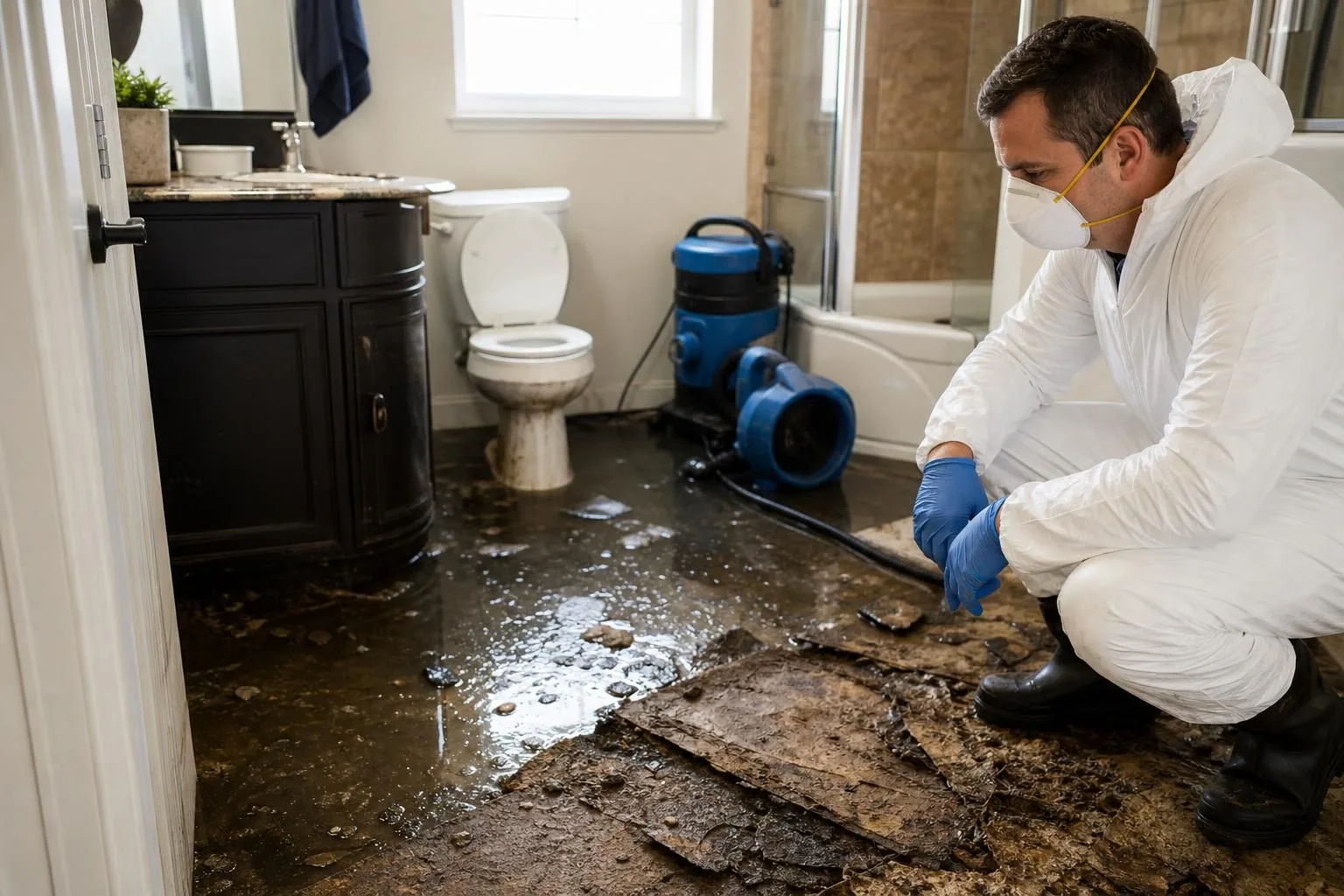
Sewage backup cleanup begins with safety, not scrubbing. Sewage is contaminated water, often called black water, so anything it touches should be treated as unsafe until trained cleanup professionals evaluate it.
- Stop using sinks, toilets, showers, laundry, and dishwashers.
- Keep children, pets, and anyone without protective gear away.
- Don’t walk through standing sewage or touch wet carpet, drywall, boxes, baseboards, or personal items.
- If you can stay out of the contaminated area, take photos from a doorway or other dry spot.
- Call a qualified restoration company for sewer backup cleanup and drying.
This guide explains what to do before anything is moved, what usually cannot be saved, and how professional contaminated water cleanup works. For related safety context, see /category-3-water-damage/ and /services/water-damage-restoration/.
Quick Answer
Treat a sewage backup as contaminated water, not a mopping job. Sewage is often black water, which may contain waste, bacteria, viruses, chemicals, and debris. Your first priority is reducing exposure.
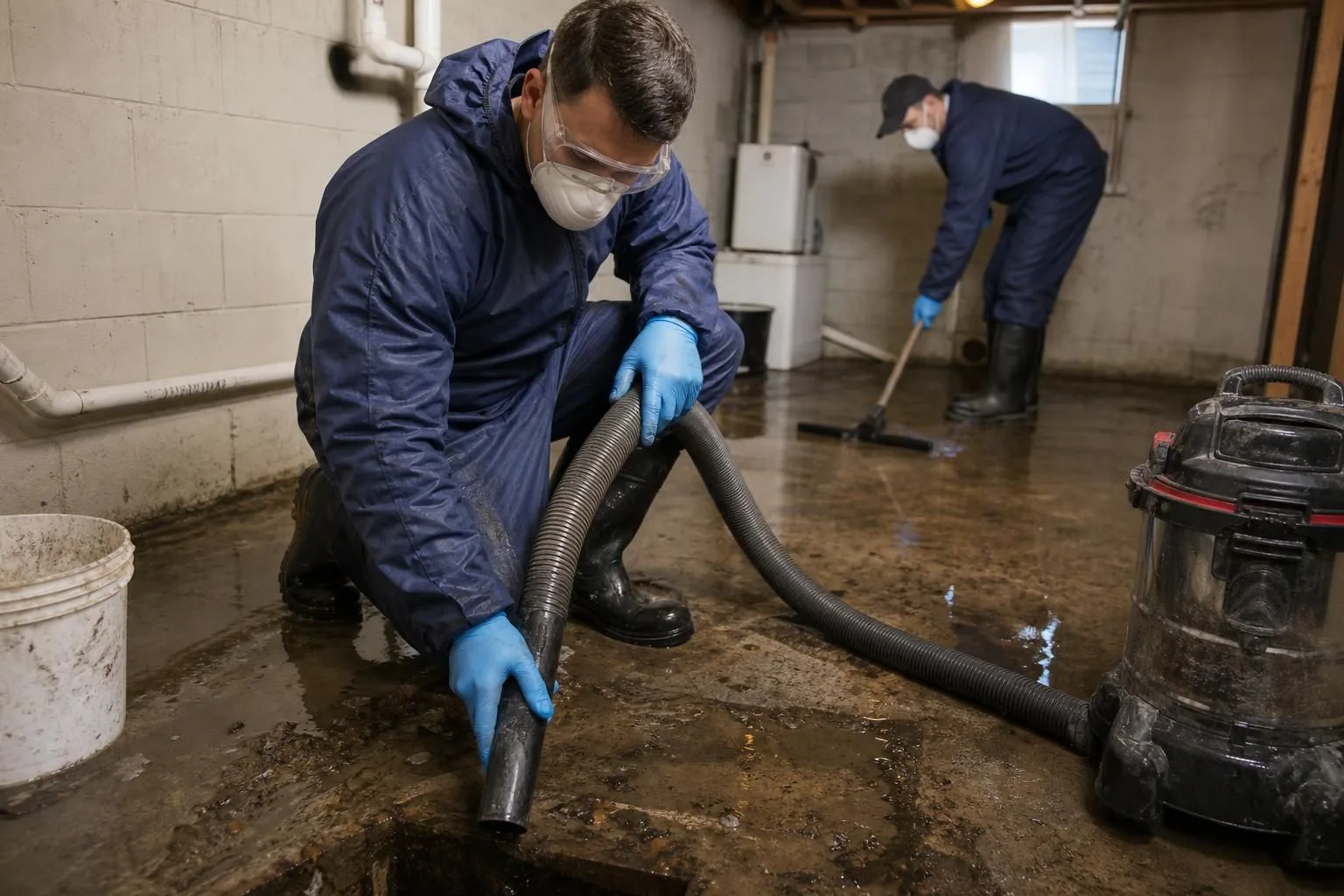
- Stop using water in the building. Don’t flush toilets, run sinks, start laundry, shower, or use the dishwasher. Extra water can push more sewage into the affected space.
- Keep people and pets out. Close doors only if you can do it from a clean, dry area. Do not let children, pets, or anyone with cuts or health concerns near the backup.
- Don’t walk through it. Avoid standing sewage, soaked carpet, wet boxes, and splash-marked items. The CDC recommends avoiding contact with contaminated water whenever possible.
- Shut off electricity only if safe. If water is near outlets, cords, appliances, or a breaker panel, stay away and call for help. Never step into water to reach a switch.
- Take photos from a dry place. Capture the drain, water line, affected rooms, and damaged belongings before anything is moved.
- Call a qualified sewage cleanup professional. This is not ordinary water damage. Contaminated materials may require containment, removal, sanitizing, drying, and verification before the space can be used again.
Stop Using Water and Keep People Away
Stop every water-using activity right away. Don’t flush toilets, run sinks, start the dishwasher, take showers, or use the washing machine. If the backup involves the main sewer line, each added gallon can force more sewage into the home.
Keep people and pets out of the affected area. Sewage is a contamination risk, so don’t walk through it, pick up wet items, or let anyone “grab something quickly.” Close doors from a clean, dry side if possible. Put a note on the door so no one enters by mistake.
| Situation | Do now | Don’t do | Why it matters |
|---|---|---|---|
| Basement drain backing up | Stop all water use | Don’t walk through it | Sewage can spread on shoes |
| Bathroom overflow | Block room access | Don’t touch towels or rugs | Soft items absorb contamination |
| Water near outlets | Stay out and call help | Don’t reach for switches | Shock risk may be present |
| Backup near HVAC area | Keep system off if safe | Don’t run fans | Air movement can spread contaminants |
If the affected area seems small, such as one bathroom drain overflowing onto tile and baseboards, the same rule applies: avoid contact. If it is larger, such as a basement with soaked carpet, drywall, and stored boxes, keep the entire area off-limits until a qualified cleanup team evaluates it. For contaminated water categories, see /category-3-water-damage/.
Why Sewage is Different From Clean Water Damage
Clean water damage is usually about drying materials quickly before mold or structural damage spreads. Sewage backup cleanup is different because the water may contain human waste, bacteria, viruses, chemicals, and debris. It is a contamination problem first and a drying problem second.
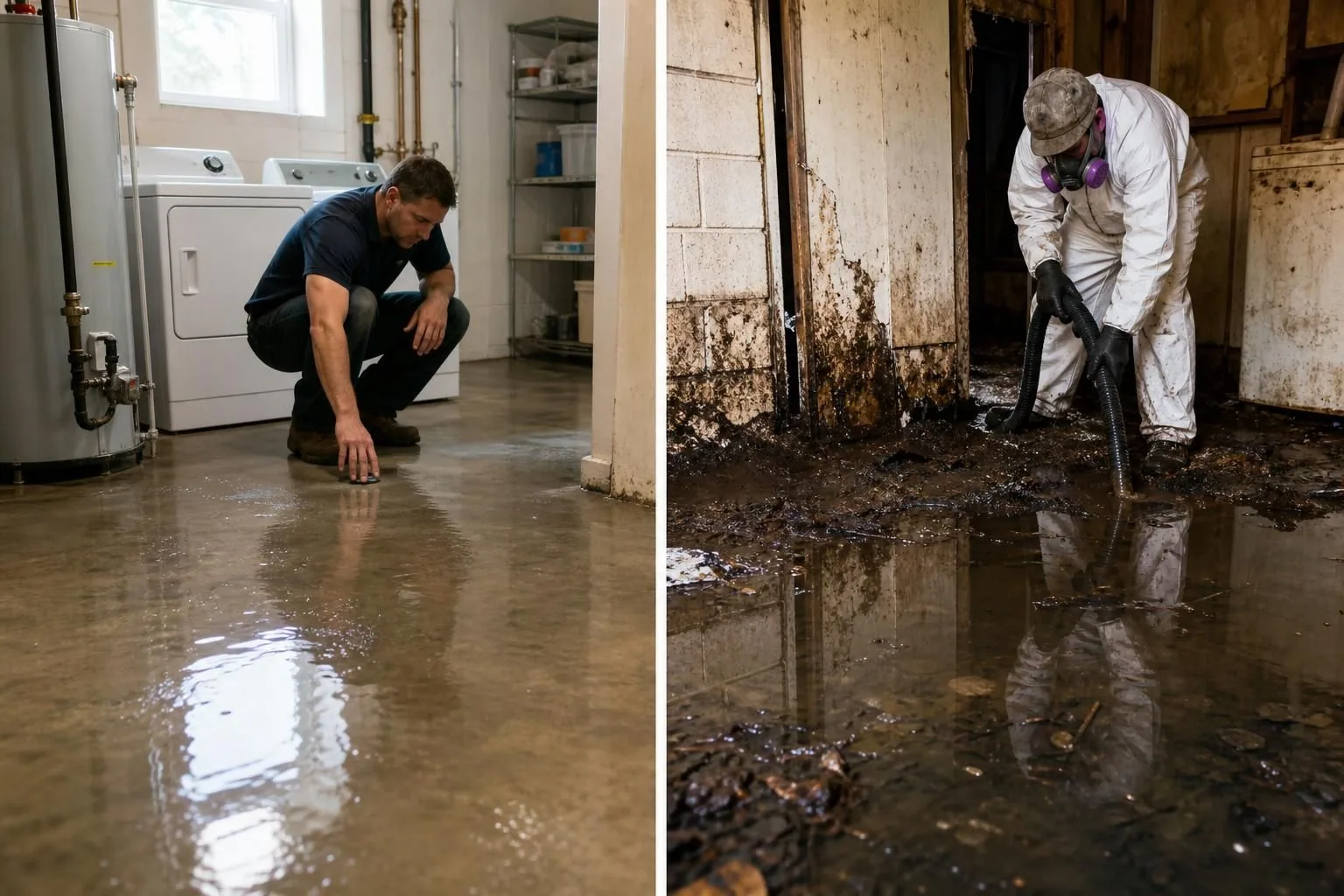
You may hear sewage called black water or Category 3 water. Black water means heavily contaminated water that can make people sick if it touches skin, enters cuts, splashes into eyes, or contaminates belongings. You can read more about this type of loss at /category-3-water-damage/.
In practice, you should not judge the danger by the amount of water you see. A small bathroom drain overflow that reaches tile, baseboards, towels, and stored toiletries can contaminate everything it touches. A basement backup with soaked carpet, drywall, and cardboard boxes is more obvious, but the cleanup principle is the same: do not handle wet materials as if they are merely dirty.
Porous materials are the biggest concern. “Porous” means the material has tiny spaces that absorb liquid, much like a sponge. Carpet, padding, drywall, insulation, fabric furniture, mattresses, paper, and cardboard can hold contamination below the surface. Wiping the outside does not make the inside safe.
Non-porous surfaces, such as sealed tile or some hard plastics, may sometimes be cleaned and sanitized by trained technicians. Even then, surrounding materials matter. If contaminated water runs under flooring, behind trim, or into wall cavities, the visible surface is only part of the problem.
What to Photograph and Document
Document the scene before anything is moved, cleaned, or thrown away, but only if you can do it without stepping into sewage or touching contaminated items. Use your phone from a doorway, stairs, or another dry area. Zoom in instead of walking closer.
- Photograph the source area. Capture the backed-up toilet, floor drain, shower drain, utility sink, or sewer cleanout where sewage appeared.
- Photograph every affected room. Take wide shots first. For example, show a basement with soaked carpet, wet drywall, and damaged storage boxes in one frame.
- Get close-ups of damaged materials. Photograph baseboards, flooring seams, drywall lines, cabinet bottoms, furniture legs, rugs, cardboard boxes, and personal items near the backup.
- Show the water line. If contaminated water touched drywall, trim, or insulation, photograph the highest visible wet mark. This helps show how far contamination may have spread.
- Record hidden-spread clues. In a bathroom overflow, photograph tile, baseboards, nearby towels, bath mats, and floor-level items. In a finished room, capture places where water may have run under flooring or behind trim.
- Make a simple inventory. Write down damaged items, room names, approximate quantities, and whether items are porous, like carpet or cardboard, or hard-surfaced, like sealed tile.
Save all photos before cleanup begins. Your restoration company and insurance adjuster may need them to understand the contamination path, damaged materials, and removal scope.
Materials That Usually Need Removal
Sewage-soaked materials usually come out because contamination can hide inside them. Think of porous materials like a sponge: even if the surface later looks cleaner, dirty water may still be trapped inside.
Do not pull, cut, bag, or carry these items yourself if they are contaminated. The Centers for Disease Control and Prevention advises avoiding direct contact with sewage and contaminated floodwater. Leave handling to trained crews with proper protective equipment.
Materials that commonly need removal include carpet and carpet padding, drywall, insulation, affected flooring, particleboard furniture, paper goods, upholstered items, and baseboards or toe kicks.
- Carpet and carpet padding, especially in basements where sewage has spread across the floor.
- Drywall that has wicked up sewage from the bottom edge.
- Insulation inside walls, because it traps moisture and contamination.
- Laminate flooring, engineered wood, and some vinyl products if sewage has gone underneath.
- Particleboard furniture, pressed-wood cabinets, and swollen trim.
- Cardboard boxes, paper files, books, and stored items on the floor.
- Mattresses, upholstered furniture, pillows, bath mats, and soft toys.
- Baseboards and toe kicks when sewage has run behind or beneath them.
Hard, non-porous surfaces may sometimes be cleaned and sanitized by professionals. Examples include sealed tile, porcelain fixtures, metal shelving, and some plastics. However, a hard surface is not automatically safe to keep. Cracks, seams, grout lines, and hidden cavities matter.
A small bathroom drain overflow may affect tile, baseboards, and nearby personal items. A larger backup can reach under finished flooring, into wall insulation, or near heating and cooling equipment. That is why sewage is treated as Category 3 water, explained further at /category-3-water-damage/.
Professional Cleaning, Sanitizing, and Drying
Professional sewage backup cleanup follows a controlled sequence because the goal is not just to make the room look dry. The goal is to remove contaminated materials, clean what can safely remain, dry the structure, and confirm the area is ready for repair.
- Set containment. Crews block off the affected area with plastic sheeting or barriers. Containment helps keep contaminated dust, moisture, and debris from spreading into clean rooms.
- Remove unsafe materials. Soaked carpet, pad, drywall, insulation, cardboard boxes, and swollen wood products are usually cut out or discarded. In a basement backup, this may mean removing lower drywall, wet carpet, and stored boxes before detailed cleaning begins.
- Clean and sanitize salvageable surfaces. Non-porous surfaces, such as sealed tile, porcelain, metal, and some plastics, may be cleaned and treated with appropriate disinfectants. Cracked grout, open seams, and hidden cavities still need inspection.
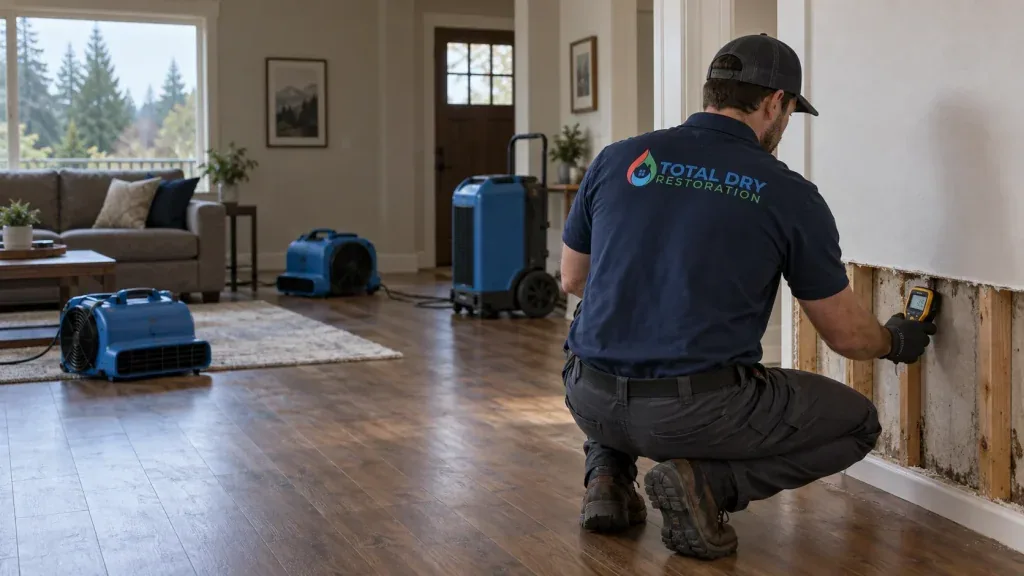
- Dry the structure. Air movers and dehumidifiers remove remaining moisture from framing, subfloors, and wall cavities. Drying matters because trapped moisture can continue causing damage after visible sewage is gone.
- Verify before rebuilding. Crews check moisture levels and inspect affected areas before new flooring, drywall, trim, or cabinets are installed.
If the backup affected multiple rooms, finished spaces, or areas near heating and cooling equipment, bring in trained help. Professional /services/water-damage-restoration/ should treat the job as contamination cleanup from start to finish.
FAQs
Can I Clean a Small Sewage Backup Myself?
Don’t treat sewage like dirty mop water. The CDC recommends avoiding direct contact with sewage and using protective equipment if you must be near it. If there is standing sewage, soaked carpet, wet drywall, or contaminated personal property, keep out and call trained cleanup help.
What Should I Not Touch After a Sewage Backup?
Don’t touch soaked carpet, padding, drywall, insulation, cardboard boxes, upholstered furniture, towels, clothing piles, toys, or anything porous that sat in sewage. Also avoid walking through the area and tracking contamination into clean rooms.
Is Sewage Backup the Same as Category 3 Water Damage?
Yes, sewage is commonly treated as Category 3 water damage, which means highly contaminated water. That changes the cleanup plan because the goal is removal, sanitizing, drying, and verification, not just water extraction. Learn more at /category-3-water-damage/.
Can Tile or Concrete Be Saved?
Sometimes. Hard, non-porous surfaces like tile, sealed concrete, and some metal or plastic items may be cleaned and sanitized by professionals. Nearby materials still matter. In a bathroom overflow, the tile may survive while baseboards, drywall edges, and personal items need removal.
When Should I Call Professionals Immediately?
Call right away if sewage reaches finished rooms, spreads under flooring, touches insulation, affects stored boxes, or gets near heating and cooling equipment. A basement with soaked drywall, carpet, and boxes is not a safe cleanup project.
If sewage touched porous materials, spread under flooring, reached insulation, or sat near heating and cooling equipment, treat the area as contaminated until trained cleaners say otherwise. Don’t pull up carpet, sort soaked boxes, or wipe down personal items by hand because those steps can spread contamination and make documentation harder.
For next steps, review contaminated-water guidance at /category-3-water-damage/ and contact a qualified cleanup team through /services/water-damage-restoration/ if the backup affected more than a small, contained hard-surface area. Until help arrives, keep water use stopped, keep people and pets out, take safe photos from a dry spot, and leave sewage backup cleanup to professionals.