
Water damage under laminate flooring is one of those problems that looks small at first, then gets expensive fast if you guess wrong. The tricky part is that laminate can hide moisture in the underlayment and along seams, even when the surface feels “mostly dry.” In this guide, you’ll get a practical, step-by-step plan: what to do in the first hour, how to confirm whether water is trapped, how to dry it without causing more swelling, and how to decide between laminate flooring repair vs replace without second-guessing every move.
Best for: Homeowners dealing with a fresh spill or leak caught quickly, with limited swelling and no musty odor.
Not ideal when: Water has been sitting for days, the floor feels spongy, or you suspect contaminated water from a backup.
Good first step if: You can safely stop the water and pull a baseboard to check for wet underlayment laminate conditions.
Call a pro if: You have widespread buckling, moisture keeps returning, or the subfloor is wet and you can’t dry it fast.
Quick Summary
- Act fast: stop the water, remove surface moisture, and lower humidity before boards swell further.
- Don’t trust the top layer; confirm what’s happening at seams, edges, and along walls.
- Drying works best when you create airflow pathways, not when you blast heat at the surface.
- Swollen laminate flooring usually means the core has absorbed water, and those boards won’t fully flatten.
- Underlayment and subfloor condition often decides whether you can repair sections or need a larger replacement.
- If there’s odor, repeated dampness, or suspected mold, treat it as more than a “flooring” issue.
Quick Steps to Take Immediately
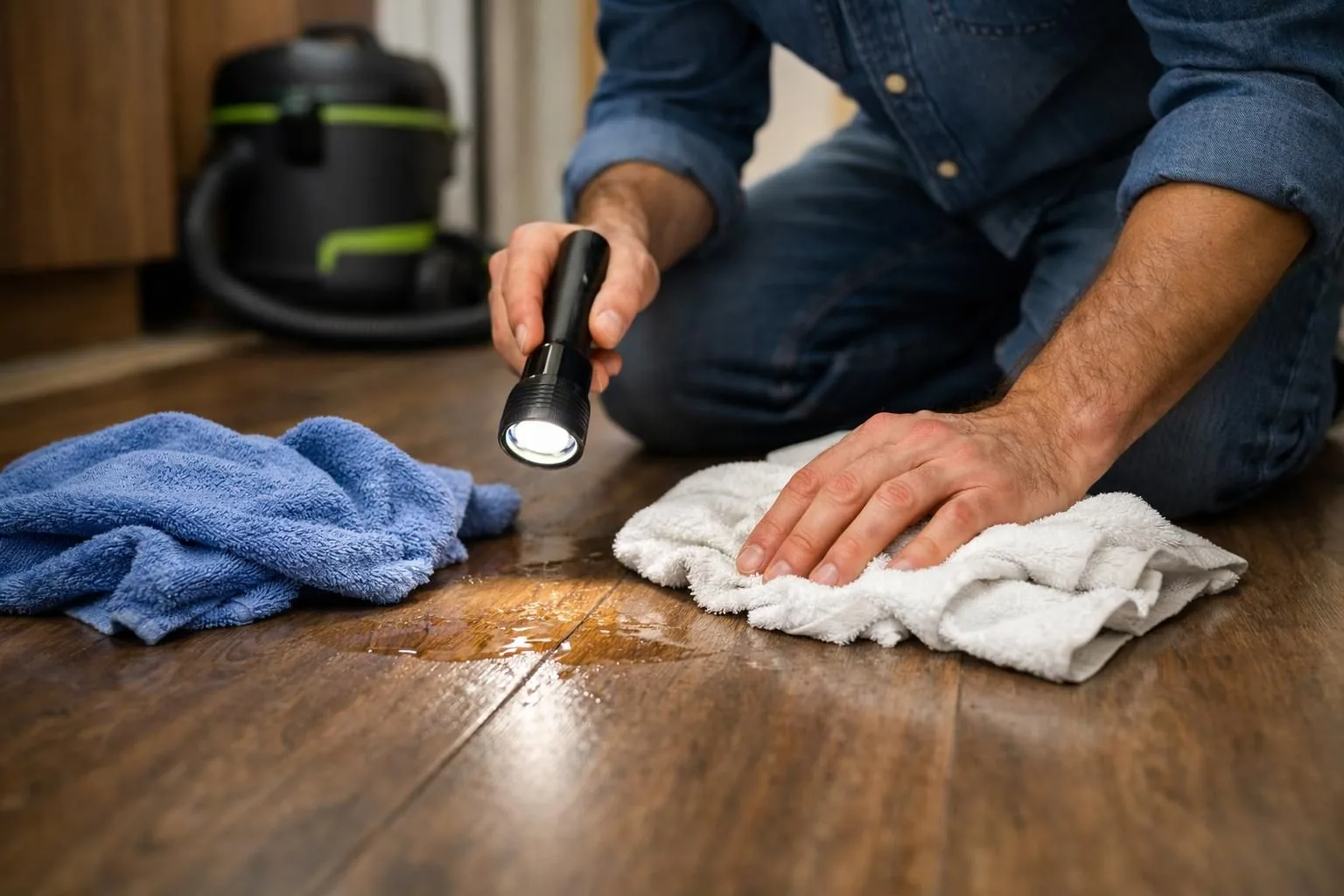
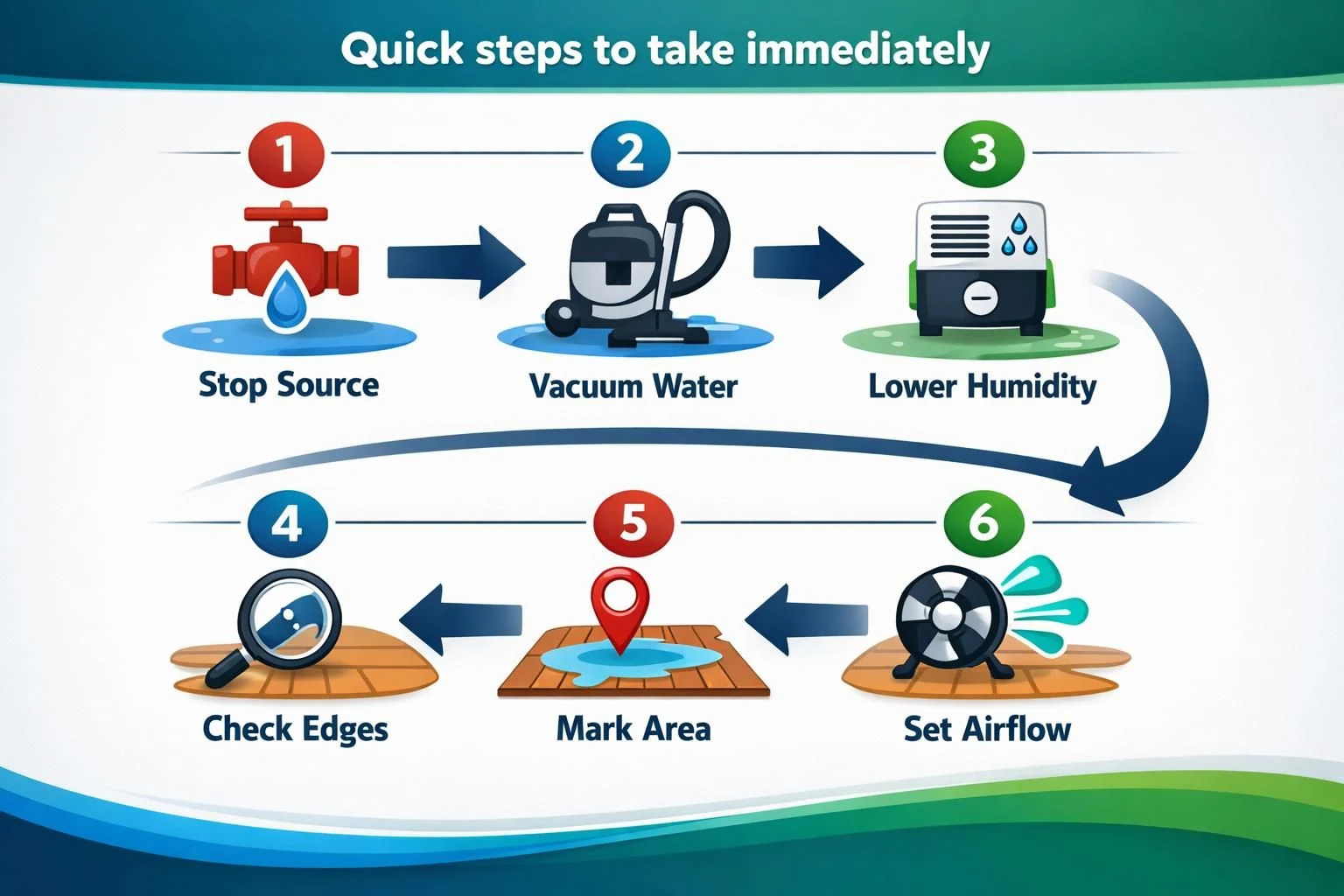
Move fast; the first hour matters. Stop the source, then remove standing water with towels or a wet/dry vacuum. Lower humidity with a dehumidifier and run fans across the surface, not into seams. This matches stop water from spreading. Mark the wet zone with tape. Don’t mop, steam clean, or blast heat at the floor.
Signs Water is Trapped Under Laminate Flooring
Moisture may be trapped when the surface looks fine but feels soft, sounds hollow, or dampness returns at seams. Symptoms show at edges and transitions first. Press near joints for squish or flex. Watch for musty odor near walls, darkened seams, baseboard swelling, peeling paint, wavy drywall, or a loosening transition strip. See signs of hidden water.
Stop the Source and Prevent Spread to Other Rooms
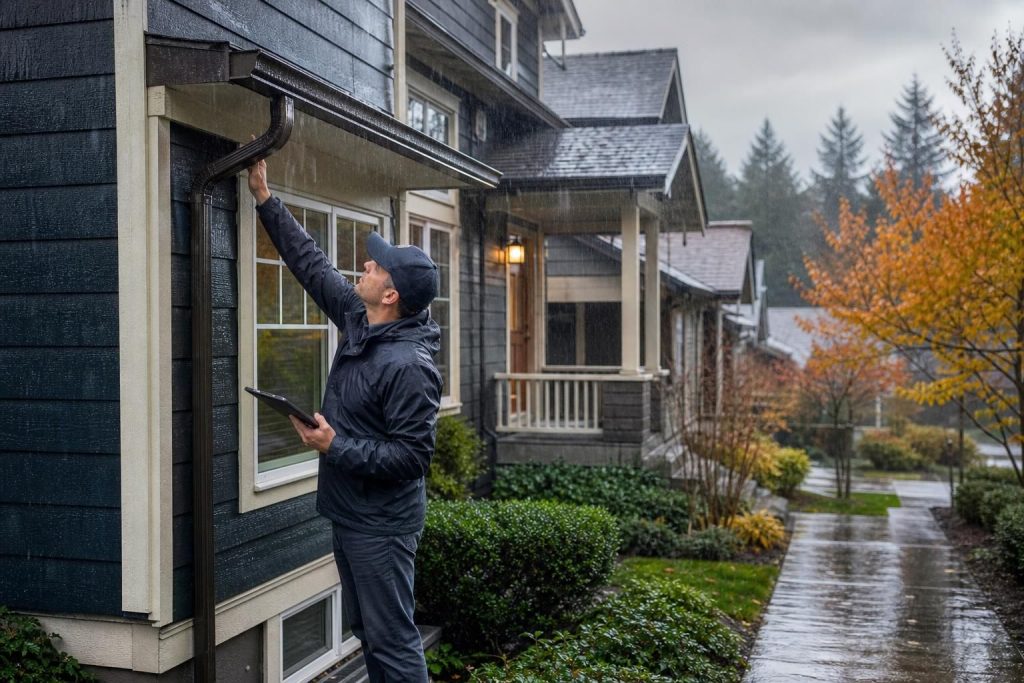
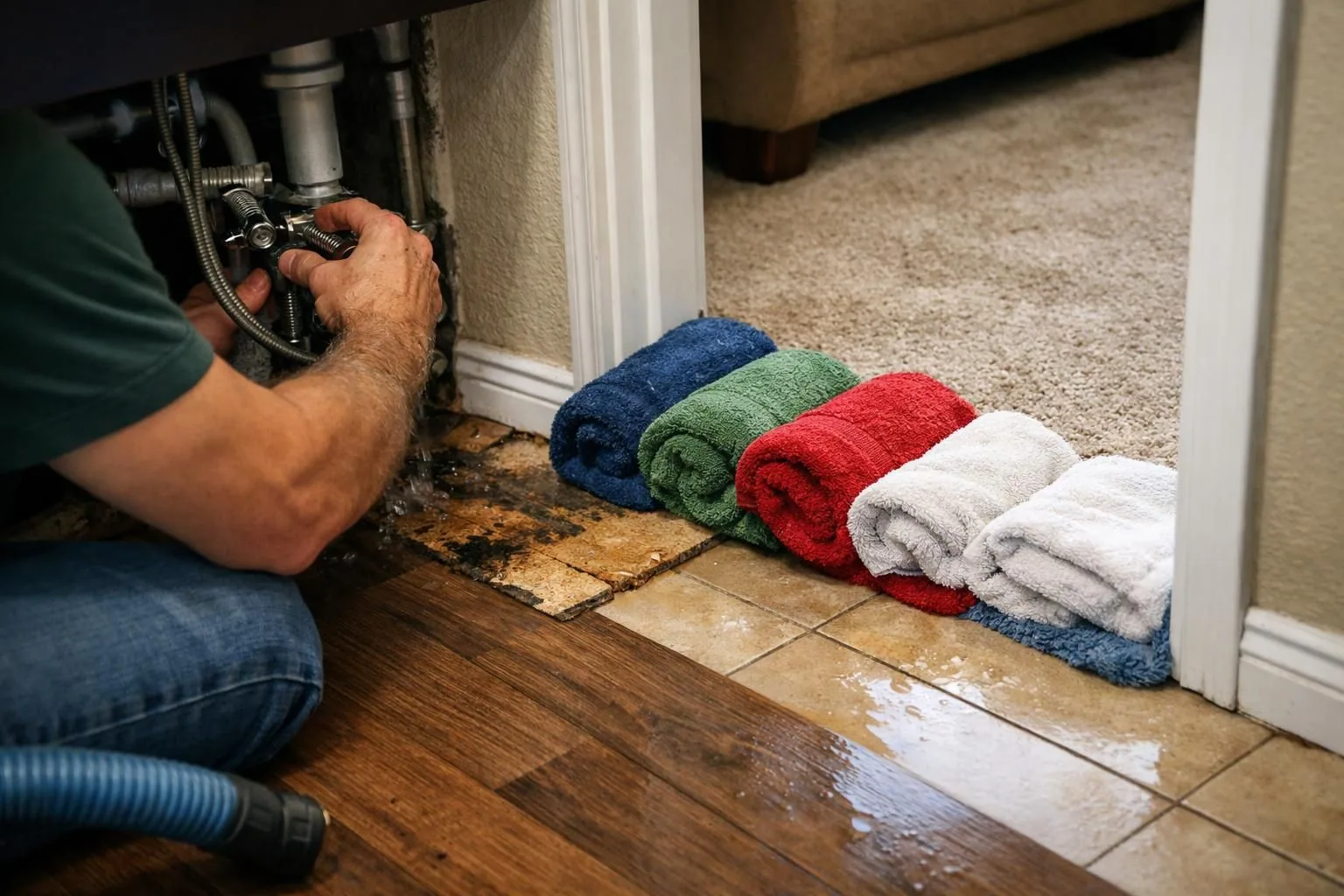
Limit laminate floor water damage by stopping the source and blocking migration before drying. If the leak is active, shut the nearest fixture valve or the main supply, then confirm flow stopped.
Track the leak to the highest point of wetness and work outward. Water can follow underlayment and door-threshold gaps. For kitchen and bath leak-hunting steps, use find the source of a leak. Close doors and towel thresholds to contain spread.
Can Laminate Flooring Be Saved (and When it Can’t)
Laminate may be saved if exposure was brief, swelling is minimal, and the underlayment and subfloor dry fast with no odor. The fiber core rarely “unswells,” so swollen edges often leave weak joints. If boards stay flat, you may dry in place and replace a small run. If multiple rows buckle or separate, plan partial replacement.
Swelling, Edge Lift, and Seam Separation Red Flags
Edge lift, peaked seams, or tenting usually means swelling isn’t cosmetic. Long-edge lift can indicate moisture entering through joints; end-joint swelling can mean water traveled along plank length.
Raised edges along walls suggest wicking behind baseboards, while a hump spanning rows points to trapped moisture. If seams catch socks or stay misaligned, those planks usually aren’t salvageable.
Underlayment and Subfloor Checks
Underlayment and subfloor condition determines whether you can dry-and-keep or must open the floor. Remove one baseboard and check the underlayment edge for dampness, compression, or odor. Press near walls for sponginess and check drywall edges. For deeper damage, read how to handle a wet subfloor.
How to Dry the Area Properly (without Warping More Boards)
Dry laminate by lowering humidity and using controlled airflow, not high heat. Run a dehumidifier, then aim fans parallel to the floor to pull moisture from seams. If water got underneath, remove baseboards at the wettest edge to vent the perimeter. Keep furniture off the area. For timelines, see how long drying takes. Recurring odor suggests trapped moisture.
When to Remove Planks
Remove planks when water reached underlayment or subfloor and you can’t create a reliable drying path. If boards buckle, crunch at joints, or stay soft after 24–48 hours, the core is likely saturated. For floating floors, start at the nearest wall and stop when you reach dry material and can expose underlayment.
When to Remove Planks, Trim, or Baseboards
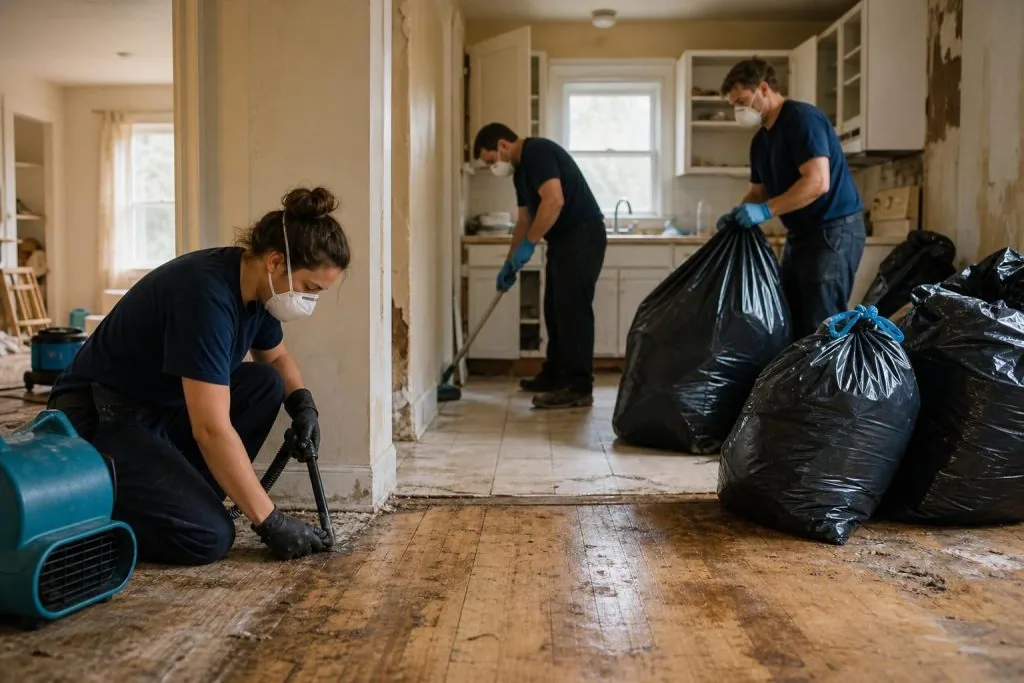
Remove trim or planks when drying in place can’t reach moisture or click-lock joints are failing. Start by pulling baseboards to expose the expansion gap and check for wet underlayment or damp drywall. Remove planks if water traveled past the visible area, standing water sat underneath, or buckling needs relief. Don’t reinstall until layers are fully dry.
Repair vs Replace: What Usually Makes Financial Sense
Repair usually makes sense when damage is confined, you can match the existing product, and the subfloor is dry and stable. Replace usually makes sense when the affected area is large, the laminate is discontinued or sun-faded, or the click-lock edges across multiple rows are swollen and unreliable.
| Option | Best for | Limits | Typical outcome |
|---|---|---|---|
| Dry in place + minor repair | very small, quick exposure | hidden wet underlayment | may look fine, joints can weaken |
| Partial plank replacement | localized damaged section | matching product, access path | good if subfloor is dry |
| Full room replacement | widespread swelling/buckling | more demo and dust | consistent look, fewer future seam issues |
Now, the nuance: the cheapest-looking option can become the priciest if it leaves moisture behind. If you patch a few boards but the underlayment stays damp, you might deal with odor, recurring seam lift, or subfloor deterioration later. That’s why your “repair vs replace” call should be based on what’s underneath as much as what you can see.
Before you commit, check whether water affected adjacent materials like drywall or cabinetry toe-kicks. If the wall base is wet, you may also need to think about water damage on walls so you’re not repainting over a continuing moisture source.
When to Call a Restoration Pro
Call a restoration pro when moisture is widespread, you can’t confirm drying under the laminate, or the water type raises health risks. Pros use meters and targeted drying. Escalate for broad buckling, persistent musty smell, or dampness that returns. If insurance is involved, documentation matters. See restoration process overview.
Conclusion
Start by stopping the leak, extracting surface water, and dropping humidity fast, then confirm whether moisture is trapped at seams, edges, and under the baseboards. From there, your best move depends on swelling, odor, and whether the underlayment or subfloor stayed wet. If you’re on the fence, open a small inspection point and let what you find guide you. With water damage under laminate flooring, fast, careful drying and the right repair vs replace call is what prevents a repeat problem.
Swelling
Swelling shows water has soaked into the fiber core, not just the surface. Once swollen, planks may not return to thickness, leaving raised edges and fragile click-lock joints. If swelling grows after 24 hours, moisture is still trapped below and you need better drying access.