
Yes, your HVAC system should be inspected after a fire if smoke was anywhere near returns, vents, filters, or the indoor air handler. HVAC smoke damage after fire matters because the system can pull in smoke particles and then spread HVAC smoke odor through rooms that weren’t directly affected.
- Leave the furnace, air conditioner, or fan off if you smell smoke from vents.
- Check visible registers, returns, and filters for soot, dark dust, or smoky odor.
- Call a fire damage cleanup provider before restarting airflow.
A common clue is simple: one room smells fine until the heat or AC kicks on, then the whole home smells smoky. That usually means airflow is moving odor or residue through the system.
Quick Answer
HVAC smoke damage after a fire is likely when smoke had a path into the HVAC system, meaning the heating, ventilation, and air conditioning equipment that moves air through your property. Common entry points include return vents, open registers, and a fan running during or after the fire.
Think of the system like the lungs of the building. If it pulls smoky air in, it can move odor and fine residue into ducts, filters, and rooms that weren’t close to the fire.
Treat it as a “keep it off and check first” situation if you notice any of these warning signs.
- Smoke smell gets stronger when the furnace, air conditioner, or fan turns on.
- Soot or gray-black dust appears around vents, registers, or return air covers.
- The air filter looks dark, clogged, or smoky after the fire.
- One room smells okay until airflow starts, then the odor spreads.
Don’t open equipment panels or try to clean inside ducts yourself. Leave the system off, note where odors or residue show up, and arrange inspection before using it again.
How Smoke Enters HVAC Systems
Smoke gets into an HVAC system the same way normal room air does: through airflow. The return side pulls air from the home back to the furnace, air conditioner, or air handler. If that air is smoky, the system can pull in smoke particles and odor too.
Think of the return vent like a vacuum intake. During or after a fire, smoke can move through the system in a few common ways.
- Smoke enters open return vents while the system is running.
- The filter catches some particles, but odor and fine residue can still pass through.
- Air moves through ducts and carries smoke smell into rooms far from the fire area.
- Soot settles on vent covers, registers, duct surfaces, or nearby walls.
- If doors are opened, fans are used, or pressure changes inside the building, smoke can drift into new airflow paths.
This can happen even if the flames never touched the HVAC equipment. A small kitchen fire, for example, may still send smoke toward a hallway return. Once smoke reaches that return, the system may spread odor beyond the original fire area. That’s why the path of the smoke matters as much as the size of the fire.
Signs Smoke Reached Ducts, Filters, or Vents
Smoke usually leaves clues before you ever open a duct. Start with the easy checks you can do from the room side of the system.
- Smell changes when airflow starts. If the house smells mostly normal, then the smoke odor gets stronger when the furnace, air conditioner, or fan turns on, smoke may be sitting in ducts, filters, or the air handler area.
- Odor moves from one room to another. One bedroom may seem fine until airflow begins. Then the whole home picks up a smoky smell because the system is pushing contaminated air paths around.
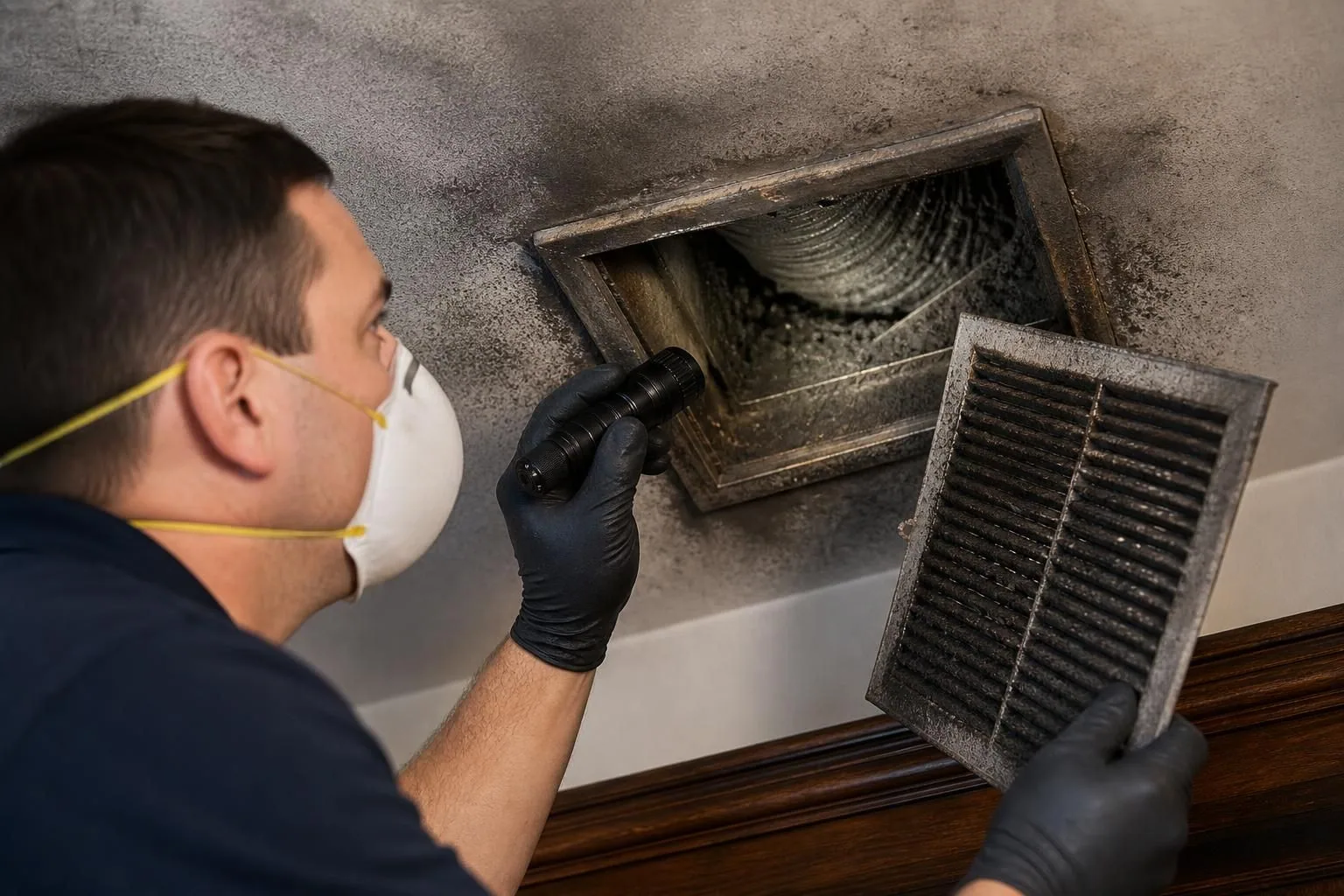
- Soot appears around vents or returns. Look for gray or black dust on vent covers, ceiling registers, wall returns, or the paint around them. Soot is fine smoke residue, not regular household dust.
- Filters look dark, loaded, or clogged. A filter that was white or light gray before the fire may turn brown, black, or patchy after smoke exposure. Don’t shake it out, because that can release particles.
- Dust near vents smells smoky. If residue on a register or nearby wall has a burnt odor, treat it as possible smoke contamination.
If you see these signs, keep the system off until it’s inspected.
Why Running the System Too Soon Can Spread Odor
Turning on the furnace, air conditioner, or fan can move smoke odor from one affected area into rooms that were clean. The blower fan, which is the part that pushes air through your vents, doesn’t know the difference between normal air and smoky air. It just moves whatever is in the system.
Think of your ductwork like a hallway for air. If soot or smoky residue is sitting near a return vent, inside a filter, or on vent covers, airflow can pick up that odor and carry it through the property. That’s why one room may smell fine until the system starts, then the whole home suddenly smells burnt.
Running the system too soon can also make cleanup harder. Freshly cleaned rooms can be recontaminated if smoky air keeps cycling through the vents. A darkened or clogged filter can release odor too, especially if air is forced through it.
If smoke exposure is suspected, leave the system off, avoid using “fan only” mode, and don’t remove or shake filters unless a restoration or HVAC professional tells you how to handle them safely.
Restoration vs HVAC Repair Roles
Restoration crews and HVAC professionals solve different parts of the same smoke problem. A restoration crew focuses on contamination: soot, smoke particles, odor, duct surfaces, registers, returns, and contents nearby. An HVAC professional focuses on the equipment itself: whether the furnace, air conditioner, blower, or air handler needs service, repair, or replacement.
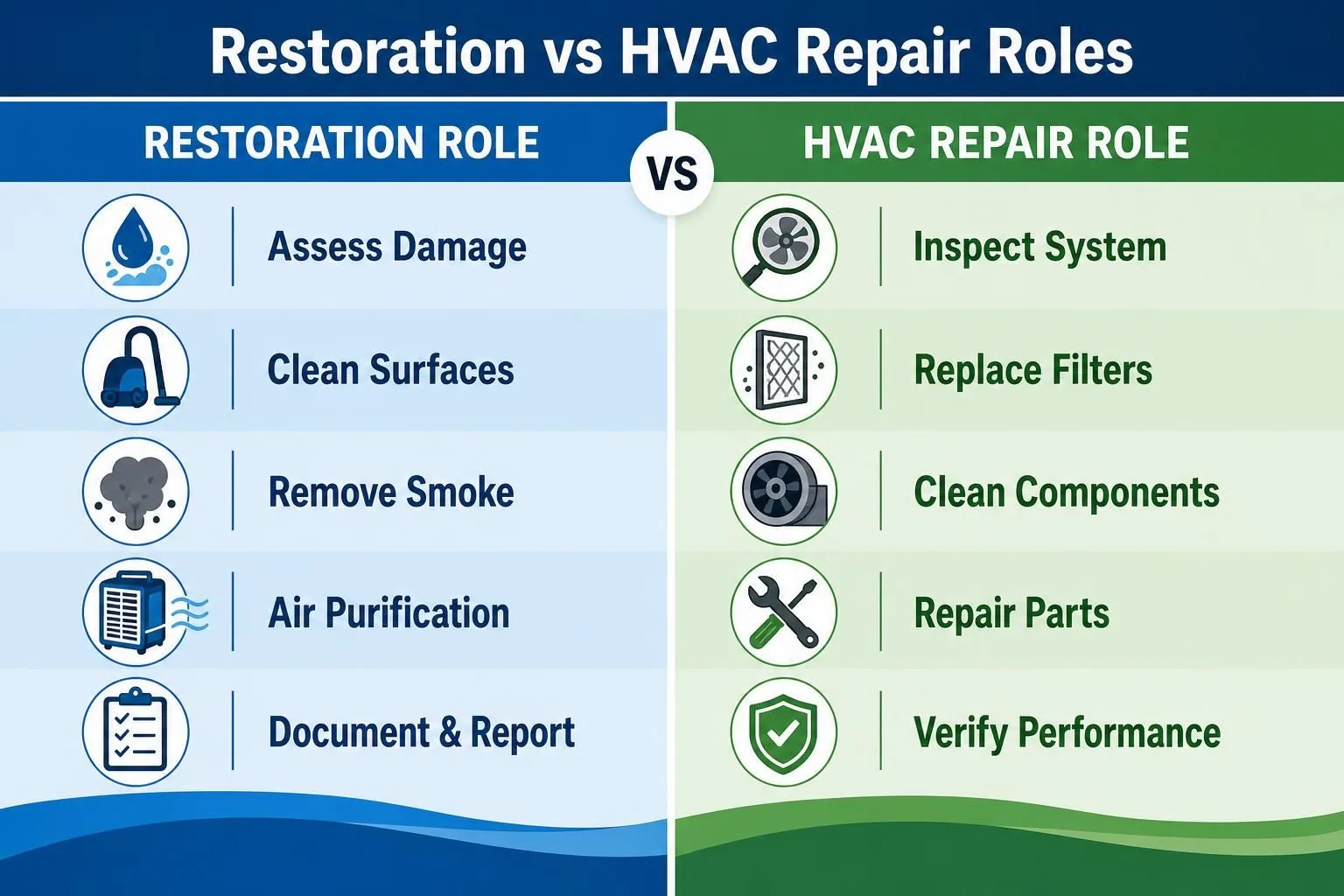
Think of it like a smoky kitchen after a grease fire. One person cleans the walls and removes odor. Another checks whether the exhaust fan still works correctly. You may need both, but they’re not doing the same job.
| Situation | Who should lead | Who may need to assist | Main goal |
|---|---|---|---|
| Smoke odor from vents | Restoration crew | HVAC professional | Find and remove odor source |
| Soot on registers or returns | Restoration crew | HVAC professional | Inspect duct path safely |
| Dark or clogged filter | Restoration crew first | HVAC professional | Handle contamination before airflow |
| Equipment won’t operate normally | HVAC professional | Restoration crew | Assess mechanical condition |
- Document what you see and smell before anything is moved.
- Contact a fire and smoke damage cleanup provider, such as /services/fire-and-smoke-damage-cleanup/, for contamination inspection.
- Ask whether ducts, vents, returns, and filters show smoke exposure.
- Bring in an HVAC professional if the equipment needs mechanical inspection or service.
- Coordinate timing so cleaned rooms aren’t recontaminated by untreated ductwork or filters.
Don’t ask an HVAC technician to “just replace the filter and turn it on” if soot or smoke odor is still present. And don’t expect a restoration crew to certify that mechanical components are safe to operate. The safest plan is coordinated inspection, cleanup, and equipment assessment in the right order.
Cleanup and Deodorization Next Steps
Start by treating the HVAC system as “paused” until the smoke path is understood. Your goal is to remove contaminated materials, control odor, and avoid blowing residue into cleaned rooms.
- Keep the system off if smoke odor, soot, or darkened filters are present. Don’t use the fan-only setting either, because it still moves air through ducts.
- Photograph vents, returns, filters, and visible residue before anything is moved. This helps your restoration provider understand where smoke traveled.
- Check the filter without shaking it. If it’s dark, clogged, or smells smoky, place it in a bag and set it aside. Don’t install a new filter and restart the unit yet.
- Have a restoration team inspect vents, returns, accessible duct areas, and nearby surfaces. For coordinated fire and smoke damage cleanup, start with /services/fire-and-smoke-damage-cleanup/.
- Clean affected rooms and HVAC contact points in the right order, so soot from untreated vents doesn’t settle back onto finished surfaces.
- Bring in an HVAC professional before operation if the air handler, furnace, blower area, or connected equipment may have been exposed.
Deodorization works best after residue is removed, not before. Masking sprays won’t solve smoke trapped in airflow paths.
FAQs
Can Smoke Damage My HVAC System Even if the Fire Was Small?
Yes. A small kitchen or appliance fire can still send smoke into return vents, filters, or nearby duct openings. The risk is higher if the fan, furnace, or air conditioner was running during or after the fire.
Should I Replace the HVAC Filter Right Away?
Don’t run the system just to “test” it first. If the filter is dark, smells smoky, or looks clogged, leave the system off and document it with photos. A restoration or HVAC professional can confirm safe handling and replacement.
Is Smoke Smell From Vents Always Duct Contamination?
Not always. Odor can come from smoky rooms, dusty vents, a dirty filter, or residue inside airflow paths. The pattern matters. If the smell gets stronger when air starts moving, the HVAC system needs attention.
Can I Clean the Vents Myself?
You can gently wipe the outside of registers and vent covers if it’s safe to do so. Don’t open equipment panels, push brushes into ducts, or spray deodorizer into vents. That can spread residue or create new problems.
When Can I Turn the HVAC System Back On?
Wait until the smoke path has been checked and affected filters, vents, ducts, or equipment areas have been addressed. If you’re unsure, keep it off until a qualified professional reviews it.
HVAC smoke damage after a fire comes down to three practical questions: did smoke have a path into the system, do you see or smell evidence at vents or filters, and does odor spread when airflow starts? If the answer is yes to any of those, keep the system off until it’s checked.
Don’t guess, don’t spray deodorizer into vents, and don’t replace filters while the blower may still pull residue through the property. Document what you see, note when odors appear, and contact a restoration professional for fire and smoke damage cleanup at /services/fire-and-smoke-damage-cleanup/ so the HVAC system can be inspected and coordinated safely.