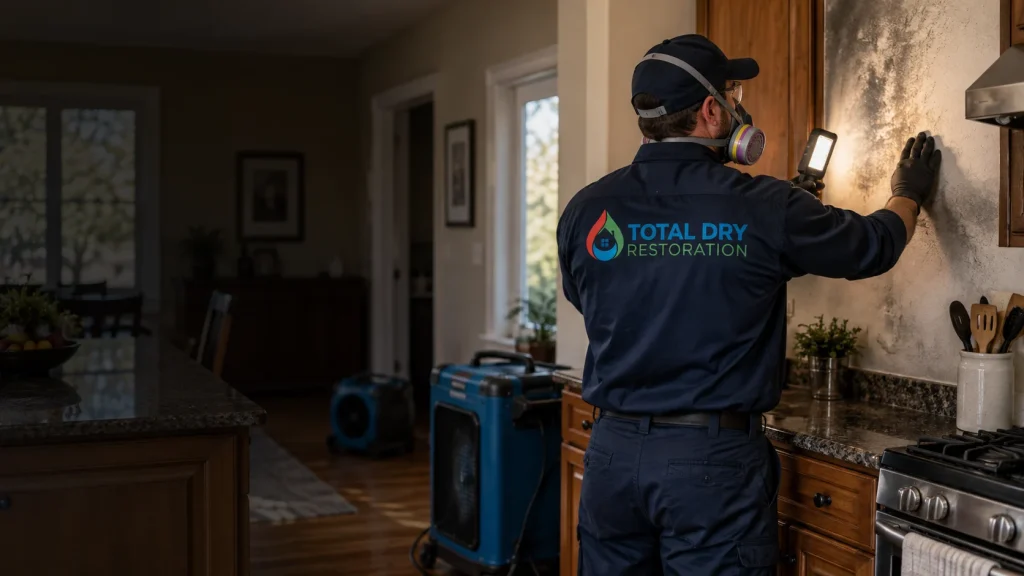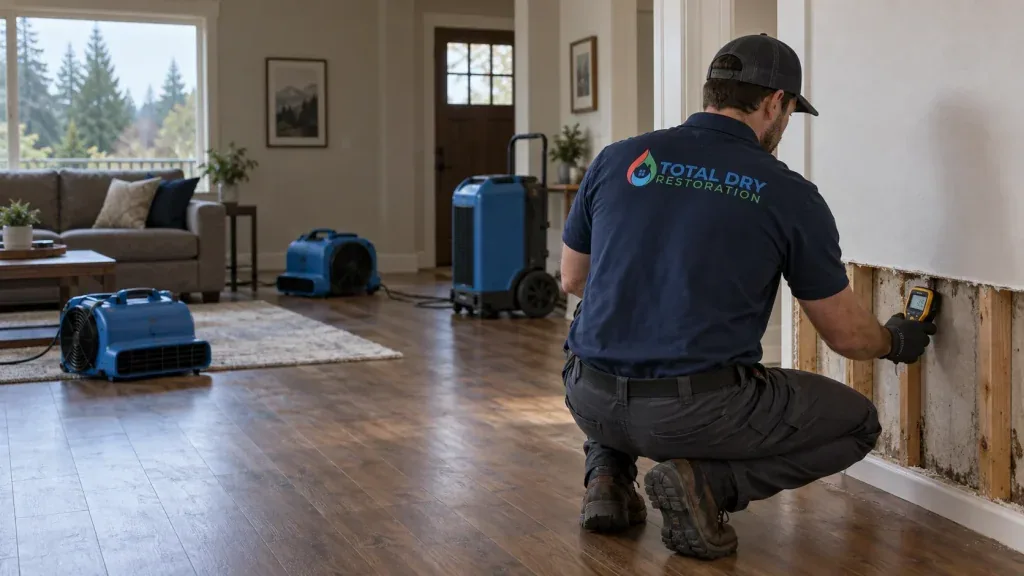

Category 3 water damage means water has touched dangerous contamination, so the cleanup plan changes right away. This is the kind of water homeowners often call black water damage, contaminated water damage, or sewage water damage. It may contain waste, chemicals, bacteria, or other unsafe material you can’t see just by looking at the floor.
If you’re dealing with this, the goal isn’t just to dry the room. You need to stop the source, keep the contamination from spreading, remove materials that can’t be cleaned safely, and dry what remains. This guide breaks that down in plain language so you know what to do first, what not to touch, and when category three water cleanup needs professional help.
Best for: Homeowners who need to understand whether wet materials are contaminated and what cleanup steps come first. Not ideal when: The water is still rising, sewage is present, or electrical hazards make the area unsafe. Good first step if: You can safely stay out of the affected area and stop using nearby drains or fixtures. Call a pro if: Contaminated water has reached carpet, drywall, insulation, cabinets, crawl spaces, or heating and cooling systems.
Quick Summary
- Category 3 water is heavily contaminated and should be treated as unsafe.
- Drying alone isn’t enough because germs or waste can remain in materials.
- Porous items like carpet padding, insulation, and some drywall often need removal.
- Cleanup should move in order: stop the source, contain, remove, clean, then dry.
- Professional help is safest when sewage, floodwater, or hidden contamination is involved.
Quick Answer
Category 3 water damage involves highly contaminated water that can make people sick through contact, splashing, or hidden residue. Think of raw chicken juice across a kitchen counter, but on a much bigger scale. You would not wipe part of it and call it done. You would clean, remove what cannot be cleaned, and stop the spread.
In homeowner terms, Category 3 water can come from a sewage backup, outside floodwater, or water mixed with waste, soil, or other unsafe contaminants. The IICRC uses categories to describe contamination levels, but the practical point is simple: Category 3 requires a more protective cleanup plan.
- Keep people and pets out of the area.
- Avoid walking through the water.
- Shut off the water source if safe.
- Do not run fans across contaminated areas.
- Photograph visible damage from a safe spot.
- Call qualified help if sewage, floodwater, or soaked porous materials are involved.
If you are unsure whether cleanup comes before rebuilding, the difference between water mitigation and restoration helps explain why stopping damage and removing unsafe materials usually comes before repairs.
Category 1 vs Category 2 vs Category 3 Water
The difference between Category 1, Category 2, and Category 3 water is the level of contamination, not just where the water appears in the house. Category 1 starts as clean water. Category 2 contains some contamination. Category 3 is heavily contaminated and requires the most caution.
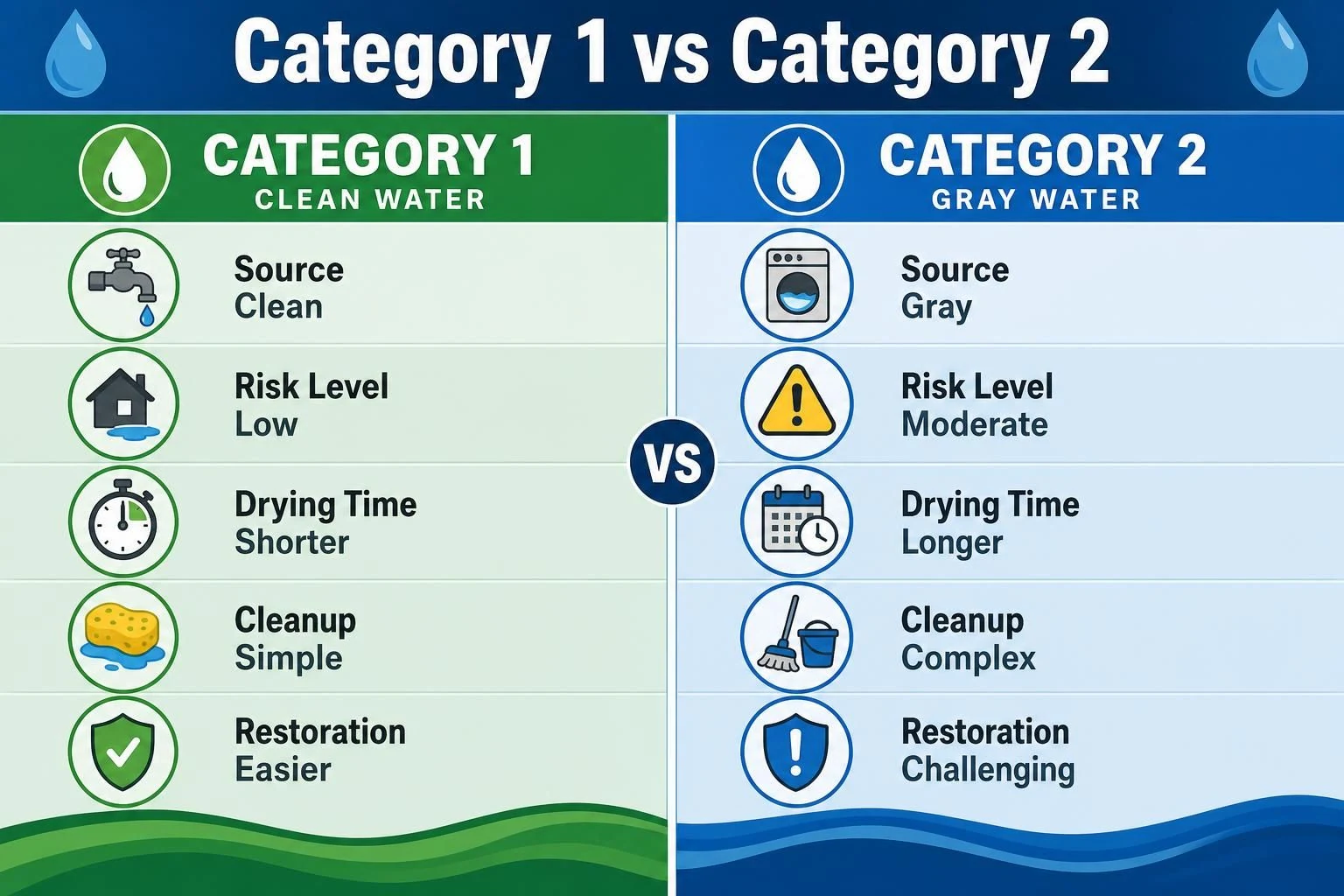
Category 1 is like water from a supply pipe before it touches anything dirty. Category 2 is like used water from an appliance or fixture that may contain soaps, dirt, or mild contaminants. Category 3 is like sewage or floodwater. You should treat it as unsafe.
| Water category | Plain-English meaning | Common examples | Cleanup concern |
|---|---|---|---|
| Category 1 | Starts clean | Broken supply line, clean toilet tank water | Dry quickly before it worsens |
| Category 2 | Some contamination | Dishwasher discharge, washing machine overflow | Clean and dry affected surfaces |
| Category 3 | Heavy contamination | Sewage backup, floodwater, toilet overflow with waste | Remove unsafe materials and disinfect |
Water categories can also change. Clean water that sits, travels through dirty building materials, or mixes with soil may no longer be clean. In practice, a bathroom or laundry-area overflow may start as cleaner water, but if it passes through debris, contaminated flooring, or backed-up drains, the risk changes.
This is why cleanup decisions should be based on the water’s path. A supply-line leak on tile may be handled very differently from water that soaked into carpet after touching sewage. Even familiar household leaks can get complicated. For example, a washing machine overflow may involve detergent and dirty laundry water rather than clean supply water, so you need to judge what the water contacted before deciding what can stay.
Common Sources of Category 3 Water
The most common sources of Category 3 water are sewage backups, outside floodwater, and overflows that contain waste or heavy contamination. If water came from a drain, a toilet with feces, or outside during a storm, assume it may be unsafe until a professional evaluates it.
- Sewage backing up through a floor drain, toilet, tub, or shower
- Floodwater entering through doors, windows, garages, or foundation openings
- Toilet overflows involving waste
- Stormwater carrying soil, debris, or street runoff into the home
- Water entering crawl spaces and then moving into living areas
- Long-standing water that has mixed with damaged materials or debris
Stormwater is especially tricky because it can pick up soil, chemicals, animal waste, and debris before entering your home. If outdoor water is pushing inside, storm water intrusion cleanup usually starts with limiting entry, separating clean areas from dirty areas, and checking hidden spaces before drying.
Why Porous Materials Often Cannot Be Saved
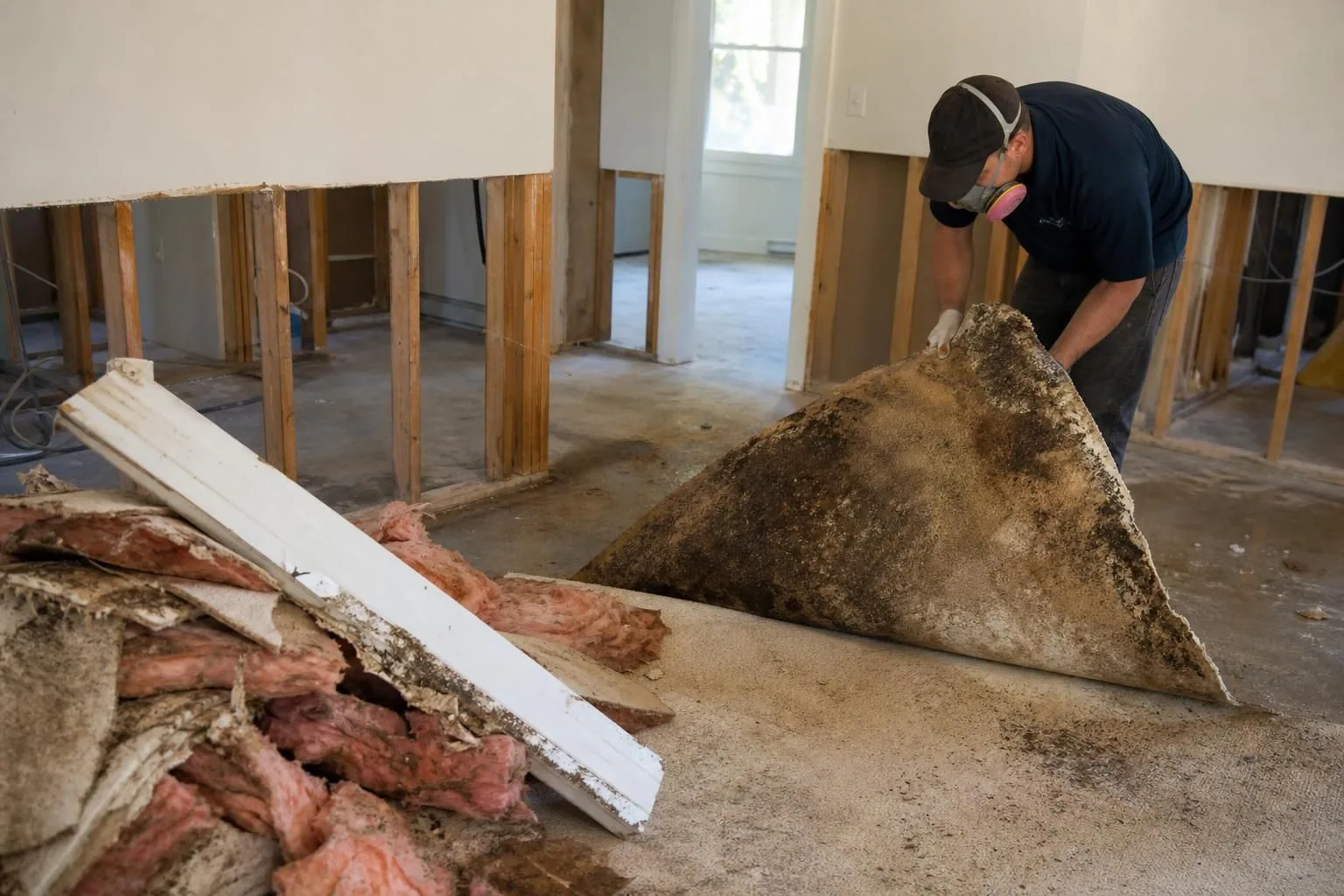
Porous materials often cannot be saved after Category 3 water damage because contaminated water can soak below the surface and stay trapped. Porous means full of tiny openings, like a sponge, bread, or towel. Once dirty water gets inside, wiping the outside does not clean the inside.
That is why black water damage is different from a clean spill. The question is not only, “Is it dry?” It is, “Can it be cleaned all the way through?” If not, removal is often safer.
Common materials that may need removal include carpet and carpet padding, wet insulation, soft baseboards or trim with swelling, drywall that absorbed contaminated water, particleboard cabinets or vanities, laminate flooring with trapped water underneath, upholstered furniture touched by sewage or floodwater, and cardboard boxes, papers, and soft stored items.
- Carpet and carpet padding
- Wet insulation
- Soft baseboards or trim with swelling
- Drywall that absorbed contaminated water
- Particleboard cabinets or vanities
- Laminate flooring with trapped water underneath
- Upholstered furniture touched by sewage or floodwater
- Cardboard boxes, papers, and soft stored items
Some non-porous materials may be cleaned if structurally sound, such as sealed tile, metal, glass, and some plastics. Even then, edges, cracks, grout lines, and wall openings matter.
Hidden moisture also raises the chance of mold after the water event. If wet materials were not removed or dried correctly, mold after water damage can become a second problem on top of contamination.
Safety, Containment, Cleaning, and Drying
Safe Category 3 cleanup follows a strict order: protect people, contain the area, remove contaminated materials, clean remaining surfaces, and then dry the structure. Drying comes later because air movement can spread contamination into clean rooms.
- Stop the source if safe. Turn off the water supply if a fixture is overflowing. Stop using drains if sewage is backing up. If flooding came from outside, avoid moving water and possible electrical hazards.
- Isolate the area. Close doors, keep children and pets away, and avoid carrying shoes, towels, or tools into clean spaces.
- Avoid direct contact. Do not touch sewage, wet carpet, or soaked debris with bare hands. Protective gear includes gloves, eye protection, boots, and disposable coverings.
- Remove unsalvageable porous materials. Professionals often remove wet carpet padding, affected drywall, insulation, and other materials that cannot be cleaned through their full depth.
- Clean remaining hard surfaces. Cleaning removes soil and residue. Disinfecting uses an approved product to reduce germs on a cleaned surface. Dirt reduces disinfectant performance, so cleaning comes first.
- Dry the structure.
After contaminated material is removed and surfaces are cleaned, drying equipment may reduce moisture in framing, subfloors, and other remaining materials.
A common mistake is turning on large fans right away. That can spread particles and odors. Another is saving materials because they look fine. Appearance does not prove safety.
If damage extends beyond a small contained surface, professional water damage restoration can handle containment, removal, cleaning, drying, and repair planning in the right order.
When to Call a Professional
You should call a professional for Category 3 water damage when contamination has touched absorbent materials, spread beyond a small area, or entered hidden spaces. This is not overreacting. It is about avoiding guesswork with sewage water damage or floodwater that may carry health risks.
Stop do-it-yourself cleanup and get help if you see any of these signs.
- Sewage has backed up into the home
- Floodwater entered from outside
- Carpet, padding, insulation, or drywall is wet
- Water has reached cabinets, built-ins, or wall cavities
- The affected area smells like sewage or strong musty water
- You don’t know how far the water traveled
- Electrical outlets, appliances, or heating and cooling equipment were affected
- Someone in the home is medically vulnerable
A professional crew can inspect beyond the visible puddle. They may check moisture inside walls, under flooring, and around trim. They can also set containment, remove unsafe materials, and document what was affected with notes, photos, and measurements.
Professionals also help separate mitigation from restoration. Mitigation stops damage from getting worse through extraction, removal, cleaning, and drying. Restoration puts the home back together later.
FAQs
Is Category 3 Water the Same as Black Water?
Category 3 water is often called black water, but the terms aren’t always used perfectly by homeowners. The key point is contamination. If water may contain sewage, flood debris, waste, or harmful residue, treat it as Category 3 until it’s inspected.
Can I Clean Category 3 Water Damage Myself?
You may be able to keep people away, stop using affected plumbing, and document the damage from a safe distance. But full category three water cleanup is usually not a good do-it-yourself job when sewage, floodwater, carpet, drywall, or insulation is involved.
Can Contaminated Carpet Be Dried and Reused?
Carpet and padding affected by Category 3 water usually can’t be safely saved because contamination can soak through the fibers and into the padding. Dry carpet isn’t the same as clean carpet. If sewage or floodwater touched it, removal is commonly needed.
What if the Water Only Touched Tile or Concrete?
Tile, sealed concrete, metal, and other hard surfaces may be cleanable if they’re not cracked, porous, or hiding water underneath. Still, the edges matter. Water can travel under baseboards, into grout lines, and behind walls, so inspection is still smart.
How Fast Should I Act After Sewage Water Damage?
Act as soon as it’s safe. Keep people out, stop using plumbing if drains are backing up, and arrange cleanup quickly. The longer contaminated water sits, the more materials it can soak into, which can make removal and drying more involved.
Category 3 water damage changes the cleanup plan because contamination matters as much as moisture. Don’t judge the job by whether the floor looks dry. Judge it by where the water came from, what it touched, and whether affected materials can truly be cleaned.
Your next step is simple: keep the area isolated, avoid spreading contamination, and get a qualified inspection if sewage, floodwater, or soaked porous materials are involved. Once the unsafe materials are addressed and the remaining structure is cleaned and dried, repairs can move forward with far less guesswork.