
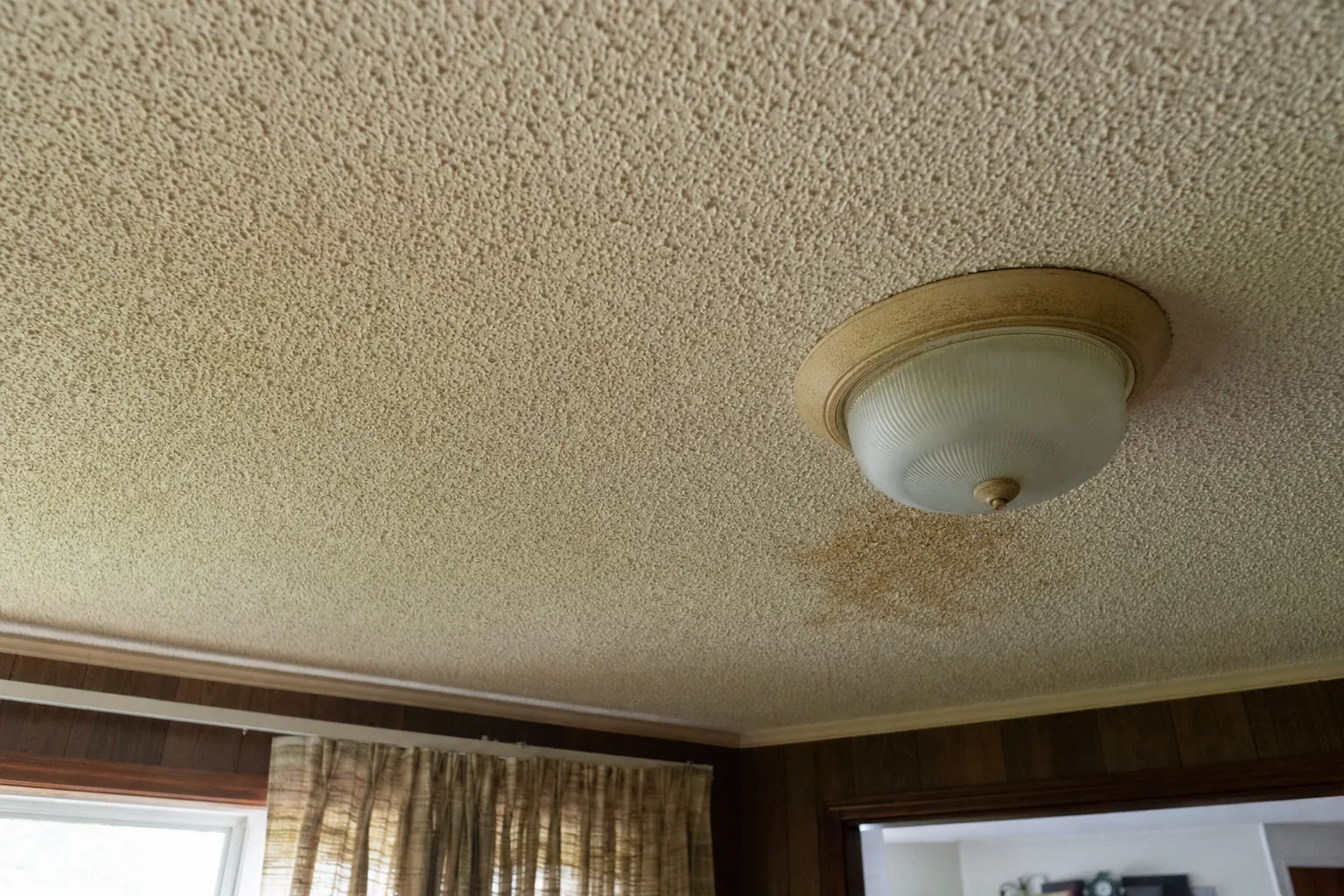
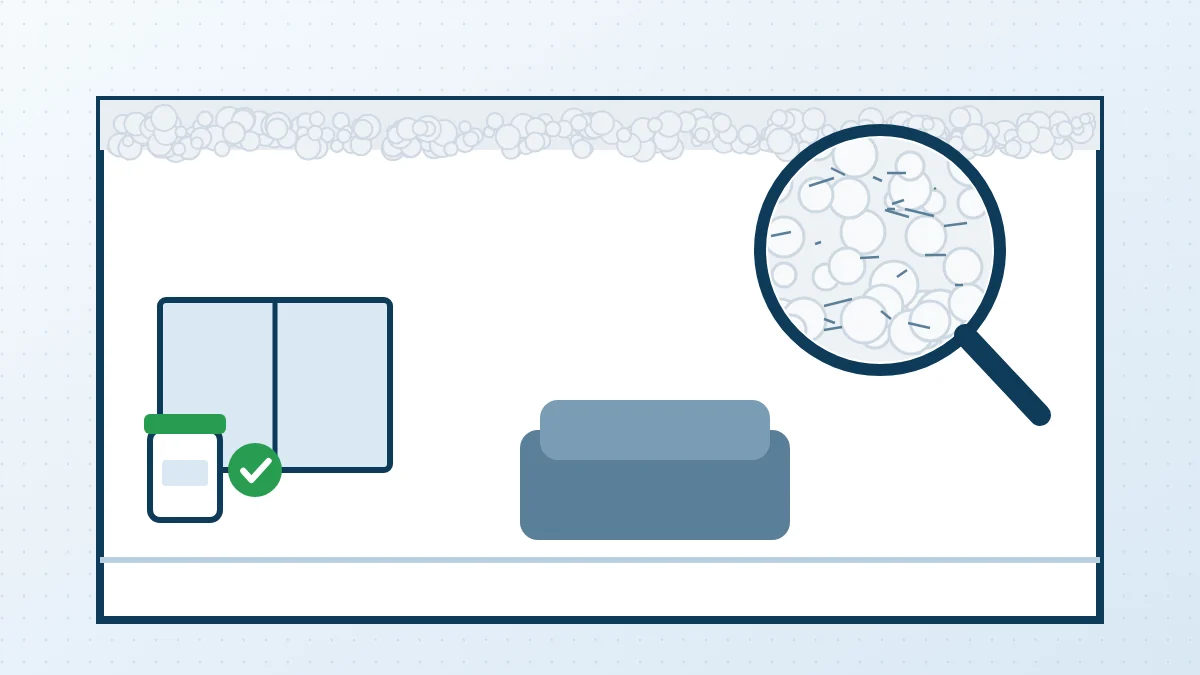
Popcorn ceilings, also called acoustic or textured ceilings, are common in older homes around Burien and South King County. Some of them contain asbestos and many do not. You cannot tell by looking, touching, or knowing roughly when the house was built. The only reliable answer comes from a lab analysis of a properly taken sample.
This guide explains when asbestos in a popcorn ceiling is a real concern, when it is better to leave the ceiling alone, how testing works, and what to do if the ceiling has been damaged by a leak.
Short answer: an intact popcorn ceiling that nobody plans to disturb is usually safest left alone. Before any sanding, scraping, drilling, cutting, or remodeling, have the material tested. If the ceiling is already damaged by water, keep people away from fallen debris and do not sweep or vacuum it until you know what it contains.
Why popcorn ceilings can contain asbestos
Spray-applied acoustic textures were popular for decades because they hid imperfections and softened sound. Some of those textures were made with asbestos fibers. Others used different materials. The Southwest Clean Air Agency puts it plainly: not all popcorn ceilings contain asbestos, and if you decide not to test, you should assume the ceiling does contain it and treat it accordingly (SWCAA guidance).
Asbestos is mainly a health risk when fibers are released into the air and inhaled. A ceiling in good condition that is not being disturbed releases very little. The risk rises when the texture is crumbling, wet, scraped, sanded, or cut.
When to leave it alone
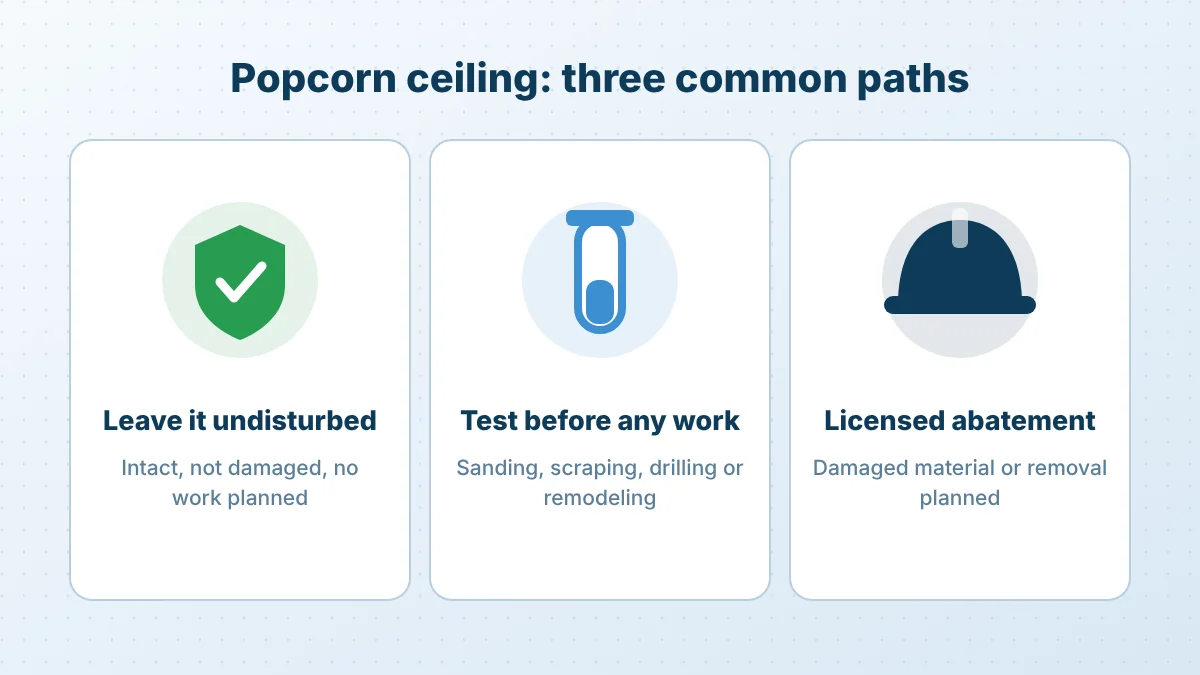
The U.S. EPA’s advice for homeowners is that the best approach is usually to leave asbestos-containing material alone if it is in good condition, and not to touch material you suspect contains asbestos (EPA: Protect Your Family from Exposures to Asbestos). Leaving it alone generally makes sense when:
- The texture is intact, with no flaking, crumbling, or water stains.
- No remodeling, rewiring, light fixture changes, or drywall repairs are planned on that ceiling.
- Nobody is scraping, sanding, or hanging things from it.
Painting over a popcorn ceiling is sometimes suggested as a way to seal it. SWCAA notes a trade-off: paint can block water from soaking in later, which can make safe wet removal much harder if the ceiling ever has to come down.
When to test
Test before any work that will disturb the ceiling. That includes:
- Scraping or removing the texture.
- Cutting drywall to repair a leak, install a fixture, or run wiring.
- Remodeling that opens or replaces the ceiling.
- Water or fire damage that has softened, cracked, or dropped parts of the ceiling.
EPA recommends that a trained and accredited asbestos professional take samples, and warns that sampling done incorrectly can be more hazardous than leaving the material alone. If the material is undamaged and will not be disturbed, testing is not necessary.
What the rules look like in the Puget Sound area
In King, Pierce, Snohomish, and Kitsap counties, the Puget Sound Clean Air Agency sets the asbestos rules for renovation and demolition. According to the agency, an AHERA-certified building inspector generally has to survey the materials before a renovation, and the results have to be shared with anyone who may disturb them. One exception: residents who own and live in the single-family house being remodeled (not demolished) may conduct their own survey. Removal of friable asbestos above certain amounts requires a notification to the agency before work starts (Puget Sound Clean Air Agency: renovation requirements).
Rules change and the details depend on the project, so confirm current requirements with the agency or your contractor before work begins. Contractors and landlords have different obligations than owner-occupants.
If a leak has damaged a popcorn ceiling
Water is one of the most common reasons a textured ceiling gets disturbed. A ceiling leak can soak the texture, make it sag, and drop pieces onto floors and furniture. If that happens:
- Keep people and pets out of the area under the damaged section. A sagging, wet ceiling can also fall without warning.
- Stop the water at the source if you can do it safely, and treat water near light fixtures as an electrical hazard.
- Do not sweep, vacuum, or scrape up fallen texture. SWCAA specifically warns against vacuuming or sweeping asbestos debris.
- Cover belongings you cannot move, and close the room off if you can.
- Have the material tested before anyone cuts out wet drywall or starts drying with fans that could spread debris.
Drying and repairs can usually still move forward quickly once the test results are known. See our guide on ceiling water damage repair for the leak and drying steps, and water damage and asbestos for how water losses and older building materials interact.
What testing involves
A sample is a small piece of the texture taken from several spots, sealed, and sent to an accredited laboratory. The person sampling should wet the area first and protect the room so the sampling itself does not spread fibers. Results tell you whether asbestos is present and in what proportion. If results come back at or near the low end, SWCAA recommends additional samples to confirm.
If the ceiling contains asbestos and needs to come out, removal should be done by a certified asbestos abatement contractor, with containment, wet methods, protective equipment, and proper disposal. If it does not, the ceiling can be repaired or removed like other drywall work, with normal dust control.
Getting a ceiling tested near Burien
If you are planning a remodel or dealing with a leak under a textured ceiling in Burien, White Center, Tukwila, Des Moines, or nearby, our lead and asbestos testing service can help you find out what you are working with before anyone disturbs the material. For other older materials that often come up during renovation, see asbestos testing before renovation.