
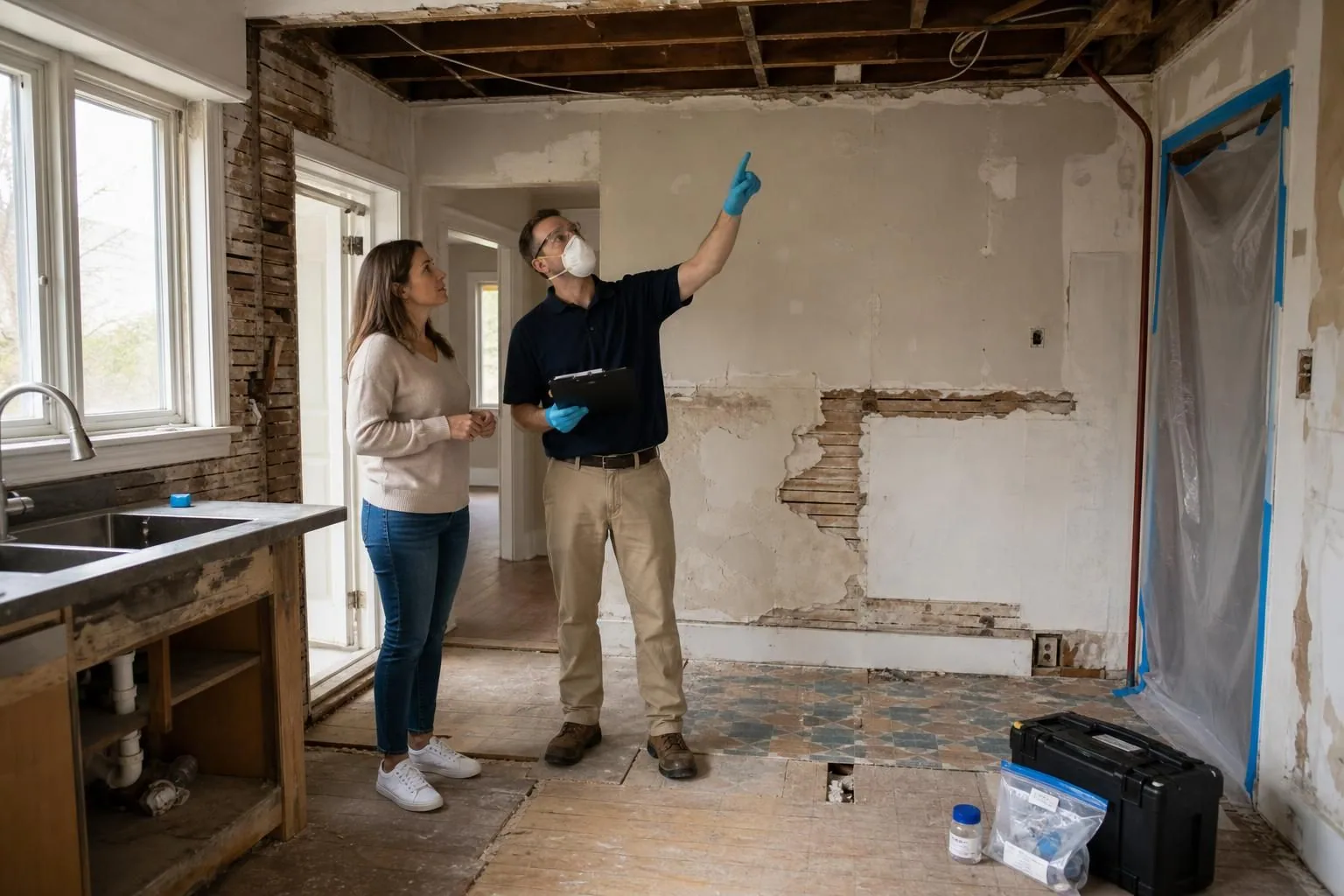
Asbestos testing before renovation is needed when an older home project may cut, drill, scrape, sand, remove, or demolish materials that could contain asbestos. The safe rule is simple: if you don’t know what the material is, don’t disturb it until testing answers the question. Asbestos is a mineral fiber once used in many building products because it handled heat and wear well. The problem is that asbestos fibers can become hazardous when materials are damaged or broken apart.
This guide is for homeowners planning repairs, remodels, or demolition in an older home with unknown flooring, walls, ceilings, insulation, adhesives, or layered materials. If your work stays on clean, modern, known surfaces and will not disturb suspect materials, testing may not be needed for that task. But if you uncover older layers or your project involves cutting, sanding, scraping, drilling, or tear-out, pause before work continues.
Sampling and next steps should generally be handled by a qualified asbestos inspector or licensed asbestos professional, not by disturbing materials yourself. Rules for testing, notification, removal, and disposal can vary by city, state, or province, so local requirements matter. Get expert help especially if suspect material is damaged, dusty, crumbling, or located where renovation work cannot avoid disturbing it.
Quick Answer
Asbestos testing before renovation should happen before any work that could damage, break, cut, or remove suspect materials in an older home. You are not testing because every old material is dangerous. You are testing because guessing is unreliable.
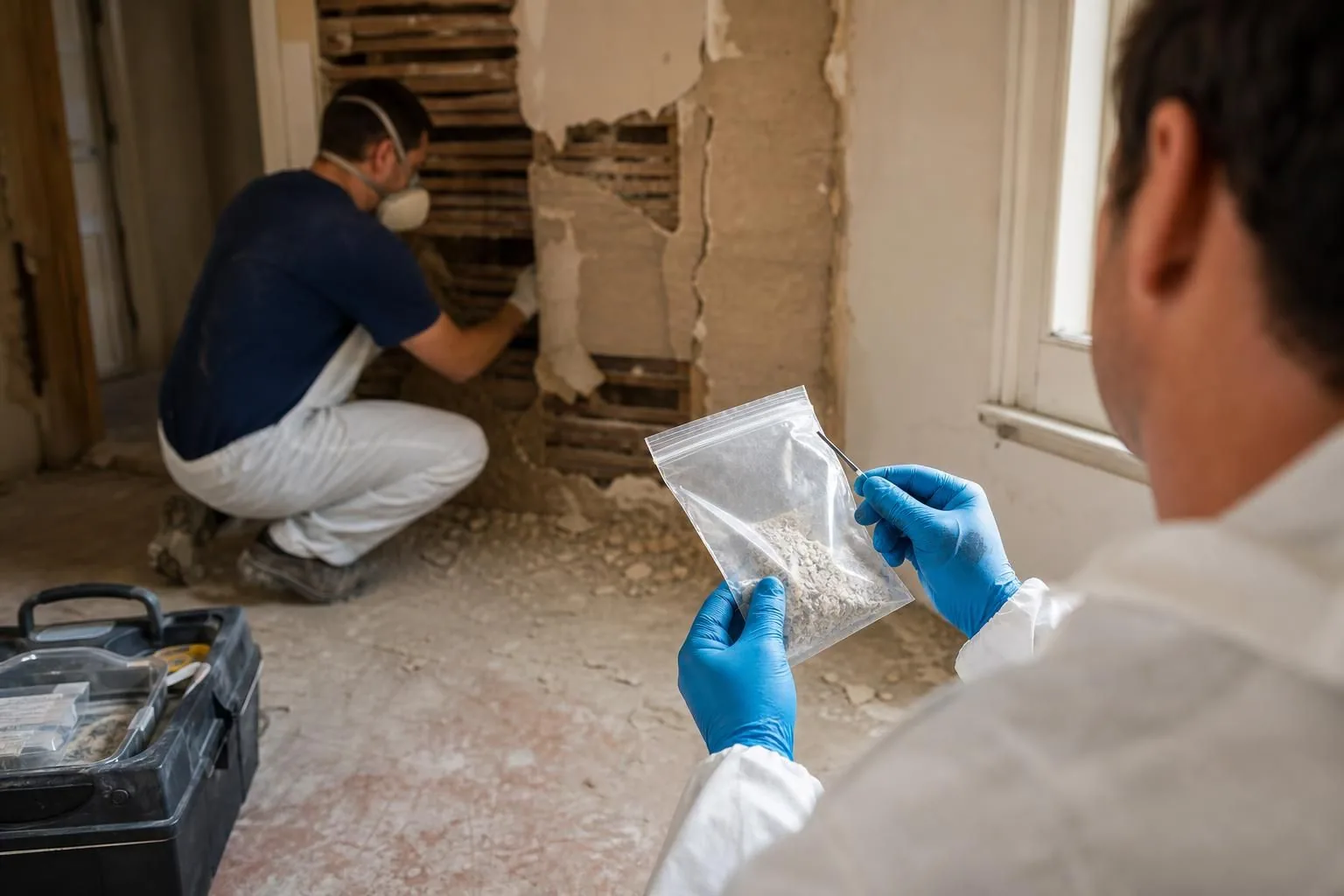
Use this pre-work sequence:
- Stop before disturbance.
- Identify the materials the project will touch.
- Ask whether they are older, layered, hidden, brittle, or unknown.
- Arrange an asbestos inspection before remodel work if yes.
- Wait for the lab result or inspector’s recommendation.
- Proceed only after you know whether asbestos was found.
The key word is disturb. Intact material may not matter if you never touch it. But if renovation will open walls, remove flooring, scrape texture, or access old pipe areas, testing should come first. Many homeowners start with lead and asbestos testing before planning goes further.
Why You Cannot Identify Asbestos by Sight
You cannot identify asbestos by sight because asbestos fibers are microscopic and were mixed into many ordinary building materials. Floor tile, ceiling texture, adhesive, or wall panels can look normal and still require lab testing.
Homeowners often assume a material is harmless because it looks like old glue or a typical textured ceiling. But appearance is only a clue, not proof. Asbestos may be hidden inside a product, mixed into backing, or buried under newer finishes.
Older homes are especially tricky because they contain layers. A floor can have newer vinyl, older sheet flooring, adhesive, and another layer below. A wall may include paint, joint compound, patch material, and old board. The surface does not show the full story.
An asbestos inspection before remodel work answers a practical question: will the project disturb asbestos-containing material? Do not rely on photos, internet comparisons, or a neighbor’s guess. If the material is suspect and the work will disturb it, testing by a qualified provider is the reliable way to know.
Materials That May Contain Asbestos
Many asbestos building materials look like common flooring, ceiling, wall, insulation, or adhesive products found in older homes. The material doesn’t need to look strange or damaged to deserve caution before a remodel.
Use the list below as a screening tool, not a diagnosis. If your project won’t touch the material, you may not need immediate action. But if your work will cut into it, remove it, scrape it, drill through it, or break it apart, pause before continuing.
| Area | Suspect material | Why testing matters | Project trigger |
|---|---|---|---|
| Kitchen or bathroom | Older vinyl floor, sheet flooring, backing, adhesive | Layers can hide older materials | Removing flooring or cabinets |
| Ceiling or wall | Textured coating, joint compound, old panels | Fibers may be mixed into finishes | Scraping, sanding, cutting |
| Basement or utility area | Pipe wrap, boiler insulation, duct insulation | Materials may be brittle or hidden | Repairing pipes or opening chases |
| Attic or exterior area | Old siding, roofing, insulation board | Products may be weathered or layered | Demolition or major repair |
A bathroom remodel is a common example. You may plan to replace a vanity and tile, then discover old sheet flooring under the current floor. If removal would pull up backing or adhesive, asbestos sampling older home materials may be needed before work continues.
The same applies in basements, attics, and utility rooms. Pipe wrap, old panels, and insulation may not be part of the “pretty” remodel, but they can sit right in the path of plumbing, electrical, or heating work. If you’re opening walls because of stains, soft spots, or unknown damage, check for signs of hidden water damage without cutting into suspect older surfaces.
When Testing Should Happen Before Repairs
Testing should happen before repairs begin whenever the work will disturb suspect older materials. Do not wait until demolition has started, dust is visible, or part of the material is already removed.
The best time is during planning. Walk through the project and ask what will be touched, not just replaced. Touched includes drilling, cutting, sanding, scraping, opening, lifting, breaking, or removal. Even a small repair can require testing.
Common situations include:
- Cutting a hole in an older wall for plumbing access
- Drilling through old floor layers for a new fixture
- Scraping ceiling texture before painting
- Sanding old patching compound
- Removing cabinets that sit on top of older flooring
- Tearing out panels in a basement or utility room
- Demolishing a wall, ceiling, or built-in feature
Testing before demolition matters because demolition quickly breaks materials apart. Once debris is mixed, it is harder to tell what was disturbed. Sample first through the proper professional process, wait for results, then plan the repair safely.
What Not to Disturb Before Results
Do not disturb suspect material while waiting for asbestos test results. That means no cutting, sanding, scraping, drilling, sweeping, vacuuming, tearing out, or “just checking a corner” if the material may contain asbestos.
The wait matters because testing only helps if the material stays stable until results come back and the next step is clear. The goal is to avoid dust, damage, and debris before you know what you are dealing with.
Avoid these mistakes:
- Don’t peel back flooring to check the layers.
- Don’t scrape ceiling texture to test a spot.
- Don’t sand older wall patching before painting.
- Don’t drill through suspect panels for temporary access.
- Don’t break pipe insulation to inspect the pipe.
- Don’t sweep or vacuum debris from suspect material.
If a material is already damaged, do not make it worse. Keep people away and avoid air movement that could spread dust. If repairs follow a water damage restoration process, answer asbestos questions before disturbing older suspect materials.
Next Steps After Testing
After testing, the next step depends on two things: whether asbestos was found and whether the material will be disturbed during renovation. The report should turn uncertainty into a clear project decision.
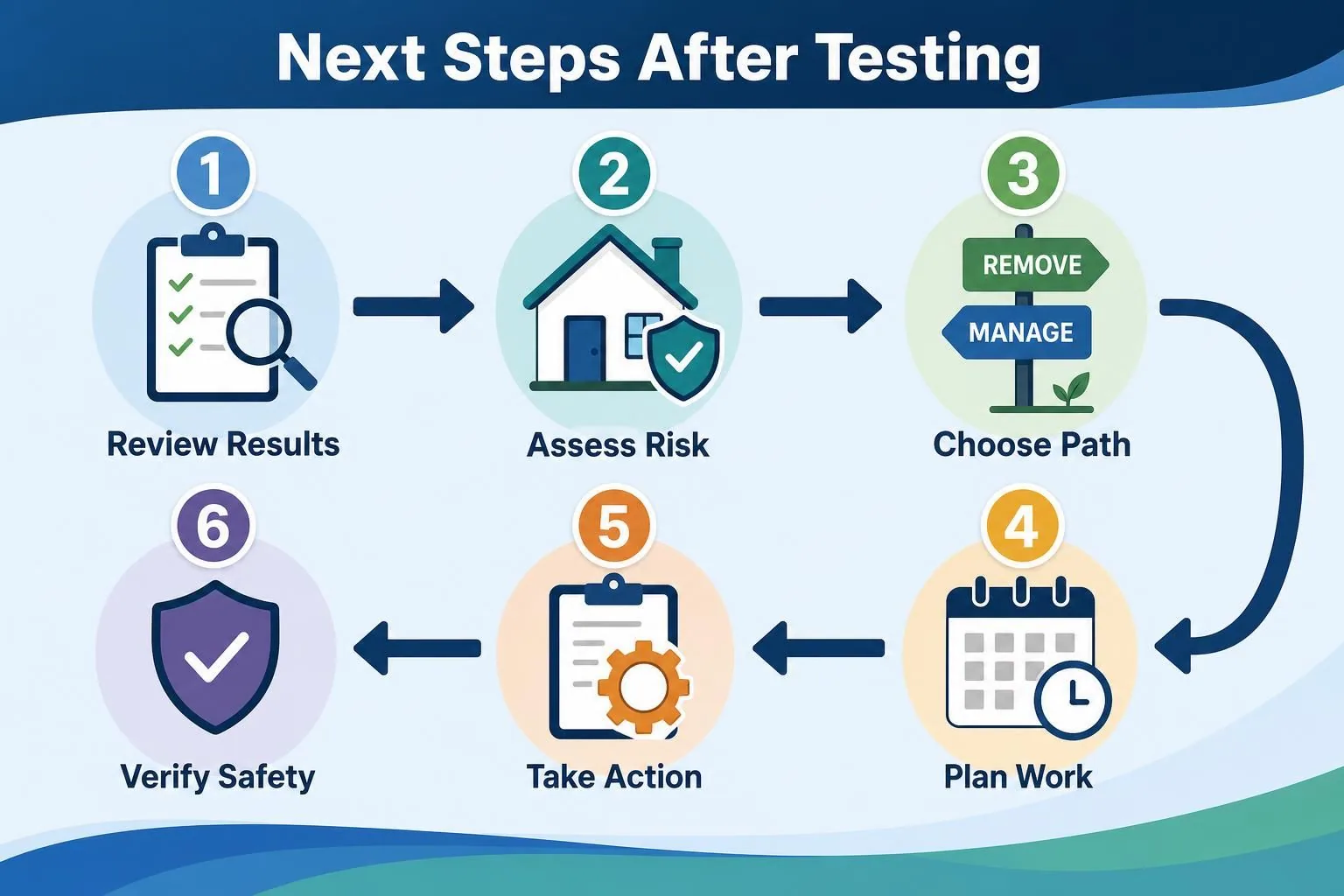
If the result is negative for the sampled material, that specific material did not test as asbestos-containing. Work may continue for that material, but do not assume every older product in the home is cleared. If the project expands or a new layer appears, reassess before disturbing it.
If the result is positive, do not remove or clean it up yourself. The project plan must change. A qualified professional may need to explain options, local requirements, and safe next steps. Depending on where you live and the type of property, regulations may affect who can perform removal, how the area is contained, how waste is packaged, and where it can be disposed of.
Use this guide:
- Negative result, same material, same scope: work may continue.
- Negative result, new hidden layer found: pause and reassess.
- Positive result, material won’t be disturbed: ask if it can be avoided.
- Positive result, material must be disturbed: get qualified help first.
Keep reports with your renovation records for future reference.
FAQs
The most common questions about asbestos testing before renovation come down to timing, scope, and uncertainty. Homeowners usually aren’t trying to become asbestos experts. They just want to know whether it’s safe to keep working.
The short answer is to test before disturbance, not after. Once older material has been cut, sanded, scraped, or demolished, the situation gets more complicated. These answers keep the focus on pre-work decisions.
Do I Need Asbestos Testing for Every Old House Project?
No, not every project needs testing. If you’re painting a modern surface without sanding, changing hardware, or doing work that doesn’t disturb suspect materials, testing may not be needed. But if the project touches older unknown flooring, walls, ceilings, insulation, or adhesives, testing before work is the safer path.
Can a Contractor Tell if a Material Has Asbestos Just by Looking?
No, visual identification isn’t enough. A contractor may recognize materials that are commonly suspect, but confirmation requires proper sampling and laboratory analysis. Treat visual clues as a reason to pause, not as a final answer.
What if I Already Started Demolition and Found Suspect Material?
Stop work in that area and avoid disturbing the material further. Don’t keep breaking, sweeping, or removing debris to “finish the job.” The next step is to contact a qualified asbestos professional or testing provider for guidance based on what was disturbed and what remains.
Is Asbestos Sampling Older Home Material Something I Can Skip for a Small Repair?
You shouldn’t skip testing just because the repair is small if the work will disturb suspect material. A tiny plumbing access cut, drilled hole, scraped patch, or sanded surface can still affect older materials. Size matters less than whether the material will be damaged.
What Does a Positive Asbestos Result Mean for My Remodel Schedule?
A positive result means your schedule may need to pause while the project plan changes. It doesn’t mean the remodel can never happen. It means the work should proceed only after qualified guidance, proper planning, and any required professional handling steps are addressed.
Asbestos testing before renovation is really about timing. Test before the mess, before the tear-out, and before a small repair turns into disturbed unknown material. If your older home project may affect flooring, walls, ceilings, insulation, pipe wrap, panels, or adhesive, use the stop, sample, wait, then proceed framework.
Your next step is to walk the project area and list every material the work will touch. If any older or unknown material would be cut, drilled, scraped, sanded, removed, or demolished, pause the renovation plan and arrange testing before work continues.