
Mold after water damage doesn’t always appear right away, so don’t panic if you’ve just found a leak. But damp materials can become a mold risk fast when drying is delayed or incomplete. The goal is simple: stop the water, remove as much moisture as you can, and check whether hidden areas are still wet. Think of drywall, carpet padding, insulation, and cabinets like sponges. The surface may look fine while moisture sits inside. In this guide, you’ll learn the water damage mold timeline, the early signs to watch for, what you can dry yourself, and when professional drying or mold remediation makes more sense.
Best for: Homeowners who found a recent leak and want to act quickly before moisture turns into a bigger problem. Not ideal when: Sewage, floodwater, or long-standing leaks are involved, because contamination and hidden damage change the response. Good first step if: You can safely stop the water source and start removing standing water right away. Call a pro if: You see visible mold, smell musty odors, or suspect moisture inside walls, floors, insulation, or cabinets.
Quick Summary
- Mold risk depends on moisture, time, materials, airflow, and how completely the area dries.
- The first 24 to 48 hours matter because EPA-style guidance focuses on fast moisture control.
- Musty odor, staining, spots, warped materials, and damp flooring can signal trouble.
- Porous materials like drywall, carpet padding, insulation, and wood need extra attention.
- Drying may be enough for small clean-water leaks found quickly, but hidden moisture changes the plan.
Quick Answer
Mold growth after a water leak becomes more likely when wet materials stay damp, especially beyond the first day or two. Mold is not guaranteed by a specific hour, but risk rises when moisture remains trapped in porous materials. Dry quickly, verify hidden areas, and keep watching for odor or discoloration.
| Timeframe | What to do | What to watch for | Main risk |
|---|---|---|---|
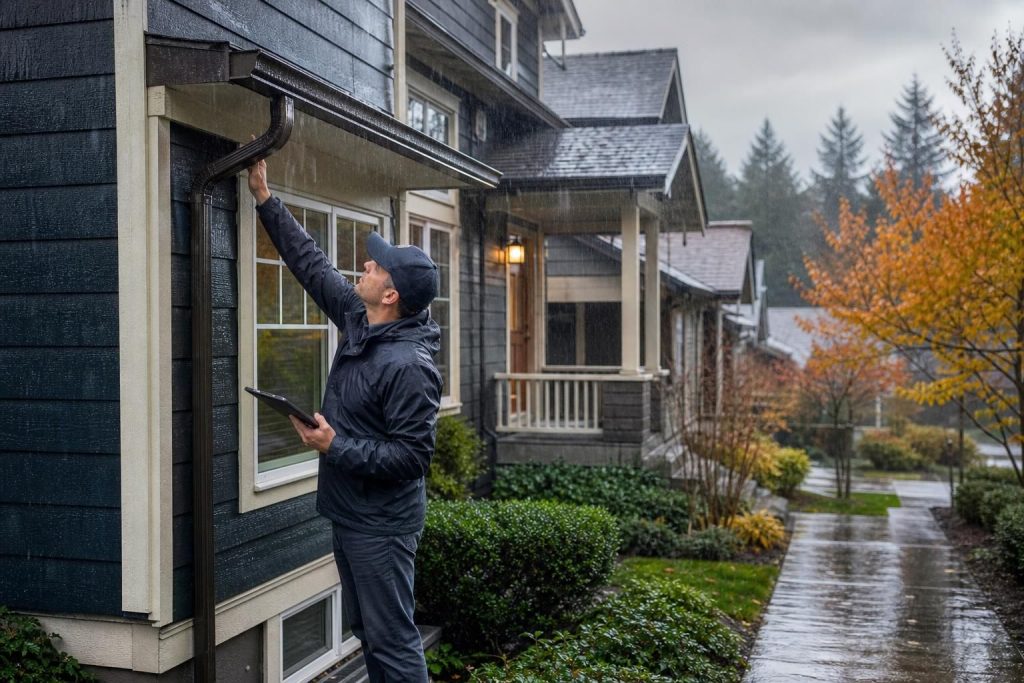
| Immediately | Stop the leak and remove standing water | Active dripping or spreading wet areas | More materials getting soaked |
| First 24 hours | Open access, move wet items, start drying | Damp drywall, carpet, cabinets, or flooring | Hidden moisture |
| 24 to 48 hours | Keep dehumidifiers and airflow running | Musty odor or materials that won’t dry | Rising mold risk |
| Following days | Recheck surfaces and smells | Spots, staining, warping, recurring dampness | Mold from water damage |
If the water came from a clean source, such as a supply pipe, and the area is small:
- Stop the water source.
- Remove standing water with towels, a wet vacuum, or extraction equipment.
- Move wet contents away from walls and floors.
- Pull up wet rugs if you can do it safely.
- Run fans and a dehumidifier.
- Check the same area again over the next few days.
If drying time is unclear, how long does water damage take explains why materials dry at different speeds.
Why the First 24 to 48 Hours Matter
The first 24 to 48 hours matter because fast drying reduces the chance that damp building materials will support mold. The Environmental Protection Agency, or EPA, gives moisture-focused guidance: fix the water problem, dry wet materials as quickly as practical, and remove materials that can’t be dried properly. That’s the plain version. Mold prevention starts with moisture control.
So what does this mean in practice? Don’t just wipe the surface and assume you’re done. Water can travel sideways, downward, and behind finishes. A small pipe leak under a sink may wet the cabinet base. A ceiling stain from an upstairs bathroom leak may mean damp drywall above your head. A water heater leak can make carpet feel dry on top while padding underneath stays wet.
- Shut off the water if the leak is still active.
- Turn off electricity to wet areas if there’s any safety concern.
- Remove standing water.
- Increase airflow with fans if the area is safe.
- Use a dehumidifier to pull moisture from the air.
- Move wet boxes, fabrics, and furniture away from damp surfaces.
- Take photos before moving damaged materials if you may file a claim.
A common mistake is drying only what you can see. Another is closing the room too soon. If the air feels heavy or humid, moisture is still part of the problem. For setup tips, read this guide to using a dehumidifier after water damage so you don’t just blow damp air around the room.
Signs Mold May Be Starting After a Leak
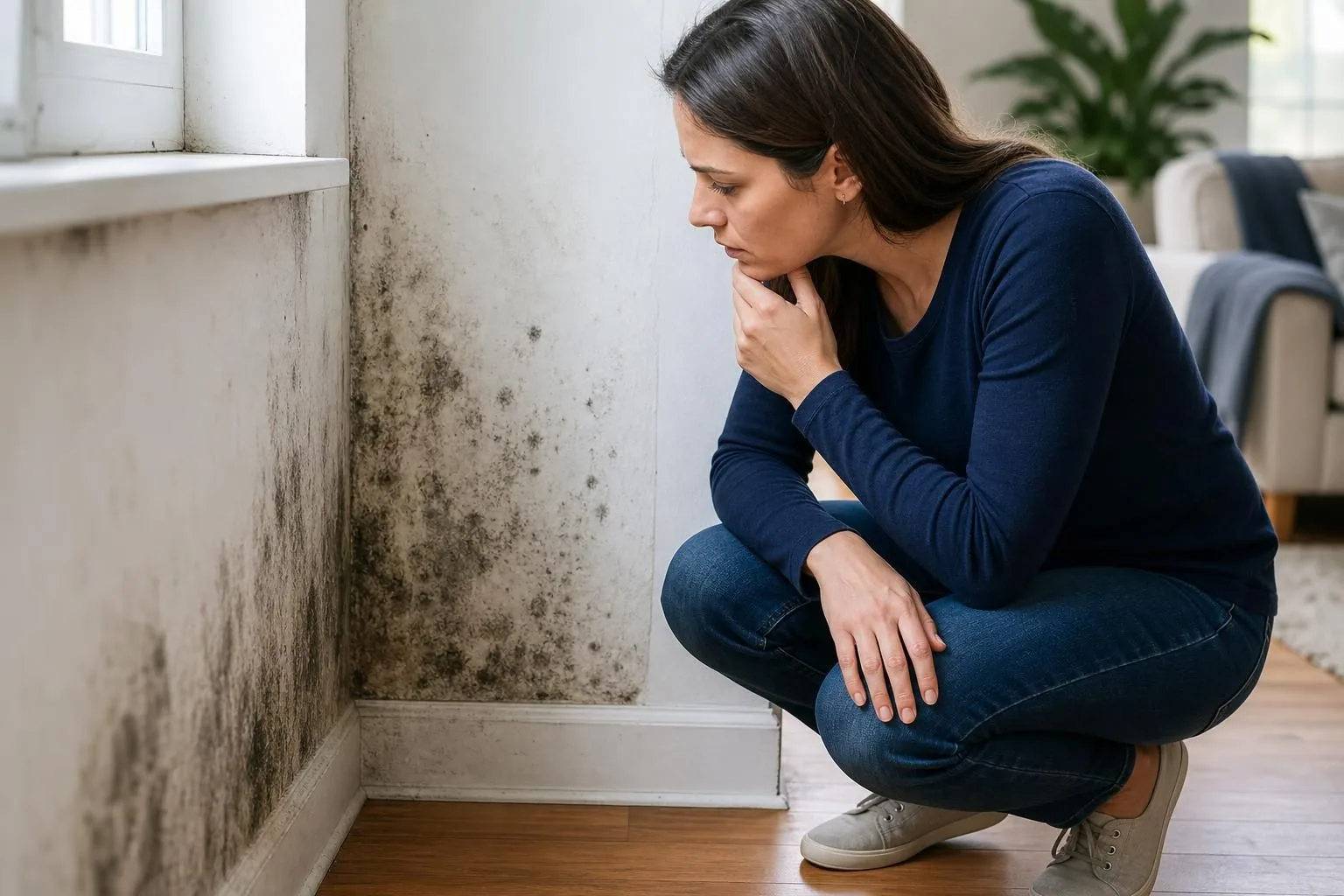
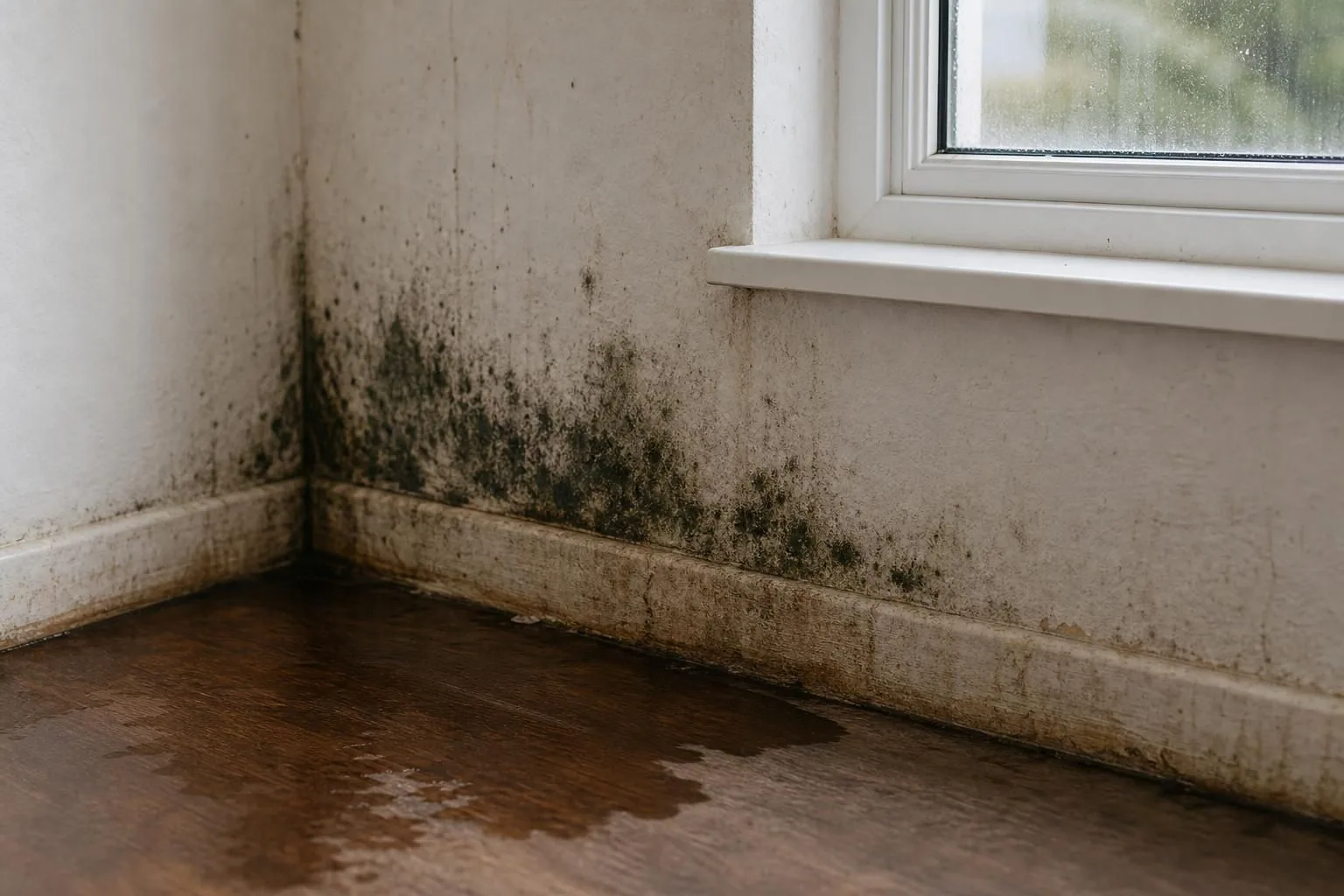
The most common early signs of mold after water damage are musty odor, visible spots, staining, persistent dampness, and materials that change shape. You don’t need to identify the mold type to know something is wrong. If an area stayed wet and now smells earthy, stale, or musty, treat that as a warning sign.
Check slowly. Use your eyes, nose, and hands, but don’t disturb suspicious growth. Look around the original leak and then expand outward. Water rarely stays in one neat circle. It follows gravity, seams, cracks, flooring layers, wall cavities, and trim.
Watch for these signs:
- Dark, greenish, gray, or fuzzy spots on walls, trim, cabinets, or contents
- Yellow, brown, or cloudy water stains
- Damp drywall that feels soft or swollen
- Peeling paint or bubbling wall surfaces
- Warped baseboards, buckled flooring, or swollen wood
- Carpet that smells musty even when the top feels dry
- Condensation or high humidity that lingers after the leak is fixed
For example, a ceiling stain from an upstairs bathroom leak may look dry from below. But moisture can remain trapped behind drywall or above the ceiling. A basement leak is similar. You may remove visible water, yet a musty odor remains because humidity is still high in the room, crawlspace, or wall materials.
If the signs are hard to trace, compare what you’re seeing with common hidden water damage indicators before cutting into materials or sealing the area back up.
Materials Most Likely to Grow Mold
Porous materials are most likely to grow mold because they absorb water and hold moisture below the surface. Drywall, insulation, carpet padding, unfinished wood, and paper-faced materials are common problem spots after leaks.
Check the materials that got wet first, then the materials touching them. Wet walls can soak baseboards. Wet carpet can keep subflooring damp. A leaking shower can affect the wall, floor, trim, and nearby cabinet. If your leak started in a bathroom, water damage from a leaking shower explains why moisture often spreads beyond the visible tile or fixture.
Pay special attention to:
- Drywall and joint compound
- Carpet and carpet padding
- Wood subfloors and framing
- Laminate and engineered flooring
- Cabinets and toe-kick spaces
- Cardboard boxes and paper files
- Upholstered furniture and mattresses
- Ceiling tiles and acoustic panels
A water heater leak is a good example. Carpet may feel dry after a fan runs overnight while padding underneath still holds water. That hidden damp layer can keep feeding odor and mold risk, as can a water damaged subfloor below finished flooring.
Non-porous materials, like metal, glass, and
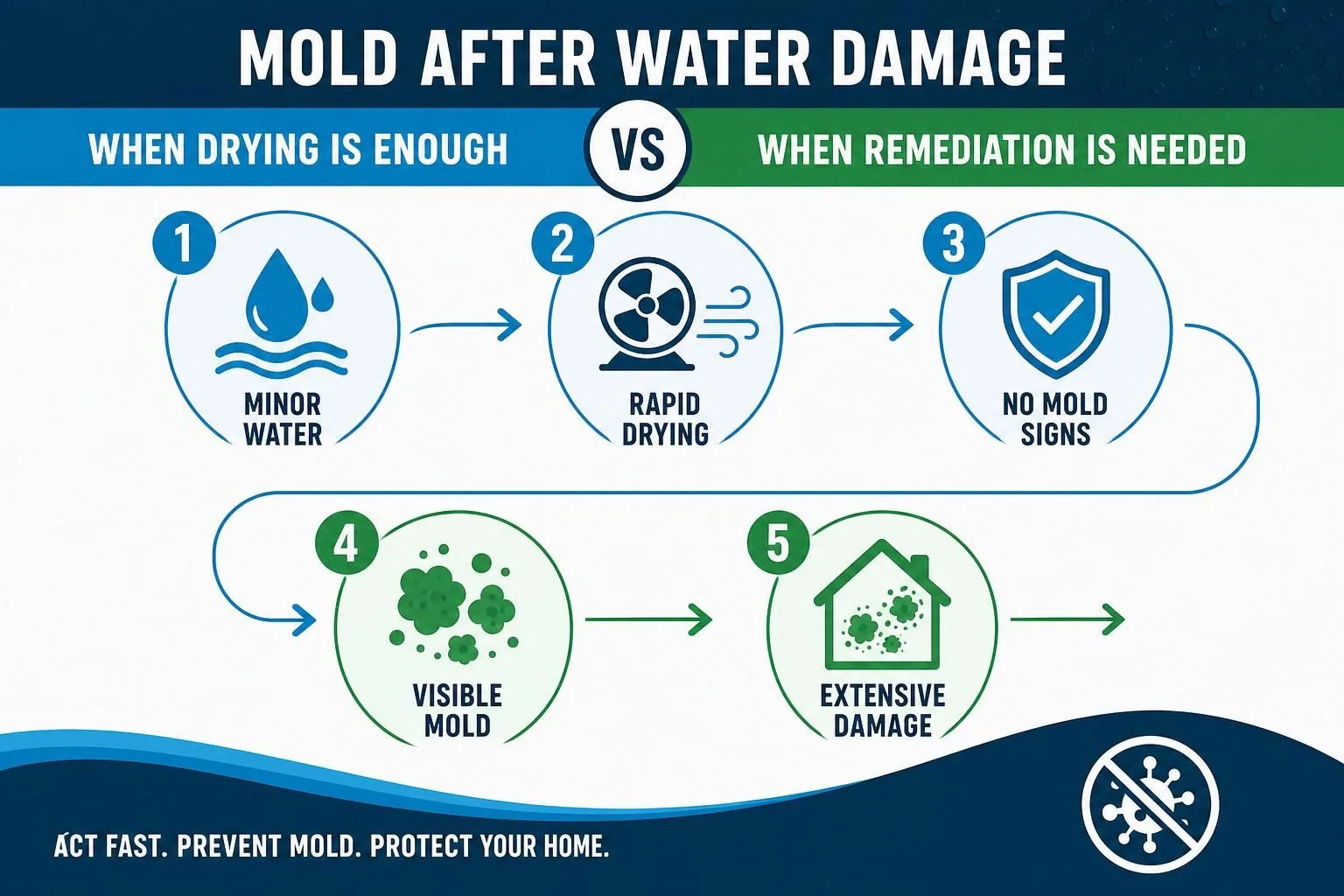
When Drying is Enough vs When Remediation is Needed
Drying may be enough when a leak is small, clean, recent, and all affected materials can be fully dried. A clean-water pipe leak found quickly is the best case: remove the water, dry the area, and if no odor or staining returns, mold remediation may not be needed.
Drying alone is not enough when water sat, mold is visible, odor returns, or porous materials stayed wet. Remediation addresses mold contamination through containment, damaged-material removal, cleaning, and structural drying.
Use this checklist.
Drying may be enough if:
- The water came from a clean supply line.
- The leak was found quickly.
- No musty odor is present.
- Drywall, insulation, carpet padding, and cabinets stayed dry.
- Moisture does not return after drying.
Remediation may be needed if:
- You see visible mold growth.
- A musty smell lingers after drying.
- Drywall, insulation, carpet, or padding stayed wet.
- Water came from sewage, floodwater, or another contaminated source.
- The same area has leaked before.
- Moisture may be trapped behind walls, under flooring, or beneath cabinets.
If the water source is uncertain or the wet area is larger than expected, professional water damage restoration can confirm what is wet before mold from water damage becomes harder to manage.
How Restoration Teams Reduce Moisture and Contamination
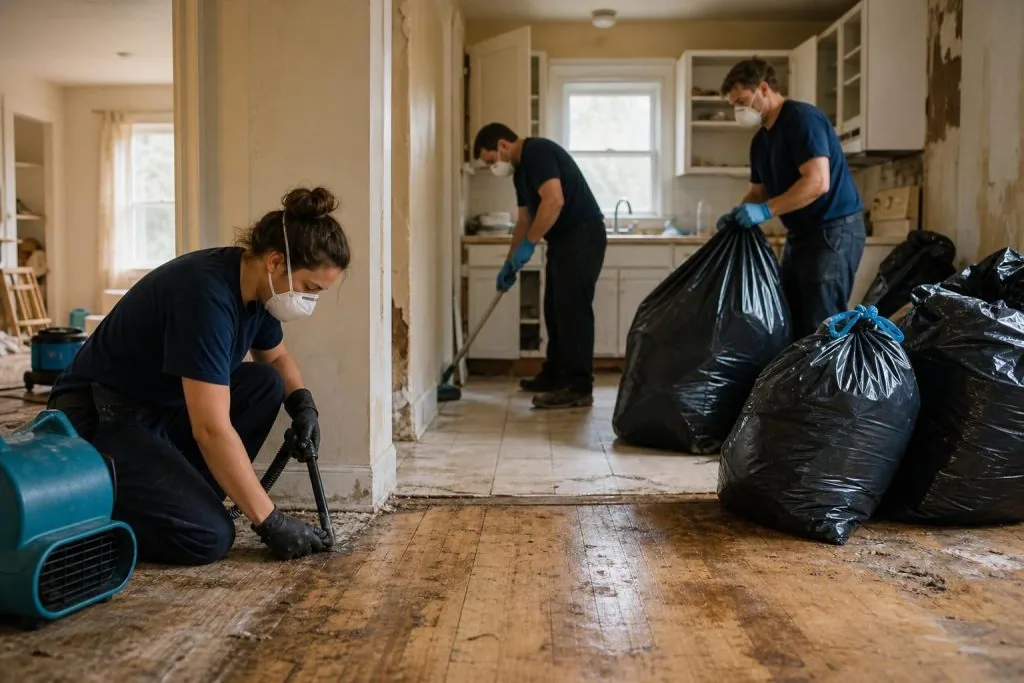
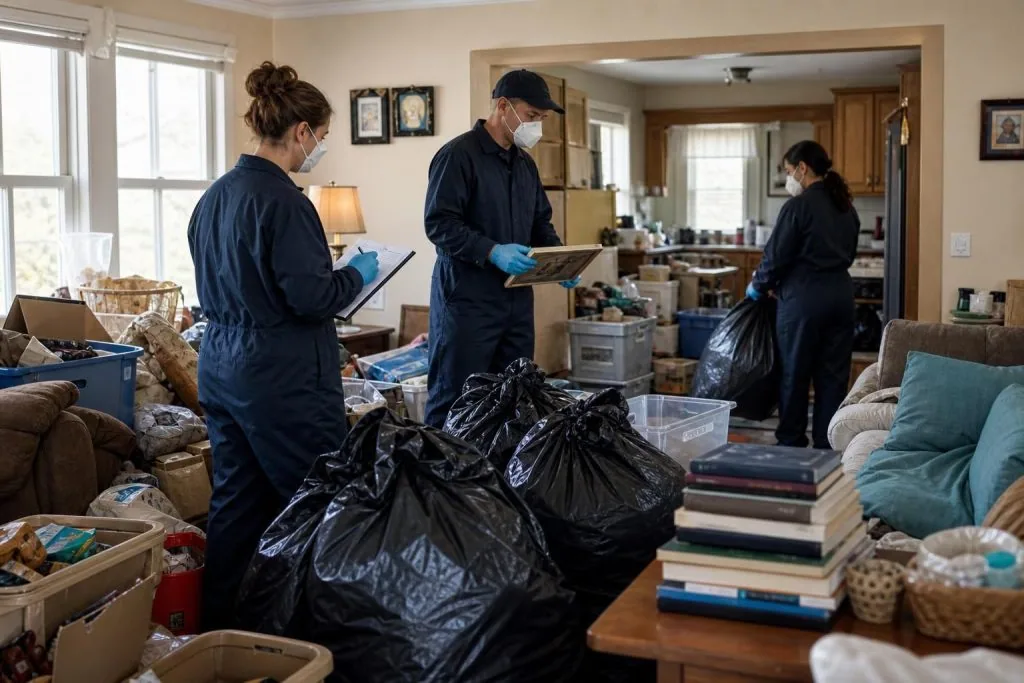
Restoration teams reduce moisture and contamination by finding hidden wet areas, removing water, drying the structure, and separating clean drying work from mold cleanup when needed. They don’t just place a fan and leave. The useful part is measurement, access, and a controlled process.
A typical process looks like this:
- Inspect the leak area.
- Identify the water source.
- Check nearby walls, flooring, trim, cabinets, and ceilings.
- Map moisture with tools that help locate damp materials.
- Remove wet materials that can’t be dried safely or effectively.
- Set up air movement and dehumidification.
- Monitor drying progress.
- Clean affected hard surfaces.
- Use containment if mold contamination is suspected or visible.
Moisture mapping is just a fancy phrase for checking where water traveled. Think of it like tracing a spill under a rug. You can’t judge the whole problem from the top layer. Teams may check under flooring, behind baseboards, inside wall cavities, or around cabinets.
Containment means isolating a work area so dust and disturbed material don’t spread through the home. It’s commonly used when mold cleanup is needed. If mold is already visible or materials smell musty after drying, the job may shift from basic drying to professional mold remediation.
You should expect a restoration team to explain what can stay, what should be removed, and what needs monitoring. Be cautious if anyone promises that a surface wipe alone fixes wet insulation, soaked carpet padding, or hidden wall moisture.
FAQs
These FAQs answer the beginner questions homeowners usually ask after a leak, especially when they’re trying to prevent mold after water damage without overreacting. Use them as quick decision support, not as a substitute for inspecting wet materials carefully.
If your situation involves sewage, floodwater, visible mold, or a leak that may have lasted for days, treat it as higher risk. In those cases, the safest next step is usually a professional inspection rather than repeated surface cleaning.
How Fast Can Mold Grow After Water Damage?
Mold can start becoming a concern when materials stay damp, especially around the first 24 to 48 hours. The exact timing depends on moisture, material type, temperature, airflow, and how much water was absorbed. Don’t focus on a single hour. Focus on drying quickly and checking hidden areas.
Does Every Leak Cause Mold?
No, every leak doesn’t cause mold. A small clean-water leak found quickly and dried thoroughly may not lead to mold growth. The risk rises when water sits, porous materials get soaked, humidity remains high, or the leak keeps returning.
Is Bleach Enough to Clean Mold After Water Damage?
Bleach isn’t a complete fix for many water damage mold problems, especially on porous materials like drywall, wood, carpet, or insulation. It may change the surface appearance without solving hidden moisture. First fix the water source. Then dry, remove unsalvageable materials, and clean appropriate surfaces.
When Should I Call a Professional?
Call a professional if you see mold, smell musty odors, find wet drywall or insulation, or suspect water under flooring or inside walls. You should also get help for contaminated water, repeated leaks, or basement and crawlspace moisture that doesn’t clear after visible water is removed.
Conclusion
Mold after water damage is really a moisture problem with a clock attached. The faster you stop the leak, remove water, dry porous materials, and verify hidden areas, the better your chances of avoiding bigger damage. Watch for odor, staining, soft drywall, warped flooring, and damp materials that don’t dry.
Your next step is simple: inspect the affected area today, keep drying if materials are still damp, and don’t cover or repaint anything until you’re confident the moisture is gone. If mold is visible or the smell keeps coming back, move from basic drying to professional evaluation.