
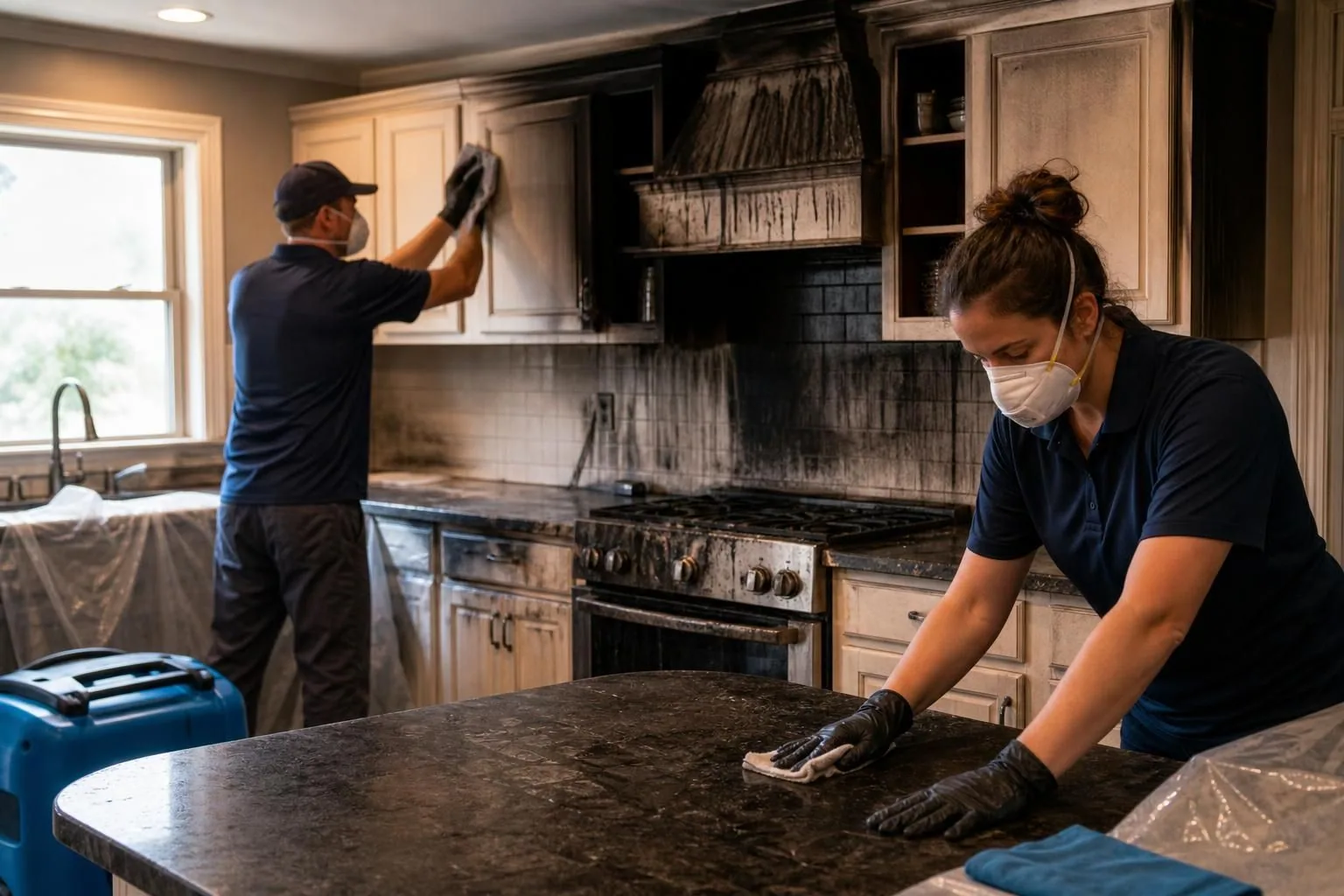
A kitchen fire can look small and still leave a big mess behind. Sticky soot, smoke odor, spoiled food, extinguisher residue, and damaged cabinets can all show up after the flames are out. Kitchen fire smoke damage cleanup starts with safety, not scrubbing. You’ll need to confirm the fire is fully out, protect yourself from soot, avoid using affected appliances, and decide what can be cleaned, what needs to go, and when it’s time to bring in help. This guide walks you through grease fire cleanup, small kitchen fire cleanup, smoke damage in kitchen surfaces, and soot on cabinets after fire damage in plain, practical steps.
- Use this for homeowners and renters dealing with a contained kitchen fire who need safe cleanup steps before using the kitchen again.
- Pause if there’s structural damage, active smoke, electrical damage, heavy soot, or you’re unsure whether the fire is fully out.
- First, you can safely enter the kitchen, take photos, open windows, and keep people away from contaminated items.
- Get expert help if odor lingers, cabinets are swollen, appliances were exposed, or soot has spread into vents and nearby rooms.
Quick Answer
Kitchen fire smoke damage cleanup should start with safety checks, documentation, disposal of contaminated items, and careful surface cleaning before any appliance is reused. Don’t start by wiping everything with a wet rag. Grease smoke is sticky, and a damp wipe can smear soot into cabinet finishes, painted walls, grout lines, and appliance seams.
- Confirm the fire is completely out.
- Keep children, pets, and unnecessary foot traffic away.
- Turn off affected appliances if you can do so safely.
- Open windows if smoke has cleared and outdoor air won’t blow soot deeper inside.
- Photograph cabinets, walls, appliances, food, and residue before moving items.
- Throw away exposed food and contaminated packaging.
- Dry-clean loose soot first with a soot sponge or soft cloth.
- Wash only washable surfaces with a mild cleaner after loose soot is removed.
- Stop if stains spread, odor remains, or appliances may be unsafe.
Here’s a quick clean, discard, or call framework:
| Sealed hard countertop | If lightly sooty and intact | If cracked or melted | If residue keeps returning |
|---|---|---|---|
| Open food or packaging | No | Yes | If contamination is widespread |
| Cabinets | If light residue only | If charred beyond repair | If swollen, stained, or odorous |
| Appliances | Exterior only, with care | If small item is burned | If wiring, vents, or interiors were exposed |
For larger residue, our guide to fire and smoke cleanup explains when professional cleaning is safer than trial-and-error scrubbing.
Why Kitchen Fires Create Sticky Smoke Damage
Kitchen fires create sticky smoke damage because burning grease, food, plastic, paper, and cabinet finishes release oily residue that clings to nearby surfaces. Think of it like cooking vapor from frying food, but darker, dirtier, and more stubborn. It doesn’t just float away once the room airs out.
A stovetop grease fire is a classic example. Flames may stay near the pan, but smoke can coat the upper cabinets, range hood, backsplash, ceiling above the cooktop, and nearby light fixtures. That residue often feels tacky. If you drag a regular sponge across it, you may create gray streaks that are harder to remove.
Small fires can do the same thing. An oven fire or toaster fire may leave less visible soot, but the odor can settle inside the appliance, nearby cabinets, and porous items such as dish towels or cardboard boxes. A microwave or trash can fire may seem contained, yet smoke can still contaminate nearby snacks, paper goods, and plastic containers.
Grease smoke also behaves differently from dry dust. Dry dust sits on top. Grease soot bonds to the surface. That’s why the first cleaning pass matters. Remove loose residue before washing. Use gentle pressure. Start in a small hidden spot. And don’t use harsh abrasives on cabinet finishes or stainless steel, because they can scratch or dull the surface.
What to Throw Away After a Kitchen Fire
Throw away anything exposed to heavy smoke, heat, melted plastic, extinguisher residue, or questionable contamination. Food and porous items can absorb smoke odor and residue even when they look normal.
Start with food. Remove open packages, unsealed pantry items, produce sitting out, bread, snacks, spices with loose lids, and anything close to the fire. Discard food stored in cardboard, paper, thin plastic, or damaged packaging. If a trash can, microwave, toaster, or stovetop fire happened nearby, check shelves and counters around that area too.
Get rid of these items when affected:
- Cardboard food boxes near smoke
- Melted or warped plastic containers
- Disposable plates, napkins, and paper towels exposed to smoke
- Heavily smoky dish towels, sponges, or oven mitts
- Charred cutting boards or utensils
- Items coated with extinguisher residue
- Anything with a strong smoke smell after airing out
Some intact hard items may be cleaned. Glass, metal cookware, ceramic dishes, and sealed hard containers usually clean better than porous materials. Inspect them closely, and discard warped or smoky plastic lids.
Don’t save pantry items just because “the fire didn’t touch them.” Smoke is the issue. If smoke entered a cabinet, items inside may be exposed too. When unsure, bag questionable items instead of putting them back into clean cabinets.
Cabinets, Appliances, Walls, and HVAC Concerns
Cabinets, appliances, walls, and HVAC vents need separate cleanup decisions because each surface holds soot differently. HVAC moves heated or cooled air through your home, and smoke in that system can spread odor beyond the kitchen.
For cabinets, start gently. Remove dry soot with a soot sponge or soft cloth, working top to bottom. Don’t flood wood or manufactured wood. If cabinets are wet from firefighting, swollen, bubbling, or soft around seams, pause before cleaning. Moisture can damage cabinet boxes and finishes, and our guide to water damage to kitchen cabinets explains what to check before swelling gets worse.
For painted walls and ceilings, test a small area first. If the wall turns gray as you wipe, stop and dry-clean more residue before washing. Countertops are usually more forgiving, but grout, seams, and backsplashes can hold odor.
For appliances, clean exterior surfaces only unless you know the appliance is safe. Don’t use a smoke-exposed oven, toaster, microwave, range hood, or refrigerator near the fire until it’s been checked. Smoke can enter vents, fans, seals, and controls.
For vents, remove loose soot around the cover, but don’t run the system if you suspect smoke entered it.
Odor Removal After Grease Smoke
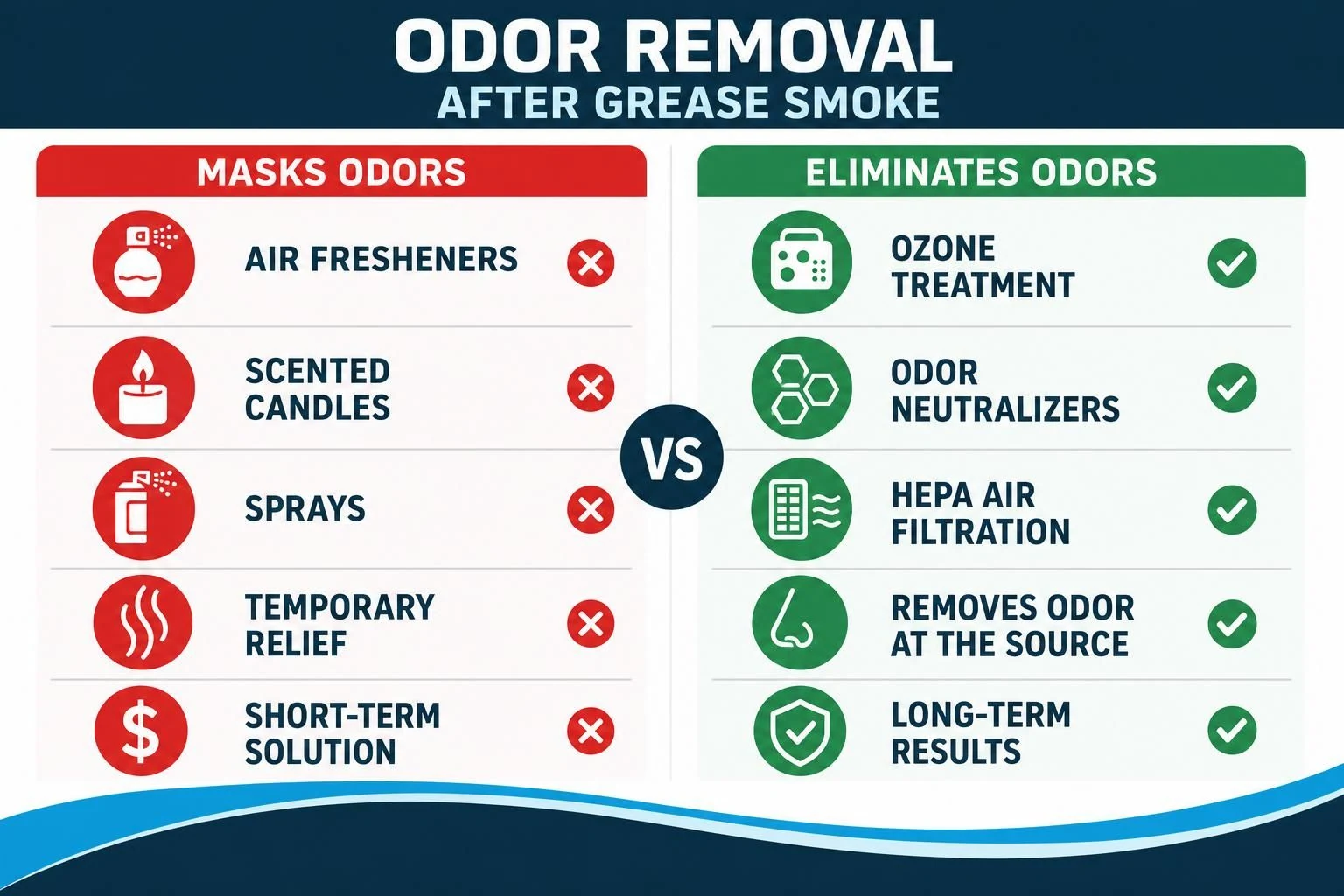
Odor removal after grease smoke works only when you remove the residue causing the smell. Air fresheners, candles, and sprays may hide it briefly, but they don’t remove sticky soot from cabinets, walls, appliances, fabrics, or vents.
Follow this sequence.
- Remove the source.
- Ventilate carefully.
Open windows if conditions are safe. Use fans to move air outdoors, not deeper into the house.
- Clean hard surfaces.
Start with dry soot removal. Then wash washable surfaces with mild cleaner and clean water. Change cloths often to avoid spreading residue.
- Separate soft goods.
Wash smoky curtains, towels, table linens, washable rugs, and clothing. Set aside items that still smell after washing.
- Check hidden odor spots.
Open cabinet doors, inspect the range hood, smell inside appliances, and check around vents.
- Reassess the next day.
Smoke odor can seem better while windows are open and return after the room is closed.
A toaster fire may leave only a small counter mark, but odor can remain in the toaster, the cabinet above it, nearby bread bags, and a dish towel. Clean only the counter, and the kitchen may still smell smoky.
If water extinguished the fire, odor cleanup may overlap with drying. Damp cabinets, drywall, and flooring can hold smells longer. A controlled drying setup, such as the guidance in using a dehumidifier, may help you understand why moisture needs attention too.
When a Small Fire Still Needs Professional Cleanup
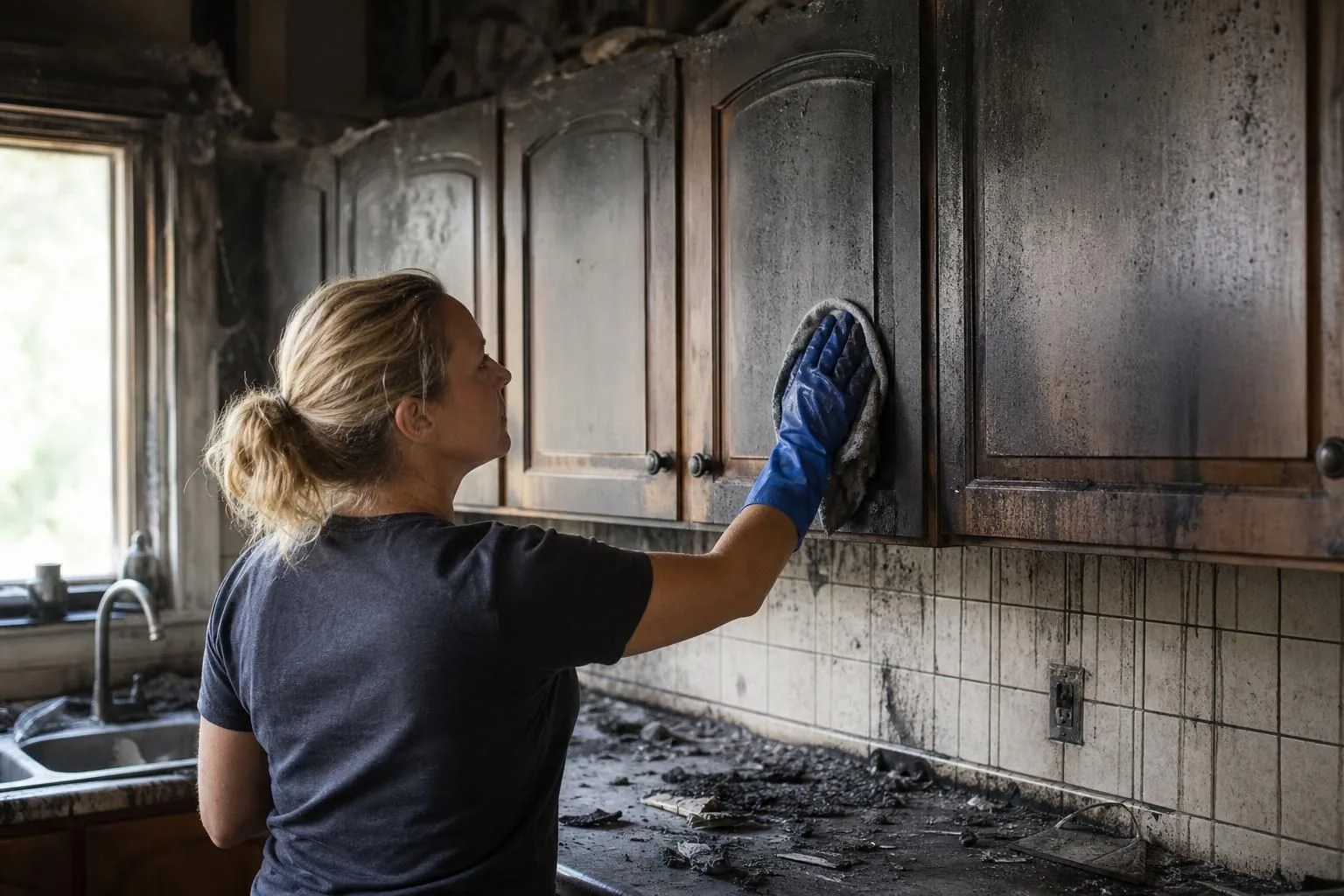
A small kitchen fire still needs professional cleanup when soot, odor, moisture, electrical risk, or appliance contamination goes beyond simple surface cleaning. Size alone doesn’t tell the whole story. A contained grease fire can create stubborn residue, while a brief microwave fire can contaminate food and leave odor in nearby cabinets.
Consider professional help if you notice any of these warning signs:
- Soot has spread to ceilings, upper cabinets, or nearby rooms.
- Smoke odor returns after cleaning and ventilation.
- The range hood, oven, microwave, or refrigerator was exposed to smoke.
- Electrical outlets, cords, or appliance controls were near heat.
- Heating or cooling vents smell smoky.
- Extinguisher powder is inside appliance seams or cabinet gaps.
- Water was used and cabinets, drywall, or flooring stayed wet.
You’ll also want help if cleaning makes things worse. If a wall turns gray, a cabinet finish becomes cloudy, or soot streaks across a ceiling, stop. More scrubbing can set the stain or damage the surface.
Professional fire cleanup is not just “stronger cleaning.” It can include residue testing, source removal, odor treatment, careful contents cleaning, and checking whether smoke moved into hidden spaces. If firefighting water affected walls near the kitchen, you may also need to watch for drywall damage. Our guide to drywall water damage can help you spot moisture-related warning signs.
FAQs
Can I Clean Soot on Cabinets After a Fire Myself?
You can clean light soot on cabinets yourself if the cabinets are not charred, swollen, peeling, or deeply stained. Start with dry soot removal before using any liquid cleaner. Test a hidden spot first. If wiping spreads gray stains or the cabinet feels sticky after cleaning, stop and get help.
Is Food Safe if it Was Sealed During a Kitchen Fire?
Some factory-sealed cans or glass jars may be easier to clean, but food in cardboard, paper, thin plastic, or damaged packaging should usually be discarded if exposed to smoke. Don’t rely only on appearance. Smoke residue and odor can cling to packaging and nearby pantry shelves.
Can I Use My Oven or Microwave After a Small Fire?
Don’t use an oven, microwave, toaster, range hood, or other affected appliance until it has been checked and cleaned appropriately. Smoke, heat, grease residue, and extinguisher material can get into vents, controls, seals, and interior parts. Using it too soon can spread odor or create safety concerns.
Why Does My Kitchen Still Smell Like Smoke After Cleaning?
Your kitchen may still smell because residue remains on hidden or porous surfaces. Check cabinet interiors, the range hood, appliance vents, dish towels, curtains, rugs, pantry packaging, and heating or cooling vents. Odor removal depends on removing the source, not just adding fresh scents.
What Should I Do if the Fire Was Put Out With Water?
If water was used, check cabinets, toe kicks, flooring, baseboards, and nearby drywall for wet spots, swelling, bubbling, or softness. Smoke cleanup and moisture cleanup can overlap. Drying matters because damp materials can hold odor and may deteriorate if ignored.
Conclusion
Kitchen fire smoke damage cleanup is about making safe decisions in the right order: confirm safety, document damage, discard contaminated items, clean residue carefully, and check appliances, cabinets, odors, and vents before using the kitchen normally again. A small grease fire can still leave sticky soot and hidden odor, so don’t rush the process.
Start with the areas closest to the fire, then work outward. If soot spreads, odor lingers, cabinets swell, or appliances were exposed to smoke or extinguisher residue, pause and call a qualified cleanup professional before the damage gets harder to correct.