
After a house fire, the first job is to stay safe, avoid rushing cleanup, and save proof before the scene changes. These fire damage insurance claim tips will help you build a clear claim file with photos, notes, receipts, inventory records, and restoration paperwork.
This guide is for documenting and supporting a claim. It is not legal advice, coverage advice, or a prediction of settlement value, because policy terms and insurer decisions vary.
Think of your claim file like a timeline: what happened, what was damaged, what was secured, what was removed, and what repairs may be needed.
- Use this if you need a simple documentation workflow before cleanup, restoration estimates, and adjuster conversations begin.
- Pause if the property is unsafe to enter or local officials have not cleared the structure for access.
- Start with wide photos, close-up photos, and notes before damaged items are moved.
- Get expert help if you see structural damage, electrical hazards, standing water, heavy soot, or strong smoke odor throughout the home.
Quick Answer
The best way to support a fire damage insurance claim is to create a dated, organized claim file before major cleanup or repairs begin. That file should include photos, videos, inventory lists, receipts, adjuster notes, and restoration paperwork.
- Confirm the property is safe to enter.
- Take wide photos of each affected room.
- Record close-up photos of burned, smoke-stained, wet, or soot-covered areas.
- Make a damaged-item inventory by room.
- Save receipts related to emergency work, cleanup, repairs, or temporary needs.
- Ask the adjuster what else they need before you discard items or approve repairs.
| Documentation type | What to capture | Why it helps |
|---|---|---|
| Fire damage | Burned surfaces, charred items, damaged finishes | Shows direct visible loss |
| Smoke and soot | Staining, residue, odor areas, affected rooms | Supports a smoke damage insurance claim |
| Water damage | Wet walls, floors, ceilings, contents | Separates firefighting damage from burn damage |
| Receipts and estimates | Cleanup bills, repair estimates, temporary service receipts | Tracks costs and work performed |
The big mistake to avoid is throwing away damaged belongings before you document them, unless safety requires immediate removal. If cleanup has already started, photograph what remains, write down what was removed, and ask the cleanup crew for notes, photos, or disposal records if they have them.
Start With Safety and Emergency Documentation
Your first priority is safety. Fire scenes may contain electrical hazards, weak floors, broken glass, contaminated water, and unstable materials. If officials say not to enter, wait.
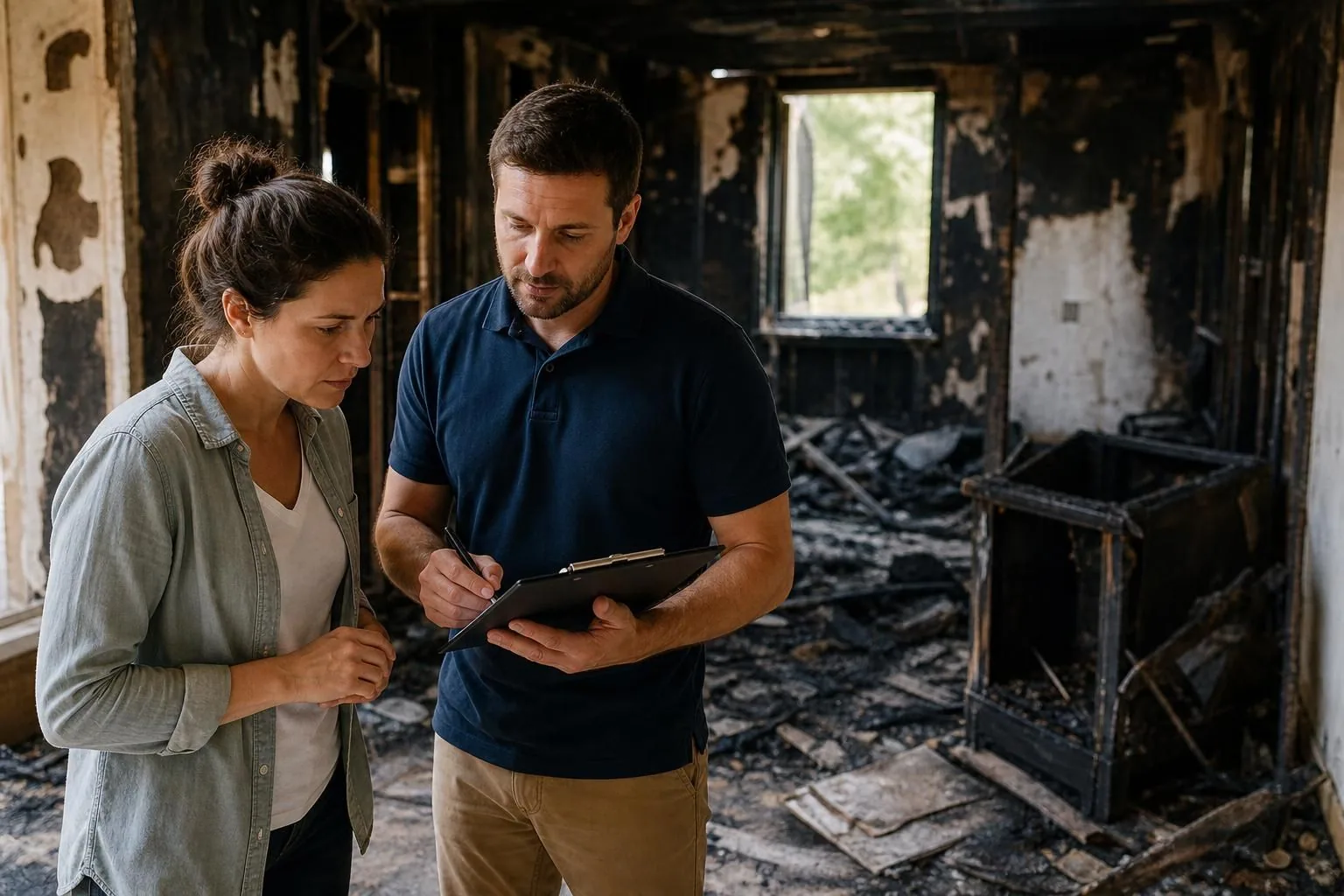
Once access is safe, document the property before cleanup changes it. Start outside with photos of the front, back, sides, roofline, windows, doors, garage, and visible burned areas. Then go room by room. Photograph each room from the doorway, then take closer shots of walls, ceilings, floors, cabinets, furniture, appliances, and personal items.
- Open a folder for the claim.
- Add subfolders for photos, videos, receipts, estimates, notes, and inventory.
- Name files by room and date.
- Write a short note after each walkthrough.
- Save messages from the insurer, adjuster, restoration company, and contractors.
In the first hours, focus on preserving the original scene before board-up, tarping, water extraction, or debris removal. A common field mistake is photographing a boarded-up window but not the broken frame, smoke staining around the opening, or wet flooring below it before emergency work begins. If a crew boards up or tarps the home, ask them to note which openings were secured and why. A step-by-step guide to what to do after a house can help you keep safety, documentation, and cleanup in order. Your first pass does not need to be perfect.
Photos, Videos, Receipts, and Inventory
Strong fire damage documentation shows both the overall scene and specific damage. Wide photos show where damage occurred. Close-ups show severity. Videos help connect room layout, smoke travel, and item condition.
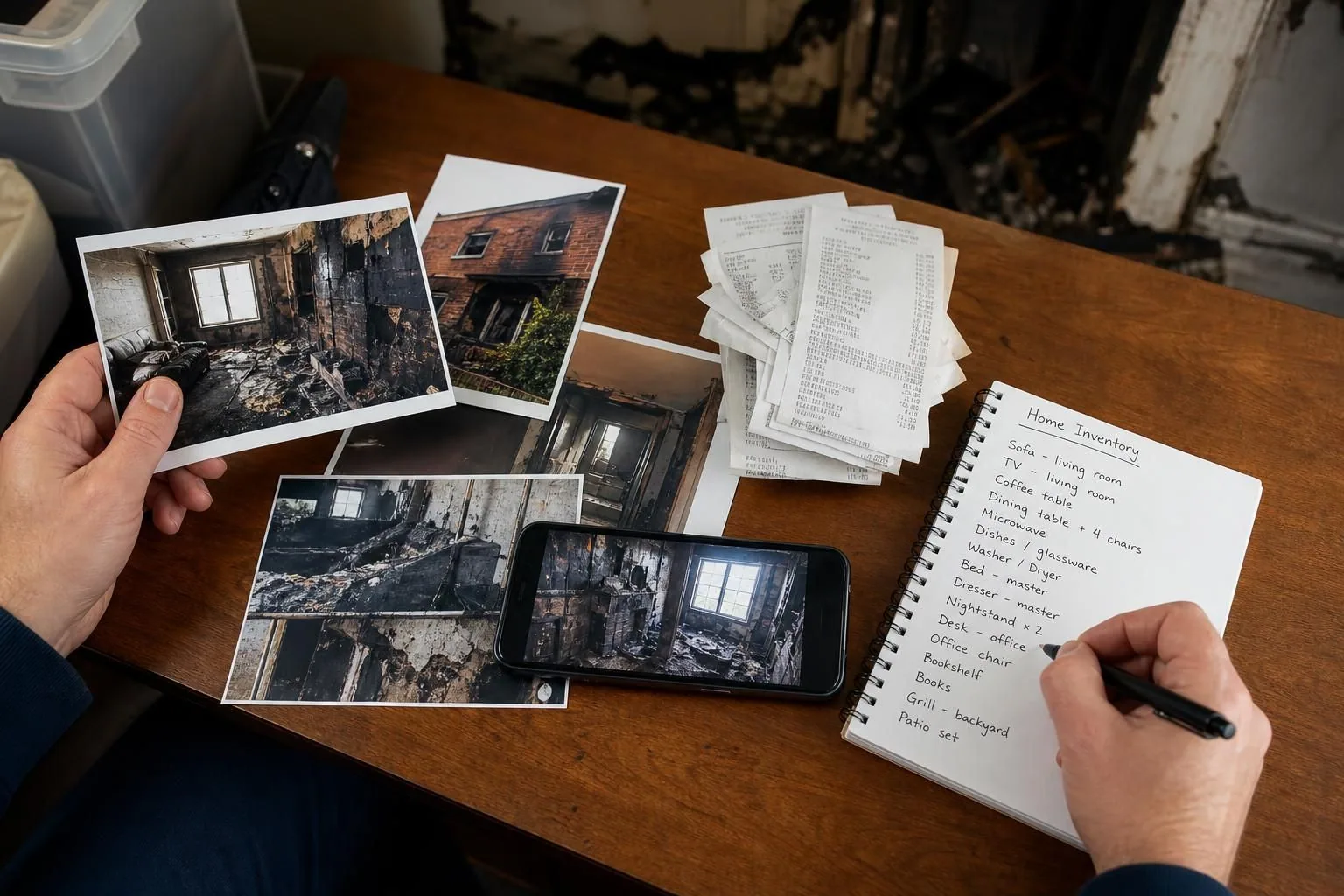
- Exterior views of the home
- Entry areas and hallways
- Each affected room from several corners
- Burned or melted materials
- Smoke staining on walls, ceilings, vents, and contents
- Wet flooring, drywall, cabinets, and belongings
- Damaged personal property before disposal
For inventory, list belongings room by room. Include the item name, approximate age if known, prior condition, and what happened to it. If you do not know a detail, say so rather than guessing.
Save receipts for lodging, board-up, tarping, cleaning supplies, laundry, storage, inspections, and restoration work. If cleanup already started, make a removed-item list right away and note who removed items, when, and why. For example, “June 8: restoration crew removed wet living room carpet and pad because of firefighting water; photos taken before removal; invoice pending” is more useful than “carpet thrown out.”
A simple inventory line can look like this:
| Room | Item | Condition before fire | Damage noted | Photo/receipt |
|---|---|---|---|---|
| Living room | Sofa | Used, good condition | Smoke odor and soot on fabric | Photo 06-08, no receipt |
Smoke, Soot, Water, and Odor Documentation
Document smoke, soot, water, and odor separately because they can affect rooms and belongings that never burned. A small kitchen fire may leave odor in bedrooms, soot around vents, and residue inside cabinets.
- Dark staining on walls and ceilings
- Residue around vents, fans, and light fixtures
- Discoloration inside closets, cabinets, and drawers
- Soot on furniture, clothing, electronics, and soft goods
- Rooms with strong odor but little visible flame damage
Odor is easy to miss because it does not always show in photos. Note where it is strongest, whether it is smoky, chemical, electrical, or musty, and whether it worsens when drawers, closets, vents, or closed rooms are opened. Note affected soft materials such as fabrics, mattresses, carpets, curtains, upholstered furniture, and stored clothing. That supports later decisions tied to smoke damage cleanup.
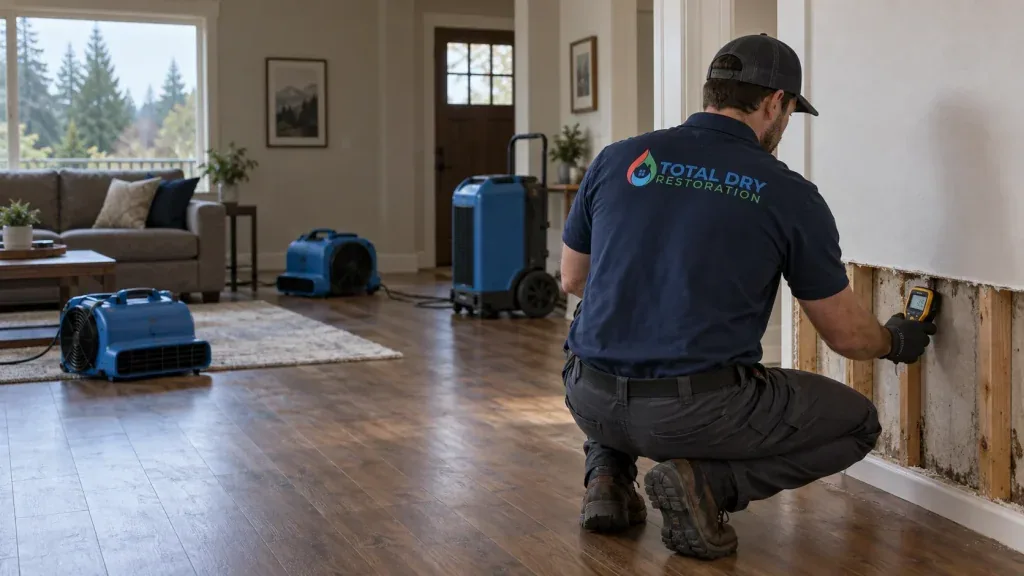
Document firefighting water separately. Photograph standing water, wet baseboards, bubbling paint, sagging ceilings, soaked insulation, and damaged contents. If water is a major part of the loss, drying records may matter, and emergency water damage restoration is often part of the cleanup timeline.
What Restoration Companies Can Provide
A restoration company can provide damage notes, cleanup records, photos, moisture readings, and an itemized estimate. Their paperwork helps explain what was found and what work may be needed.
Ask for documents in plain language. You can say, “Please send the written scope, photos, and any drying or cleaning notes for my claim file.” The scope lists the work the company believes is necessary, while the estimate breaks out labor, materials, equipment, and cleanup tasks.
- Initial inspection notes
- Room-by-room damage descriptions
- Photos before and during cleanup
- Itemized cleaning or repair scope
- Drying logs for wet areas
- Pack-out lists for belongings removed from the home
- Disposal notes for unsalvageable items
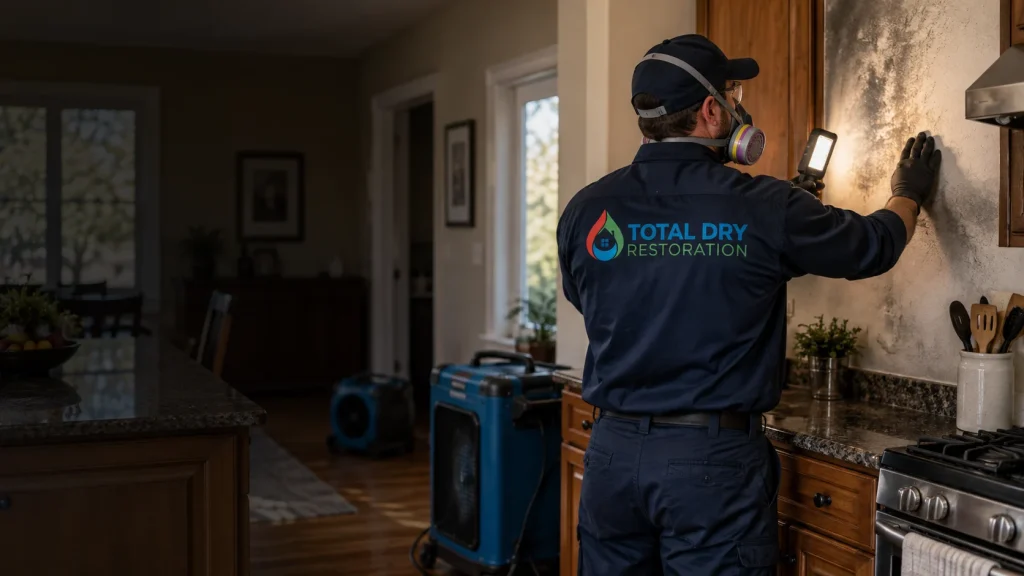
Separating debris removal, soot cleaning, odor treatment, drying, and repair makes your claim easier to explain. A bedroom may need no fire repair but still require soot cleaning, textile evaluation, and odor treatment because smoke entered through the hallway and HVAC system. If the loss involves both fire and smoke, fire and smoke damage cleanup documentation may connect cleanup steps to specific rooms and materials.
Before sending restoration paperwork to your adjuster, check for missing rooms, wrong addresses, vague descriptions, and unclear disposal notes.
What to Ask Your Adjuster
Ask your adjuster what documentation they need, what steps require approval, and whether anything should be photographed before disposal or repair. The goal is to understand the claim process and avoid missing proof. Take notes on every call, including the date, name, and key points.
- What photos, videos, receipts, or inventories do you need?
- Should I keep damaged items until inspection?
- Can I start emergency cleanup, drying, or board-up?
- Do you need the restoration estimate before repairs begin?
- How should I submit added smoke, soot, odor, or water evidence?
- Are there deductibles, limits, or exclusions I should review?
- Who do I contact if new damage appears during cleanup?
If firefighting water is involved, ask how to document it with the fire and smoke loss. Coverage can be policy-specific, so compare your situation with homeowners insurance and water damage while relying on your own policy and adjuster.
Use this decision rule when something may be removed: if an item is unsafe, photograph it and ask whether disposal is allowed; if it is safe but heavily damaged, keep it until inspection; if it has already been removed, document who removed it, when, and why.
FAQs
The most common fire claim questions come down to timing, proof, and what to save. You do not need perfect paperwork to begin, but you do need a steady system for collecting evidence.
Use the answers below as practical guidance. Your insurer, policy, and adjuster may require different steps, so always confirm claim-specific instructions before discarding items or approving major repairs.
Should I Clean Anything Before the Adjuster Sees It?
Avoid major cleanup before documentation whenever you safely can. Take photos and videos first. If emergency cleanup is needed to prevent further damage or address safety issues, document the condition before work starts and save the cleanup company’s notes, photos, invoices, and work descriptions.
What if I Forgot to Take House Fire Insurance Photos Right Away?
Start documenting what remains now. Photograph damaged rooms, repaired areas, leftover debris, saved items, receipts, and any visible smoke, soot, or water marks. Write a timeline explaining what was removed, who removed it, and why. Ask contractors or restoration crews whether they took earlier photos.
How Detailed Should My Damaged-item Inventory Be?
Make it detailed enough for someone else to understand the item and the damage. List the room, item name, visible condition, and whether it was burned, smoke-damaged, wet, or discarded. Add receipts, photos, manuals, or purchase records when you have them, but do not invent details you cannot confirm.
Can Smoke Odor Be Part of a Claim if Nothing Looks Burned?
Smoke odor can be relevant evidence, but coverage and handling depend on the policy and claim review. Document which rooms smell affected, whether soot is visible nearby, and which materials absorbed odor. Photos may not capture smell, so written notes and professional inspection records can help.
Do I Need a Restoration Estimate Before Talking to the Adjuster?
No, you can usually start the claim conversation before you have a full estimate. Still, an itemized fire restoration estimate can help organize repair and cleanup needs. Ask your adjuster whether they want to review the estimate before work begins, especially for larger repairs or specialty cleaning.
Good fire damage insurance claim tips all point to the same habit: document first, organize everything, and ask clear questions before damage evidence disappears. Separate burned materials, smoke residue, soot, odor, water damage, belongings, receipts, and estimates so your claim file tells a complete story.
For the next 24 hours, use a short sequence: confirm access is safe, photograph every affected area, record smoke and odor notes, save emergency service receipts, list anything removed, and ask your adjuster what must be kept before cleanup continues. Then put every file, message, invoice, and note in one claim folder so your next conversation is based on clear records instead of memory.