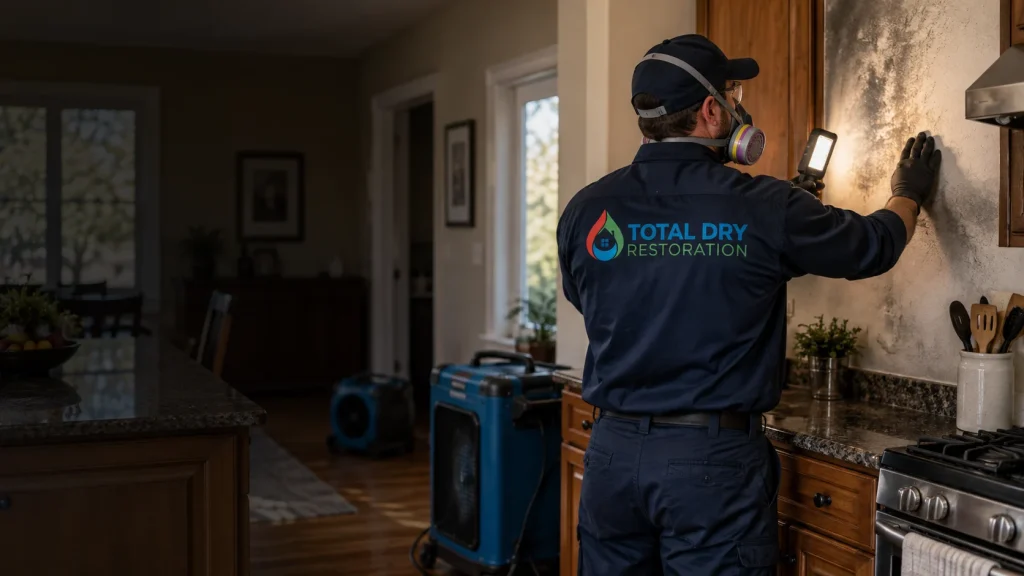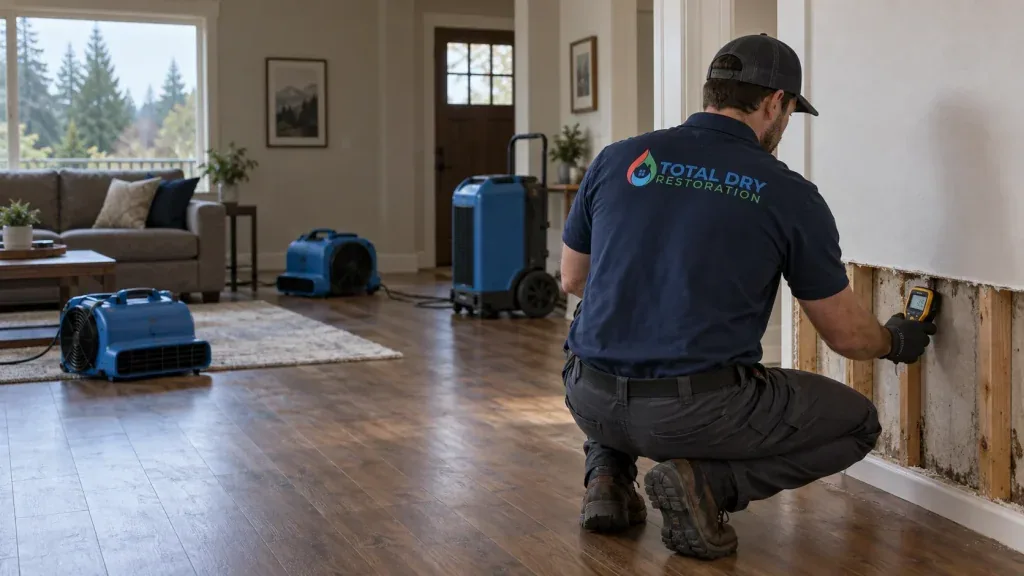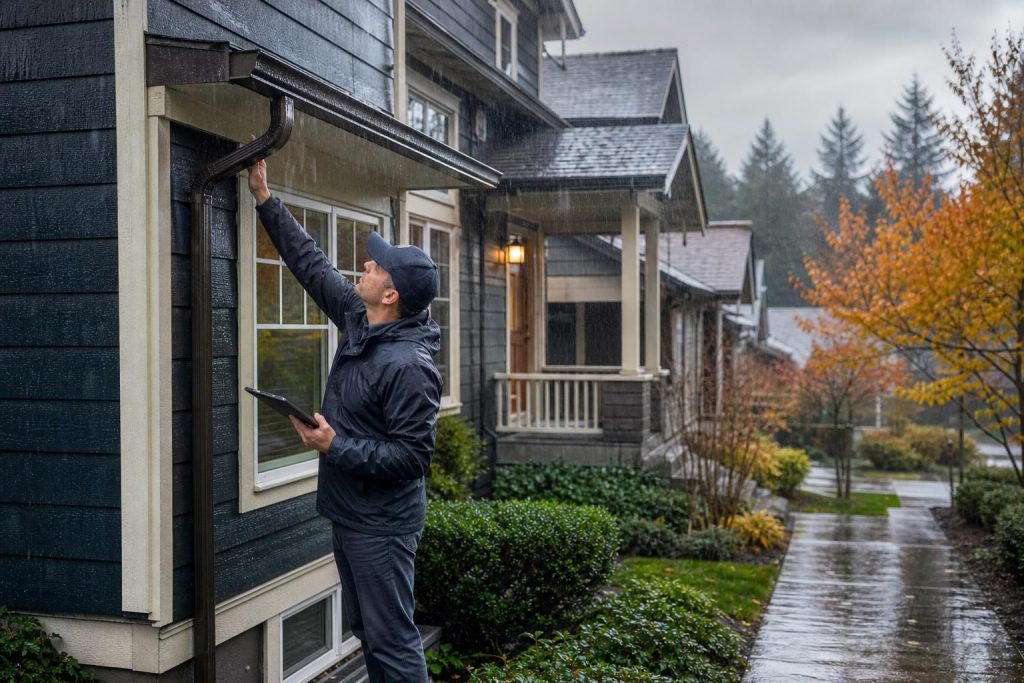

A roof leak can cause attic mold when moisture soaks into insulation, wood framing, or roof sheathing and stays trapped. A fresh leak may only mean active moisture. A stained board may be old damage. Established mold usually shows up as dark spotting, a musty odor, or attic materials that stay damp after the roof leak is repaired.
Start safely before you touch anything:
- Open the attic hatch and check for a musty smell.
- Shine a flashlight at insulation and the underside of the roof boards.
- Look for staining near vents, flashing areas, and visible leak paths.
- Don’t step into the attic unless you know where the joists are.
Quick Answer
A recent roof leak doesn’t automatically mean you have attic mold, but it does mean you have the conditions mold likes: damp wood, wet insulation, and limited airflow. If the area is still wet, you’re dealing with active moisture. If the leak was fixed but staining, odor, or spotting remains, you may be looking at residual damage or established mold.
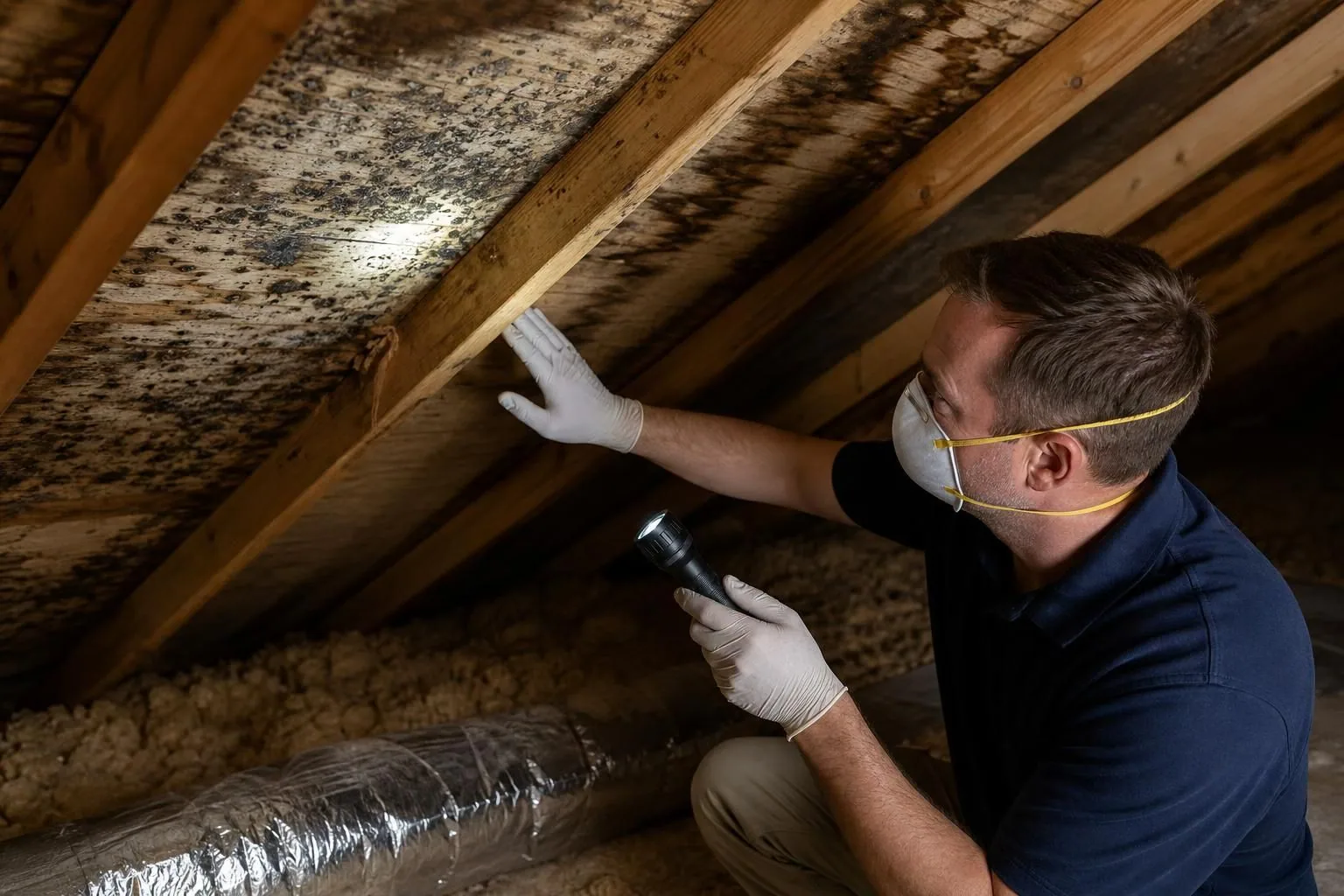
Check from the attic hatch or a safe walkway only. Don’t step on ceiling drywall. Look for visible staining, damp insulation, musty odors, and repeated wetness near roof penetrations.
- Dark, gray, green, or black spotting on roof sheathing, which is the wood panels under the shingles.
- Damp or compressed insulation below the leak path.
- Brown water stains on rafters, framing, or the ceiling below.
- A light musty odor near one section of the attic.
- Repeated wetness near a roof vent, chimney, skylight, or flashing area.
A single stain directly below a roof vent often points to one leak path. Spotting that appears across several rafter bays, especially away from the original drip point, may point to moisture spreading through poor attic ventilation or repeated wetting over time.
Fix the leak source, evaluate the attic materials, then decide whether basic cleanup or professional mold remediation is needed.
How Roof Leaks Create Attic Mold
A roof leak creates attic mold by giving mold spores moisture and a place to grow. Mold spores naturally float in the air and usually stay harmless until they land on damp materials like sheathing, rafters, or insulation.
Think of the attic as a closed space under the roof. If water gets in around a vent, chimney, skylight, nail hole, or flashing, it may not drip into a room. Instead, it can run along wood, soak insulation, or collect on the underside of the roof deck.
An active leak is the bigger mold risk because materials keep getting wet. A residual moisture problem means the leak may be fixed, but attic materials still hold dampness. That can still support mold if the attic dries poorly.
- Water enters through a roof opening or failed seal.
- Moisture spreads across sheathing, framing, or insulation.
- Damp insulation slows drying by holding water against nearby wood.
- Poor ventilation traps humid air in the attic.
- Mold begins growing on damp organic surfaces, especially wood and paper-faced materials.
The leak starts the problem, but trapped attic moisture helps mold continue.
Signs to Check From Inside the Home
Start from the safest places: top-floor rooms, ceilings, closets, and the attic hatch. Avoid walking on attic joists or disturbing suspected mold. You want signs that moisture reached attic materials and stayed there.
- Look for ceiling stains below the attic. Brown or yellow rings can mean water moved through insulation before reaching drywall.
- Smell near the attic hatch. A musty odor after a leak can suggest damp attic materials, even if mold is not visible.
- Shine a flashlight into the access area. Look for dark specks, gray patches, or fuzzy spotting on framing or roof sheathing, the wood under shingles.
- Check visible insulation. Wet, matted, compressed, or discolored insulation is a warning because it can hold moisture against wood.
- Look for staining on the underside of the roof. A small, sharply defined stain below a plumbing vent or roof nail may be localized. Long streaks running down rafters or spotting across multiple bays deserve closer inspection.
- Notice repeat patterns. If the same area looks damp after rain, especially near a vent or flashing, the leak may still be active.
If you see spotting or smell persistent mustiness, take photos and consider a mold inspection or professional mold remediation service: /services/mold-remediation/.
Insulation, Sheathing, Ventilation, and Moisture
Attic mold risk depends on where water landed, what stayed wet, and how well the attic can dry. Think of the attic like a closed box under your roof: if water gets in and air does not move well, moisture lingers.
Insulation is often the first attic material to show a roof leak. Fiberglass batts can look compressed, darker, or matted when damp. Blown-in insulation may clump or form a crust. A limited leak might leave one affected section below a vent or flashing seam. That section still matters because it can slow drying and keep nearby framing damp.
Roof sheathing is the plywood or oriented strand board attached under your shingles. From inside the attic, it is the ceiling above the rafters. A stain confined to one sheathing panel often points to a localized leak path. Spotting that appears on several panels or along multiple rafters may mean moisture traveled farther than the obvious drip point.
Ventilation is the attic’s airflow system. Soffit vents, ridge vents, gable vents, and roof vents help damp air escape. In an attic with poor ventilation, moisture can linger after the roof repair is complete. That lingering dampness can let mold spread beyond the original leak area.
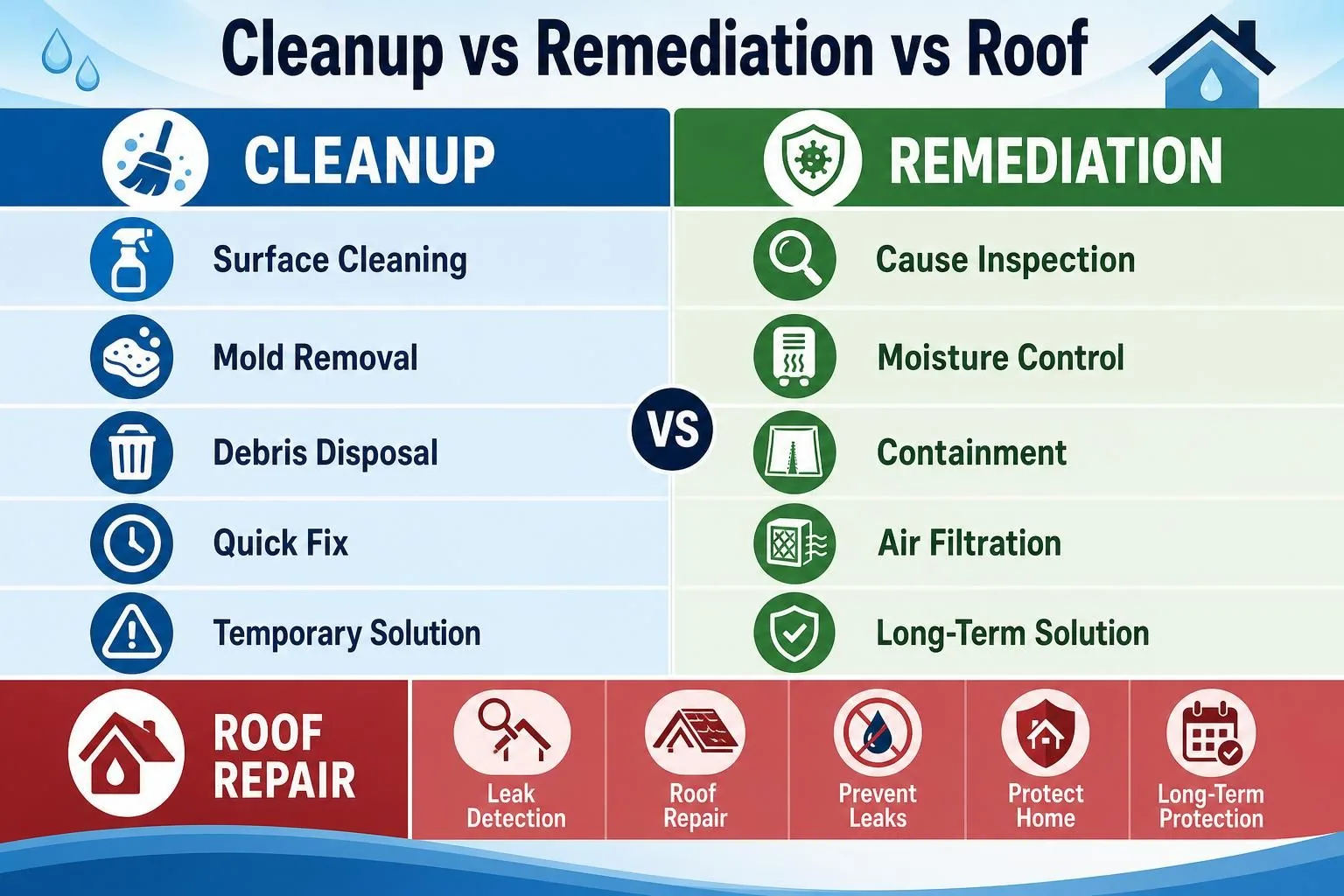
Cleanup vs Remediation vs Roof Repair
Treat these as three different jobs. Roof repair stops new water from entering. Cleanup removes wet, damaged, or loose materials. Mold remediation means safely removing mold growth and controlling spores so they don’t spread into the living space.
| Problem you see | What it usually means | Who/what addresses it | Do this first |
|---|---|---|---|
| Water still dripping after rain | Active roof leak | Roof repair | Stop the leak source |
| One damp insulation section, light musty odor | Limited wet material, possible early mold | Inspection or cleanup | Confirm moisture level |
| Dark spotting on sheathing or framing | Established attic mold | Mold remediation | Avoid disturbing it |
| Same area gets wet again near flashing or a vent | Recurring leak path | Roof repair plus mold check | Fix re-wetting |
Use this order so you don’t pay to clean the same attic twice.
- Confirm whether the leak is active. Check after rain if you can do so safely from the attic hatch or nearby access area. If the same insulation, sheathing, or framing is wet again, the roof issue isn’t solved.
- Remove or dry wet materials only when it’s safe and limited. A small damp insulation section may need removal because insulation can retain water. Don’t bag or shake moldy insulation through the house.
- Call for mold remediation if you see spotting, fuzzy growth, widespread staining, or a persistent musty smell. Professional mold remediation services at /services/mold-remediation/ are meant for containment, removal, and cleaning of affected attic materials.
- Handle any below-ceiling water issues separately. If the leak also affected drywall, flooring, or rooms below, broader roof leak water damage cleanup may apply: /roof-leak-water-damage-cleanup/.
Don’t paint over stained attic sheathing and call it fixed. If moisture remains or the leak returns, mold can come back behind the covered area.
Preventing Recurring Attic Mold
Prevent recurring attic mold by fixing both parts of the problem: the water entry point and the attic conditions that let moisture linger. If you only dry the visible spot, a small leak near a vent, chimney, or flashing point can keep affecting the same materials.
- Confirm the roof leak is actually stopped. After heavy rain, check the same attic area again from the access point. Look for fresh darkening on roof sheathing, new drips, or insulation that feels damp through a gloved hand.
- Remove or address wet insulation. Even if the wood above looks dry, damp insulation underneath can keep humidity high around framing.
- Improve attic airflow. Ventilation means air can enter and leave the attic instead of sitting still. An attic with poor ventilation may stay humid after the roof repair is complete, giving mold more time to return.
- Keep bathroom and kitchen exhaust out of the attic. Exhaust fans should vent outside, not into attic space. Warm indoor air can add moisture even when the roof is fixed.
- Recheck the area seasonally. Look at the affected sheathing, framing, and insulation after storms and during cold months when condensation is more likely.
A simple decision path helps: if the stain stays dry after storms, monitor it; if it darkens after rain, repair the roof path; if it spreads across bays or develops visible spotting, schedule a mold evaluation.
FAQs
How Fast Can Attic Mold Appear After a Roof Leak?
Mold can start growing when attic materials stay damp long enough, but the exact timing varies by temperature, airflow, and how wet the insulation or wood became. A small leak may create only early moisture signs at first. A recurring leak near flashing raises the risk because the same area never gets a full chance to dry.
Is Stained Roof Sheathing Always Mold?
No. Staining on roof sheathing can be old water marks, dirt, tannin staining from wood, or mold. Look for fuzzy growth, speckled spotting, dampness, and musty odor. If you’re not sure, don’t scrape it. Have the area inspected.
Can I Remove Attic Mold Myself?
You may be able to remove a small, dry, surface-level issue, but attic work is risky because of insulation, electrical lines, poor footing, and hidden moisture. If mold is on sheathing, framing, or insulation, professional mold remediation is usually safer. See /services/mold-remediation/ for remediation-focused help.
Do I Need Roof Repair or Mold Remediation First?
Stop the leak first if it’s active. Then address wet materials and mold. For broader leak-related drying steps, see /roof-leak-water-damage-cleanup/. Both problems matter because mold can return if the attic keeps getting wet.
Attic mold after a roof leak comes down to three checks: did water get in, did attic materials stay damp, and is there visible growth or a musty odor near insulation, sheathing, or framing? A one-time leak with a localized stain may need drying and monitoring, while recurring dampness near flashing, spotting across multiple bays, or mold-like growth usually deserves closer inspection.
Don’t treat roof repair, drying, and mold remediation as the same job. Fix the leak source, confirm whether attic materials are still wet, and have suspected mold evaluated before covering it back up or assuming it’s gone. If you’re unsure, start with a safe attic-area check and document what you see.