
Smoke smell after a house fire usually comes from tiny soot and odor particles that settle into fabric, wood, drywall, carpet, cabinets, and heating or cooling ducts. So the fastest way to reduce it isn’t just spraying a room or wiping what you can see. You need to ventilate, clean the right materials, and check for hidden odor sources.
Start with the basics:
- Make sure the fire department or a qualified professional says the home is safe to enter.
- Open windows and use fans to push air outdoors, not into other rooms.
- Remove washable fabrics, loose debris, and heavily smoky items.
- Clean hard surfaces with the right soot-safe cleaner.
- Stop and get help if the smell returns, spreads through the vents, or seems trapped in walls or cabinets.
Quick Answer
Start by making the house safe to enter, then move air out before you clean. Open windows if weather allows, use box fans facing outward, and wear gloves, eye protection, and a well-fitting mask if you’re handling soot.
- Remove burned debris and heavily smoke-damaged items that can’t be safely cleaned.
- Vacuum loose soot with a high-efficiency particulate air vacuum, often called a HEPA vacuum.
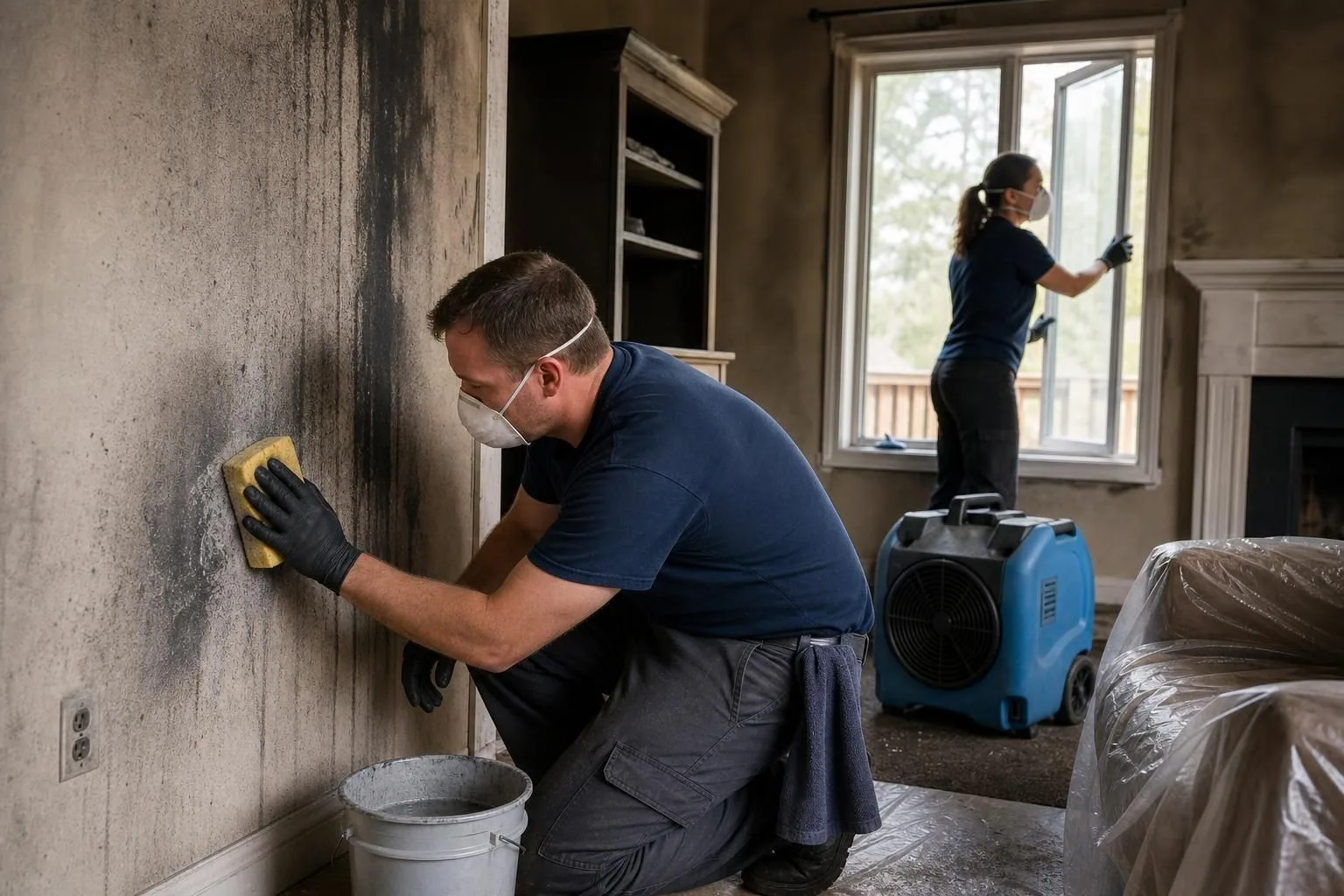
- Wash hard surfaces with a cleaner made for smoke residue, not just regular scented soap.
- Launder washable fabrics and set aside curtains, rugs, and upholstered items that still smell.
- Check hidden odor spots, especially closets, cabinets, wall cavities, attic areas, and air ducts.
- Run the heating, ventilation, and air conditioning system only after it’s been inspected if smoke may have entered it.
DIY cleaning can reduce light smoke odor, but deeper fire smoke smell may need specialized deodorization. Visible clean doesn’t always mean odor-free.
Why Smoke Odor Lingers After Visible Cleanup
Smoke odor sticks around because fire residue is usually microscopic. Soot is the fine, dusty carbon left after something burns. It can ride warm air into cracks, fabric fibers, unfinished wood, cabinet boxes, wall gaps, and ductwork. Think of it like campfire smell in a jacket, except the “jacket” is your house.
Visible cleanup handles what you can see. Odor removal has to deal with what absorbed smoke or trapped particles.
| Where the smell shows up | Common hidden source | What it means | First move |
|---|---|---|---|
| Curtains, sofa, carpet | Fabric fibers and padding | Odor is absorbed | Wash, remove, or professionally clean |
| Inside cabinets | Raw wood or gaps | Smoke settled inside | Clean inside surfaces and air out |
| Walls still smell | Drywall or insulation | Odor may be below surface | Don’t paint yet |
| Smell spreads when HVAC runs | Ducts, filter, blower | System may be circulating odor | Stop use and inspect |
That’s why a room can look clean but still smell smoky, especially after windows are closed for a day.
First Safety and Ventilation Steps
Before removing smoke smell, avoid spreading soot or breathing contaminated dust.
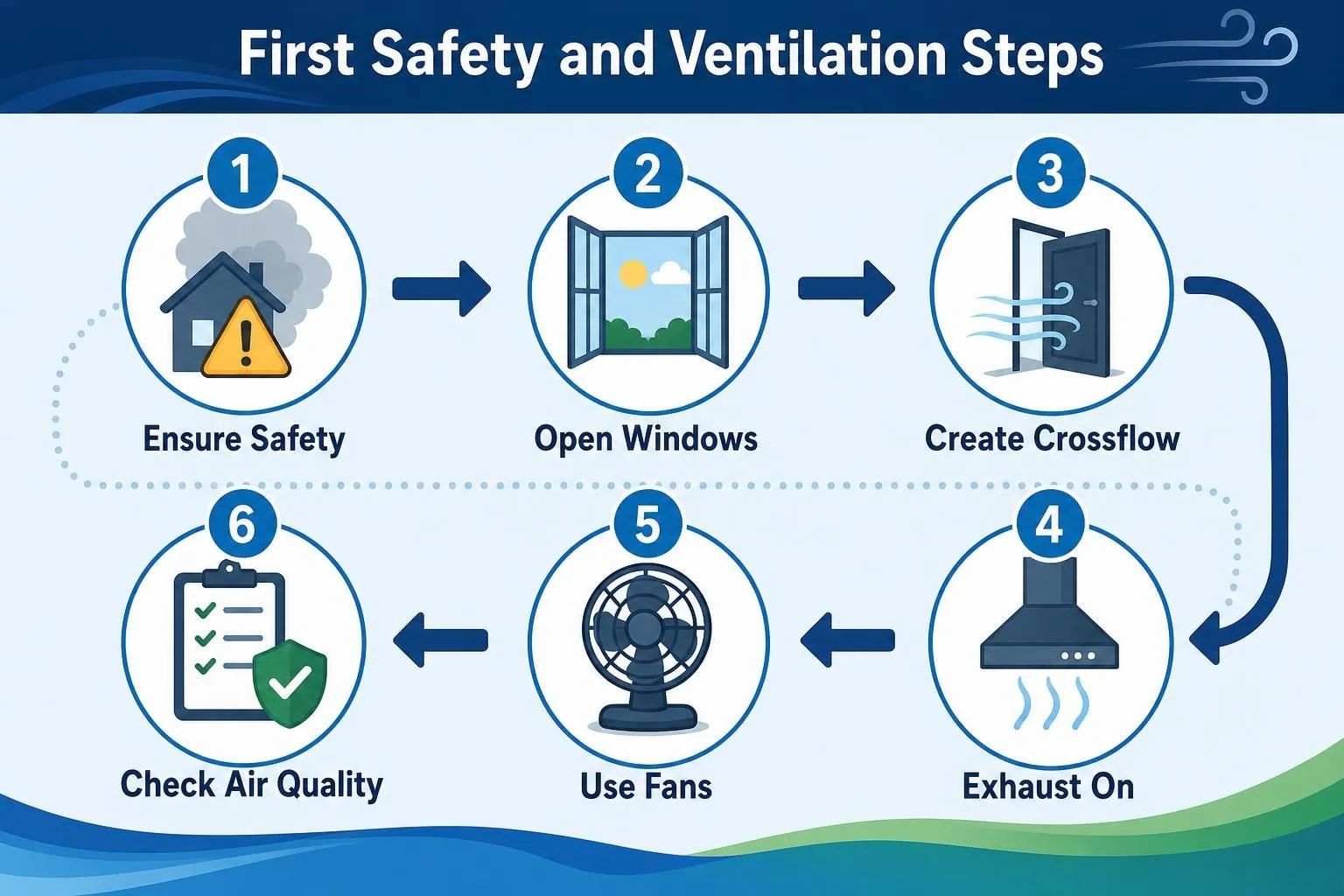
- Get clearance before entering. If the fire department, insurance adjuster, or restoration company has not said the area is safe, wait. Fire-damaged rooms may have weak floors, exposed wiring, wet ceilings, and polluted air.
- Wear protection. Use gloves, eye protection, long sleeves, and a well-fitting respirator if soot is present. A paper dust mask is not enough.
- Turn off the heating and cooling system. Do not run it yet, because the blower can spread smoky particles through ducts and into cleaner rooms.
- Open windows and exterior doors if weather allows. Place a box fan in a window facing outward to push smoky air outside.
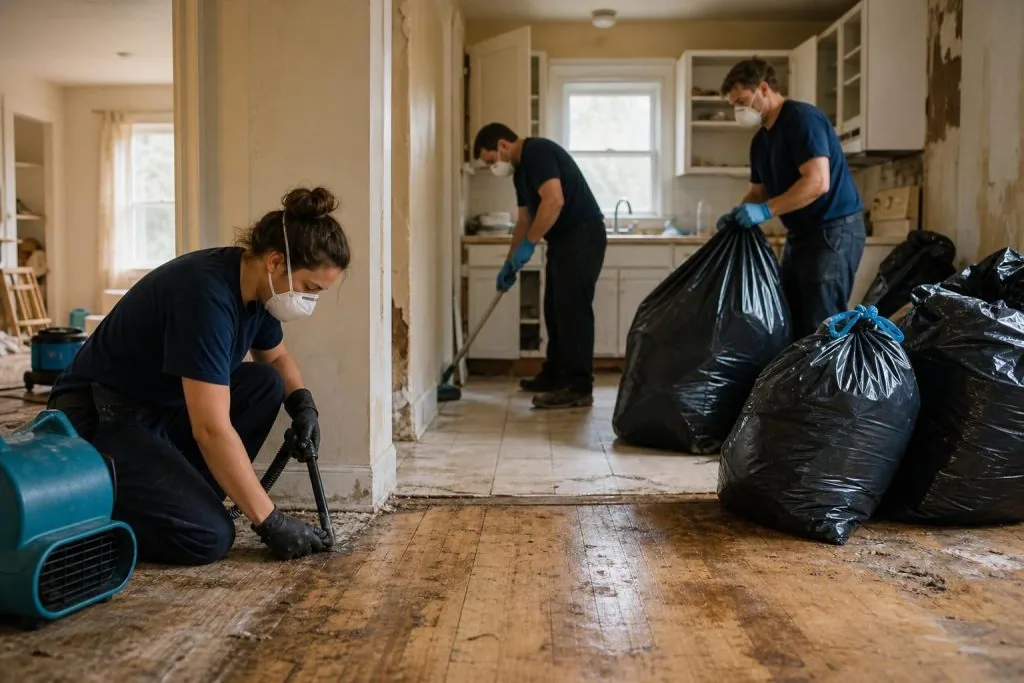
- Remove loose debris carefully. Bag charred items and smoky trash instead of dragging them through the house.
Soft Goods, Cabinets, Drywall, and HVAC
Treat smoke odor like spilled ink: the longer it sits, the deeper it soaks in.
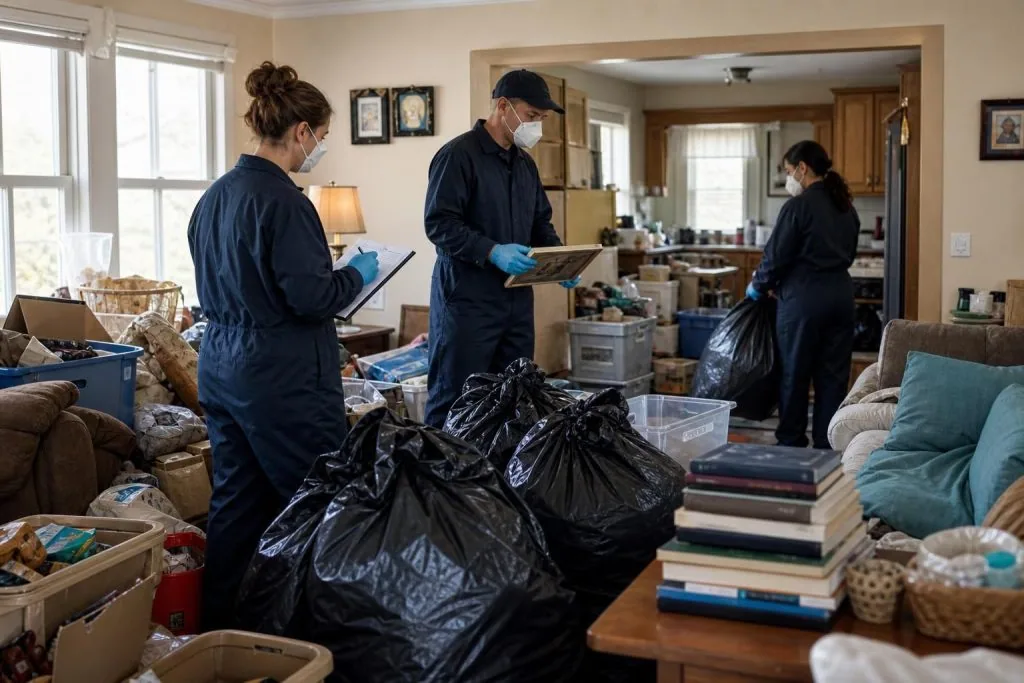
- Soft goods: Remove curtains, bedding, washable clothing, small rugs, and pillows from the smoky area. Wash what the care label allows with regular detergent, then air-dry outside if possible. Don’t use a hot dryer first; heat can set odor into fabric. Upholstery and wall-to-wall carpet may need deep extraction or replacement if the smell stays.
- Cabinets: Open every door and drawer. Wipe interior wood, shelves, hinges, and undersides with a cleaner made for soot, not just a scented spray. A kitchen can smell smoky even after counters are clean because cabinet boxes hold residue.
- Drywall: Wipe light residue gently, but stop if the wall smears, flakes, or smells smoky after drying. That can mean odor is inside paint, paper facing, or wall cavities.
- HVAC: Keep the system off until filters, returns, registers, blower areas, and ducts are inspected. If the smell gets stronger when heat or air conditioning starts, smoke residue may be circulating.
Why Odor Can Return After DIY Cleaning
Smoke odor often returns because DIY cleaning removes the residue you can reach, not always the residue hiding inside materials. Think of it like wiping coffee off a sponge. The surface looks better, but the smell can still come back as the sponge dries or warms up.
A common pattern is this: you clean the room, open the windows, and the house smells better for a day or two. Then you close the home overnight, turn on the heat, or get a humid afternoon, and the smoky smell returns. That usually means odor is still trapped somewhere.
- Residue inside carpet padding, upholstery foam, curtains, or insulation.
- Smoke particles inside cabinet boxes, wall cavities, or unfinished wood.
- Soot in air returns, ducts, filters, or blower compartments.
- Walls cleaned on the surface while smoky paint, drywall paper, or primer still holds odor.
If the smell keeps coming back after careful cleaning and ventilation, treat it as a hidden-source problem, not a fresh-air problem.
Professional Deodorization Options
Professional deodorization is appropriate when the odor survives careful cleaning, spreads through the heating or cooling system, or comes back after the house is closed up for a day or two.
A fire odor technician usually works in this order: find the source, remove what can’t be saved, clean the residue, deodorize the air and materials, and seal remaining porous surfaces.
- Find the source. They inspect fabric, carpet padding, cabinets, attic insulation, drywall, and HVAC parts.
- Remove what can’t be saved. Burned insulation, charred wood, and smoke-loaded padding may need replacement.
- Clean the residue. They use soot sponges, degreasers, and HEPA vacuuming. HEPA means a high-efficiency filter that traps very small particles.
- Deodorize the air and materials. Options may include hydroxyl generators, ozone treatment in controlled conditions, or thermal fogging, which sends a deodorizing mist into odor paths.
- Seal remaining porous surfaces. Smoke-sealing primer can help after cleaning, not instead of cleaning.
For deeper help, see /services/fire-and-smoke-damage-cleanup/ or /smoke-damage-cleanup/. DIY work can reduce odor, but hidden fire residue often needs specialized cleanup.
FAQs
How Long Does Smoke Smell Last After a Fire?
Smoke smell may last a few days, several weeks, or longer, depending on the fire. A small kitchen fire may improve after ventilation, washing, and textile cleaning. A fire that filled several rooms with smoke can leave odor in curtains, upholstery, carpet padding, cabinets, drywall, unfinished wood, and ducts.
If the house smells better with windows open but smoky again after it’s closed overnight, the odor source is still inside the home, not just in the air.
Can Vinegar, Baking Soda, or Air Fresheners Remove Fire Smoke Smell?
Vinegar and baking soda may help with light odor on small washable items, but they won’t reliably remove fire smoke smell from a house. Air fresheners don’t remove smoke residue. They only cover it for a short time.
Think of it like spraying perfume on a smoky jacket. It may smell better briefly, but the smoke is still in the fabric.
Use household remedies only as limited helpers:
- Sprinkle baking soda on washable rugs or fabric before proper cleaning.
- Use vinegar on some hard, washable surfaces only if the material can handle it.
- Avoid scented sprays if they irritate your throat or make the air feel heavy.
- Don’t rely on bowls of vinegar, candles, or plug-ins for odor inside walls, cabinets, ducts, or carpet padding.
If you can see soot, clean the residue first. Deodorizing before soot removal usually gives poor results.
Should I Paint Over Smoky Walls?
Don’t paint over smoky walls before cleaning them. Regular paint may hide the smell for a while, but odor can bleed back through, especially when the room gets warm or humid.
- Remove loose soot with a dry soot sponge if residue is present.
- Wash the wall with a cleaner made for smoke residue and safe for that surface.
- Let the wall dry fully.
- Close the room for several hours, then check for odor.
- Apply smoke-sealing primer only after cleaning, if the wall still smells but doesn’t need replacement.
If drywall absorbed heavy smoke, sealing may not be enough. Some sections may need to be removed.
Why Does My House Smell Smoky When the Heat or Air Conditioning Turns On?
Your heating, ventilation, and air conditioning system, often called HVAC, may be spreading smoke odor. HVAC is the equipment that heats, cools, and moves air through your home.
Smoke can get into return vents, supply ducts, filters, blower compartments, and insulation around the system. Then, when the heat or air conditioning turns on, airflow carries that odor from room to room.
Change the filter, but don’t stop there. If the smell gets stronger when the system runs, have the ductwork and equipment inspected before you keep circulating air.
When Should I Call a Professional?
Call a professional if smoke reached several rooms, soot is heavy, odor keeps coming back, or the HVAC system smells smoky when it runs. You should also get help if the fire involved plastics or other synthetic materials, or if anyone in the home has asthma, allergies, headaches, or throat irritation.
Professional cleanup is usually the safer choice when odor returns after the house is closed up, walls were cleaned but cabinets, closets, or drywall still smell, soft materials like carpet, upholstery, or curtains keep holding odor, or you cannot locate the source. It is also wise to get expert advice before sealing, ozone or hydroxyl treatment, or duct cleaning.
A simple rule works well: ventilate first, clean what you can safely reach, and notice where the smell returns. If odor comes back, gets stronger when heating or cooling runs, or lingers in porous materials, hidden residue is likely. For stubborn odor, review /services/fire-and-smoke-damage-cleanup/ or /smoke-damage-cleanup/ and schedule an inspection before sealing, painting, or replacing materials.