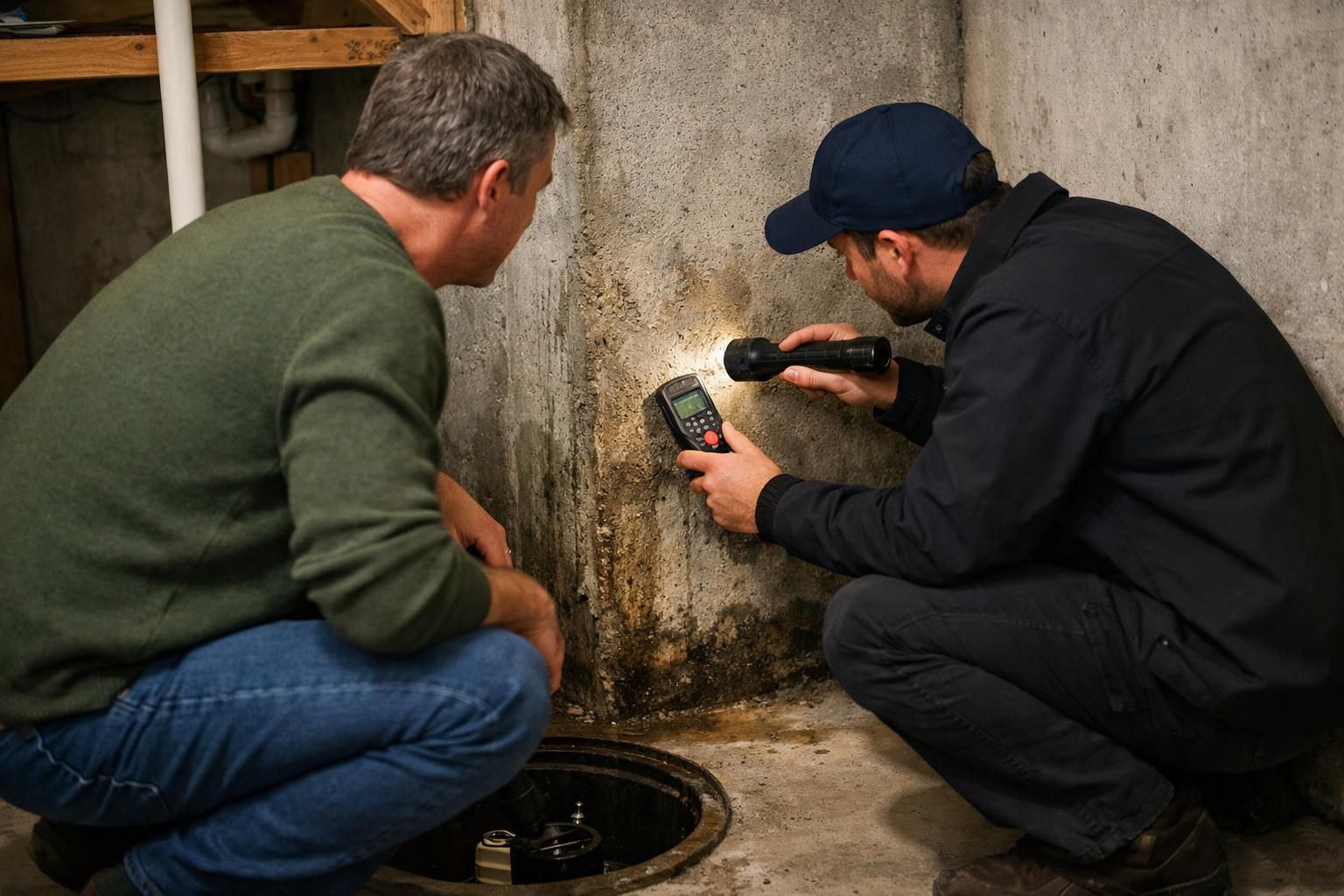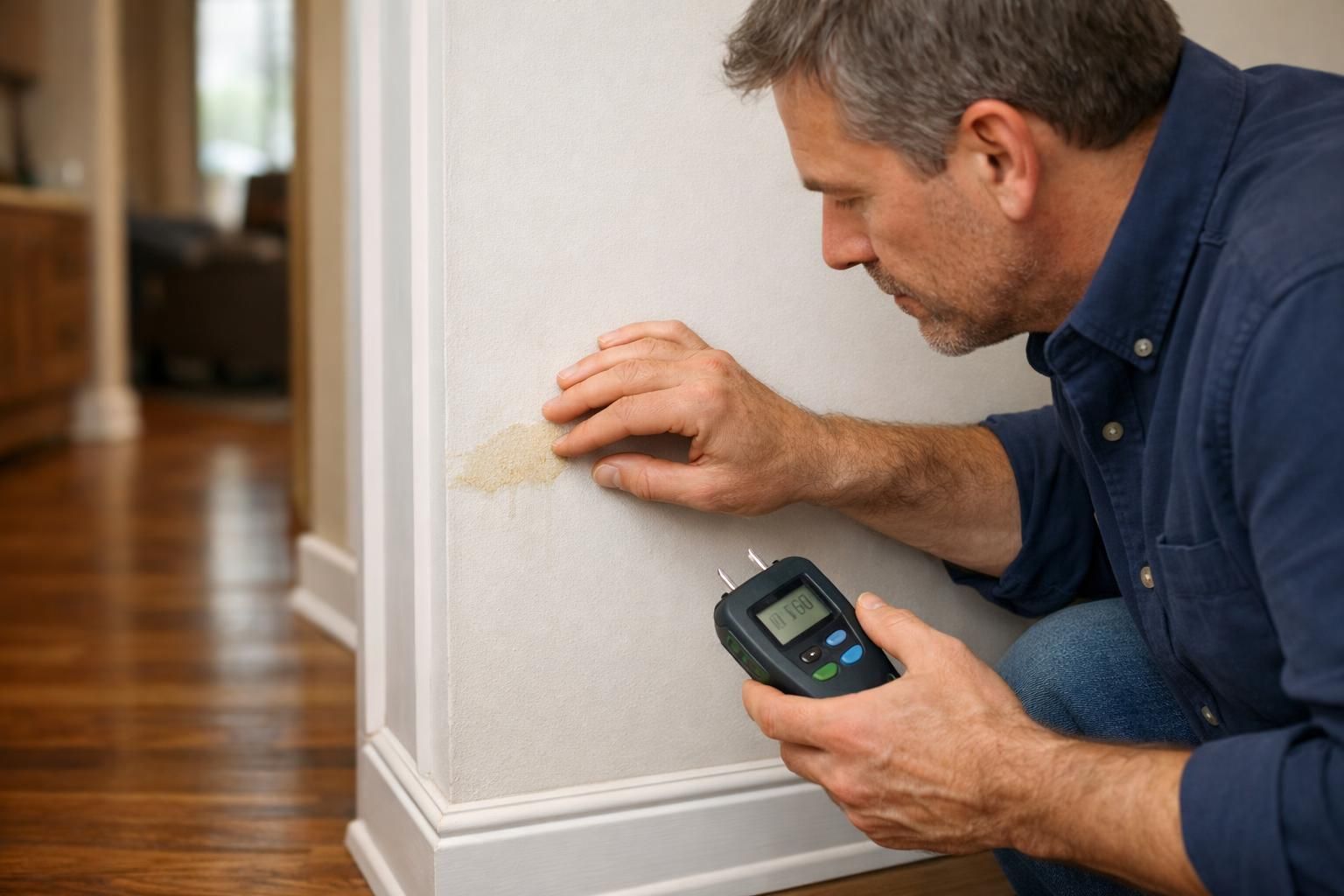
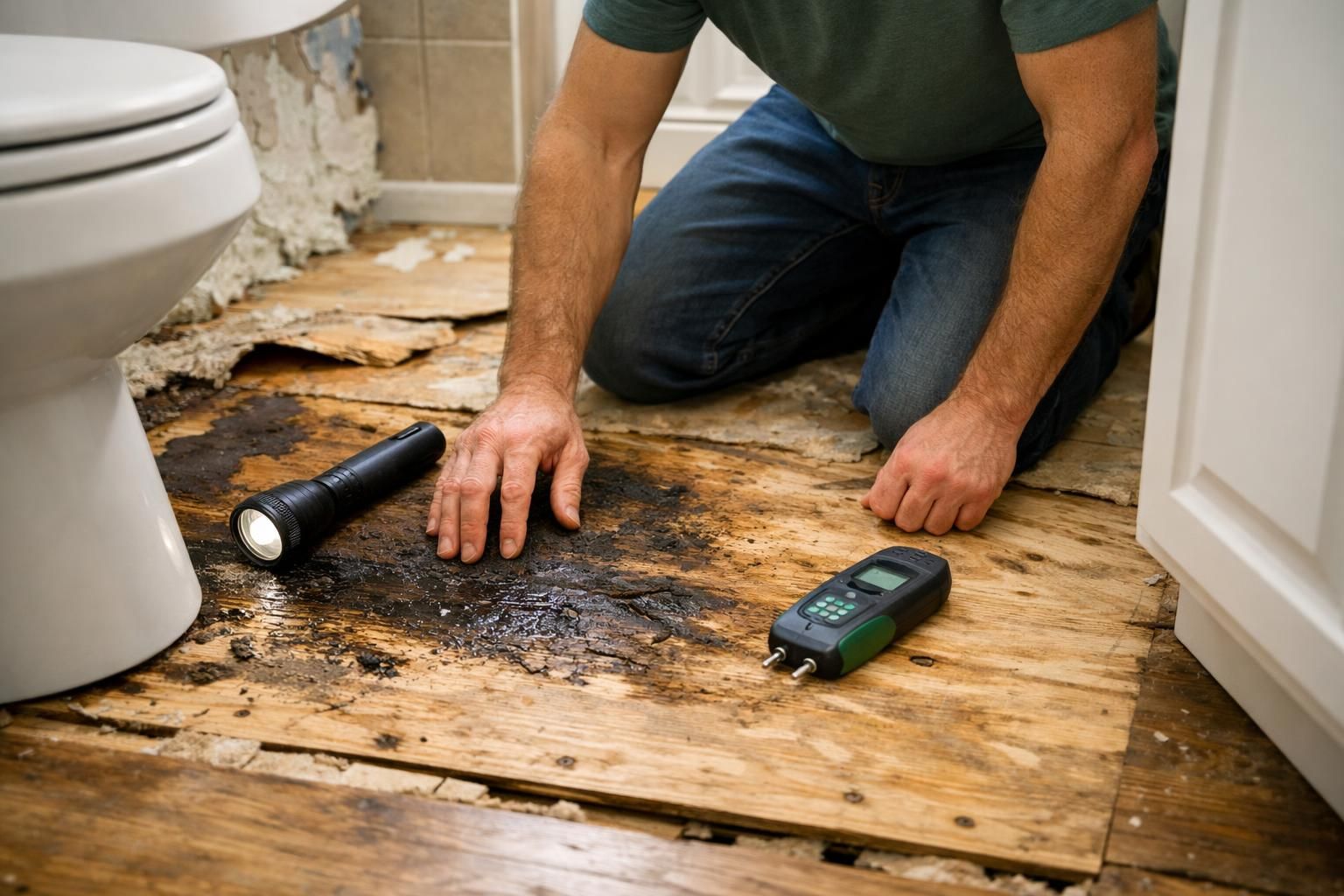
A water damaged subfloor can go from “slightly annoying” to “structural problem” faster than most homeowners expect. The tricky part is that the worst damage often hides under finished flooring, where moisture, swelling, and mold can keep working for weeks. In this guide, you’ll learn the most reliable signs to look for, how subfloor water damage happens in real homes, and what repair paths actually make sense. We’ll also get specific about when to replace subfloor from water damage instead of patching it, so you can make a call based on safety, longevity, and the reality of what you can see.
Best for: Homeowners who noticed soft spots, swelling, or musty odors and want to decide between drying, repair, or replacement.
Not ideal when: You have ongoing leaking, sewage backup, or widespread mold, because the subfloor can’t be evaluated safely yet.
Good first step if: You can stop the water source and expose an edge or vent opening to confirm dampness without tearing up everything.
Call a pro if: Floors feel bouncy, joists may be affected, or you can’t fully dry the assembly within a few days.
Quick Summary
- Subfloor water damage usually shows up as soft spots, swelling, squeaks, or a musty smell before you ever see standing water.
- The subfloor can sometimes be repaired if it’s structurally sound, fully dried, and the water source is fixed.
- Replacement makes more sense when the material has delaminated, rotted, stayed wet too long, or mold keeps returning.
- Your decision depends on coverage area, depth of saturation, and whether joists or insulation were also hit.
- Prevention is mostly about fast leak detection, controlled humidity, and keeping bathrooms and kitchens properly sealed.
Signs of a Water Damaged Subfloor
A common sign of a water damaged subfloor is a floor that feels soft, spongy, or bouncy even when the surface looks dry. That “give” usually means swelling, lost stiffness, or breakdown at seams and fasteners.
Look for movement at transitions where swelling creates a ridge or lip. Cracked tile, popped grout, or vinyl seams opening often point to subfloor movement underneath.
No-tool signs include soft spots near toilets, tubs, sinks, dishwashers, and exterior doors; swollen panel edges; musty odor that returns; new squeaks paired with flex; and stains at baseboards or penetrations. A ring around a toilet suggests a wax ring issue, while long linear damage can indicate a leak in a wall bay. Compare surface symptoms at wood flooring water damage signs.
How Does a Subfloor Get Water Damaged
A subfloor gets water damaged when moisture enters the floor system faster than it can dry, especially at seams, plumbing cutouts, and low-ventilation cavities. Material matters, but duration matters more: repeated wetting or slow leaks usually cause far more deterioration than a spill cleaned quickly.
Bathrooms and kitchens are common hotspots because they combine plumbing, splash zones, and many penetrations. A small drip under a sink can keep the underside damp for months, and a shower leak can soak the subfloor from above while tile still looks “fine.” If that sounds familiar, leaking shower water damage reflects what often happens.
Common causes include wax ring failures, appliance leaks, overflows, and crawlspace humidity.
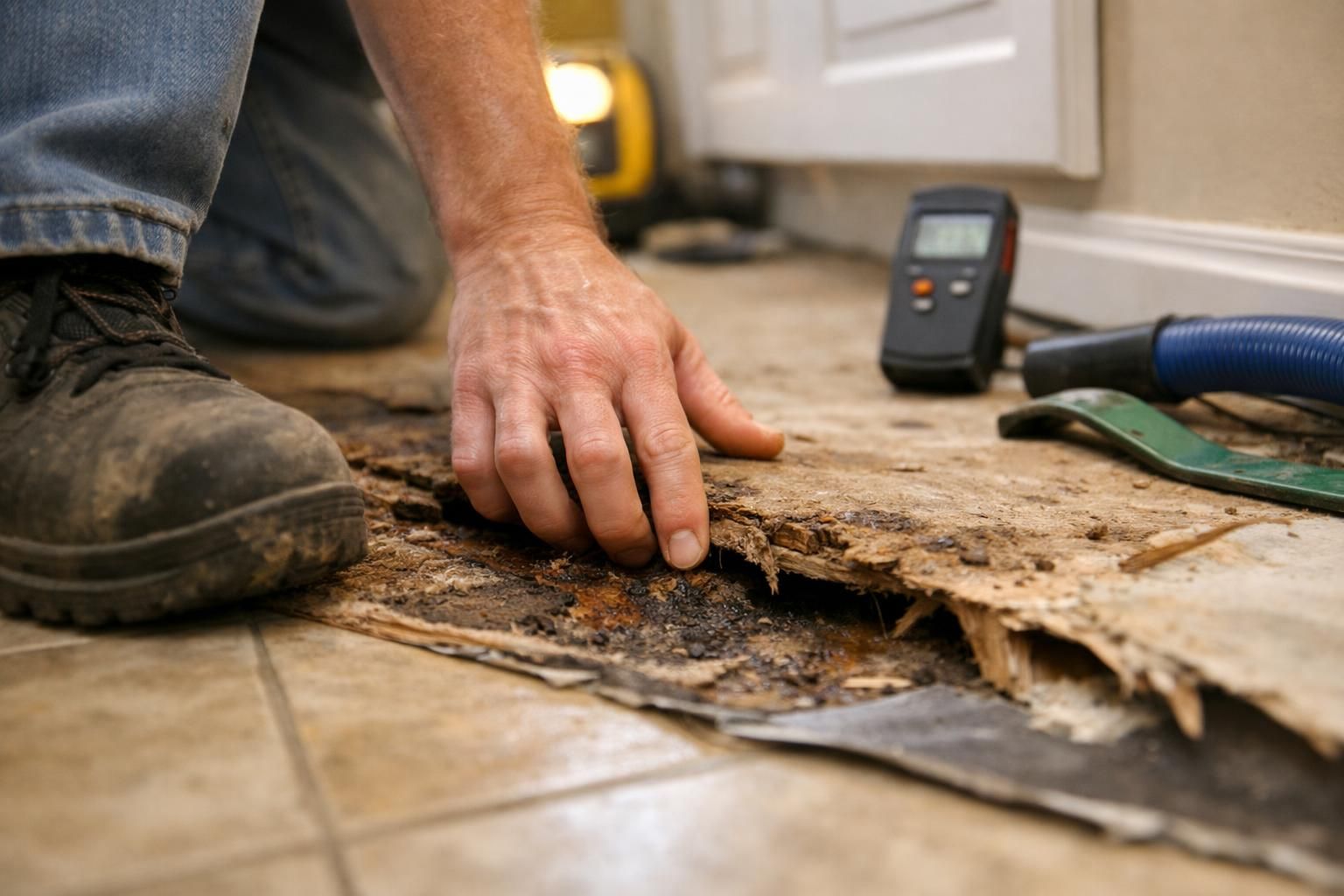
Can a Water Damaged Subfloor Be Repaired
Yes, a water damaged subfloor can be repaired if it dries fully, remains structurally sound, and the damage is localized. The goal is restored stiffness and fastening strength.
Access drives the call. Under tile and backer board, you often must remove finish layers to inspect. From a basement or crawlspace, look for staining, swollen edges, fungal growth, and loose fasteners.
Basic workflow: stop the leak, remove wet layers that block drying, dry with airflow and dehumidification, probe seams for softness, refasten to joists, and patch or replace only compromised areas. “Dry” is not always “safe to cover,” because trapped moisture under vinyl or membranes can create odor and mold risk.
Repair Methods That Actually Hold up
Repairs must restore structure. Minor swelling may only need sanding and added fasteners. Soft or delaminated panels require cut-out and patch. Add blocking, cut to joist centers, screw a tight grid, and install underlayment only when dry.
Materials That Don’t Forgive Moisture
OSB swells at edges and can lose strength after prolonged wetting. Plywood handles brief wetting better but can delaminate when saturated. Plank subfloors can cup and loosen, causing movement that damages tile.
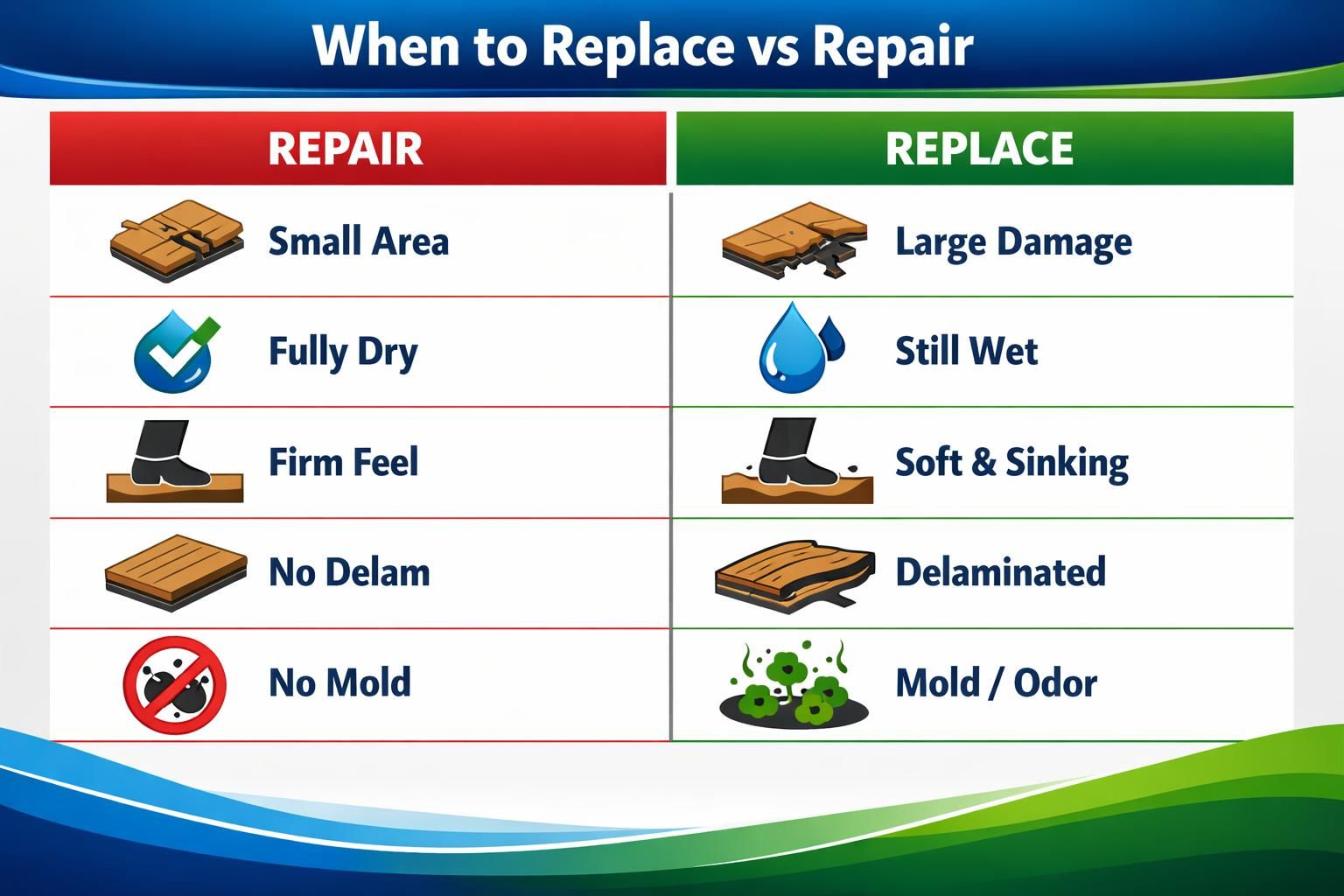
When to Replace vs Repair a Subfloor
You should replace rather than repair when the subfloor has lost structural strength, has rot or delamination, or can’t be dried and kept dry after the leak is fixed. Repair makes sense when the damage is small, the panel is still stiff, and you can verify drying and fastening into solid material.
Here’s a concise way to compare the decision:
| Condition | Repair makes sense | Replace makes sense | What you’re trying to avoid |
|---|---|---|---|
| Localized wet area | Dry, refasten, patch | Wet area spreads under multiple rooms | Chasing symptoms room to room |
| Swelling/edge lift | Minor, sands flat, stays stiff | Edges crumble or stay crowned | Uneven floor that cracks tile |
| Mold/odor | No growth after drying and cleaning | Recurring odor or visible growth on wood | Sealing in contamination |
| Material breakdown | No delamination, screws bite | Layers separate or wood is punky | Flooring failure over weak base |
Replacement isn’t just about the panel, either. If joists are stained, soft, or sagging, you’ve moved beyond a simple subfloor conversation. That’s when it’s smart to bring in someone who can evaluate structure, not just flooring.
Now, let’s make the “when to replace subfloor from water damage” question more concrete. Replacement is usually the better bet when:
- The floor deflects noticeably between joists even after drying
- A screwdriver sinks in easily or pulls up damp, stringy fibers
- Plywood has delaminated or OSB edges have turned to crumbly flakes
- The affected area reaches multiple bays, not just a small patch
- Fasteners no longer hold because the wood around them is compromised
- You can’t remove wet layers that are blocking drying (underlayment, foam, etc.)
- The water was contaminated and porous materials were exposed
And don’t ignore recurrence. If you’ve already “fixed” it once and the smell or softness returned, that’s your clue the assembly never truly dried or the leak source is intermittent.
Water Damaged Subfloor Repair Cost
Water damaged subfloor repair cost is driven mostly by access and rebuild scope, not the size of the soft spot. The same patch can be simple under floating flooring but expensive under tile, cabinets, or multiple layers.
Key cost drivers include finish-floor removal and reinstallation, drying equipment and time, underlayment/backer layers, pulling toilets or vanities, joist blocking or leveling, and mold remediation when needed. Separate mitigation (stop source, demo, drying) from reconstruction (new subfloor and finishes). For broader context, see water damage restoration cost factors.
If insurance may apply, photograph the source and footprint, and save receipts. Start here: insurance coverage for water damage.
How to Prevent Subfloor Water Damage
Prevent most subfloor water damage by catching small leaks early, sealing wet-area transitions, and letting cavities dry. Focus on toilets, showers, dishwashers, washing machines, and exterior doors.
Check supply lines and shutoffs for slow drips, replace brittle hoses, and fix rocking toilets before the wax ring fails. Re-caulk tub-to-tile and shower curb joints, and run bath fans during and after showers to reduce humidity. Use leak pans where appropriate and keep drains clear.
Avoid trapping moisture: installing water-resistant flooring over a damp subfloor can prevent drying and worsen hidden damage. For active appliance leaks, use dishwasher leak cleanup steps to address both the surface and the cavity.
FAQs
Do I Need to Replace Water Damaged Subfloor if it Feels Only Slightly Soft?
Not always. Dry it fully, then probe and refasten. If screws won’t bite, the soft area grows, or odor returns, a cut-out patch or replacement is usually smarter than covering it.
How Long Can a Subfloor Stay Wet Before it Becomes a Replacement Job?
No single deadline. Temperature, airflow, material, and saturation level control outcomes. The key is whether you can dry it completely and confirm strength. Damp, closed cavities raise deterioration and mold risk quickly.
What Does Water Damage Rotted Subfloor Look Like From Below?
From below, rot shows dark staining, fuzzy growth, and wood that flakes or turns stringy when scraped. You may see sagging between joists or fasteners pulling through. If a screwdriver pushes in easily, strength is likely compromised.
Can I Just Seal Over Subfloor Water Damage With Primer or an Odor Blocker?
Sealing can cover minor stains after the subfloor is dry and solid. It will not fix softness, delamination, or active mold. If odor comes from damp layers below, sealing traps the problem.
Should I Replace the Subfloor and the Joists at the Same Time?
Only if joists are compromised, but inspect them whenever subfloor is removed. Solid joists can stay, sometimes with blocking or leveling. If joists are soft, cracked, or sagging, treat it as structural repair.
Conclusion
A water damaged subfloor is one of those problems you can’t solve with hope and a new layer of flooring. If the panel dries fully, stays stiff, and holds fasteners well, a targeted repair or patch can be a solid fix. But when you’re dealing with swelling that won’t settle, recurring odor, delamination, or water damage rotted subfloor sections, replacement is usually the safer and longer-lasting call. Your best next step is simple: stop the source, open up enough area to inspect, and decide based on strength, not appearances.