
If you wipe black soot on painted walls with water too soon, you’ll often smear it deeper instead of cleaning it off. Soot is fine, oily smoke residue. It clings to paint, ceilings, corners, and textured surfaces like dust mixed with grease.
Start with the order that prevents bigger damage:
- Check for structural damage, electrical hazards, and safe ventilation before touching anything.
- Photograph walls for your insurer or fire department if needed.
- Remove loose soot dry first, then test whether gentle cleaning, sealing, repainting, or drywall repair makes sense.
Quick Answer
Treat soot cleanup as a sequence, not a scrubbing job. If the wall is safe to approach, start dry, test small, then decide whether cleaning is enough.
- Stop and check safety first. Look for soft drywall, sagging ceilings, exposed wiring, wet areas, or a smoky room with poor airflow. If anything feels unsafe, don’t touch the walls.
- Document the soot before cleaning. Take photos of walls, ceilings, corners, and black streaks above candles, appliances, outlets, or heat sources.
- Remove loose soot dry. Use a gentle vacuum with a brush held slightly off the surface if you can do that without rubbing. A dry soot sponge can also lift light residue, but don’t scrub.
- Test a small hidden spot. If soot smears, paint lifts, or the stain spreads gray, stop wet cleaning.
- Decide the next move. Light soot from a small kitchen flare-up may clean up. Heavy soot, textured ceilings, lingering odor, yellowing, or stains that return later usually mean the residue is deeper than the surface. That’s when cleaning may need to shift to sealing, repainting, drywall repair, or professional smoke cleanup.
What Soot Actually is and Why it Smears
Soot is fine, oily smoke residue left behind when something burns. Think of it like greasy dust. It can cling to painted drywall, ceilings, trim, corners, textured surfaces, and tiny wall imperfections you can’t really see.
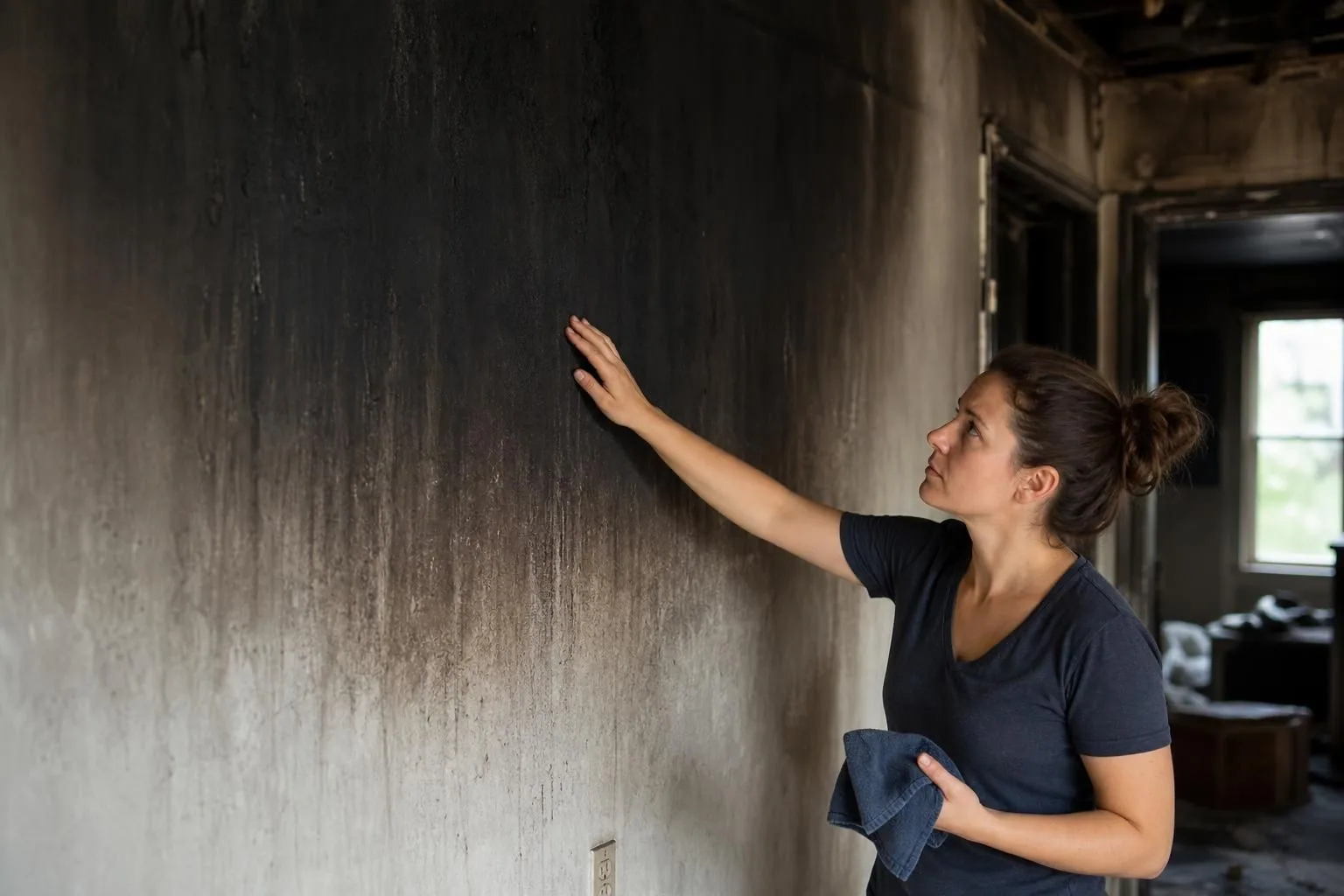
That oily part is why soot smears. When you rub it, you’re not just moving dry dirt. You may be pressing residue into the paint film or into porous surfaces like unsealed drywall, flat paint, wallpaper, or ceiling texture. Add water too early and the soot can turn into a gray-black wash that spreads outward.
You’ll often see this with black streaks above a candle, appliance, outlet, fireplace, or heat source. Touch the mark with a finger and it may drag into a darker smudge. After a fire, the same thing can happen across a whole wall, especially near the ceiling where hot smoke collected.
So the cleaning order matters because the first pass should remove loose residue without driving it deeper. Once soot is embedded, the job may shift from cleaning to sealing, repainting, or replacing damaged material.
First Safety Checks Before Touching Walls
Before you clean anything, make sure the room is safe to enter and that you won’t erase evidence your insurer may need. Soot can wait. Safety and documentation come first.
- Check for structural damage. Look for sagging ceilings, warped walls, cracked drywall, soft floors, or doors that suddenly don’t close right. If anything looks unstable, stay out.
- Avoid electrical hazards. Don’t touch soot around outlets, switches, appliances, or breaker panels. Black streaks above an outlet or appliance may point to heat, smoke movement, or an electrical issue.
- Ventilate gently. Open windows if it’s safe, but don’t aim a fan directly at soot-covered walls. That can blow loose residue into clean rooms, vents, and fabrics.
- Wear basic personal protective equipment, or PPE. That means gloves, eye protection, long sleeves, and a well-fitting mask or respirator if there’s dust or odor. PPE is just gear that helps keep residue off your skin and out of your lungs.
- Take photos first. Photograph each wall, ceiling corner, and damaged item before cleaning. If the fire department or insurance company needs documentation, clean walls can make the damage harder to prove.
Why Dry Cleaning Usually Comes Before Wet Cleaning
Dry cleaning comes first because soot behaves more like greasy dust than ordinary dirt. Add water too early and you can turn that dust into a gray-black paste that sinks into paint, drywall paper, corners, and texture.
- Let loose particles settle. Don’t brush the wall with your hand or a rag.
- Vacuum gently if the surface is dry and stable. Use a vacuum with a HEPA filter if you have one, and hold the nozzle slightly away from the wall. Don’t press or drag it across the soot.
- Test a dry soot sponge on a small hidden spot. This is a special dry cleaning sponge used to lift residue without liquid. Press lightly and move in straight strokes. Don’t scrub in circles.
- Stop when the sponge stops lifting residue. If the wall starts smearing, flaking, or showing shiny rub marks, you’re past safe DIY cleaning.
Only after loose soot is removed should you consider mild wet cleaning on a small test area. Even then, painted walls can streak, fade, or release odor later.
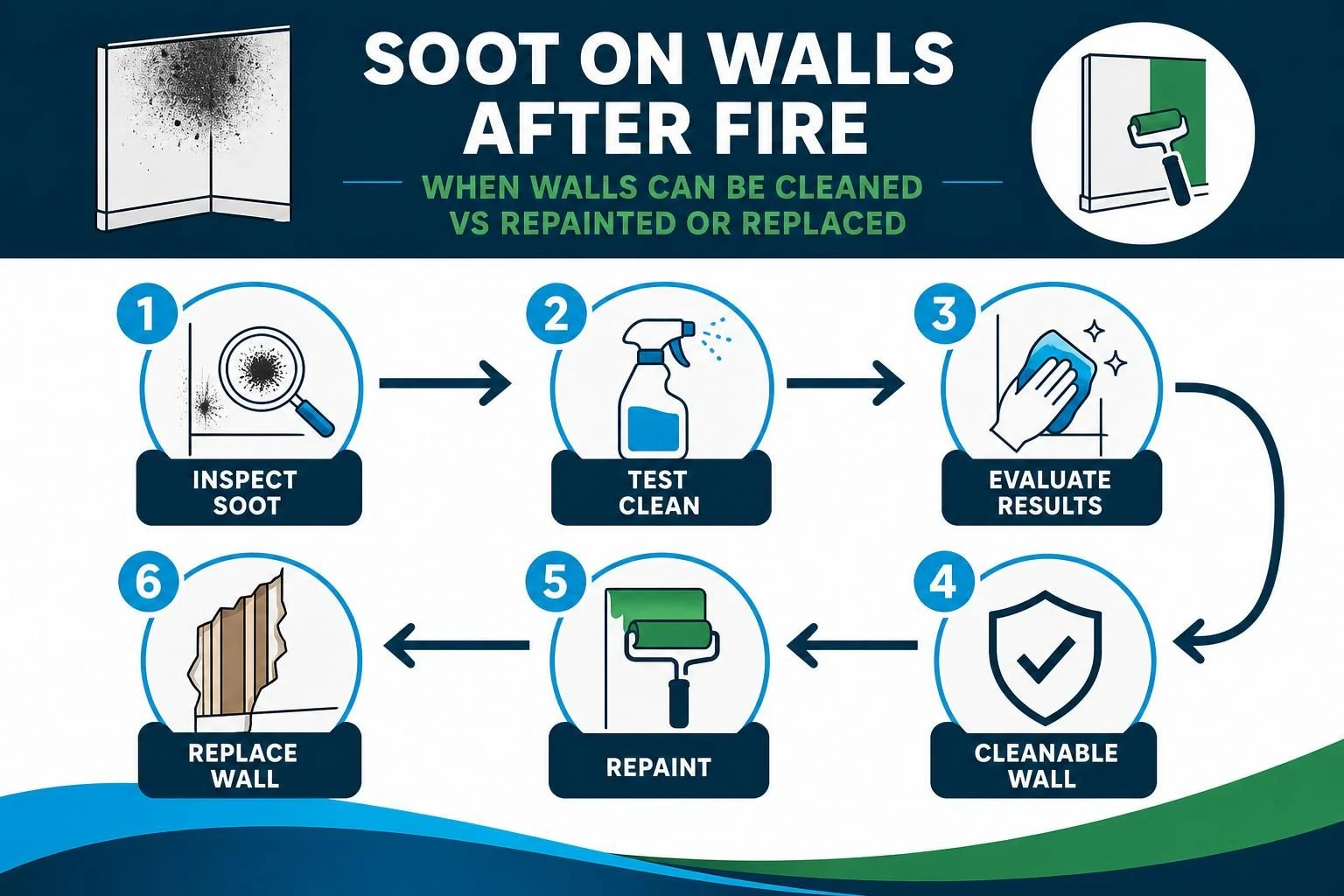
When Walls Can Be Cleaned vs Repainted or Replaced
After the dry pass and a tiny wet test, judge the wall surface itself, not just the stain. Some soot sits on top of paint. Some sinks into paint or drywall. And some damage means the wall material is no longer worth cleaning.
| Wall condition | Likely decision | Why |
|---|---|---|
| Light gray soot from a small kitchen flare-up | Clean, then reassess | Residue may be surface-level |
| Black streaks that smear when touched | Stop DIY cleaning | Soot is bonding to the paint |
| Clean-looking wall that later yellows, ghosts, or smells | Seal and repaint after proper cleaning | Smoke residue may still be underneath |
| Soft, blistered, wet, or crumbling drywall | Repair or replace | The wall material is damaged |
Use this simple order:
- Look at corners, ceilings, and textured areas. Soot collects there like dust in a ceiling fan. DIY wiping often spreads it across the bumps instead of lifting it.
- Wait before repainting. Paint can hide soot for a while, then yellow stains or smoke odor may come back. A stain-blocking primer can help only after residue is properly removed.
- Replace materials that are physically damaged. If drywall is wet from firefighting water, soft, warped, or deeply smoke-stained, cleaning the surface won’t fix the wall.
For a room with visible soot plus lingering odor after a larger fire, professional smoke damage cleanup (/smoke-damage-cleanup/) or full fire and smoke damage cleanup (/services/fire-and-smoke-damage-cleanup/) is usually the safer next step.
When to Bring in a Smoke Damage Crew
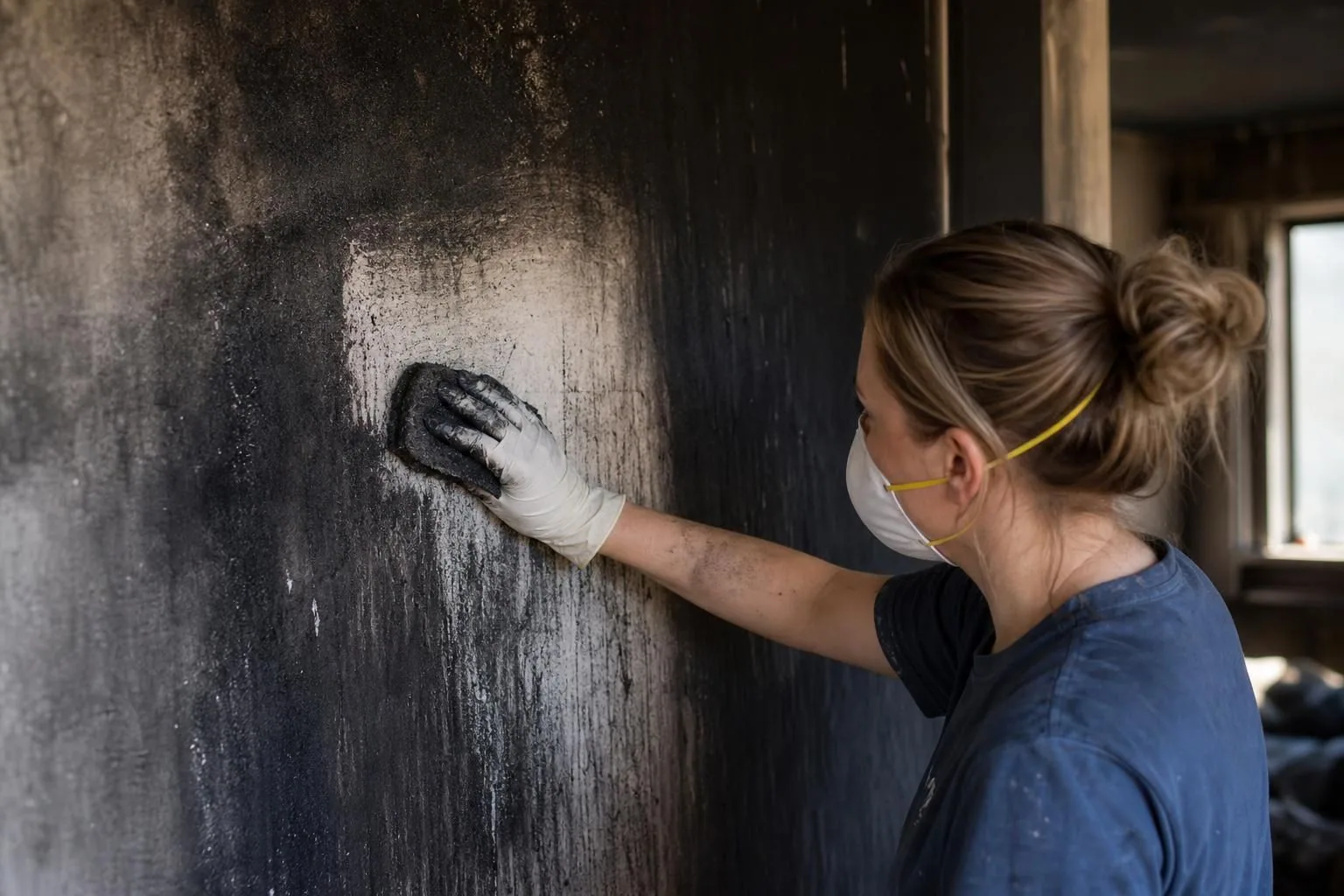
Call a smoke damage crew when the soot pattern is bigger than a small, contained spot or when the wall keeps telling you the damage is deeper than the surface. A tiny kitchen flare-up with light gray dust near the stove may be a careful do-it-yourself job. A room with black wall streaks, ceiling staining, and smoky odor usually isn’t.
Use this stop-and-call checklist:
- Stop wiping if soot smears, turns sticky, or leaves gray shadows after a dry pass.
- Smell the room after airing it out. If smoke odor lingers, soot or smoke residue may be hiding in wall texture, insulation gaps, cabinets, or vents.
- Look for heating, ventilation, and air conditioning contamination. If smoke moved through vents, cleaning one wall won’t solve the source.
- Watch for water damage from firefighting. Wet drywall, bubbling paint, or soft spots need repair decisions, not more cleaning.
Professional smoke damage cleanup (/smoke-damage-cleanup/) or fire and smoke damage cleanup (/services/fire-and-smoke-damage-cleanup/) is also the smarter move when stains return as yellowing or ghosting after the wall looked clean.
FAQs
How Do I Clean Soot From Walls After a Fire?
Start with safety and photos. If the area is small, like a light soot mark from a kitchen flare-up, gently remove loose residue first with a vacuum brush held just off the surface or a dry soot sponge. Then test any damp cleaning in a hidden spot.
What Should I Do About Black Soot on Painted Walls?
Don’t scrub it. Black streaks above a candle, outlet, appliance, or heat source often smear because soot is oily. If a dry pass leaves staining, stop and test gently. If paint lifts, dulls, or the stain spreads, the wall may need sealing and repainting.
Should I Use Water First?
No, not as your first move. Water can push soot into painted drywall, corners, texture, and tiny wall pores. Think of it like rubbing wet newspaper ink into fabric. Dry removal usually gives you a cleaner starting point.
Does Smoke Odor Mean Soot is Still There?
Often, yes. Odor can come from hidden residue on ceilings, trim, vents, insulation, or textured surfaces. If a room still smells smoky after visible soot is gone, or yellowing and ghosting return later, there’s likely residue you haven’t reached.
Conclusion
Soot on walls after a fire is easier to handle when you follow the right order: document first, check safety, remove loose residue dry, then test whether gentle wet cleaning is safe. If soot smears, odor lingers, stains return, or the damage reaches ceilings, corners, vents, or textured surfaces, stop treating it like simple dirt.
For a small kitchen flare-up, careful DIY cleanup may be enough. For heavier smoke residue, review professional options at /smoke-damage-cleanup/ or /services/fire-and-smoke-damage-cleanup/ before repainting and trapping odor underneath. Your next step is simple: inspect the wall, take photos, and choose the least aggressive safe method first.