
Smoke damage often reaches rooms that never had flames, so the real question isn’t just “How do I wipe this off?” It’s what can be cleaned, what needs sealing after cleaning, and what should be replaced because residue or odor has gone too deep.
- Check the material. Hard, nonporous surfaces are more likely to clean up than fabric, insulation, mattresses, or heavy carpet.
- Check the severity. Light smoke residue cleanup is different from thick, oily soot cleanup after a hot fire.
- Check the smell. If something looks clean but still smells smoky, odor may be trapped inside the material or moving through heating and cooling ducts.
Smoke damage cleanup means removing visible soot, hidden residue, and odor sources. Painting, spraying fragrance, or scrubbing everything the same way can make the problem worse.
Quick Answer
Smoke damage cleanup means removing soot, oily smoke residue, and odor sources, not just making a wall or cabinet look cleaner. Start by asking two questions: is the material hard or porous, and did smoke stay on the surface or soak in?
Hard, smooth materials are usually the best cleaning candidates. Think glass, metal, sealed tile, some appliances, and lightly affected painted trim. A dry soot sponge, which is a special sponge that lifts soot instead of smearing it, can help show whether residue is removable.
Porous materials need more caution. Fabric, carpet, mattresses, raw wood, insulation, and upholstered furniture act like sponges. They can hold smoke odor even after the surface looks clean. Light smoke on washable curtains may be treatable. A smoke-soaked mattress or heavily affected carpet often isn’t practical to restore.
Sealing sits in the middle. Use it for stained but stable surfaces, such as drywall or trim, only after soot cleanup, drying, and odor control. Sealer isn’t perfume or magic paint. It’s more like closing a cleaned door.
For a small kitchen smoke incident, cabinets may be cleaned, nearby walls may need cleaning plus sealing, and soft goods in the next room may need laundering, deodorizing, or replacement.
Why Smoke Damage Spreads Beyond the Burn Area
That room-by-room difference happens because smoke acts less like a stain and more like a gas carrying tiny dirty particles. It rides air currents, slips through gaps, and settles wherever cooler surfaces, soft materials, or airflow patterns give it a place to land.
Think of smoke like cooking smells, only dirtier and stickier. If you burn toast, you may smell it in the hallway even though the toaster never left the kitchen. After a fire, the same movement happens with soot and oily smoke residue.
Smoke can spread through:
- Pressure changes from the fire, fans, broken windows, or doors opening
- Cracks around trim, outlets, light fixtures, and baseboards
- Porous materials such as carpet, curtains, bedding, and upholstery
- Wall cavities, attic spaces, and insulation
- HVAC returns, which can pull smoke into ductwork and push odor into rooms far from the original fire area
So a bedroom with no flames can still smell smoky because fabrics, carpet, and painted surfaces absorbed residue. A living room may look clean at first, then smell worse on a humid day because moisture reactivates odor trapped in porous materials.
This is why smoke damage cleanup starts with tracing where smoke traveled, not just where the fire burned.
Cleanable vs Unsalvageable Materials
Sort each item by two things: how porous it is and how heavy the smoke exposure was. Porous means it soaks things up, like a sponge. Nonporous means residue mostly sits on the surface, like on glass or metal. Semi-porous materials, such as painted drywall or wood cabinets, fall in the middle.
| Material or item | Clean first when | Seal only when | Replace when |
|---|---|---|---|
| Glass, metal, tile, sealed countertops | Soot is light to moderate | Rarely needed | Heat cracked or contaminated |
| Painted drywall, trim, cabinets | Surface is intact | Clean, dry, odor controlled | Charred, swollen, odor persists |
| Clothing, curtains, rugs, upholstery | Light smoke, washable | Not practical | Heavy odor or soot remains |
| Mattresses, insulation, heavy carpet | Limited exposure only | Not recommended | Deep smoke, moisture, contamination |
Use this quick process before deciding:
- Check the surface. If it’s smooth and intact, start with careful cleaning. Don’t scrub dry soot hard, because you can smear it into the surface.
- Smell the item separately. Move it away from the damaged room if you can. If it still smells smoky after airing out, the odor is probably inside the material, not just on top.
- Look for heat, water, or fire extinguisher damage. Smoke is only one part of the problem. Warped cabinets, wet drywall, or contaminated carpet may not be worth saving.
- Decide clean, seal, or replace. Sealing is for building materials like drywall or trim after residue and odor are handled. It’s not a shortcut for dirty surfaces.
A small kitchen smoke incident is a good example. Cabinet fronts may clean up well. A nearby painted wall might need cleaning, drying, and sealing before repainting. Curtains, pillows, or a fabric chair near the kitchen may hold odor even if they look fine.
For heavy soot, widespread odor, or mixed fire and water damage, professional smoke damage cleanup can help you avoid saving materials that will keep releasing odor later.
Soot, Odor, and HVAC Concerns
Soot, odor, and HVAC spread are three separate problems, even though they often show up together.
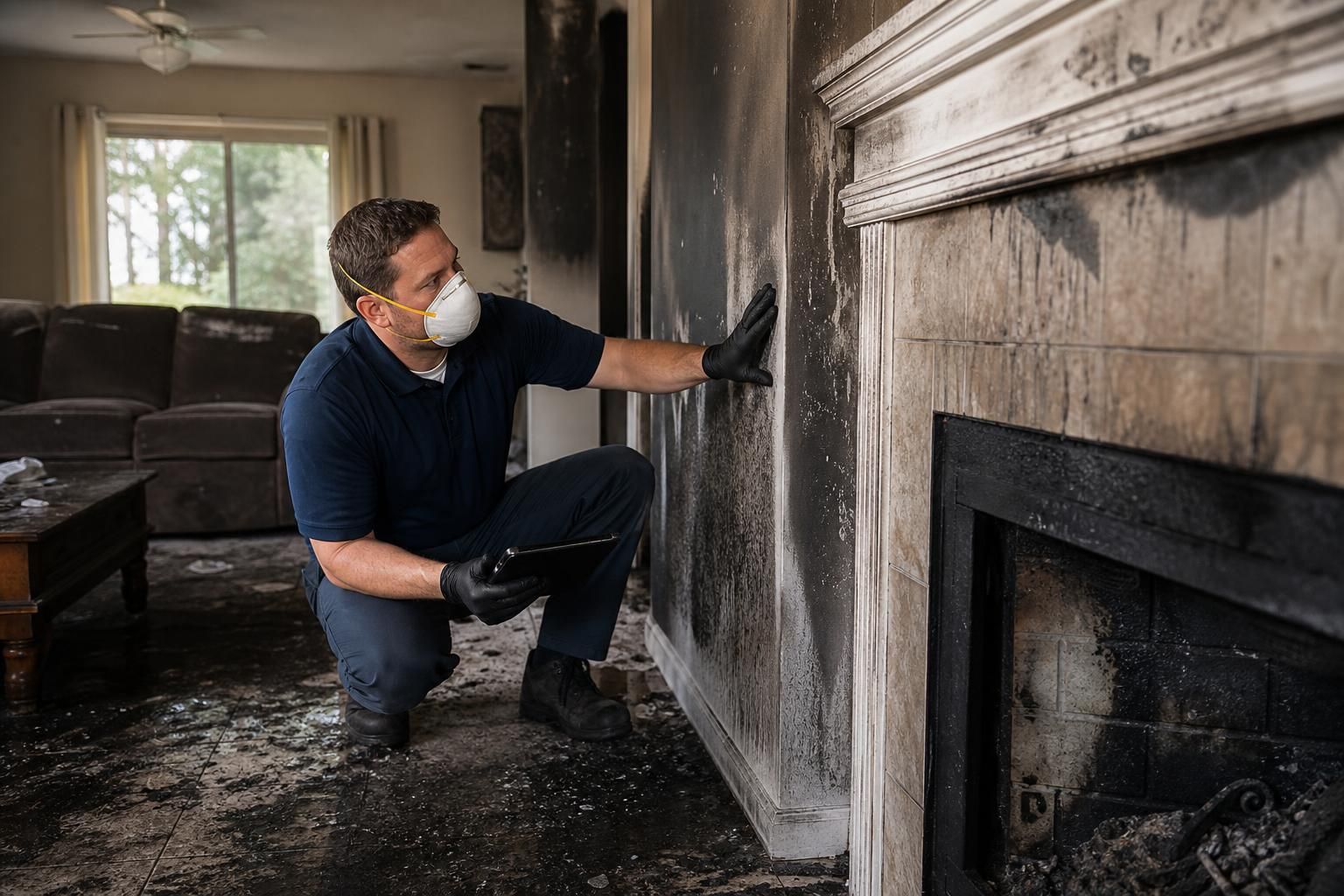
Soot is the dark, powdery or greasy residue left after something burns. Don’t treat it like normal dust. If you wipe it with a wet rag, you can smear it deeper into paint, trim, plastic, or cabinet finishes. Dry soot may need careful dry cleaning first. Greasy soot, like from a kitchen fire, usually needs a different cleaning method.
Smoke odor is different. A surface can look clean and still smell smoky because tiny odor particles have soaked into porous materials. Think of it like spilled coffee in a couch cushion. Cleaning the outside doesn’t always reach what settled inside.
HVAC means heating, ventilation, and air conditioning. Your HVAC system moves air through the home. If smoke gets pulled into a return vent, it can carry odor into bedrooms, closets, or hallways that were nowhere near the fire.
A simple first check:
- Look for soot near vents, return grilles, ceiling edges, and door gaps.
- Smell rooms far from the source after the system has been off for a while.
- Replace only basic filters if it’s safe and accessible.
- Leave duct interiors, blower parts, and electrical components to qualified professionals.
This is why a living room with no flames can still have smoky carpet, curtains, and painted walls. The air carried the problem there.
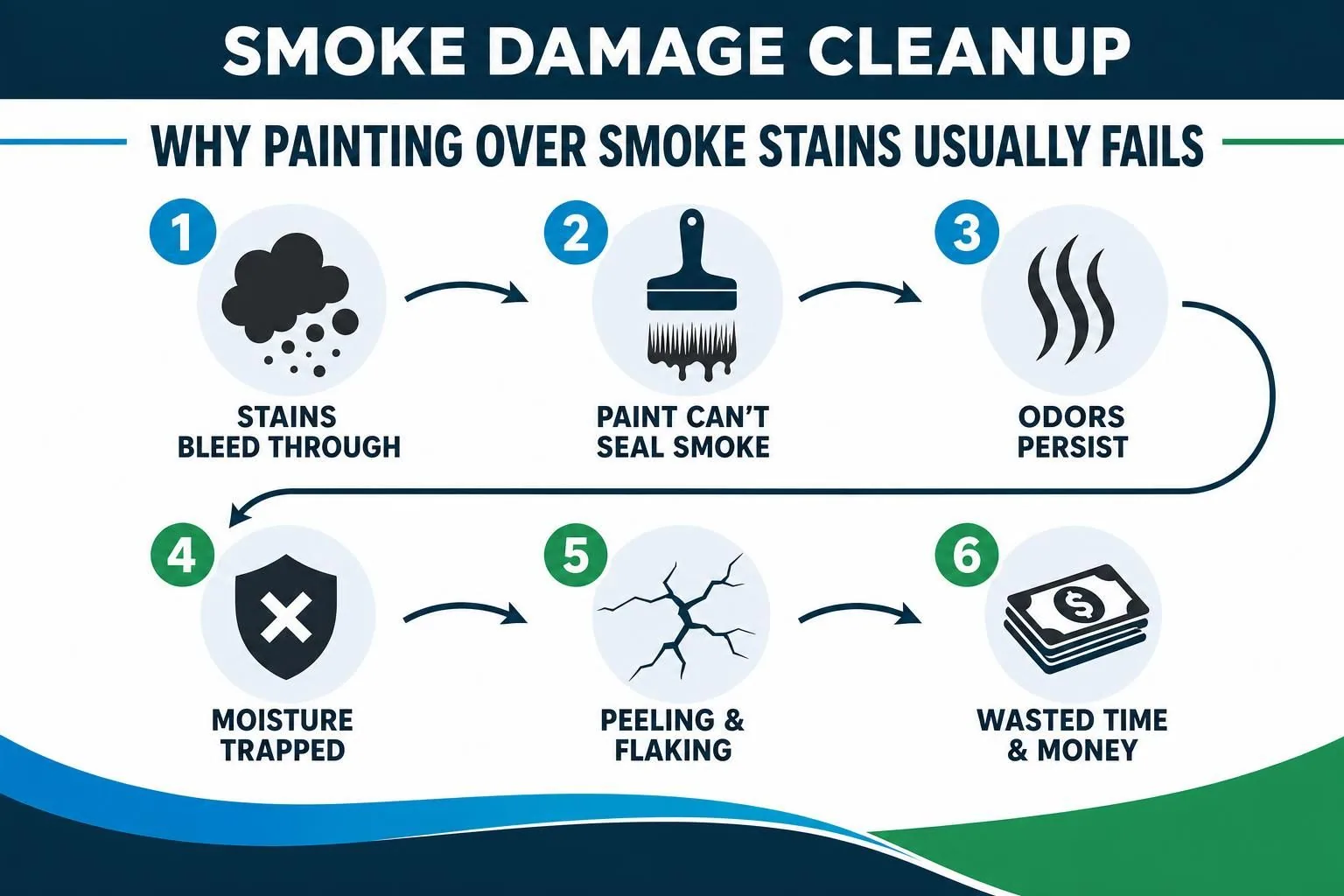
Why Painting Over Smoke Stains Usually Fails
Paint can hide a gray stain for a little while, but it won’t remove the smoke residue sitting under it. Smoke residue is the oily, dirty film left after smoke particles land on a surface. Think of it like trying to paint over grease on a kitchen wall. The new coat may stick unevenly, discolor, or let odor push back through.
This is especially common on soot-stained drywall, ceilings, baseboards, and trim. If soot is still on the surface, a brush or roller can smear it into the paint. If the wall still smells smoky, regular paint can trap that odor instead of solving it. Later, heat, humidity, or sunlight may make the smell noticeable again.
Use this order instead:
- Check whether the material is sound. Crumbling drywall, swollen trim, or charred surfaces may need replacement.
- Remove loose soot with the right dry-cleaning method before using moisture.
- Clean smoke residue with a suitable cleaner for that surface.
- Seal only after residue and odor are controlled.
- Repaint after the sealer has properly cured.
Sealing is a bridge between cleaning and repainting, not a shortcut around cleanup. If the stain or odor keeps returning after careful cleaning, replacement may be the more practical choice.
Professional Cleaning and Deodorization Steps
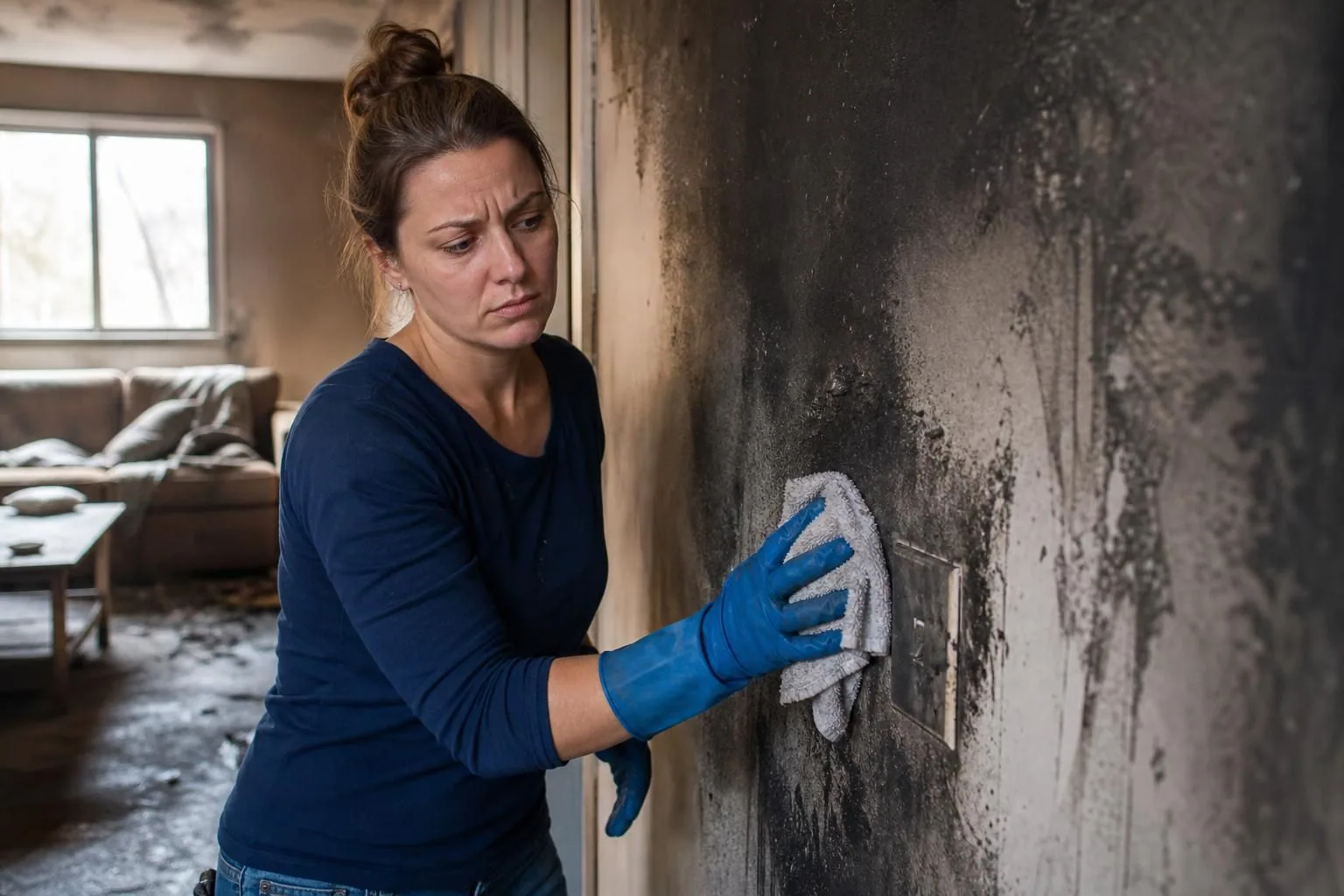
Professional smoke damage cleanup usually follows a simple order: find the spread, remove residue, control odor, then decide what can stay. Deodorization means removing or neutralizing the source of the smell, not just spraying a fragrance over it.
- Inspect every affected room, not just the burn area. Check walls, ceilings, cabinets, closets, carpets, fabrics, and HVAC returns. A living room with no flames can still hold odor in curtains, carpet, and painted surfaces.
- Protect unsafe areas first. Avoid handling electrical items, wet ash, collapsed materials, or debris that may contain hazardous contaminants.
- Remove loose soot dry. Pros use methods such as specialized vacuums and dry sponges so soot doesn’t smear into paint, trim, or unfinished wood.
- Clean residue by material. Metal, sealed countertops, glass, and some painted surfaces may clean well. Upholstery, mattresses, insulation, and heavily affected carpet may not be practical to restore.
- Treat odor sources. This may include cleaning contents, removing unsalvageable porous items, cleaning ductwork when smoke entered the HVAC system, and using professional deodorizing equipment.
- Seal only when needed. Stained drywall or trim may need a smoke-rated sealer after cleaning and drying, before repainting.
For heavy soot, widespread odor, or HVAC involvement, bring in a qualified restoration team. You can learn more at /services/fire-and-smoke-damage-cleanup/.
FAQs
Can I Clean Smoke Damage Myself?
You can handle very light residue on hard, washable surfaces if there’s no charring, no electrical damage, and no heavy odor. Start with gentle dry cleaning methods before using moisture, because wet wiping can smear soot into paint, grout, and wood grain.
How Do I Know if Something Should Be Replaced?
Replace is more likely when the item is porous, heavily exposed, unsafe, or still smells smoky after careful cleaning. Mattresses, insulation, heavily affected carpet, and some upholstered furniture often fall into this category because smoke can settle deep inside them.
Is Sealing the Same as Cleaning?
No. Sealing means applying a barrier coating after residue and odor sources are handled. Think of it like closing a clean box. If you seal over dirty, smoky material, you may trap odor and stains instead of solving the problem.
Why Does a Room Smell Smoky if There Were No Flames There?
Smoke travels with air. It can move through door gaps, vents, wall cavities, and heating or cooling returns. That’s why a bedroom or living room can smell smoky even when the fire started in the kitchen.
What’s the Biggest DIY Mistake?
Painting too soon. Smoke damage cleanup needs residue removal, odor control, drying, and then sealing or repainting when appropriate. If you skip those steps, stains and odor can come back.
Conclusion
Good smoke damage cleanup starts with a simple question: is the material hard and washable, porous but salvageable, or too contaminated to keep? Clean first when residue is light, seal only after soot and odor are controlled, and replace items that stay smoky, unsafe, or heavily damaged.
Don’t judge by appearance alone. A wall, carpet, cabinet, or sofa can look better and still hold odor deep inside. Walk room by room, note soot, smell, moisture, and HVAC spread, then decide what needs DIY cleaning and what needs professional help at /services/fire-and-smoke-damage-cleanup/.