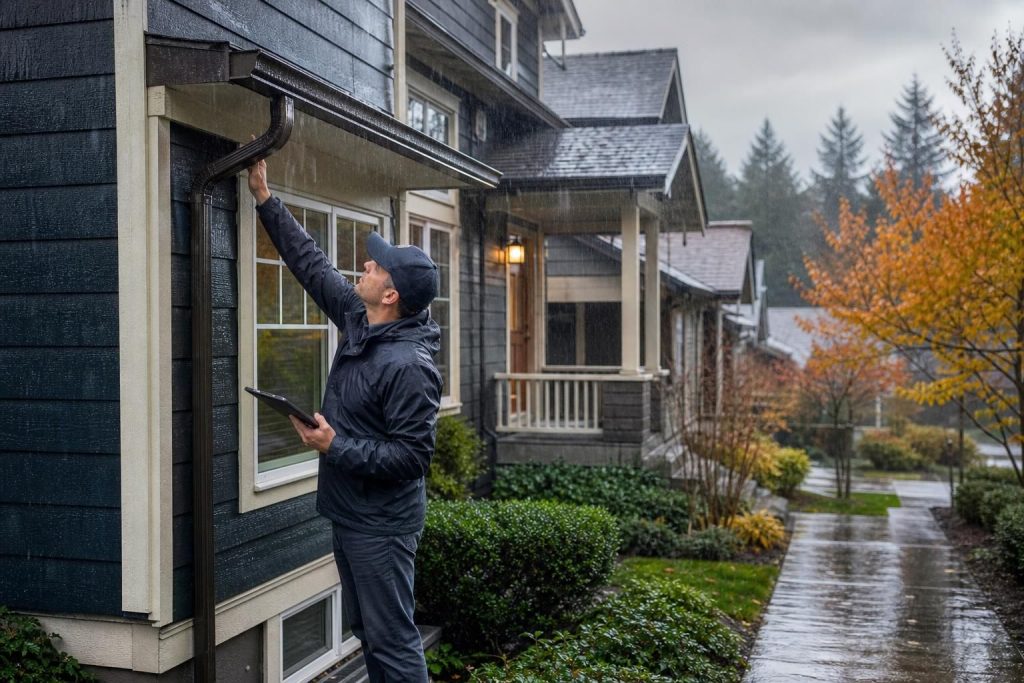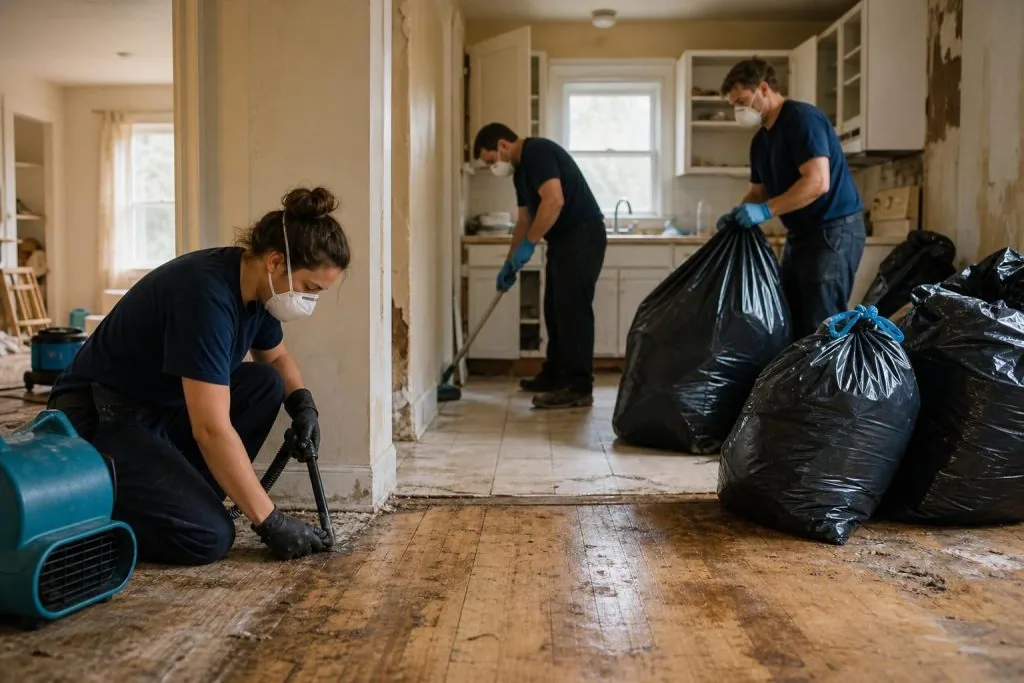

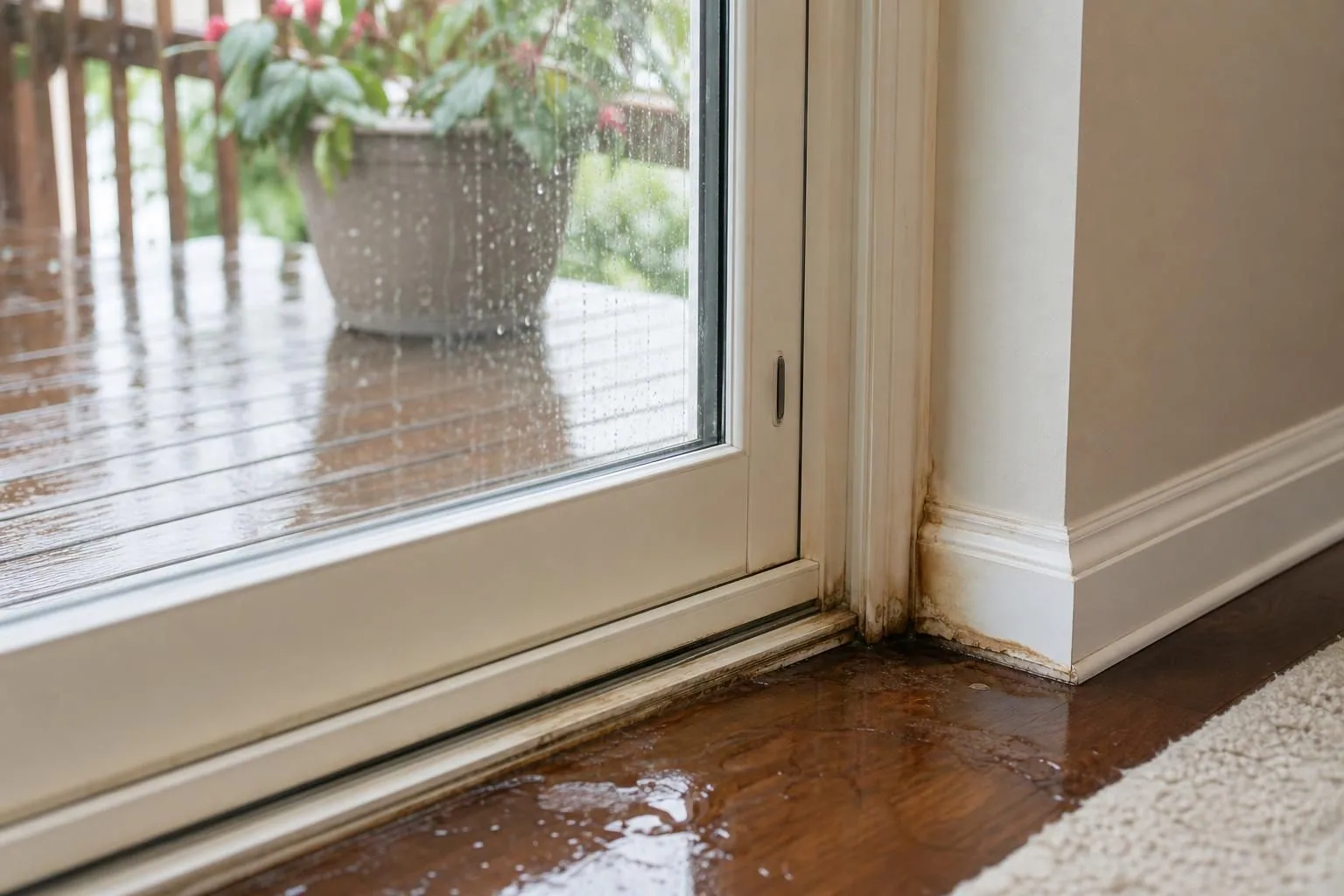
A wet track or small puddle can look harmless, but sliding glass door leak water damage can spread under flooring, behind trim, and into the door frame if rain keeps pushing water inside. First, stop more water from entering. Then find out whether hidden materials are still wet.
If water has soaked carpet, laminate, wood, drywall, baseboards, or the subfloor, start with water damage restoration services instead of only wiping the surface dry.
Quick Answer
Treat sliding glass door leak water damage as two jobs: stop more rain from getting in, and find out how far the water traveled. A wet track may be simple. Water soaking carpet, laminate, wood, baseboards, or drywall near the patio door needs faster attention.
- Stay safe first. Keep people off wet flooring if it feels soft or slippery. If water is near outlets, cords, or electronics, don’t touch them until the area is safe.
- Remove standing water. Use towels or a wet/dry vacuum if you can do so safely. Don’t push water under trim or flooring.
- Take photos. Document the track, door frame, flooring, baseboards, and any staining before you move items or start cleanup.
- Add temporary rain protection. Clear debris from the track, place towels at the interior edge, and use plastic sheeting outside if needed. This is short-term protection, not a real repair.
- Call for help if water entered flooring or walls. Water damage restoration services can check hidden moisture and dry materials. For storm-driven leaks, review storm water intrusion cleanup guidance. If the floor feels spongy, compare the symptoms with water-damaged subfloor concerns.
Why Sliding Doors Leak During Heavy Rain
Heavy rain exposes weak spots in a sliding glass or patio door because the door sits in a low track. That track is meant to collect and drain some water, not hold a pond.
- Clogged tracks. Dirt, leaves, pet hair, and grit can block the channel where water is supposed to move.
- Blocked weep holes. Weep holes are tiny drain openings in the bottom of the door track. If they’re clogged, the track can fill with water and overflow into the room.
- Worn weatherstripping. Weatherstripping is the rubber or fuzzy seal around the door. Once it cracks, flattens, or pulls loose, wind-driven rain can push through.
- Poor exterior slope. If the patio, deck, or soil slopes toward the door, rainwater naturally runs to the frame instead of away from it.
- Failed caulk or patio door flashing. Caulk seals small joints. Flashing is hidden water-shedding material around the door opening. If either fails, water can sneak behind the frame.
- Warped or damaged frames. A bent track or shifted frame can leave gaps the door no longer seals.
So what does this mean in practice? Sliding glass door leak water damage often starts with drainage failure, then spreads when repeated storms keep feeding water into the same area.
Signs Water Has Reached the Subfloor or Wall
Visible water is only the surface clue; the bigger question is whether moisture has moved under the flooring or behind the patio door trim.
Check the area within a few feet of the sliding door after the puddle is gone. Look and feel for signs of hidden moisture.
- Swollen laminate, cupped wood boards, loose vinyl, or carpet that stays damp at the edge.
- Brown or yellow staining on baseboards, drywall, or the lower corners of the door frame.
- Peeling paint, bubbling drywall, or trim that pulls away from the wall.
- Soft baseboards or swollen trim around the patio door frame after repeated rainwater intrusion.
- A musty smell near the door, even after the visible water has dried.
- Recurring dampness in the same spot after every storm.
A common pattern is simple: heavy rain leaks under the sliding glass door, soaks the nearby carpet or laminate, then disappears from view. But the moisture may still be trapped underneath. Carpet fibers can feel dry while the padding underneath is still holding water like a sponge. Laminate and wood flooring can also trap moisture at seams, edges, and underlayment.
Use this quick decision rule: if the surface dries but the area still smells musty, feels cool, or changes shape, assume moisture may be below the surface until it is checked. If the floor feels spongy, compare your symptoms with water-damaged subfloor guidance before covering the area back up.
What to Do Before More Rain Arrives
Before the next storm, your goal is damage control, not a permanent fix. Don’t caulk the door shut or reinstall wet flooring yet. First, slow the water down and keep the area as dry and visible as possible.
- Move furniture, rugs, curtains, and storage bins away from the sliding door. Wet fabric holds moisture against trim and flooring.
- Take photos or short videos of the puddle, wet track, soaked carpet, stained trim, and exterior conditions. Do this before you clean up.
- Remove standing water with towels or a wet/dry vacuum. Only use a vacuum if the cord, outlet, and floor area are dry enough to be safe.
- Open and clean the door track. Scoop out leaves, mud, pet hair, and grit. Check the small drain openings in the track, called weep holes. If they’re clogged, water can fill the track and spill indoors.
- Redirect outside water away from the patio door. Move planters, clear nearby drains, and use temporary splash blocks or sandbags if water is pooling against the threshold.
- Add temporary weather protection outside, such as a tarp or plastic sheeting, without trapping water inside the wall or floor.
A simple pre-rain check is: track clear, weep holes open, exterior water flowing away, towels ready inside, and wet flooring left uncovered so you can see whether the leak returns. If stormwater is already entering flooring or walls, review storm water intrusion cleanup steps before the leak repeats.
Drying the Area and Checking for Mold
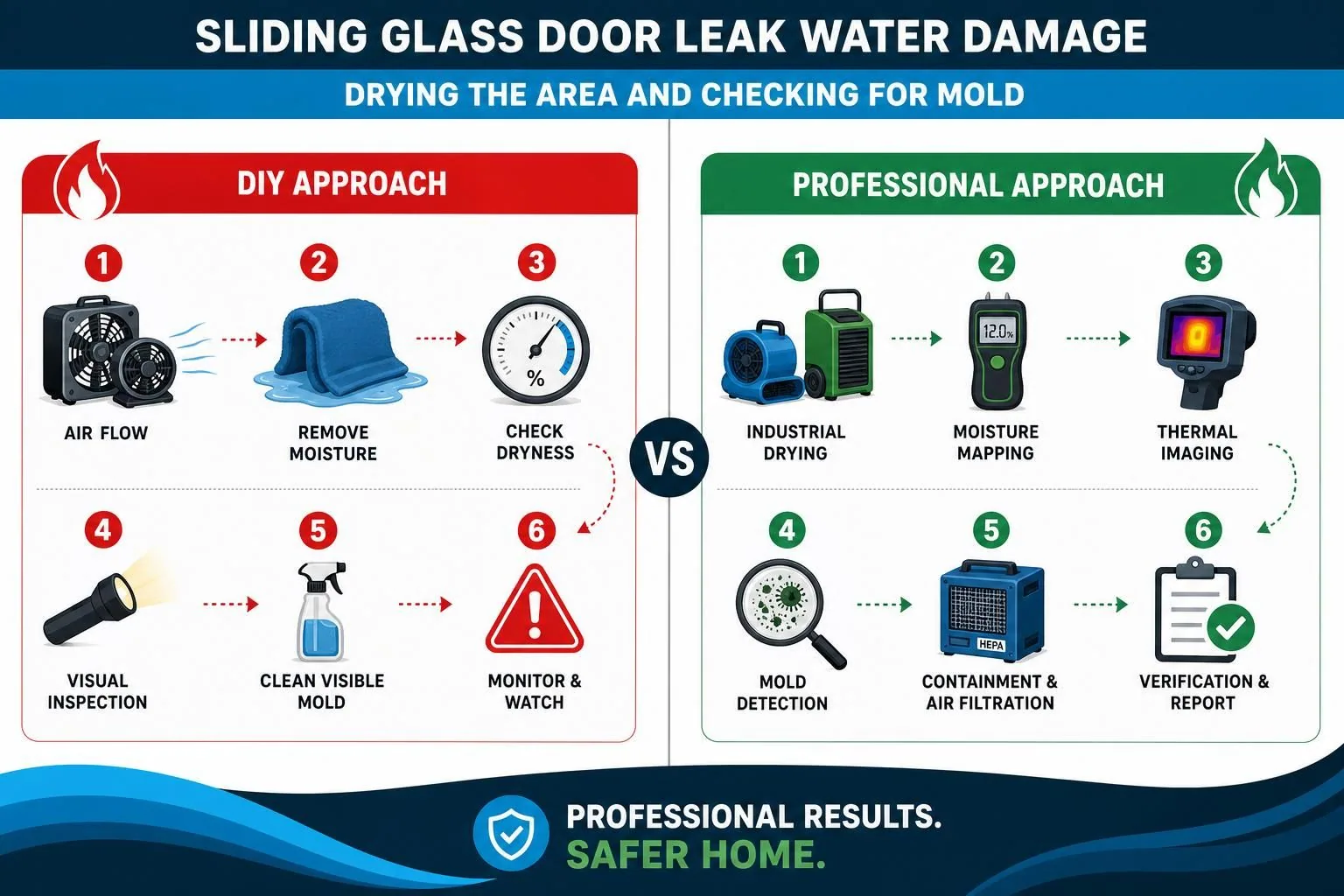
Drying isn’t just wiping the puddle. With sliding glass door leak water damage, the water often slips under carpet, laminate, wood flooring, trim, or the door threshold where you can’t see it.
- Remove standing water first. Use towels or a wet/dry vacuum if it’s safe to plug in equipment. Don’t use electrical tools near active water.
- Pull back what you can without damaging it. Lift wet rugs, move furniture, and remove loose trim only if it comes off easily. The goal is to let trapped moisture breathe.
- Increase airflow. Run fans across the wet area, not just straight at the wall. Use a dehumidifier if you have one. Think of it like drying a soaked sponge: air movement helps, but moisture also has to leave the room.
- Don’t seal damp materials. Avoid caulking, painting, or reinstalling flooring until the area is confirmed dry. Sealing too soon can trap moisture underneath.
- Check for warning signs. A musty smell, spongy floor, swollen baseboards, bubbling paint, or recurring dampness after storms means the problem may be below the surface.
Professional moisture checks are useful because the surface can dry faster than the layers below it. A restoration technician may check carpet, padding, tack strips, baseboards, drywall, subfloor, and the area under the door threshold with moisture meters. They are not just looking for one wet spot; they are mapping where the water traveled so the drying plan matches the actual damage.
A simple decision rule: if carpet padding, particleboard, swollen laminate, or wet drywall stayed wet long enough to smell musty or lose shape, drying alone may not be enough. Some materials may need to be lifted, removed, or replaced so the subfloor and wall cavity can dry safely.
If the floor feels soft near the patio door, read more about water-damaged subfloor concerns. If water entered flooring or walls, professional water damage restoration services can check hidden moisture and dry the area properly.
Repair vs Restoration: Who Handles What
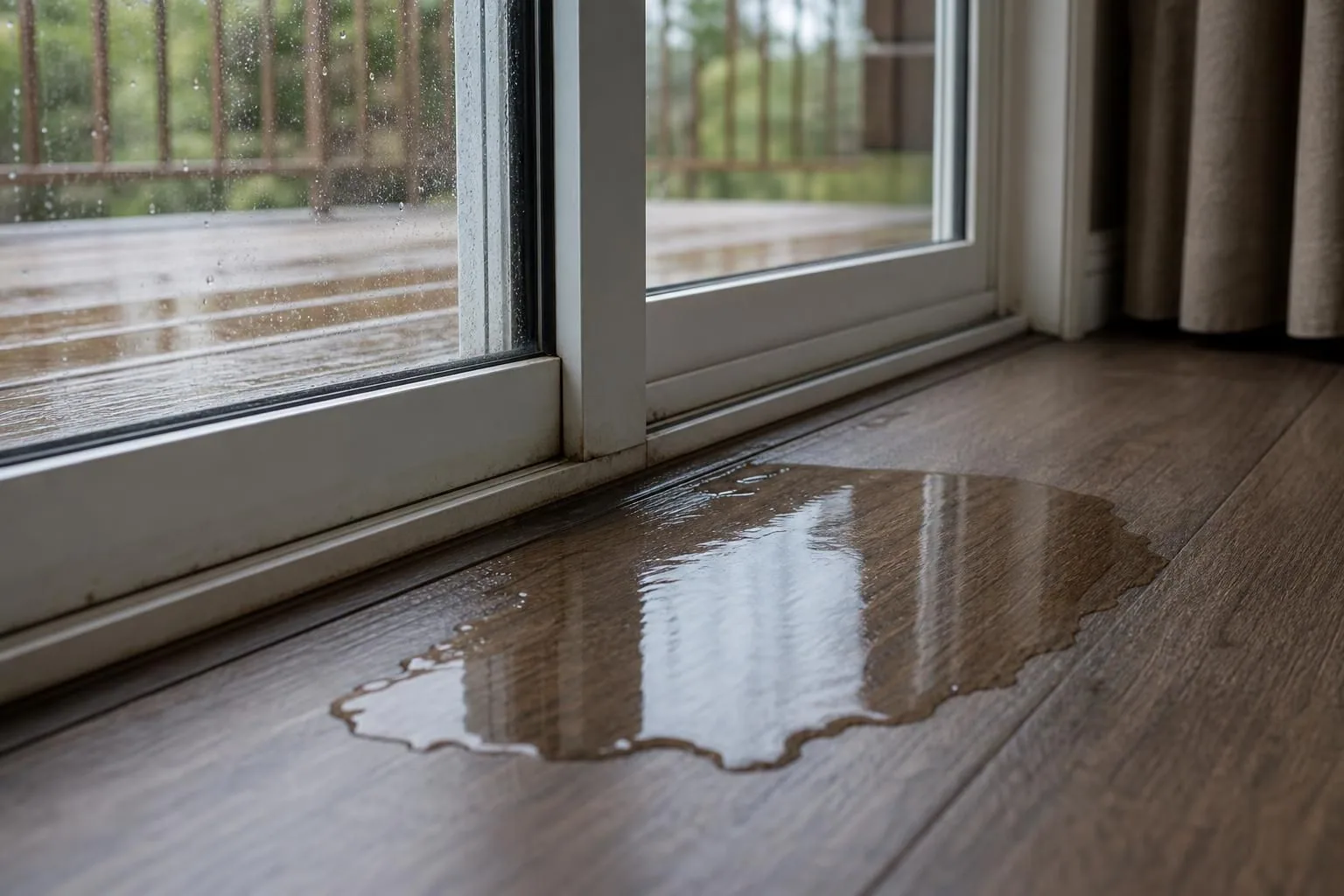
Stopping the leak and restoring the wet materials are usually two different jobs. Think of it like a leaky sink: a plumber fixes the pipe, but someone else may need to dry the cabinet and floor. With sliding glass door leak water damage, the same split applies.
| Problem you see | Who to call | What they handle | How urgent |
|---|---|---|---|
| Water entering at the patio door track or frame | Door repair, glass company, contractor | Track, rollers, weatherstripping, frame, caulk, flashing | Before the next rain |
| Wet carpet, laminate, wood, trim, or drywall | Water damage restoration | Extraction, drying, moisture checks, damaged material removal | Same day if spreading |
| Storm water pushed indoors by wind or flooding patio drainage | Storm water intrusion cleanup | Cleanup, drying plan, contamination concerns | Same day |
| Soft or spongy floor near the door | Restoration first, then flooring repair | Hidden moisture check, subfloor assessment | Don’t cover it up |
Call a door repair pro when the main issue is the opening itself: a clogged or damaged track, failed weatherstripping, warped frame, loose threshold, or bad patio door flashing. Their job is to stop more rain from entering.
Call water damage restoration services when water has soaked into materials. That includes carpet padding, laminate seams, wood flooring, baseboards, drywall, or the subfloor. Restoration crews use moisture meters, air movers, and dehumidifiers to find and dry water you can’t see.
If you’re not sure who should come first, start with restoration when the floor feels soft, smells musty, or stays damp after the puddle is gone. A door can be repaired later, but trapped moisture under finished flooring can keep causing damage even after the leak source is fixed.
FAQs
Is a Small Puddle by a Sliding Glass Door a Big Problem?
One puddle isn’t always serious, especially if you catch it fast and the floor dries fully. The concern is repeated sliding glass door leak water damage. If water keeps crossing the track, it can soak carpet padding, laminate seams, wood edges, baseboards, and the subfloor underneath.
Can I Dry it Myself?
Yes, if the water stayed on a hard surface and the area dries completely. Wipe it up, run fans, use a dehumidifier, and keep the track clear. Don’t reinstall trim, rugs, or flooring over damp materials. If the floor feels spongy, smells musty, or stays cool and damp, review water-damaged subfloor warning signs and get the moisture checked.
Who Should I Call First?
Call a door repair pro if the issue is clearly the track, rollers, weatherstripping, or patio door frame. Call water damage restoration if water entered flooring, drywall, or baseboards. If the leak happened during heavy wind-driven rain or exterior flooding, storm water intrusion cleanup may be the better fit.
Should I Caulk the Door Before the Next Storm?
Only use temporary protection if more rain is coming. Don’t make permanent caulk or flooring repairs until hidden materials are dry and the leak path is confirmed.
Conclusion
Sliding glass door leak water damage comes down to two questions: did you stop the rain from coming in, and did the water reach hidden materials? If the track overflowed once and everything dried fully, basic cleanup and temporary weather protection may be enough until the door is repaired.
But if flooring feels soft, trim is swollen, stains keep returning, or a musty smell lingers near the patio door, don’t just caulk over it. Get the leak source checked, then have the wet area moisture-tested and dried properly. Start with water damage restoration services if water entered flooring, drywall, baseboards, or the subfloor.